
Desserts
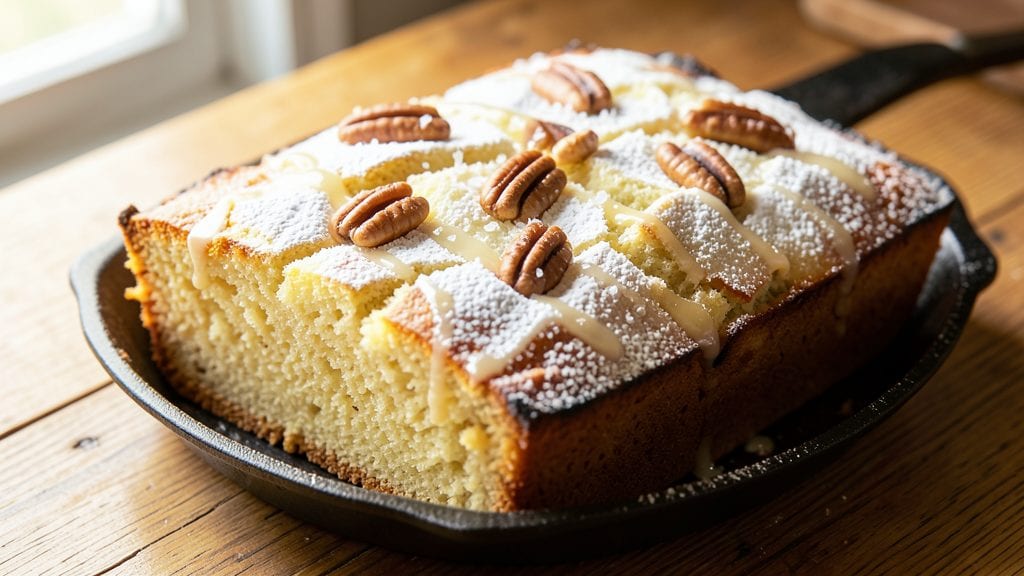
This Pioneer Woman pound cake recipe delivers the signature buttery layers and vanilla sweetness that made it a Southern classic. The secret lies in precise measurements and a gentle baking process that ensures a moist, tender crumb with just the right crumbly texture—no dryness here.
I’ve baked this version countless times, and it never disappoints, whether served warm with tea or sliced for a celebration dessert.
The recipe relies on a simple yet effective method: creaming butter and sugar until light, then folding in eggs and dry ingredients with care to maintain air pockets.
A touch of vanilla extract and a pinch of salt elevate the flavors, while the cake’s golden-brown crust gives way to a rich, buttery interior. This isn’t just dessert—it’s a piece of baking history, perfected for modern kitchens.
What you’ll achieve is a pound cake so dense and moist it stays fresh for days, with layers that practically melt in your mouth. The vanilla flavor is subtle yet undeniable, and the buttery richness makes every slice worth savoring.
Perfect for birthdays, holidays, or just because—this cake is a crowd-pleaser with minimal effort.
For extra flair, consider adding lemon zest or chopped pecans to the batter, or top with a dusting of powdered sugar and fresh berries. The possibilities are endless, but the base recipe remains foolproof. Let’s get baking!
Ingredients for pioneer woman pound cake
Buttery layers, vanilla richness, and tender crumb—this is the classic Southern pound cake.
| Ingredient | Amount | Notes |
|---|---|---|
| Unsalted Butter 🧈 | 1 ½ lb | Room temperature for creaming |
| Granulated Sugar 🍬 | 2 cups | Superfine for even texture |
| Large Eggs 🥚 | 8 whole | Room temperature preferred |
| All-Purpose Flour 🌾 | 2 ½ cups | Sifted for light texture |
| Pure Vanilla Extract 🌿 | 2 tbsp | High-quality for flavor |
| Fine Sea Salt 🧂 | 1 tsp | Enhances sweetness balance |
| Baking Powder 🔥 | 2 tsp | Double-acting for lift |
| Cornstarch 🌽 | 2 tbsp | Prevents dryness |
| Lemon Zest (optional) 🍋 | 1 tbsp | Brightens vanilla flavor |
| Chopped Pecans (optional) 🥜 | 1 cup | Adds crunch texture |
The butter is everything here—1.5 pounds of unsalted, room temperature ensures perfect creaming without grease. Professional bakers swear by Kerrygold or Plugrá for their rich, smooth texture. If you're using store-brand, melt it first to ensure full incorporation. The sugar should be superfine for even distribution, but regular works in a pinch—just pulse it in a food processor briefly. Eggs? Room temperature is non-negotiable—cold eggs create dense cakes. For the flour, sift it to eliminate lumps and improve air pockets, which is critical for that light, fluffy texture the recipe promises.
No vanilla extract? Vanilla bean paste at half the amount works beautifully, though it’s pricier. Substituting with imitation vanilla won’t cut it—this recipe demands the real deal. For the optional lemon zest, use organic lemons to avoid pesticide residue. If pecans aren’t in season, chopped walnuts or almonds add a similar crunch. Cornstarch is key for moisture retention—skip it and you’ll end up with a dry cake. The baking powder should be double-acting; check the expiration date—old baking powder won’t lift properly. For the salt, fine sea salt dissolves more evenly than coarse, ensuring even flavor distribution throughout the batter.
This cake keeps beautifully for 3-4 days in an airtight container at room temperature, though it tastes best within the first 24 hours. For longer storage, wrap tightly in plastic wrap and refrigerate, bringing to room temperature before serving. It also freezes exceptionally well—slice before freezing to avoid ice crystals, and wrap each piece individually. The butter flavor intensifies after freezing, making it even more decadent. If you’re baking ahead for a gathering, make it a day in advance—the flavors meld beautifully overnight. Just don’t skip the cooling step; rushing it leads to a collapsed cake. The crust will firm up as it cools, so patience here is rewarded with a perfect texture.
Why You'll Love This Recipe
- No Panic Needed: This recipe is that unfussy. Cream the butter and sugar for 5 minutes—yes, really—and the rest is just folding and baking. No fancy techniques, no stress. The cornstarch and baking powder handle all the heavy lifting, so you don’t have to worry about dryness or dense crumbs. Honestly, even my "I forgot to preheat the oven" moments still turn out solid.
- Vanilla Bliss: The 8 large eggs and 2 tablespoons of pure vanilla extract create a flavor so rich, it’s like a warm hug in cake form. That fine sea salt? It balances the sweetness just right, while the lemon zest (if you add it) brightens things up without overpowering. Trust me, the vanilla isn’t just flavor—it’s the star, and this cake nails it every single time.
- Crowd-Pleaser Always: Whether it’s a Sunday dinner, a potluck, or just because, this cake is the kind people ask for seconds of. Slice it plain, layer it with buttercream, or even dust it with powdered sugar—it works every time. And since it keeps well for 3-4 days, you can make it once and enjoy leftovers guilt-free. My kids even fight over the pecan pieces (yes, even on a Tuesday night).
- Budget-Friendly Luxury: A pound of butter and a few eggs? That’s all it takes to feel like you’re treating yourself to something special. No expensive ingredients, no weird substitutions—just the basics that make this cake ridiculously good. And because it’s so versatile, you can use it for breakfast (toasted slices!), dessert, or even a fancy coffee date. It’s the kind of recipe that makes you feel like a pro without breaking the bank.
Step-by-step instructions for Pioneer Woman pound cake
Here's the method for a rich, moist pound cake with perfect layers and buttery vanilla flavor.
Cream the Butter and Sugar Thoroughly
In a stand mixer fitted with the paddle attachment, beat the 1½ lb unsalted butter and 2 cups granulated sugar on medium speed for 5-7 minutes. You're looking for a light, fluffy mixture that nearly doubles in volume and becomes pale in color. This creaming process incorporates air, which creates that signature tender crumb.
Here's the thing—don't rush this step. I've found that creaming for at least 5 minutes ensures proper aeration. Scrape down the sides of the bowl with a rubber spatula every minute to make sure all the butter is fully incorporated. The mixture should be smooth with no visible butter lumps remaining.
Add Eggs and Vanilla Extract Gradually
Add the 8 large eggs, one at a time, mixing on low speed after each addition until fully incorporated. After the last egg, add the 2 tbsp pure vanilla extract and mix for 10 seconds. The mixture will appear slightly curdled at first, but don't worry—this will resolve when we add the dry ingredients.
I like to use room temperature eggs for this recipe. They blend more smoothly and help create a lighter texture. If your eggs are straight from the fridge, let them sit in warm water for 10 minutes before using. This step is crucial for achieving that classic pound cake consistency.
Combine Dry Ingredients and Fold Gently
In a separate bowl, whisk together the 2½ cups all-purpose flour, 2 tbsp cornstarch, 2 tsp baking powder, and 1 tsp fine sea salt. Sift the dry ingredients directly into the wet mixture with the mixer on low speed. Mix just until combined—you should still see some flour streaks. Overmixing develops gluten and makes the cake dense.
If using the 1 tbsp lemon zest, add it now along with the 1 cup chopped pecans (if including them). Fold these gently with a silicone spatula to distribute evenly. The lemon zest adds a bright citrus note that complements the vanilla beautifully, while the pecans provide welcome crunch throughout each slice.
Bake in Prepared Pans for Even Cooking
Preheat your oven to 350°F. Generously grease two 9-inch round cake pans with butter or line them with parchment paper. Divide the batter evenly between the pans and smooth the tops. Bake for 50-60 minutes or until a toothpick inserted in the center comes out clean and the tops spring back when pressed gently.
I always bake this cake in two layers for that classic pound cake presentation. The key is to avoid opening the oven door during the first 40 minutes of baking. This helps maintain even heat distribution and prevents the cake from sinking in the center. Rotate the pans halfway through the baking time for even browning.
Cool and Layer for Maximum Flavor
Remove the cakes from the oven and let them cool in the pans for 15 minutes. Then transfer them to a wire rack to cool completely. While the cakes are still warm, brush the tops with a simple syrup made by heating ½ cup granulated sugar with ¼ cup water until dissolved. This adds moisture and enhances the cake's sweetness.
Once completely cooled, layer the cakes with vanilla buttercream made from the remaining ½ lb unsalted butter, 1 cup powdered sugar, and 1 tbsp pure vanilla extract. This step creates that signature layered look and ensures every bite delivers perfect vanilla flavor.
Pro Tips For Making Pioneer Woman Pound Cake
- Don’t Skimp on Creaming: DESCRIPTION: That 5-7 minute butter-sugar beat isn’t just busywork—it’s where the cake’s lightness happens. I’ve seen people cut it to 3 minutes, and the result? A denser crumb that’s all butter without the air. Scrape the bowl every minute too, or you’ll end up with dry pockets where the butter never got incorporated.
- Sift the Dry Mix: DESCRIPTION: The 2.5 cups flour, 2 tbsp cornstarch, and 2 tsp baking powder need to be sifted together before folding—no exceptions. I used to just dump them in, and the cake turned out gummy. Sifting aerates the dry ingredients and prevents clumps that’ll make your cake tough. (Pro move: Sift directly into the wet mixture while mixing on low.)
- Rotate the Pans: DESCRIPTION: Halfway through the 50-60 minute bake, swap the pans front to back. My first time baking this, I forgot, and one side came out golden while the other stayed pale. The oven’s hot spots are real—this ensures even baking and that perfect domed shape.
- Brush Syrup While Warm: DESCRIPTION: That simple syrup of ½ cup sugar and ¼ cup water? Brush it on the warm cakes, not room temp. I learned this after a batch turned out dry—syrup works best when the cake’s still giving off heat. Let them cool in the pan for 15 minutes first, then transfer to a rack for the syrup. Trust me, your slices will thank you.
Perfect pairings for pioneer woman pound cake
Tea Time Classics
This pound cake pairs beautifully with Earl Grey tea, especially the Twinings brand, for its citrusy bergamot notes that complement the vanilla and lemon zest. Brew a fresh pot and let it steep for 4-5 minutes to avoid bitterness.
The warmth of the tea enhances the cake’s buttery richness while cutting through its sweetness. I always serve it with a side of clotted cream or whipped butter for dipping—trust me, it’s a Southern tradition. 🍵
Berry Compote Contrast
A warm raspberry compote adds a tart contrast to the cake’s sweetness. Simmer 1 cup raspberries, 2 tbsp granulated sugar, and 1 tsp lemon juice in a saucepan for 8-10 minutes until thickened.
Spoon it over each slice before serving. The juicy berries brighten the cake’s vanilla notes and feel like a summer dessert in every bite.
Vanilla Ice Cream Dream
Nothing beats a scoop of homemade vanilla ice cream alongside this cake. I recommend blending 2 cups heavy cream, 1 cup whole milk, ¾ cup sugar, and 2 tbsp vanilla extract before churning.
The creamy texture and cool temperature balance the cake’s warmth perfectly. For extra indulgence, drizzle with hot fudge sauce or caramel.
Coffee Pairing for Brunch
If you prefer coffee, a light roast like Peet’s Major Dickason’s Blend enhances the cake’s buttery depth. Brew it strong and add a splash of half-and-half for creaminess.
The coffee’s bitterness grounds the cake’s sweetness, making it ideal for a hearty brunch. I often pair it with a side of scrambled eggs for a complete meal.
Wine Elevation
For a more sophisticated touch, serve this cake with a dry Riesling from Germany or a Vouvray from France. The wine’s acidity cuts through the cake’s richness while highlighting its vanilla and citrus notes.
Avoid sweet wines—they’ll compete with the cake’s sweetness. A chilled glass makes the pairing feel special and elegant.
Nutrition facts
Frequently asked questions
Why does this recipe call for room temperature butter and eggs?
Room temperature butter and eggs blend more smoothly, creating a lighter, airier texture. Cold ingredients create dense cakes, while room temperature ingredients incorporate air perfectly for that tender crumb. The recipe relies on this for its signature buttery, moist result—no shortcuts here!
Can I skip the cornstarch in this recipe?
Not if you want a moist cake! The 2 tablespoons of cornstarch prevents dryness by absorbing excess moisture. Skipping it risks a cake that’s cakey rather than cakey-moist. Trust the process—it’s what makes this recipe legendary.
What’s the best way to test if the cake is done?
Insert a toothpick into the center—if it comes out clean with no wet batter clinging, it’s done! The cake should also spring back gently when pressed. Avoid opening the oven early; waiting ensures even baking and prevents sinking. Patience pays off!
How do I store leftovers to keep them fresh?
Wrap tightly in plastic wrap or foil and store in an airtight container at room temperature for up to 3-4 days. For longer storage, freeze slices individually—thaw at room temperature before serving. The butter flavor deepens after freezing, making it even richer!