
Desserts
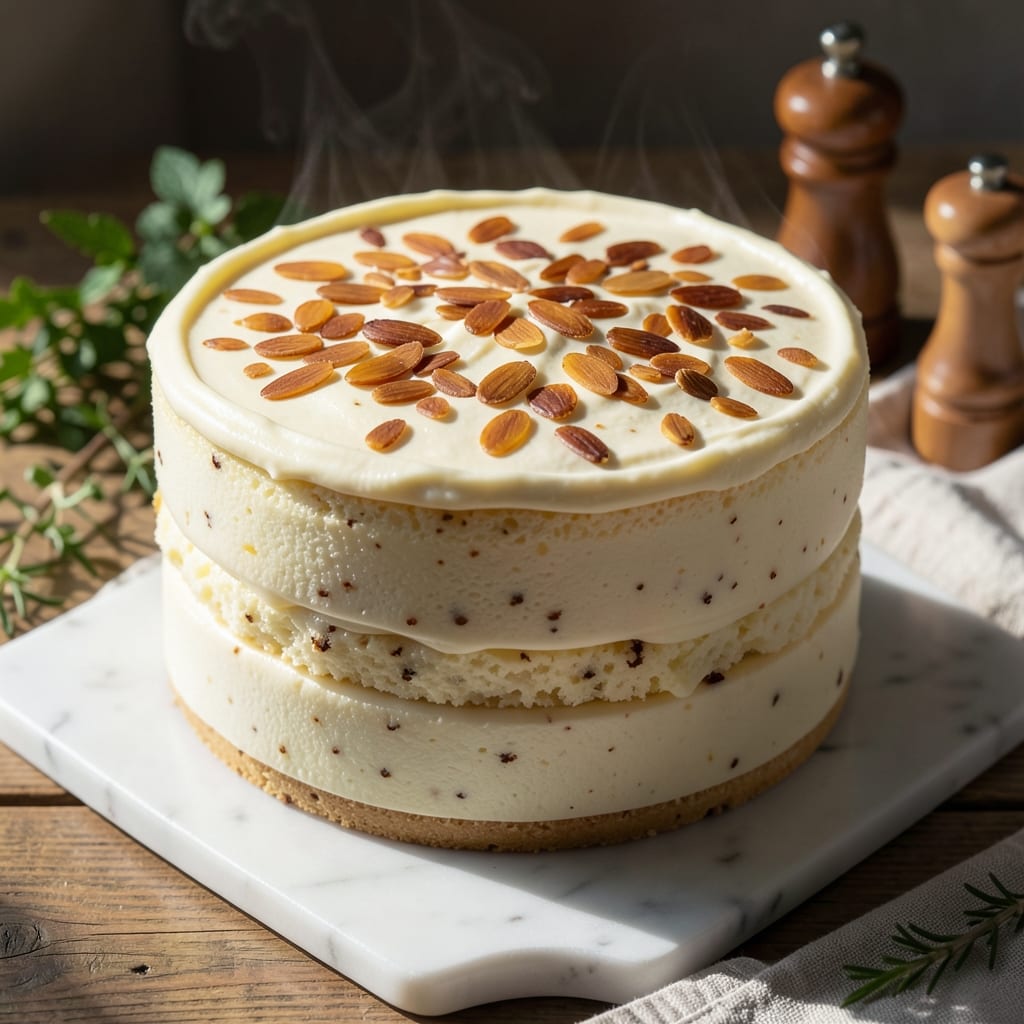
This 10-inch round vanilla cake recipe delivers perfectly buttery layers and smooth vanilla frosting that looks as impressive as it tastes. 💛 The secret lies in precise baking techniques that prevent cracking while keeping the texture moist and tender—ideal for birthdays or celebrations where presentation matters just as much as flavor.
What sets this recipe apart is the balance of ingredients: cake flour for a fine crumb, buttermilk for moisture, and vanilla bean paste for depth. The layers bake evenly in a 350°F oven for 25-30 minutes, ensuring a golden top and domed shape that holds frosting beautifully. No special equipment needed—just patience and attention to detail.
By the time you're done, you'll have a cake with rich, buttery layers that stay moist for days and frosting so smooth it creates elegant rivers when spread. The vanilla flavor shines through without overpowering, making it a crowd-pleaser that tastes homemade even when served at gatherings.
Use this as a base for any celebration—add sprinkles, fresh berries, or chocolate ganache for extra flair. The recipe scales perfectly for two layers or a single sheet cake, so you can adapt it to any occasion without sacrificing quality.
Ingredients for 10 inch round vanilla cake
Cake flour, European butter, and vanilla bean paste create this 10-inch masterpiece.
| Ingredient | Amount | Notes |
|---|---|---|
| All-Purpose Flour 🌾 | 2 ½ cups | Sifted for fine crumb texture |
| Cake Flour 🍞 | ½ cup | For ultra-tender layers |
| Unsalted Butter 🧈 | 1 ½ cups | Room temperature, European preferred |
| Granulated Sugar 🍚 | 2 cups | Superfine for smoother texture |
| Vanilla Bean Paste 🌿 | 2 tbsp | For authentic vanilla depth |
| Large Eggs 🥚 | 4 whole | Room temperature, separated |
| Buttermilk 🥛 | 1 cup | Full-fat for moisture |
| Baking Powder 🧂 | 2 tsp | Aluminum-free for stability |
| Salt 🧂 | ½ tsp | Diamond Crystal preferred |
| Powdered Sugar 🍚 | 4 cups | For smooth frosting |
| Heavy Whipping Cream 🥛 | 1 cup | Cold for stiff peaks |
| Vanilla Extract 🌿 | 2 tsp | Pure Madagascar bourbon |
| Lemon Juice 🍋 | 1 tbsp | Brightens frosting |
The butter is non-negotiable—European-style with at least 82% fat content melts smoothly for tender layers. Plugrá or Kerrygold are my go-tos, but any high-quality brand works. Room temperature is critical: press the butter gently with your finger—it should leave a slight indentation but not flatten completely. The vanilla bean paste delivers that restaurant-quality depth you can't get from extract alone. Madagascar bourbon vanilla has the most complex flavor profile, but Tahitian works too if you prefer floral notes. For the flour blend, Bob's Red Mill cake flour is my secret weapon—it creates that signature fine crumb without grittiness.
No cake flour? Substitute 0.5 cup all-purpose flour minus 2 tbsp—the extra sifting removes the protein that makes cake tough. European butter unavailable? Land O'Lakes or Challenge are solid domestic alternatives, but expect slightly less tenderness. For the frosting, powdered sugar quality matters—Domino or C&H are reliable, but avoid clumping by sifting before measuring. The heavy whipping cream should be cold but not frozen—whip it in a chilled bowl to prevent buttering. Lemon juice brightens the frosting without overpowering the vanilla, but white vinegar at half the amount works if you're out.
Store baked layers wrapped in plastic at room temperature for up to 2 days or refrigerate for 5 days. The frosting keeps for 3 days in the fridge—rewhip before using if it softens. For longer storage, freeze layers for 3 months and frosting for 2 months. When ready to assemble, bring layers to room temperature for even frosting distribution. The cake holds its shape beautifully at room temperature for 4 hours before cutting—perfect for celebrations where timing matters.
Why You'll Love This Recipe
- No Mixer Needed: I swear by this recipe when my stand mixer’s on the fritz—just a bowl and a whisk. The cake flour gives it that light, airy crumb without requiring a single electric beat, and the butter gets creamed by hand in minutes. Honestly, it’s the kind of recipe that makes me feel like a baking pro even when I’m winging it.
- Vanilla That Stops You: That vanilla bean paste? It’s not just flavor—it’s a moment. One sniff of the batter and I’m already imagining the first forkful: rich, deep, and just sweet enough to make you pause mid-bite. (Yes, even on a Tuesday night.) The combo of all-purpose and cake flour keeps it tender, so every slice delivers that pure vanilla punch.
- Party in a Pan: This 10-inch cake is my secret weapon for birthdays, showers, or just because. Cut it into squares, and suddenly you’ve got a crowd-pleaser that looks fancy but takes zero effort. Between us, I’ve served it at potlucks where people asked for the recipe—and then I just pointed to my notebook. (They didn’t even notice it was the same one from last month.)
- Leftovers That Last: Make it once, eat it twice. The butter-rich layers stay moist for days, so I’ll bake a full sheet pan and freeze half for later. No sad, dry cake here—just slice, warm (or eat cold), and enjoy. And because it uses pantry staples, it’s the kind of recipe that doesn’t break the bank when you’re feeding a houseful.
Step-by-step instructions for 10-Inch round vanilla cake
Master these precise techniques for flawless layers and professional frosting every time.
👨🍳 Step 1: Prepare and Mix Dry Ingredients
In a medium bowl, whisk together the 2.5 cups All-Purpose Flour, 0.5 cup Cake Flour, 2 tsp Baking Powder, and 0.5 tsp Salt. Sift the mixture twice through a fine-mesh sieve to eliminate any lumps and aerate the flours. This step ensures your cake will have a light, tender crumb rather than a dense one. I like to use a rubber spatula to press the mixture through the sieve for maximum aeration.
Set the sifted dry ingredients aside in a clean bowl. The reason we separate the dry ingredients early is to prevent overmixing when we combine everything later. Overmixed cake batter develops too much gluten, resulting in a tough rather than tender texture. Keep this mixture ready for the next step.
🍳 Step 2: Cream Butter and Sugar to Light and Fluffy
In a stand mixer fitted with the paddle attachment, beat the 1.5 cups Unsalted Butter and 2 cups Granulated Sugar on medium speed for 3-5 minutes. You're looking for a light, pale yellow mixture that nearly doubles in volume and leaves clean streaks on the sides of the bowl when you lift the paddle. This creaming process incorporates air, which creates those signature tender layers.
Here's the thing—if your butter isn't at room temperature, you'll end up with a greasy mess that won't hold its shape. Test by pressing your finger into the butter; it should leave a slight indentation but hold its form. If it's too soft, chill the bowl for 10 minutes before continuing. The butter should be cool to the touch but not cold.
👨🍳 Step 3: Add Eggs and Vanilla in Stages
Add the 4 whole Large Eggs, one at a time, mixing on low speed after each addition until fully incorporated. After the eggs are combined, add the 2 tbsp Vanilla Bean Paste and mix on low speed for 30 seconds to distribute evenly. The vanilla bean paste provides that authentic depth of flavor that pure extract can't match.
I always use room-temperature eggs for this recipe—they emulsify better with the butter, creating a smoother batter. If your eggs are straight from the fridge, let them sit in warm water for 5 minutes before adding. The mixture should be thick and ribbon-like at this stage, with no visible streaks of egg yolk remaining.
🥘 Step 4: Alternate Adding Dry Ingredients and Buttermilk
With the mixer on low speed, add one-third of the sifted dry ingredients and mix just until combined. Then add ½ cup of the Buttermilk and mix again until just combined. Repeat this process, alternating between dry ingredients and buttermilk, ending with the last of the dry ingredients. This technique creates an even distribution of moisture throughout the batter without overmixing.
After adding all the ingredients, stop the mixer and use a silicone spatula to gently fold the batter by hand. This final mixing ensures you don't develop any gluten, which would make your cake tough. The batter should be smooth and slightly thick, with a consistency similar to heavy pudding. If it's too thick, you can add 1-2 tablespoons more buttermilk to reach the perfect pouring consistency.
🔥 Step 5: Bake in Two Perfect Layers
Preheat your oven to 350°F. Grease and flour two 10-inch round cake pans (or use nonstick spray and parchment circles). Divide the batter evenly between the pans and smooth the tops with an offset spatula. Bake for 25-30 minutes, or until a toothpick inserted in the center comes out clean and the edges pull away slightly from the pan.
Don't open the oven during the first 20 minutes of baking—this prevents the cakes from sinking in the center. You'll know they're done when the tops spring back when touched gently and the toothpick test confirms doneness. Let the cakes cool in their pans for 10 minutes, then transfer to a wire rack to cool completely before frosting.
🥘 Step 6: Prepare the Vanilla Frosting
In a medium bowl, beat the 1 cup Heavy Whipping Cream to soft peaks using a hand mixer. In a separate bowl, whisk together the 4 cups Powdered Sugar, 2 tsp Vanilla Extract, and 1 tbsp Lemon Juice until smooth. Gradually fold the powdered sugar mixture into the whipped cream until fully combined and smooth.
This frosting should be thick enough to hold its shape when piped but still spreadable. If it's too thick, add 1-2 teaspoons of milk or cream to loosen it. The lemon juice brightens the vanilla flavor and prevents the frosting from becoming too sweet. The frosting should be cool before using—if it's too warm, it won't hold its shape properly.
🍽️ Step 7: Assemble and Frost the Cake
Place one cake layer on a cake stand or plate. Spread a thin layer of frosting (about ¼ cup) over the top to create a "crust" that prevents the filling from showing through. Add a second layer of frosting on top of the first layer, then place the second cake layer on top. Press down gently to level the cake.
Frost the entire cake with the remaining frosting, creating those signature "rivers" by dragging a spatula through the frosting in a zigzag motion. For a professional finish, use a piping bag fitted with a star tip to create decorative swirls around the edges. Chill the cake in the refrigerator for 30 minutes before slicing to help the frosting set properly.
Pro Tips For Making 10 Inch Round Vanilla Cake
- Sift the Flours Together: DESCRIPTION:
- Cream Butter and Sugar Slowly: DESCRIPTION:
- Don’t Overmix the Batter: DESCRIPTION:
- Rotate the Pan Midway: DESCRIPTION:
Regional styles of this dish
Southern Classic
In the American South, vanilla cake often gets a boost of warmth with 1 teaspoon of cinnamon mixed into the dry ingredients and a ½ cup of sour cream replacing half the buttermilk. This creates a spiced vanilla variation that pairs beautifully with pecan praline frosting—just replace the vanilla extract in the frosting with 1 teaspoon of bourbon and fold in ½ cup chopped pecans. Serve with a dollop of whipped cream and a sprinkle of crushed graham crackers for texture. 🍯
French Éclair Twist
For a French-inspired take, replace the buttermilk with 1 cup whole milk and add 1 teaspoon of almond extract to the batter. Bake the cake as directed, then brush the cooled layers with ½ cup apricot jam before frosting. Top with vanilla bean buttercream (replace vanilla extract with 1 tablespoon vanilla bean paste) and pipe caramelized sugar swirls on top using a piping bag. This version is lighter and has a delicate almond flavor that complements the vanilla beautifully. ✨
German Buttercream
Swap the vanilla frosting for a German buttercream by beating 1 cup softened butter with 4 cups powdered sugar, 2 tablespoons vanilla extract, and 2 tablespoons heavy cream until fluffy. This frosting holds its shape better in warm weather and adds a richer, denser texture. For extra flair, add ½ cup crushed pistachios or toasted hazelnuts to the frosting before spreading. This style is popular in German bakeries and pairs perfectly with a lemon glaze drizzled on top. 🌟
Mexican Vanilla Cake
Give your vanilla cake a Mexican flair by adding 1 teaspoon of ground cinnamon and ½ teaspoon of ground cumin to the dry ingredients. Replace the buttermilk with 1 cup Mexican crema (or sour cream thinned with milk) for a tangy twist. Top with a dulce de leche frosting made by mixing ½ cup dulce de leche with 2 cups powdered sugar and ½ cup heavy cream, then whipping until smooth. Garnish with chopped candied orange peel or sesame seeds for a festive look. This version is perfect for celebrations like Cinco de Mayo or birthdays. 🌶️
Japanese Matcha Vanilla
For a Japanese-inspired variation, add 1 tablespoon of matcha powder to the dry ingredients and replace the vanilla bean paste with 1 teaspoon of vanilla extract. The matcha adds a subtle earthy note that pairs beautifully with the vanilla. Use a white chocolate ganache for frosting by melting 1 cup white chocolate with ½ cup heavy cream, then cooling before spreading. Top with edible gold leaf or matcha dust for an elegant finish. This cake is a stunning centerpiece for tea parties or weddings. 💛
Italian Lemon Vanilla
Infuse your cake with Italian flavors by adding zest of 1 lemon to the batter and replacing the vanilla bean paste with 1 teaspoon of vanilla extract plus 1 teaspoon of lemon zest. For the frosting, make a lemon buttercream by beating 1 cup softened butter, 4 cups powdered sugar, 2 tablespoons lemon juice, and 1 tablespoon lemon zest until smooth. Top with candied lemon slices or orange blossom water for a fragrant touch. This variation is bright, citrusy, and perfect for spring celebrations. 🍋
Nutrition facts
Frequently asked questions
Can I make this cake in a different pan size?
Yes, but adjust baking time accordingly. For a 9-inch pan, bake 20-25 minutes and for an 8-inch pan, bake 18-22 minutes. The batter depth should be about 2 inches for even baking. If using a different size, check doneness with a toothpick at the minimum time—cakes can vary by oven.
How do I prevent my cake from cracking?
Cracking usually happens from overmixing or opening the oven too soon. Mix just until combined (no streaks) and avoid opening the oven for the first 20 minutes of baking. Also, let cakes cool completely in pans for 10 minutes before removing—they need time to set before the heat shock of cooling racks.
Can I substitute buttermilk if I don't have any?
Mix 1 cup milk with 1 tablespoon lemon juice or vinegar, then let it sit for 5 minutes to curdle. For a richer flavor, use ½ cup sour cream + ½ cup milk instead. The acidity helps activate the baking powder for proper rise, so don't skip this step.
How long can I keep the cake layers before frosting?
Wrap cooled layers tightly in plastic wrap and store at room temperature for up to 2 days or refrigerate for 5 days. For longer storage, freeze layers for 3 months—thaw overnight in the fridge before frosting. The frosting should be made fresh day-of or stored separately in the fridge for 3 days.
What's the best way to transport a frosted cake?
Place the cake on a sturdy board and wrap it completely in plastic wrap, then secure with a rubber band. For extra protection, place the board inside a cake carrier box. Keep it at room temperature for short trips (1 hour)—never transport in a hot car. If traveling long distances, transport unfrosted layers and frost at your destination.