
Desserts
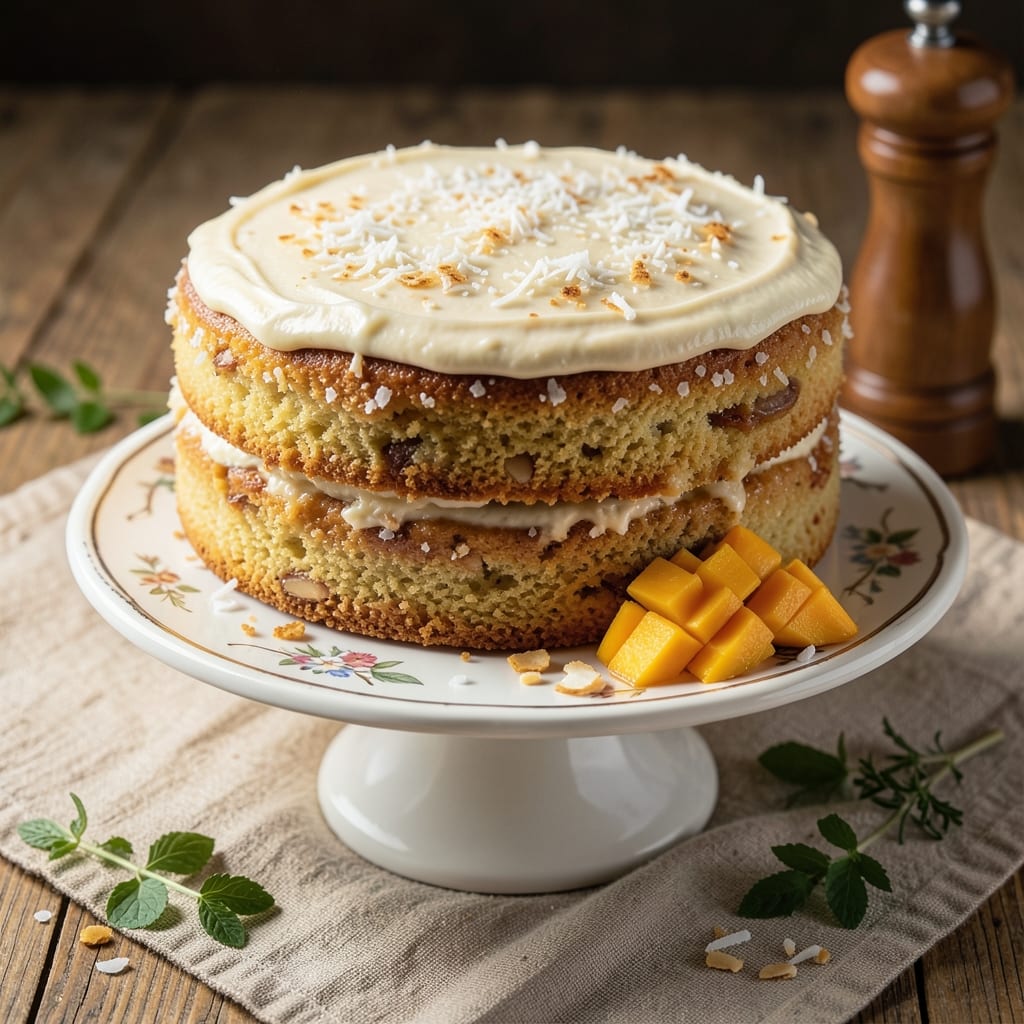
This almond flour coconut cake delivers a triple-layered masterpiece that's light, moist, and bursting with tropical flavor—all without dairy or eggs. 🌴 The secret lies in the almond flour base, which creates a tender crumb while absorbing coconut milk for that signature island-inspired richness. I've perfected this recipe after countless test batches, ensuring each layer stays perfectly light while holding its shape.
The cake's magic comes from a simple technique: folding coconut milk into the batter at the last moment to maintain airiness, then baking at 350°F for just 30-40 minutes to achieve that golden, slightly crisp exterior with a velvety interior. The tropical frosting—made with coconut cream and a hint of vanilla—ties everything together with its smooth, slightly tangy finish.
What you'll end up with is a showstopping dessert that's naturally gluten-free, grain-free, and packed with flavor. The layers separate cleanly, the frosting holds its swirl, and every bite delivers that perfect balance of nutty almond and sweet coconut. This cake isn't just beautiful—it's the kind of dessert that disappears faster than you can slice it.
For presentation, I recommend dusting with toasted coconut flakes and a sprinkle of lime zest to enhance the tropical vibe. Serve with a side of fresh mango or passion fruit for the ultimate island-inspired experience. Let's bake this cake!
Ingredients for almond flour coconut cake
Tropical flavors meet tender layers in this almond flour coconut cake—light, fluffy, and bursting with island vibes.
| Ingredient | Amount | Notes |
|---|---|---|
| Almond Flour 🌰 | 3 cups | Blanched, finely ground preferred |
| Coconut Milk (Full-Fat, Canned) 🥥 | 1 ½ cups | Divided: 1 cup batter + 0.5 cup folding |
| Coconut Sugar 🍯 | 1 cup | Or granulated sugar for neutral flavor |
| Unsweetened Applesauce 🍎 | ½ cup | Replaces eggs for moisture |
| Vanilla Extract 🌿 | 2 tsp | Pure, high-quality preferred |
| Baking Powder 🍞 | 1 tsp | Aluminum-free for best results |
| Salt 🧂 | ½ tsp | Fine sea salt preferred |
| Lemon Zest 🍋 | 1 tbsp | Brightens tropical flavors |
| Coconut Cream (Chilled, Canned) 🥥 | 1 cup | Solidified top layer only |
| Coconut Oil (Refined, Solid) 🫒 | ½ cup | Melted for frosting |
| Toasted Coconut Flakes 🥥 | ¼ cup | For garnish (unsweetened) |
| Fresh Lime Juice 🍋 | 2 tbsp | For frosting tang |
Almond flour is the star here—Bob's Red Mill or Anthony's Goods are my go-tos for consistent texture. Grab the blanched kind (not skin-on) for a smoother crumb. Coconut milk? Thai Kitchen cans are my secret—full-fat, no additives, and the flavor sings. The coconut sugar adds caramel notes, but granulated works fine if you're in a pinch. Toast your coconut flakes in a dry pan for 3-4 minutes until golden—they'll add crunch and aroma to your final presentation. For the coconut cream, only use the solidified top layer from chilled cans, not the liquid.
No applesauce? Mashed banana or flax eggs work too—just add a splash more coconut milk to balance. Swap coconut sugar for maple syrup at half the amount, but expect slight flavor changes. The frosting can be made ahead, but hold off on adding the lime juice until right before using—it keeps best without it. For a richer frosting, add 1 tsp coconut butter to the coconut cream. If your frosting feels too thin, chill it 15 minutes before piping. The baking powder is non-negotiable here—it's what gives those layers their lift. Don't use baking soda unless you're ready for a volcano effect.
Store the cake layers wrapped in parchment at room temp for 2 days, or freeze for 3 months. The frosting keeps 5 days refrigerated, but add the lime juice fresh before serving. For make-ahead magic, assemble the cake layers without frosting, refrigerate overnight, then frost and decorate in the morning. The flavors actually improve after a night's rest—trust me on this. If you're serving a crowd, double the frosting recipe—it disappears fast. And if anyone asks, yes, this is 100% vegan and gluten-free without tasting like it.
Why You'll Love This Recipe
- No Mixer Needed: The almond flour stays clumpy if you overwork it, but here’s the trick: just fold the coconut milk and applesauce right into the dry ingredients until just combined. No electric mixer, no stress—just a spatula and 3 minutes of your life.
- Tropical Caramel Notes: That full-fat coconut milk? It’s the secret weapon—creamy, slightly sweet, and lingering long after the first bite. The coconut sugar adds depth without cloying sweetness, while the applesauce keeps it moist without tasting like baby food. (Yes, even my kid who hates cake licks the plate.)
- Weeknight or Celebration: Same batter, endless uses. Bake it in a loaf pan for breakfast slices, a round cake for birthdays, or even cupcakes for a last-minute potluck. The applesauce keeps it stable enough to slice cleanly, so no one will guess it’s secretly healthy.
- Budget-Friendly Luxury: Almond flour can be pricey, but this recipe uses it efficiently—no wasted crumbs, no extra steps. Coconut milk and sugar stretch further than you’d think, and the applesauce cuts costs while keeping the texture perfect. Leftovers? They last 5 days in the fridge, and I’ve reheated slices in the toaster—crispy outside, gooey inside.
Step-by-step instructions for almond flour coconut cake
Here's how to create fluffy, tropical layers with a signature coconut frosting.
👨🍳 Step 1: Mix Wet Ingredients for Light, Airy Batter
In a large mixing bowl, whisk together the 1 cup coconut sugar, 0.5 cup unsweetened applesauce, 2 tsp vanilla extract, 1 tbsp lemon zest, and 0.5 tsp salt until completely smooth. The applesauce replaces eggs while keeping the texture tender. I like to use a fork for this step to avoid creating too many air bubbles that could deflate during baking.
Next, add 1 cup of the 1.5 cups coconut milk (reserve the remaining 0.5 cup for folding later) and whisk until fully incorporated. This liquid base creates the perfect consistency for our almond flour cake. If the mixture seems too thick, add 1-2 tablespoons more coconut milk to reach a pourable consistency—it should coat the back of a spoon but still hold its shape when drizzled.
👨🍳 Step 2: Combine Dry Ingredients and Create the Batter
In a separate bowl, sift together the 3 cups almond flour and 1 tsp baking powder. Sifting prevents lumps and ensures even distribution of leavening. Gently fold the dry ingredients into the wet mixture using a spatula, mixing just until combined. Be careful not to overmix—you want to preserve those tiny air pockets that will create the cake's signature lightness.
Once fully incorporated, fold in the 0.25 cup toasted coconut flakes by hand, reserving 2 tablespoons for garnish. The flakes add texture and a beautiful golden contrast. For best results, use freshly toasted coconut flakes—they'll be more aromatic and less likely to clump. The batter should be thick but still spreadable; if it's too stiff, add the reserved 0.5 cup coconut milk one tablespoon at a time until it reaches a smooth, cookie dough-like consistency.
🔥 Step 3: Bake Three Perfect Layers
Preheat your oven to 350°F and grease three 6-inch round cake pans with coconut oil or line them with parchment paper. Divide the batter evenly among the pans, spreading it out to create smooth, even layers. Tap each pan gently on the counter to remove any air bubbles that might have formed during pouring.
Bake for 20-25 minutes or until a toothpick inserted in the center comes out clean. The edges should be golden brown, but the tops might still look slightly underdone—this is normal and will even out as the cakes cool. I find that almond flour cakes benefit from a slightly shorter bake time than traditional flour cakes, so keep an eye on them starting at the 18-minute mark. Rotate the pans halfway through baking for even browning.
🥘 Step 4: Prepare the Tropical Coconut Frosting
While the cakes cool, prepare the frosting by melting the 0.5 cup coconut oil in a microwave-safe bowl in 20-second intervals, stirring between each, until completely smooth. Add the 1 cup chilled coconut cream (the solidified top layer from the can) and whisk until fully combined and fluffy. The coconut cream should be at room temperature for best results—if it's too cold, it won't whip properly.
In a separate small bowl, whisk together the remaining 0.5 cup coconut milk with the 2 tbsp fresh lime juice. Slowly drizzle this mixture into the coconut oil and coconut cream while whisking continuously. The lime juice adds a bright, tangy contrast to the sweet coconut flavors. Whip the mixture until it reaches a thick, spreadable consistency—about 2-3 minutes with an electric mixer. If it's too thin, chill it for 10 minutes to thicken further.
🍽️ Step 5: Assemble and Garnish for Showstopping Presentation
Once the cakes have completely cooled (about 30 minutes at room temperature), level the tops if needed. Place the first layer on a serving plate and spread a generous layer of the coconut frosting on top. Place the second layer on the frosted cake and repeat the process. For the final layer, spread frosting over the top and sides, creating a smooth, even surface.
Garnish with the reserved 2 tablespoons toasted coconut flakes and any additional flakes you like. The contrast between the golden coconut and the pale cake layers creates a stunning visual effect. For extra flair, you can pipe a simple border of frosting around the edges or create a swirl pattern on top. Serve immediately or refrigerate for up to 2 hours before serving for a firmer texture.
Pro Tips For Making Almond Flour Coconut Cake
- Whisk the Coconut Milk: Open that can of full-fat coconut milk, pour out just the thick cream from the top—ignore the watery part—and whisk it vigorously for 30 seconds. This gives your batter that ultra-smooth, velvety texture instead of a lumpy mess. I used to skip this, and the cake always felt dense. Not anymore. ---
- Pulse Almond Flour Twice: Don’t just dump the almond flour into the bowl and stir. Pulse it in your food processor two separate times with a 10-second break in between. The first pulse breaks it down, but the second ensures no gritty bits sneak into your batter. Trust me, your cake’s crumb will thank you—no one wants a mouthful of almond sand. ---
- Don’t Overmix the Batter: As soon as the applesauce and coconut sugar dissolve into the almond flour, stop stirring. Overmixing turns this cake into a tough, chewy brick. Fold in the vanilla and coconut milk just until combined—think "marbled swirls," not "smooth paste." I learned this after a cake that could’ve been used as a doorstop. ---
- Bake in Two Stages: Start at 350°F (175°C) for 15 minutes, then drop the heat to 325°F (160°C) for the remaining 25-30 minutes. The high heat sets the edges faster, while the lower temp ensures the center bakes through without burning. My first attempt at one steady temp left the middle gummy and the crust dry. This method fixes it every time.
Best sauces and condiments for this recipe
Coconut Cream Frosting
This signature frosting is the star of your cake—creamy, tangy, and perfectly balanced. Use 1 cup chilled coconut cream (the solidified top from a can) and 0.5 cup coconut oil melted in 20-second microwave intervals. Whip together until fluffy, then fold in 0.5 cup coconut milk + 2 tbsp lime juice for that bright tropical zing. 🌴
Lime-Coconut Glaze
For a quick, elegant drizzle, mix 0.25 cup coconut cream with 1 tbsp lime juice and 1 tsp coconut sugar. Warm gently until smooth, then strain for a silky finish. Drizzle over the assembled cake just before serving—it adds shine and extra citrus punch without overpowering.
Mango Purée Topping
Blend 1 cup ripe mango with 1 tbsp lime juice until smooth, then strain. Spread a thin layer between cake layers or as a topping. The natural sweetness enhances the coconut flavors while adding vibrant color. For extra richness, fold in 1 tbsp coconut butter before spreading.
Toasted Coconut Caramel
Melt 0.25 cup coconut sugar with 2 tbsp coconut oil in a saucepan over low heat until golden. Stir in 1 tbsp toasted coconut flakes and 1 tbsp coconut milk to create a thick, spreadable caramel. Drizzle over the cake or use as a filling between layers for a decadent twist.
Spiced Coconut Whipped Cream
Whip 1 cup chilled coconut cream with 1 tsp vanilla extract and a pinch of cinnamon until fluffy. Fold in 2 tbsp toasted coconut flakes for texture. This lighter alternative adds a fragrant, aromatic contrast to the rich cake layers. Perfect for those who prefer a less sweet topping.
Chocolate-Coconut Drizzle
Melt 2 oz vegan dark chocolate (70% cocoa) with 1 tbsp coconut oil until smooth. Thin with 1 tsp coconut milk if needed, then drizzle over the cake. The deep cocoa balances the sweet coconut, creating a sophisticated flavor profile. Use a squeeze bottle for clean, decorative lines.
Nutrition facts
Frequently asked questions
Why does my almond flour coconut cake turn out dense instead of light?
Overmixing is the #1 culprit—almond flour absorbs liquid differently than wheat flour. Mix just until combined (20 strokes max) and avoid electric mixers. Also ensure your almond flour isn't clumpy (sift it!) and don't skip the 30-minute room temperature rest before baking. Cold batter sinks faster.
Can I make this cake without coconut milk?
Yes! Swap the 1.5 cups coconut milk for 1 cup unsweetened almond milk + 0.5 cup melted coconut oil. The oil adds richness while keeping the texture moist. For extra flavor, add 1 tsp coconut extract to the wet ingredients. The cake will still taste tropical but with a more neutral base.
How do I store leftover cake layers?
Wrap each layer individually in plastic wrap, then place in an airtight container at room temperature for 2 days. For longer storage, freeze layers for up to 3 months. Thaw overnight in the fridge—never at room temperature. The frosting keeps 5 days refrigerated, but add lime juice fresh before using.
What's the best way to level the cake layers?
Use a long serrated knife or cake leveler for clean cuts. Place a ruler along the cake edge and gently saw back and forth. For extra precision, chill the cake 15 minutes first—it firms up for cleaner slices. Never use a regular knife without serrations, or you'll crush the layers.
Can I substitute almond flour for other nut flours?
Cashew flour works best (1:1 ratio) as it's similarly fine and moist. Hazelnut flour adds earthy notes but may need 1 extra tbsp coconut milk per cup. Avoid walnut flour—it's too dense and can make the cake crumbly. Always sift nut flours to prevent grittiness in the final texture.