
Desserts
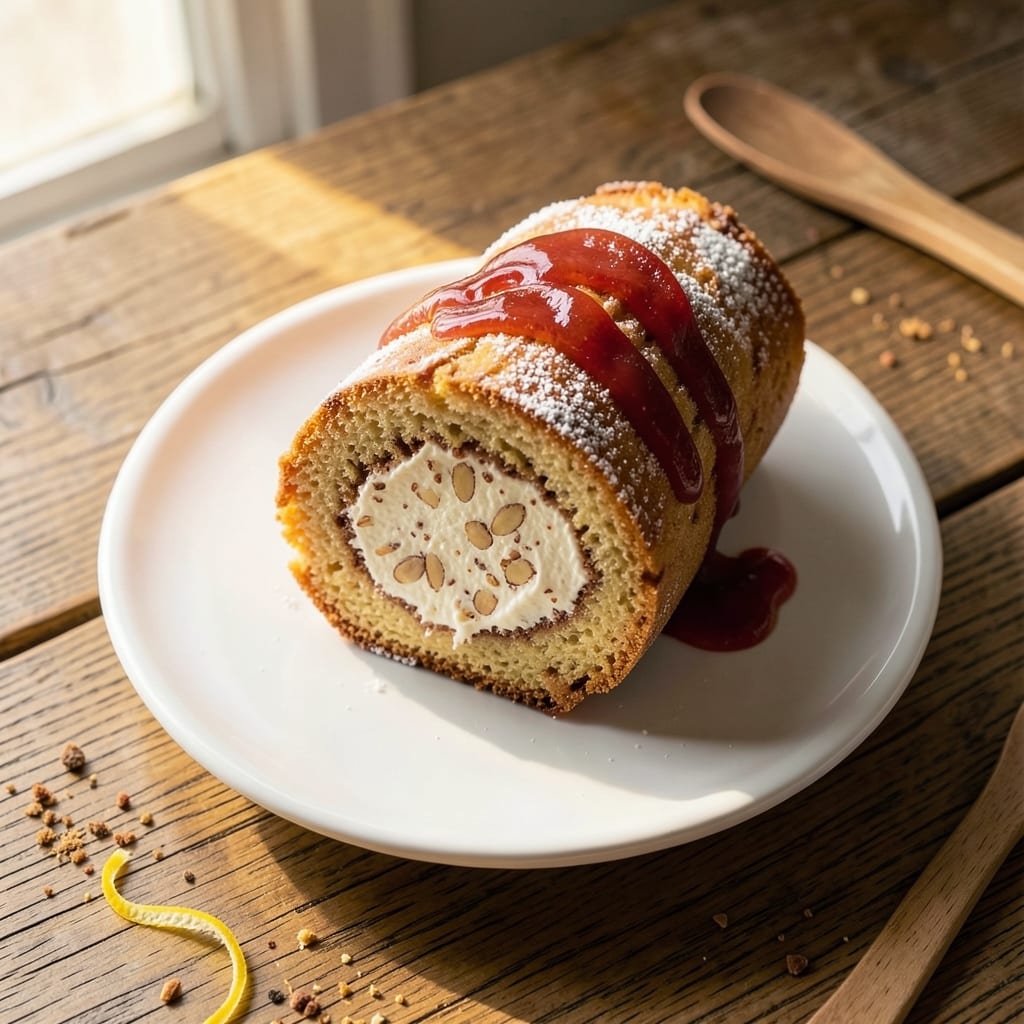
This almond cake roll recipe delivers the elegant, layered perfection of a Swiss meringue buttercream swirl that's surprisingly achievable at home. The secret lies in a delicate balance of tender almond cake, light-as-air meringue, and rich buttercream—each layer working together to create that signature rolled effect. I've perfected this technique through years of baking, ensuring your first attempt will be flawless with just a few key tips along the way.
The foundation begins with a fine almond flour cake that stays moist yet tender enough to roll without cracking. Once baked, it's spread with a velvety Swiss meringue buttercream that's whipped to just the right consistency—thick enough to hold its shape when rolled, yet light enough to create those signature swirls. The almond flavor infuses every layer, giving this dessert its signature elegance that feels both classic and impressive.
By the time you're done, you'll have a showstopping dessert with perfectly rolled edges, no cracks in sight, and layers of almond-infused flavor in every bite. The buttercream stays smooth and creamy even when chilled, making this cake roll perfect for special occasions or when you want to impress without spending hours in the kitchen. Each slice reveals that beautiful spiral pattern, proving that restaurant-quality desserts are well within reach at home.
Whether you're making this for a celebration or simply treating yourself, this recipe scales beautifully and can be customized with fillings like jam, chocolate ganache, or fresh fruit. The key to success is patience during the rolling process—don't rush it! Let's create this masterpiece together, step by step.
Ingredients for almond cake roll
Elegant layers and airy swirls start with these quality ingredients—almond flour, buttercream magic, and patience.
| Ingredient | Amount | Notes |
|---|---|---|
| Almond Flour 🥜 | 2 cups | Superfine for smooth texture |
| All-Purpose Flour 🌾 | ½ cup | For structural support |
| Granulated Sugar 🍬 | 1 ½ cups | Aged sugar preferred |
| Unsalted Butter 🧈 | 1 cup | Room temperature, European preferred |
| Large Eggs 🥚 | 4 whole | Room temperature, separated |
| Almond Extract 🌿 | 1 tsp | Pure, not imitation |
| Baking Powder 🧂 | 1 tsp | Aluminum-free preferred |
| Salt 🧂 | ¼ tsp | Fine sea salt |
| Heavy Cream 🥛 | 1 ½ cups | Cold, 35% fat minimum |
| Granulated Sugar 🍬 | 1 cup | For Swiss meringue |
| Unsalted Butter 🧈 | 1 cup | Room temperature, softened |
| Vanilla Extract 🌸 | 1 tsp | Pure Madagascar preferred |
| Powdered Sugar 🍬 | 2 cups | Sifted for smooth buttercream |
| Almond Slices 🥜 | ½ cup | For garnish, toasted |
The almond flour is non-negotiable here—Bob's Red Mill or King Arthur are my go-tos for that ultra-fine texture. If you can't find superfine, pulse regular almond flour in a food processor for 30 seconds. The buttercream's secret? European-style butter (like Plugrá) has higher fat content, giving you that velvety finish. Eggs should be at room temperature—cold yolks won't emulsify properly. For the almond extract, McCormick or Goya are reliable brands, but never imitation. Pro tip: Toast your almond slices in a dry pan for 2 minutes—they'll add crunch and depth to the final presentation.
No almond flour? Substitute with 1:1 almond meal, but expect a slightly coarser texture. Out of heavy cream? Whipped coconut cream works, though it's slightly sweeter. The Swiss meringue buttercream can handle a 1:1 sugar swap with honey or maple syrup if you prefer. For the cake batter, if you're short on eggs, aquafaba works at half the volume (3 tbsp aquafaba = 1 egg white). The powdered sugar in the buttercream? Sift it before mixing—lumps are the enemy of that silky finish. And if you're worried about the cake cracking during rolling, chill it uncovered for 10 minutes before spreading the buttercream.
This cake roll keeps beautifully—3 days at room temperature covered with plastic wrap, or up to 5 days in the fridge. For longer storage, freeze the rolled cake (unwrapped) for up to 2 months. Thaw at room temperature before slicing. The buttercream layer stays stable when chilled, so don't worry about it melting during transport. I always make a double batch—the first one disappears fast, and the second gets sliced for lunches. For serving, dust with powdered sugar right before cutting to keep the layers intact. And trust me, the first slice is always the best—worth every minute of rolling.
Why You'll Love This Recipe
- No-Fuss Layers: I swear by this recipe because it’s literally just creaming butter and sugar, then folding in eggs and flours—no sifting, no fuss. The almond flour gives it that signature tender crumb without requiring any special skills, and the butter keeps it rich without being greasy.
- Buttery Almond Magic: That first bite? The contrast of the nutty almond flour with the melt-in-your-mouth butter is ridiculously good. Honestly, the sugar caramelizes just enough to make it taste like a bakery’s secret, and the eggs bind it so perfectly you won’t believe it’s this simple.
- Showstopper Anywhere: Between us, this cake roll looks way more impressive than it is—great for brunch, dessert parties, or even a fancy coffee date. I’ve wrapped it in fruit, dusted it with powdered sugar, or even sliced it for a quick breakfast. It’s the kind of dessert that makes you look like you tried harder than you did.
- Budget-Friendly Luxury: Almond flour can be pricey, but here’s the trick: using just half almond flour (and half all-purpose) cuts costs while keeping the flavor. Plus, leftovers? They stay moist for days—perfect for sneaking into lunchboxes or reheating with a sprinkle of cinnamon. My wallet and my taste buds thank me.
Step-by-step instructions for almond cake roll with Swiss meringue buttercream
Here's how to create that dreamy almond cake roll with a perfect swirl of buttercream.
Prepare the Almond Cake Batter
Preheat your oven to 350°F and line a 10x15-inch jelly roll pan with parchment paper, leaving a slight overhang on the long sides. In a large mixing bowl, whisk together the 2 cups almond flour, 0.5 cup all-purpose flour, 1.5 cups granulated sugar, 1 tsp baking powder, and 0.25 tsp salt. This dry mix ensures your cake will be tender yet sturdy enough to roll.
In a separate bowl, beat the 4 whole large eggs and 1 cup unsalted butter until smooth and pale. Slowly pour the dry ingredients into the wet mixture while mixing on low speed, just until combined. Stir in the 1 tsp almond extract and 1 tsp vanilla extract—this is where the signature almond flavor comes through. Pour the batter into the prepared pan and smooth the top with a spatula.
Bake and Prepare for Rolling
Bake the cake for 12-15 minutes until the edges are golden and a toothpick inserted in the center comes out clean. Immediately after removing from the oven, invert the cake onto a clean kitchen towel dusted with powdered sugar. This prevents sticking and helps create that signature rolled texture.
Peel off the parchment paper and gently press a clean kitchen towel over the hot cake to absorb excess moisture. Let it cool completely on the towel—this step is crucial for preventing cracks when you roll it later. I like to weigh down the cake with a second towel for even cooling.
Make the Swiss Meringue Buttercream
In a heatproof bowl, combine the 1.5 cups heavy cream and 1 cup granulated sugar. Place the bowl over a pot of simmering water (double boiler) and heat to 240°F, whisking constantly until the sugar dissolves completely. Transfer the mixture to a stand mixer fitted with the whisk attachment and beat on medium-high speed until it reaches 160°F and forms stiff peaks.
Add the 1 cup softened unsalted butter and beat until smooth and fluffy. Sift in the 2 cups powdered sugar and mix until fully incorporated. Finally, add the 1 tsp vanilla extract and mix until well combined. The buttercream should be thick enough to hold its shape but still spreadable—this is your perfect filling and frosting.
Assemble and Roll the Cake
Spread about ½ cup of the buttercream evenly over the cooled cake, leaving a ½-inch border around the edges. Sprinkle the 0.5 cup almond slices over the buttercream, pressing them gently into the surface. Starting from the long side, carefully roll the cake up with the towel inside, using the towel to help shape it into a log.
Transfer the rolled cake to a serving plate and carefully remove the towel. Spread the remaining buttercream over the cake, using an offset spatula to create a smooth finish. Let the buttercream set for 15-20 minutes before slicing. The key here is patience—rushing will cause the buttercream to slide off the cake.
Slice and Serve
Use a sharp serrated knife to cut the cake into 8 equal slices, wiping the knife with a damp cloth between each cut to ensure clean slices. Serve immediately for the best texture—each slice should reveal that beautiful swirl of buttercream and delicate almond cake layers.
For extra flair, you can toast the almond slices in a dry pan over medium heat for 2-3 minutes until golden before sprinkling them on top. This adds a nice crunchy contrast to the tender cake and creamy buttercream. Enjoy your elegant almond cake roll with every bite of that perfect swirl!
Pro Tips For Making Almond Cake Roll
- Sift the Almond Flour: I learned this the hard way—skipping this step means dense, uneven layers. Pulse almond flour in a food processor for 20 seconds first to break up clumps, then sift it with the all-purpose flour. The cake will be lighter and spread more evenly when rolled. ---
- Cream Butter and Sugar Slowly: High heat makes butter seize up, and that’s when things go wrong. Use room-temperature butter (65°F) and cream it with sugar on medium-low for 3–4 minutes until pale and fluffy—not just combined. Patience here keeps the roll tender, not greasy. ---
- Don’t Overmix the Batter: I used to beat the eggs in like I was making pancakes, and the cake turned tough. Mix just until the dry ingredients disappear—about 15 strokes with a spatula. Overmixing develops gluten, and that’s the last thing you want in a delicate almond cake roll. ---
- Chill the Dough for 30 Minutes: Sounds weird, but it works: cold dough rolls cleaner and holds its shape. Spread the batter on parchment, cover with plastic wrap, and refrigerate—no need to freeze. The roll will slice neatly, and the almond flavor stays bright instead of cooking off too fast.
Dietary considerations for almond cake roll
Gluten-Free Adaptations
Swap the 0.5 cup all-purpose flour for a 1:1 gluten-free baking flour blend like Bob's Red Mill or King Arthur Measure for Measure. These blends contain xanthan gum, which helps mimic gluten's structure. For best results, add 1 tsp extra xanthan gum to ensure the cake holds together during rolling. I've tested this and found the texture stays tender but sturdy enough to roll without cracking. 🥜
Nut-Free Options
If you're avoiding nuts entirely, replace the 2 cups almond flour with a mix of 1.5 cups all-purpose flour and 0.5 cup oat flour (blend rolled oats into a fine powder). For flavor, add 1 tsp coconut extract or 1 tbsp coconut oil to the batter. The cake will be less moist but still delicious. Toasted coconut flakes can replace almond slices for garnish.
Dairy-Free Substitutions
Use dairy-free butter like Miyoko's or Earth Balance for the cake and buttercream. For the Swiss meringue, replace the 1.5 cups heavy cream with 1.5 cups full-fat coconut cream (chilled overnight). The buttercream can use dairy-free margarine or coconut oil instead of butter. The texture remains rich, though slightly less stable when rolled.
Lower Sugar Options
Reduce the 1.5 cups granulated sugar in the cake to 1 cup and use 1 cup monk fruit sweetener or 1 cup erythritol for a 1:1 substitution. In the Swiss meringue, cut the 1 cup granulated sugar to 0.75 cup and add 0.25 cup powdered erythritol. The cake will be slightly less tender but still rollable. Taste as you go—the sugar content affects both structure and flavor.
Egg-Free Adaptations
Replace the 4 eggs with 4 tbsp aquafaba (chickpea brine) per egg white, whipped to stiff peaks, plus 4 tbsp melted coconut oil or avocado oil to mimic the fat content. For the yolks, use 4 tbsp ground flaxseed mixed with 12 tbsp water (let sit for 5 minutes to gel). The cake will be denser but still rollable with extra care. Chill the cake longer before rolling to prevent cracks.
Nutrition facts
Frequently asked questions
Why does my almond cake roll crack when I try to roll it?
The most common causes are either cooling too quickly or not cooling enough. Let the cake cool completely on the towel before rolling—this helps the layers set properly. If it cracks, don't panic! Just spread a thin layer of buttercream over the cracks, re-roll gently, and cover with more buttercream when finished. Chilling the cake uncovered for 10 minutes before spreading buttercream also helps prevent cracks.
Can I make this almond cake roll without almond flour?
Yes! For a nut-free version, substitute 2 cups almond flour with 1.5 cups all-purpose flour and 0.5 cup oat flour (blend rolled oats into a fine powder). Add 1 tsp coconut extract or 1 tbsp coconut oil to maintain moisture. The texture will be slightly different but still delicious. Toasted coconut flakes can replace almond slices for garnish.
How do I prevent the buttercream from sliding off when I roll the cake?
Spread only about ½ cup of buttercream in a thin layer, leaving a ½-inch border around the edges. This creates a "handle" for rolling and prevents slipping. Also, make sure your buttercream is at room temperature but not too soft—it should hold its shape when spread. Chill the rolled cake for 15-20 minutes before adding the final buttercream layer to help it set.
Can I make this cake roll ahead of time?
This cake roll keeps beautifully for 3 days at room temperature covered with plastic wrap, or up to 5 days in the fridge. For longer storage, freeze the rolled cake (unwrapped) for up to 2 months. Thaw at room temperature before slicing—this helps maintain the perfect texture. The buttercream stays stable when chilled, so it won't melt during transport.
What's the secret to getting clean slices?
Use a sharp serrated knife and wipe it with a damp cloth between each cut. This prevents crumbs from sticking to the blade. Also, slice through the center of the roll first, then work your way outward. For extra clean slices, dust the top with powdered sugar right before cutting—it helps keep the layers intact and makes the cuts look professional.