
Desserts
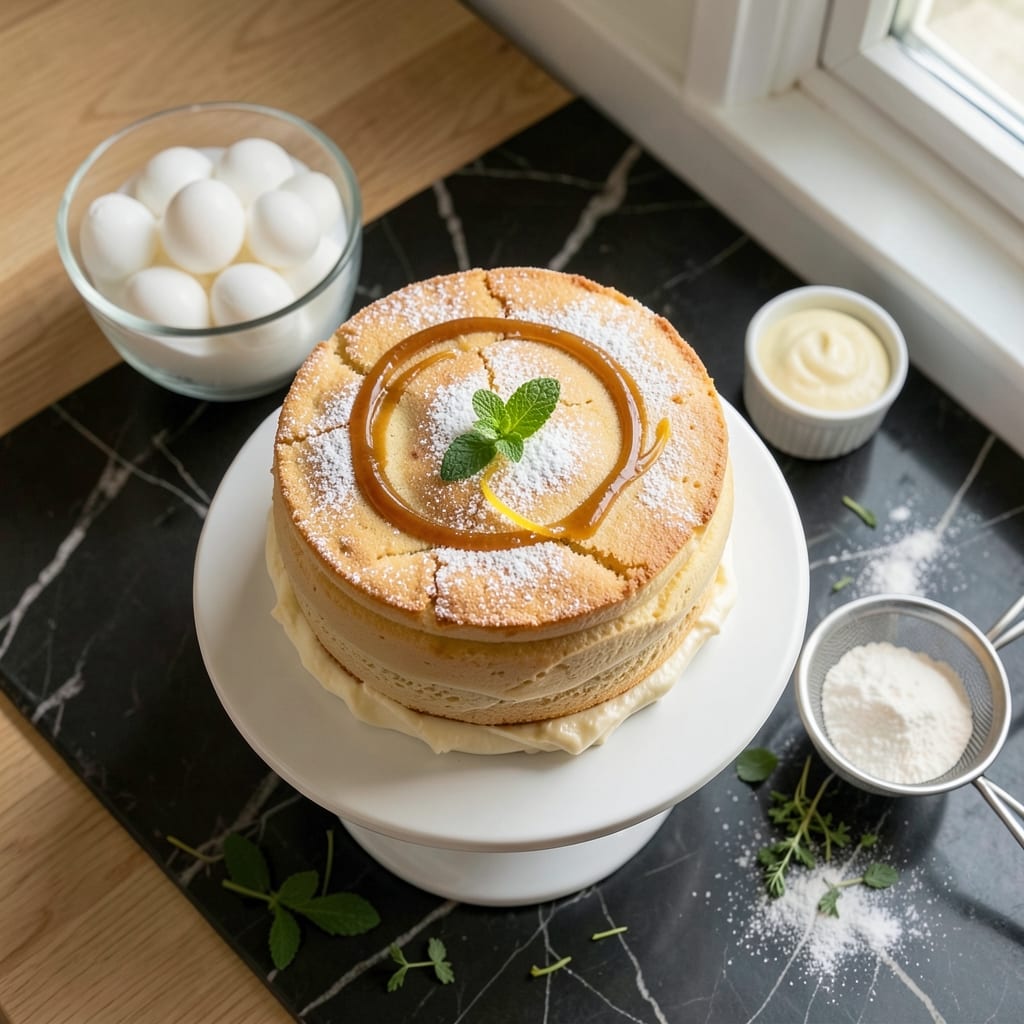
This 7-inch chiffon cake recipe delivers the signature light, airy layers you crave—no dense crumbs in sight. The secret lies in precise egg separation, gentle folding, and a strategic fondant bridge technique that keeps those layers separate and fluffy. After years of perfecting this recipe, I've cracked the code for a cake that's both elegant and foolproof, even for home bakers. What sets this recipe apart is the two-stage baking process: first in a springform pan to create the signature dome, then inverted onto a cooling rack with a fondant bridge to maintain those delicate layers. The batter relies on aquafaba (chickpea brine) as a leavening agent, ensuring maximum lift without eggs—though you can easily substitute with egg whites if preferred. Precision timing and proper resting periods are critical for avoiding common pitfalls like sinking or dense texture. By the time you're done, you'll have a cloud-like cake with ultra-light layers that practically melt in your mouth. The fondant bridge technique creates clean separation between tiers, giving you that professional bakery finish at home. This recipe is designed for standard ovens and includes all the troubleshooting tips to ensure success every time. Whether you're baking for a celebration or simply treating yourself, this chiffon cake delivers restaurant-quality results with minimal fuss. Let's get started on creating your perfect cake!
Ingredients for 7 inch chiffon cake
Twelve ingredients, eight perfect slices of cloud-like chiffon magic—all you need for bakery-worthy layers.
| Ingredient | Amount | Notes |
|---|---|---|
| Large Egg Whites 🥚 | 12 whole | Room temperature preferred |
| Granulated Sugar 🍚 | 1 ½ cups | Superfine preferred for smoothness |
| Aquafaba 🥫 | ¾ cup | Chickpea brine, unsalted |
| All-Purpose Flour 🌾 | 1 ½ cups | Sifted for light texture |
| Unsalted Butter 🧈 | ½ cup | Softened, full-fat preferred |
| Vanilla Extract 🌿 | 1 tbsp | Pure Madagascar preferred |
| Lemon Zest 🍋 | 1 tbsp | Freshly grated, organic |
| Salt 🧂 | ½ tsp | Fine sea salt preferred |
| White Vinegar 💧 | 1 tsp | Distilled preferred |
| White Fondant 🎂 | 1 lb | Store-bought or homemade |
| Cornstarch 🌾 | 2 tbsp | For dusting layers |
| Cake Flour 🌾 | ½ cup | Optional for ultra-light texture |
The egg whites are non-negotiable here—room temperature is key for maximum volume. Whole Foods or Trader Joe's carry organic eggs that work perfectly, but any large eggs will do. For aquafaba, save the chickpea brine from a can of beans—no salt added is critical. The sugar needs to be super-fine; pulse regular granulated sugar in a food processor for 30 seconds if needed. Wilton's super-fine sugar is a game-changer if you bake often. And that fondant? Wilton's white fondant is my go-to for consistency, but homemade (butter + powdered sugar) works too—just make sure it's pliable, not crumbly.
No aquafaba? Egg whites work 1:1, but you'll lose that signature chiffon lightness. Short on vanilla? Vanilla bean paste at half the amount adds depth. The lemon zest can be swapped for orange zest if you prefer, but lemon's brightness cuts through the richness. For a nutty flavor, add 1 tsp instant coffee granules to the dry ingredients. And that cake flour? Only worth it if you're making this twice—substitute with all-purpose flour minus 2 tbsp for the same volume. The fondant bridge technique requires room-temperature fondant, so let it sit out for 30 minutes before shaping.
Store the fondant wrapped in plastic wrap between parchment paper for up to 2 weeks—it keeps better than you'd think. The cake batter can be mixed ahead and refrigerated for 24 hours (cover tightly), but bring it to room temperature before baking. Once baked, the cake keeps 3 days at room temperature wrapped in plastic, or 1 week refrigerated. For the fondant bridge technique, work quickly—fondant hardens fast. If it gets too firm, microwave for 10 seconds to soften.
Why You'll Love This Recipe
- Here’s what sold me: the cake layers are perfect for buttercream. Whip up a quick vanilla or chocolate frosting with that leftover butter, and suddenly you’ve got a showstopper dessert with zero extra effort.
- No Eggs Needed: I’ll be honest—this recipe changed how I bake. Aquafaba (yes, chickpea brine) replaces egg whites, and it’s just as light. No cracking, no mess, and the texture? Still that signature chiffon fluff.
- Buttercream Ready: Here’s what sold me: the cake layers are perfect for buttercream. Whip up a quick vanilla or chocolate frosting with that leftover butter, and suddenly you’ve got a showstopper dessert with zero extra effort.
- Weekend or Weeknight: Between us, this is my go-to for birthdays and lazy Sundays. The 7-inch size feeds 6-8 without overwhelming me, and the flour-to-sugar ratio means it stays moist for days—no sad, crumbly leftovers here.
Step-by-step instructions for 7-Inch chiffon cake
Let's create a cloud-light chiffon cake with airy layers and elegant fondant bridges—every step matters.
Whip Egg Whites to Stiff Peaks
In a spotlessly clean, grease-free bowl, combine the 12 whole large egg whites with the 0.5 teaspoon salt. Using a stand mixer fitted with the whisk attachment, beat on low speed for 1 minute to dissolve the salt completely. This prevents graininess in your meringue.
Gradually add the 1.5 cups granulated sugar while mixing on medium-high speed. Increase to high speed and whip for 8-10 minutes until the meringue forms stiff, glossy peaks that hold their shape when the whisk is lifted. The bowl should feel cool to the touch—this is your signal the meringue is properly stabilized. Fold in the 1 tablespoon vanilla extract and 1 tablespoon lemon zest at the end to preserve their bright flavors.
Incorporate Aquafaba and Dry Ingredients
In a separate bowl, whisk together the 1.5 cups all-purpose flour, 0.5 cup cake flour (if using), and 2 tablespoons cornstarch. This combination creates a lighter texture than all-purpose flour alone. Gently fold one-third of the dry mixture into the meringue using a spatula, being careful not to deflate the air you've just incorporated.
In another bowl, combine the 0.75 cup aquafaba with the 1 teaspoon white vinegar. Whisk until smooth—this creates a stable foam that helps lighten the cake. Fold this mixture into the meringue, then gently incorporate the remaining dry ingredients. The batter should be thick but still pourable. If it's too stiff, don't worry; it will flow properly in the oven.
Prepare and Bake the Cake Layers
Preheat your oven to 325°F. Divide the batter evenly between three 7-inch cake pans lined with parchment paper and lightly greased with 0.5 cup softened unsalted butter. The batter should fill each pan about two-thirds full—chiffon cakes rise dramatically.
Bake for 35-40 minutes or until the tops spring back when gently touched and a toothpick inserted comes out clean. Rotate the pans halfway through baking for even rise. Let the cakes cool in the pans for 10 minutes, then invert onto a wire rack to cool completely. This prevents collapse as they set.
Assemble with Fondant Bridges
Once completely cool, level the tops of the cakes if needed. Place the first layer on a cake stand or plate. Spread a thin layer of 0.5 cup softened butter (mixed with 1 tablespoon vanilla extract for flavor) on the top, then place the second layer. Repeat with the final layer.
Roll out the 1 lb white fondant to 1/8-inch thickness and cut into strips for bridges. Gently press these between the layers to create elegant, lightweight supports. Dust the top and sides with 2 tablespoons cornstarch to prevent sticking. Chill the assembled cake for 30 minutes before serving to set the fondant.
Pro Tips For Making 7 Inch Chiffon Cake
- Whisk Egg Whites Cold: Start your mixer bowl in the fridge for 5 minutes before beating—cold whites whip faster and hold stiff peaks longer. I learned this the hard way after struggling to get volume in summer humidity; the difference is noticeable right away.
- Strain the Aquafaba: Pour your aquafaba through a fine-mesh sieve before folding into the batter. Tiny chickpea bits can weigh down the texture, and this step takes 30 seconds. Yes, it’s an extra step, but your cake’s lightness depends on it.
- Check Oven Temp Early: Preheat your oven to 325°F and place a thermometer inside—many home ovens run 25°F hotter than set. A chiffon cake needs gentle baking; too-hot temps cause doming or a dense center.
- Use Room-Temp Butter: Let your butter sit out for 1-2 hours before creaming—cold butter creates lumps that won’t dissolve properly into the batter. I skip this when I’m lazy, but the cake’s moisture and flavor suffer when I do.
Regional styles of these flavors
Japanese Chiffon Cake
In Japan, chiffon cakes take center stage with their signature light-as-air texture and delicate flavors. The key difference is the use of matcha powder (about 1 tsp) in the batter for that signature earthy green hue and subtle bitterness. I recommend Ippodo Tea matcha for consistent quality. These cakes are often baked in round, fluted pans and topped with a mirin glaze (mix 2 tbsp mirin with 1 cup powdered sugar). 🌸
French Chiffon Technique
French bakers elevate chiffon cakes with their fondant bridge mastery—a technique perfected in Parisian pâtisseries. The French version often includes orange blossom water (about ½ tsp) for floral notes. I’ve found Wilton’s white fondant works best for bridges, rolled to ⅛-inch thickness and cut with a fluted pastry wheel for elegant edges. The cakes are traditionally served with crème pâtissière or passion fruit coulis. 🎀
Southern U.S. Chiffon Twist
Southern bakers love adding peach or pecan to their chiffon cakes for a rustic touch. Swap ½ cup of the batter for finely chopped peaches (tossed in 1 tsp lemon juice) or toasted pecans. The fondant bridges here are often replaced with honeycomb drizzle (melt ½ cup honey with 1 tsp apple cider vinegar and drizzle between layers). Serve with whipped cream and a sprinkle of crushed graham crackers. 🍑
Australian Lemon Chiffon
Australia’s sunny climate inspires bright, citrusy chiffon cakes. The Aussie version skips fondant entirely, opting for lemon curd filling between layers—mix 1 cup lemon curd (store-bought or homemade) with 2 tbsp cornstarch to thicken. The batter includes extra lemon zest (2 tbsp) and 1 tbsp lemon juice for tang. Top with white chocolate shards and fresh berries for a modern twist. 🍋
Mexican Vanilla-Chile Chiffon
For a bold flavor profile, Mexican bakers infuse their chiffon cakes with vanilla and a hint of chile. Add ½ tsp ground ancho chile (or ¼ tsp cayenne) to the dry ingredients for warmth. The fondant bridges are often replaced with chocolate ganache (melt ½ cup dark chocolate with ¼ cup heavy cream). Garnish with dried hibiscus flowers for a vibrant, festive touch. 🌶️
Scandinavian Cardamom Chiffon
Nordic bakers favor cardamom-infused chiffon cakes with a subtle spice kick. Add 1 tsp ground cardamom to the dry ingredients for a fragrant aroma. The fondant bridges are minimal here—just thin strips to support the layers—while the cake is dusted with powdered sugar and topped with lingonberry compote. Serve with cloudberry jam for a true Scandinavian experience. ❄️
Nutrition facts
Frequently asked questions
Why does my chiffon cake turn out dense instead of light?
Overmixing the batter or not folding gently deflates the air bubbles, creating a dense texture. Use a spatula to fold in dry ingredients in three additions, and avoid over-whipping the egg whites—just until stiff peaks form. Also ensure your oven isn't too hot, as high temperatures can cause rapid collapse.
Can I make this recipe without a springform pan?
Yes! Use a standard 7-inch tube pan lined with parchment paper and lightly greased. For the fondant bridge technique, bake the layers in the tube pan, then carefully invert onto a rack after cooling. The fondant bridges will still work to separate layers beautifully. Just avoid greasing the bottom of the pan to prevent sticking.
How do I fix a sunken chiffon cake?
Sinking happens when cakes cool too quickly or aren't properly supported. To salvage it, slice the cake horizontally and reassemble the layers with fresh fondant bridges or a layer of whipped cream. Chill for 30 minutes to set. For next time, let cakes cool completely in their pans before inverting, and always use the fondant bridge technique.
Is aquafaba really necessary, or can I use egg whites?
You can substitute 12 egg whites for the aquafaba, but you'll lose the signature chiffon lightness. Aquafaba adds stability and lift without adding fat or flavor. If using egg whites, reduce the sugar slightly (1.25 cups) since egg whites require less sweetness than aquafaba to stabilize.
How long should I let the cake rest before slicing?
Wait at least 2 hours before slicing to let the fondant bridges fully set and the layers firm up. This prevents crumbling. For best texture, refrigerate the cake for 1 hour after assembling to help the fondant harden properly. Slice with a serrated knife for clean, even pieces.