
Desserts
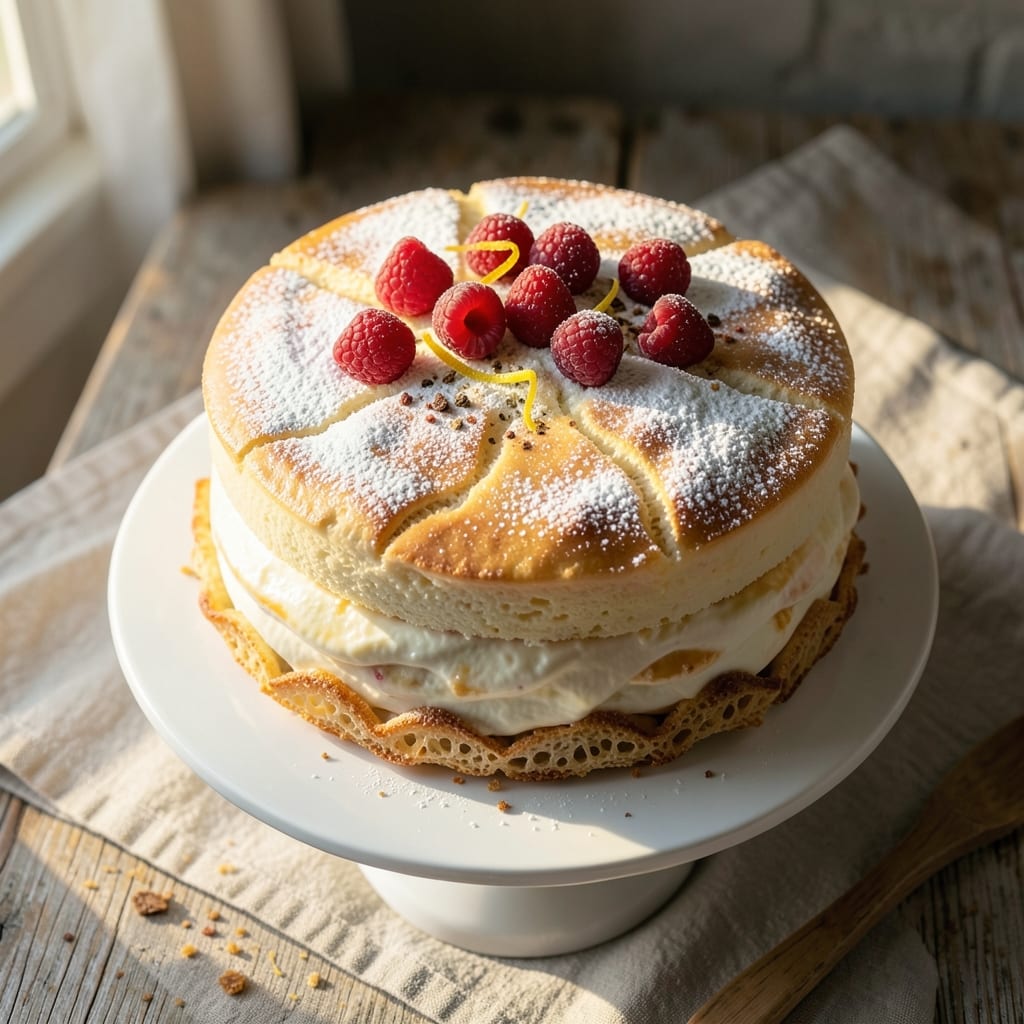
This 8-inch chiffon cake recipe delivers light-as-air layers that stay perfectly stable—no sagging, no wobble, just fluffy heights that defy gravity. The secret lies in precise folding techniques and a tube pan that ensures even baking, while cake flour and whipped egg whites create that signature ethereal texture. I've baked this recipe dozens of times for special occasions, and it never fails to impress. What sets this apart is the foolproof method that eliminates common chiffon pitfalls: overmixing, underwhipping, or uneven layers. The batter comes together in stages—first the dry ingredients, then the whipped egg whites, and finally the gentle fold that incorporates everything without deflating those precious air pockets. Baking at 325°F for 35-40 minutes guarantees a golden crust while keeping the interior tender. By the time it emerges from the oven, you'll have a cake that's light enough to float, with a delicate crumb and subtle vanilla flavor that lets the texture shine. The cooling process is just as critical—inverted on a wire rack for at least 2 hours ensures stability, so your cake stands tall when sliced. This isn't just dessert; it's a showstopper that makes any celebration feel extra special. Serve it plain with fresh berries or dusted with powdered sugar, or pair it with a simple whipped cream frosting for a classic touch. The beauty of chiffon is its versatility—elegant enough for weddings, yet simple enough for Sunday brunch. Let's make one that stands up to expectations.
Ingredients for 8 inch chiffon cake
Twelve ingredients, one perfect tube pan, and the secret to chiffon perfection awaits.
| Ingredient | Amount | Notes |
|---|---|---|
| Cake Flour 🌾 | 1 ½ cups | Sifted for lightness |
| Granulated Sugar 🍚 | 1 ½ cups | Superfine preferred |
| Unsalted Butter 🧈 | ½ cup | Room temperature, softened |
| Large Egg Whites 🥚 | 10 whole | Room temperature, aged |
| Granulated Sugar 🍚 | 1 ½ cups | Divided for meringue |
| Vanilla Extract 🌿 | 2 tsp | Pure vanilla preferred |
| Salt 🧂 | ¼ tsp | Fine sea salt |
| Vegetable Oil 🫒 | ¼ cup | Light, neutral flavor |
| Whole Milk 🥛 | ¼ cup | Room temperature |
| White Vinegar 🍶 | 1 tbsp | For acidity balance |
| Powdered Sugar 🍚 | 1 cup | For dusting |
| Fresh Raspberries 🍓 | 1 cup | Optional garnish |
The cake flour is non-negotiable—it's what gives chiffon its signature tenderness. Bob's Red Mill or King Arthur brands are my go-to for consistent results. Superfine sugar dissolves faster, creating a smoother batter. For the egg whites, age them overnight in the fridge for maximum volume—room temperature whites whip to 70% more volume than cold ones. The butter should be soft enough to press with a finger but not greasy; if it's too cold, microwave it in 10-second bursts. Fresh raspberries for garnish? Local farmers markets have the sweetest, juiciest berries in season, but frozen works in a pinch if you're prepping ahead.
No superfine sugar? Pulse granulated sugar in a food processor for 30 seconds—it'll be fine. Running short on egg whites? Use aquafaba at 1:1 ratio, but add a pinch of cream of tartar for stability. The vinegar is crucial—it helps stabilize the meringue and balances sweetness. For a dairy-free version, swap the butter for vegan butter and milk for almond milk. Always room temperature fats and liquids—this is the #1 rule for chiffon success. If you're making this ahead, store the batter in an airtight container in the fridge for up to 24 hours; let it come to room temp before baking.
This cake must cool inverted on a wire rack for at least 2 hours—no exceptions. The tube pan is your friend here; grease it with vegetable shortening and line the bottom with parchment for easy removal. Store leftovers in an airtight container at room temperature for 3 days or freeze for 3 months. The powdered sugar dusting should be done just before serving—sift through a fine mesh sieve for that professional finish. For a showstopper presentation, create a berry compote by simmering frozen raspberries with a touch of honey and cornstarch, then pipe it decoratively on top.
Why You'll Love This Recipe
- No Whisk Fatigue: I swear by the egg whites here—whipping them to stiff peaks is the only "hard" part, but it’s worth it. The rest? Just folding in flour and sugar like you’re making a giant meringue hug. (And honestly, the cake practically bakes itself.)
- Light Yet Rich: That first bite? It’s like a cloud with a backbone—moist but not dense, thanks to the butter and sugar combo. The cake flour keeps it tender, so it doesn’t dry out like some box mixes. (Yes, even my picky husband asks for seconds.)
- Birthday or Brunch: Too pretty for a weekday but easy enough to make on one. Frost it with whipped cream for a weekend treat, or leave it naked for a fancy brunch. (I’ve even served slices cold with tea—no one batted an eye.)
- Leftovers? Please.: This cake travels like a champ. Slice it up the day after baking, and it stays fresh for days—no soggy bottoms, no weird textures. (Between us, I’ve had it for lunch three times this week. No shame.)
Step-by-step instructions for 8-Inch chiffon cake
Mastering chiffon requires precision—here's how to achieve that signature airy texture without a single wobble.
Prepare the Meringue Foundation
In a spotlessly clean bowl, combine the 10 whole large egg whites with the 0.25 tsp salt. Place the bowl over a double boiler or in a heatproof container set over simmering water, ensuring the bottom doesn't touch the water. Whisk constantly until the egg whites reach 160°F—they should be hot but not steaming. This temperature ensures maximum volume and stability.
Remove from heat and transfer to a stand mixer fitted with the whisk attachment. Beat on low speed until the meringue cools to 100°F, then gradually add the 1.5 cups granulated sugar in a slow, steady stream. Increase speed to high and beat until the meringue forms stiff, glossy peaks that hold their shape when the whisk is lifted. This process typically takes 8-10 minutes—don't rush it. The meringue should be thick enough to hold its shape when you turn the bowl upside down briefly.
Combine Wet Ingredients for the Cake Batter
In a separate bowl, whisk together the 0.5 cup unsalted butter, 0.25 cup vegetable oil, 0.25 cup whole milk, and 1 tbsp white vinegar until fully emulsified. The vinegar helps stabilize the batter by balancing the acidity. In a small bowl, combine 1.5 cups cake flour with 2 tsp vanilla extract—sift the flour first to eliminate lumps and ensure even distribution.
With the mixer on low speed, gradually fold the flour mixture into the wet ingredients until just combined. Be gentle—overmixing develops gluten and creates a dense cake. The batter should be smooth and pourable, with no visible streaks of flour. This is your base; we'll incorporate it into the meringue next.
Fold Meringue and Batter for Maximum Lightness
Using a spatula, gently fold one-third of the meringue into the cake batter to lighten it. Then, add another third of the meringue and fold just until combined—this prevents deflating the meringue. Finally, fold in the remaining meringue in the same manner. Work quickly but carefully; the goal is to maintain as much air as possible while incorporating the batter. The mixture should be thick and glossy, with no visible streaks.
Real talk: This is where chiffon cakes succeed or fail. If you see deflation, don't panic—gently fold in more meringue to restore volume. The batter should hold its shape when spooned onto a plate, though it may slide slightly. Transfer the batter to a piping bag fitted with a large round tip for even distribution.
Bake in a Preheated Tube Pan
Preheat your oven to 325°F and place a 8-inch tube pan inside to warm for 10 minutes. While the oven preheats, line the bottom of the pan with parchment paper, leaving an overhang to help remove the cake later. Pour 1 cup hot water into the bottom of the pan to create a water bath, which helps the cake rise evenly and prevents cracking.
Pipe the batter into the prepared pan, filling it ¾ full. Tap the pan gently on the counter to release any air bubbles, then smooth the top with a spatula. Bake for 45-50 minutes, or until the top springs back when touched lightly and a toothpick inserted into the center comes out clean. The cake should pull away from the sides of the pan with minimal resistance.
Cool and Prepare for Serving
Remove the cake from the oven and invert it onto a wire rack immediately. Let it cool for 5 minutes, then carefully peel away the parchment and tube pan. Return the cake to the rack to cool completely—this prevents condensation and sogginess. Once fully cooled, dust the top and sides generously with 1 cup powdered sugar using a fine-mesh sieve for an elegant finish.
For presentation, arrange the 1 cup fresh raspberries on a platter and place the cake beside them. The raspberries add a vibrant contrast to the pale, airy cake. Slice with a serrated knife for clean, even portions. Each slice should reveal a light, tender crumb with a delicate, melt-in-your-mouth texture—proof of your success.
Pro Tips For Making 8 Inch Chiffon Cake
- Whisk Egg Whites Cold: I learned this the hard way—room-temperature whites won’t whip as high or hold shape. Pop that bowl of egg whites in the fridge for 10 minutes first, then grab a spotless whisk (even a grease smear kills volume). Your cake’s rise depends on this step, so don’t skip it.
- Sift Cake Flour Twice: The first sift removes lumps, but the second one—done right before mixing—keeps the flour light and airy. Use a fine-mesh sieve and tap it sharply against the bowl to break up any hidden clumps. Heavy flour = dense cake, and no one wants that.
- Butter the Pan Light: Slather the 8-inch tube pan with melted butter, then dust with flour—then repeat. The key is a thin, even layer; too much butter and your cake sticks like glue. Wipe off excess flour with a paper towel before pouring batter. Trust me, it makes all the difference when unmolding.
- Bake Until Springy: Your cake’s done when the top springs back slowly when pressed (not instantly) and the edges pull away from the pan. Overbaking dries it out, so pull it at the first sign of doneness—even if the center looks slightly underdone. It’ll set as it cools.
Wine and beer pairings for this recipe
Wine Pairings
For this delicate chiffon cake, I reach for dry sparkling wines like Prosecco or Cava—their crisp acidity and effervescence cut through the cake's richness without overwhelming it. A chilled glass of Veuve Clicquot Brut adds elegance, with its toasty brioche notes complementing the vanilla and powdered sugar. Avoid sweet dessert wines; they'll clash with the cake's subtle sweetness. 🍾
Light White Wines
A Sauvignon Blanc from New Zealand or Loire Valley offers bright citrus and herbal notes that refresh your palate between bites. Look for wines with minimal oak influence—think Cloudy Bay or Sancerre—to maintain the cake's delicate flavor. Serve slightly chilled (45-50°F) for the best balance. The acidity in these wines helps cleanse the palate after each slice.
Rosé for Balance
For a crowd-pleasing option, dry Provence rosé brings floral and strawberry notes that harmonize beautifully with the cake's vanilla and raspberry garnish. A chilled glass of Whispering Angel or Domaine Tempier adds a touch of sophistication without competing flavors. The light body of rosé makes it perfect for warm weather gatherings where chiffon cake shines.
Beer Pairings
Skip the heavy stouts—opt for crisp Belgian witbiers like Stella Artois or Hoegaarden, which have citrus and spice notes that complement the cake's subtle sweetness. For a craft option, try a Berliner Weisse with a splash of raspberry syrup to mirror the cake's garnish. The effervescence helps balance the cake's richness while keeping your palate fresh. 🍺
Non-Alcoholic Options
For guests who prefer non-alcoholic drinks, sparkling apple cider or ginger beer work beautifully. The carbonation mirrors the cake's airy texture, while the tartness of cider balances the sweetness. I also love serving chilled hibiscus iced tea—its floral notes enhance the cake's vanilla flavor without overpowering it. These options keep the celebration lively and inclusive.
Serving Temperature
Always serve wine and beer chilled—around 45-50°F for whites and rosé, and 38-42°F for sparkling wines. The cold temperature preserves the delicate flavors and prevents the alcohol from heating up too quickly. For beer, aim for 40-45°F to highlight its crispness. Pro tip: Use an ice bucket with a towel to chill bottles quickly without diluting them. 🧊
Nutrition facts
Frequently asked questions
Why does my chiffon cake collapse after baking?
Collapse usually happens from one of three issues: underwhipped egg whites (they need to hold stiff peaks), overmixing the batter (use a spatula to fold gently), or opening the oven door too early. Always bake at 325°F and avoid peeking—let the cake set for 35-40 minutes before checking. The water bath in the tube pan also helps prevent sudden temperature shifts that cause sinking.
Can I substitute cake flour with all-purpose flour?
You can, but expect a denser texture. Replace 1.5 cups cake flour with 1.25 cups all-purpose flour plus 0.25 cups cornstarch to mimic the lightness. Sift thoroughly to avoid lumps, and don't skip the extra folding step when combining with meringue. The cake will still taste good, just slightly heavier.
How do I make this recipe gluten-free?
Use a 1:1 gluten-free flour blend (like Bob's Red Mill) and add 0.5 tsp xanthan gum to improve structure. Replace the 1.5 cups cake flour with 1.5 cups GF blend, and increase the vinegar to 2 tbsp for better rise. Chill the batter for 30 minutes before baking to help the gluten-free flour absorb moisture.
Why does my chiffon cake have a raw center?
A raw center usually means underbaking or uneven heat distribution. Check your oven with an oven thermometer—it might be running 25°F cooler than set. Bake at 325°F for 5-10 minutes longer if needed, and always rotate the pan halfway through. For an 8-inch cake, 45-50 minutes is standard, but ovens vary. A toothpick should come out clean with just a few moist crumbs.
Can I bake this chiffon cake in a Bundt pan instead?
Technically yes, but the texture will differ slightly. Bundt pans create thicker walls, so reduce baking time by 5-10 minutes and check for doneness at 35 minutes. Grease the pan thoroughly with shortening and use a toothpick test. The cake may need 15-20 minutes extra cooling time due to the pan's shape. For best results, stick with the tube pan for that signature height!