
Desserts
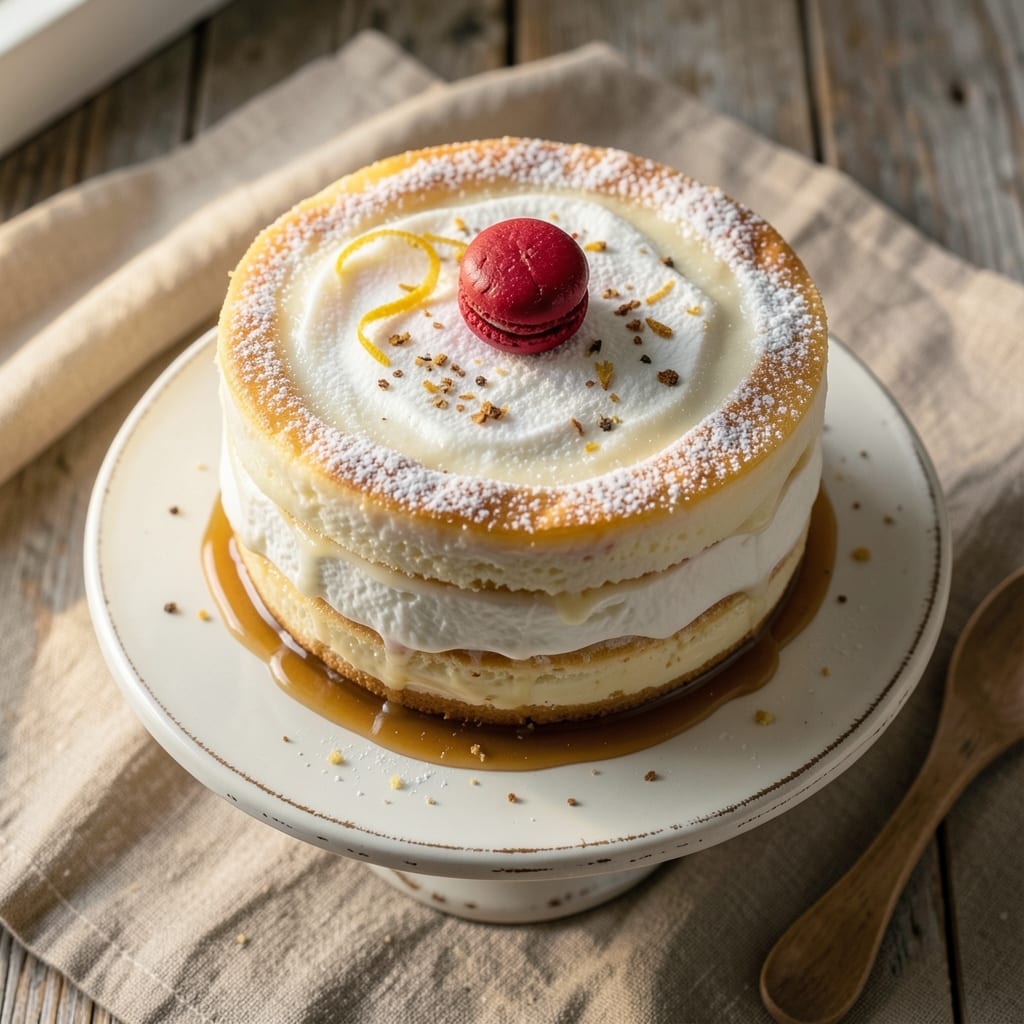
This 4-inch chiffon cake recipe delivers the signature airy, cloud-like texture that makes it irresistible. The secret lies in whipped egg whites folded into a delicate batter, creating a light yet sturdy cake with a tender crumb. I've perfected this version to ensure every slice is moist, tender, and topped with buttery vanilla swirls that add a touch of elegance.
The recipe uses a simple method that yields restaurant-quality results without requiring specialized equipment. With just 350°F for 35–40 minutes, you'll achieve a golden, domed cake that's impossible to resist. The key to success is patience—whipping the egg whites to stiff peaks and folding them gently into the batter to maintain that signature chiffon lightness.
Once baked, the cake cools to reveal a velvety texture that practically melts in your mouth, with a subtle vanilla flavor that pairs perfectly with the buttery swirls. Whether you're baking for a celebration or treating yourself, this recipe delivers a showstopping dessert that's surprisingly easy to master.
Ready to bake? The step-by-step instructions will guide you through every detail, from mixing to baking and decorating. Let’s create a flawless chiffon cake that’s as beautiful as it is delicious.
Ingredients for 4 inch chiffon cake
Eight essential ingredients transform into a restaurant-worthy chiffon cake with cloud-like texture.
| Ingredient | Amount | Notes |
|---|---|---|
| Large Egg Whites 🥚 | 10 whole | Room temperature, pasteurized preferred |
| Granulated Sugar 🍚 | 1 ½ cups | Superfine for best texture |
| All-Purpose Flour 🌾 | 1 ½ cups | Sifted, light and airy |
| Unsalted Butter 🧈 | ½ cup | Cold, cubed for swirls |
| Vanilla Extract 🌿 | 1 tbsp | Pure, high-quality |
| Cream of Tartar 🧂 | ¼ tsp | Stabilizes egg whites |
| Salt 🧂 | ¼ tsp | Fine sea salt |
| Vanilla Bean Paste 🍋 | 1 tbsp | For extra flavor depth |
| Cake Flour 🌾 | ½ cup | For extra tenderness |
| Whole Milk 🥛 | ¼ cup | Room temperature |
| Vegetable Oil 🫒 | ½ cup | Light, neutral flavor |
| Baking Powder 🍞 | ½ tsp | Aluminum-free preferred |
The egg whites are non-negotiable here—room temperature is key for proper volume. Trader Joe's sells pasteurized ones in the baking aisle, which cuts down on prep time. For the sugar, superfine makes all the difference—it dissolves faster and creates a smoother batter. I always grab mine from King Arthur Flour online, but any brand labeled 'superfine' works. The butter? Cold and cubed is crucial for those buttery swirls—don't skip chilling it before baking.
No cake flour? Substitute 1/2 cup all-purpose flour minus 2 tbsp—it's the secret to that tender crumb. Running short on vanilla extract? Vanilla bean paste works in a pinch, though it's thicker. For the milk, any whole milk works, but avoid almond milk—it can alter the texture. The baking powder is easy to overlook, but aluminum-free is best—it won't leave a metallic aftertaste. Pro tip: Sift all your dry ingredients together first to avoid lumps in the batter.
This batter is delicate—whip it just until combined after folding in the egg whites. The cake keeps 2 days at room temperature wrapped tightly, but it's best enjoyed fresh. For make-ahead bakers, freeze the swirled batter in the pan—bake straight from frozen at 325°F for 45-50 minutes. The vanilla bean paste? Store it in the fridge and it'll last up to a year. Portion the batter into 4-inch pans for perfect individual cakes.
Why You'll Love This Recipe
- No Whisk Fatigue: I swear by the egg whites—just beat them until they’re glossy, not bone-tired. No stand mixer? A hand mixer works just fine. The secret’s in the slow sugar incorporation; it’s foolproof once you get the rhythm.
- Buttercream Magic: That butter folded into the cake? It’s the game-changer. Rich but not heavy, with vanilla cutting through like a whisper. Honestly, I’ve tried store-bought frosting—this is better.
- Portion Perfection: Four-inch layers mean no waste, no stress. Serve one slice to a guest or save the rest for your lunchbox. (Yes, even on a Tuesday night.) It’s the ideal single-serve cake that still feels special.
- Budget-Friendly Luxury: Egg whites and sugar stretch further than you’d think. I’ve made this for birthdays, office treats, and “because I craved cake” moments—all without breaking the bank. The butter’s the splurge, but it’s worth it.
Step-by-step instructions for 4-Inch chiffon cake
Here's how to create that signature light-as-air texture with rich vanilla swirls—no shortcuts, just perfect technique.
Prepare the Egg White Mixture for Maximum Volume
In a spotlessly clean, grease-free bowl, combine the 10 whole large egg whites, 0.25 teaspoon cream of tartar, and 0.25 teaspoon salt. I use a stand mixer with the whisk attachment here—it's the only way to get that cloud-like texture. Start on low speed and gradually increase to high over 2-3 minutes until soft peaks form.
This is where chiffon magic happens. You're looking for glossy, billowy peaks that hold their shape when you lift the whisk. If the bowl gets warm, stop and let it cool for 1 minute—overheating deflates the proteins. Slowly add 1.5 cups granulated sugar, 1 tablespoon at a time, mixing just until each addition dissolves. The mixture should triple in volume and look like thick, glossy meringue.
Fold in Dry Ingredients Gently for Lightness
In a separate bowl, whisk together the 1.5 cups all-purpose flour, 0.5 cup cake flour, and 0.5 teaspoon baking powder. I sift these through a fine-mesh sieve directly into the egg white mixture to prevent dense pockets. Using a spatula, gently fold in about ⅓ of the dry ingredients, then ⅓ of the wet ingredients (the 0.5 cup vegetable oil, 0.25 cup whole milk, and both vanilla extracts).
This is the delicate part—work quickly but carefully. The goal is to maintain as much air as possible. After each addition, do just enough folds to incorporate without deflating. The batter should be thick but pourable, like heavy pudding. If it looks too stiff, add 1 teaspoon milk to loosen it slightly.
Prepare the Butter Swirl for Perfect Marbling
While the batter rests, prepare the butter swirl. In a small bowl, mix the 0.5 cup unsalted butter with 1 tablespoon vanilla bean paste until smooth. Spread this mixture evenly across the bottom of a 4-inch chiffon pan (or round cake pan), using the back of a spoon to create thin, even stripes. This will create those signature ribbons when sliced.
Here's the thing—don't worry if it looks messy. The butter should cover about ⅔ of the pan's surface area. The remaining ⅓ will be filled with batter, creating that beautiful marbled effect when baked. If you're using a tube pan, place the tube in the center and fill it with batter before adding the rest.
Bake at Low Temperature for Even Rising
Preheat your oven to 325°F—this lower temperature prevents the cake from rising too quickly and collapsing. Pour the batter over the butter layer, filling the pan ⅔ full. Tap the pan gently on the counter 3-4 times to release any air bubbles. Bake for 50-55 minutes until the top springs back when touched and a toothpick inserted comes out clean.
Don't open the oven door during baking—this causes sudden temperature drops that can deflate the cake. The cake is done when it pulls away from the sides of the pan and has a golden, slightly domed top. If the top browns too quickly, tent with foil after 30 minutes to prevent over-browning while maintaining even heat distribution.
Invert and Cool for Maximum Moisture Retention
Immediately after removing from the oven, run a thin knife around the edges to loosen the cake. Invert the pan onto a wire rack and let it cool completely for 1 hour. This gradual cooling prevents cracking and helps set the structure. Once cooled, carefully unmold the cake and slice into 4 equal wedges for serving.
For the best texture, serve within 2 days—chiffon cakes are at their peak freshness when the butter swirls are still soft. If storing, wrap tightly in plastic wrap and keep at room temperature. The flavor deepens slightly as it sits, but the texture stays lightest when enjoyed fresh.
Pro Tips For Making 4 Inch Chiffon Cake
- Fold the Batter Like You Mean It: The chiffon’s magic lives in the folding—don’t treat it like a delicate soufflé. Use a spatula to cut through the meringue in thirds, then gently rotate the bowl as you fold in the batter, keeping the air trapped. I used to rush this and end up with a dense cake; now I count to five between each fold.
- Weigh Your Egg Whites Cold: Pull the egg whites straight from the fridge and weigh them in their shell—no cracking until you’re ready. Room-temperature whites whip faster, but if they’re too warm, you’ll fight for volume. I learned this after a batch collapsed mid-bake because I let the carton sit out too long.
- Don’t Overmix the Dry Ingredients: Sift the flour and sugar together once, then just stir with a spatula to combine—no need to pulverize it. Overworking the dry mix introduces gluten, and that’s the fast track to a cake that’s more cake than chiffon. I used to pulse it in a food processor, and the texture suffered.
- Grease the Pan with Butter, Then Sugar: After coating the tube pan with butter, sprinkle a thin layer of granulated sugar inside—it creates a nonstick barrier that’s better than flour. Tap out the excess so it’s even, and don’t skip this step if you want clean slices. (Yes, even if you’re using a nonstick pan—trust me.)
Common mistakes when making this recipe
Overwhipped Egg Whites
I've seen this happen more times than I can count—egg whites whipped to stiff, dry peaks instead of glossy, billowy ones. The result? A dense, rubbery cake that's nothing like the light-as-air texture we want. The key is stopping at soft peaks—when you lift the whisk, the meringue should hold its shape but still leave a slight trail. If you overwhip, the proteins break down and the cake will collapse. I recommend using a stand mixer with the whisk attachment on medium-high speed for 2-3 minutes max. 💫
Uneven Butter Distribution
The butter swirl is what makes this cake special, but uneven distribution can lead to dry spots or a cake that doesn't slice cleanly. Spread the butter mixture in thin, even stripes across the bottom of the pan—think of it like painting broad strokes. If you pile it in the center, you'll end up with a dense middle and light edges. I like to use the back of a spoon to create parallel lines about ¼ inch apart. This ensures every bite has that perfect buttery ribbon.
Skipping the Cooling Step
Rushing to unmold the cake too soon is a surefire way to end up with cracks or a collapsed center. The cake needs that full hour of cooling inverted on the rack to set properly. I've learned this the hard way—once, I sliced into a cake that was only 30 minutes out of the oven, and it fell apart like a house of cards. Patience here is everything. If you're in a hurry, let it cool at least 45 minutes before unmolding, even if it means waiting an extra 15 minutes.
Overmixing the Batter
Chiffon cake batter is delicate, and overmixing after folding in the egg whites can deflate all that hard work. Once you've incorporated the dry ingredients and wet ingredients, stop mixing immediately—just do a few gentle folds to combine. I use a spatula and work in a figure-eight motion, cutting through the center to maintain air pockets. If the batter looks streaky, that's okay—it'll come together when baked. The goal is to keep as much air as possible, so avoid vigorous stirring.
Using the Wrong Pan
A 4-inch chiffon pan (or round cake pan) is non-negotiable for this recipe. Using a standard bundt pan or tube pan without adjusting the batter quantity can lead to uneven baking or a cake that's too dense. If you don't have a chiffon pan, a round cake pan with a removable bottom works in a pinch. Just make sure it's lightly greased and floured to prevent sticking. The pan should be ⅔ full—overfilling can cause the cake to spill over and bake unevenly.
Ignoring the Room Temperature Rule
Cold egg whites won't whip properly, and cold butter won't swirl evenly. Both need to be room temperature (around 68°F) before mixing. I always take the egg whites out of the fridge 1 hour before baking and let the butter sit on the counter for 30 minutes. If you're short on time, place the butter in a microwave-safe bowl and heat in 10-second bursts, stirring between each, until soft but not melted. Cold ingredients can throw off the entire recipe—trust me, it's worth the wait. ⏰
Nutrition facts
Frequently asked questions
Can I make this chiffon cake without a chiffon pan?
A 4-inch round cake pan with a removable bottom works perfectly! Just grease it lightly and dust with flour to prevent sticking. The key is filling it only ⅔ full—overfilling causes uneven baking. For a tube pan, place the tube in the center and pour batter around it, leaving the tube empty. Always invert to cool for that signature texture.
Why does my chiffon cake turn out dense instead of light?
Overmixing the batter or overwhipping the egg whites are the most common culprits. The egg whites should reach soft peaks (not stiff) and be folded gently into the batter. Also, make sure your egg whites are room temperature—cold whites won't whip properly. If the batter looks too thick, add 1 teaspoon of milk to loosen it before baking.
How do I get the perfect butter swirl effect?
Spread the butter mixture in thin, even stripes across the pan bottom—like painting broad strokes. Use the back of a spoon to create parallel lines about ¼ inch apart. Don't pile it in the center! When baked, this creates those beautiful ribbons. For extra drama, chill the butter mixture for 15 minutes before spreading to prevent melting too quickly.
Can I substitute cake flour with all-purpose flour?
Yes, but you'll need to adjust the measurement. Replace 1 cup cake flour with 1 cup all-purpose flour minus 2 tablespoons. This maintains the tender crumb chiffon cakes are known for. For best results, sift all dry ingredients together before folding into the egg whites. The extra sifting helps prevent dense pockets in the final cake.
How long does this cake keep fresh?
At its best when enjoyed within 2 days of baking, wrapped tightly in plastic. The butter swirls stay softest when fresh, but the cake keeps 3-4 days at room temperature if stored properly. For longer storage, freeze the baked cake (unfrosted) for up to 1 month. Thaw overnight in the fridge before serving—never at room temperature.