
Desserts
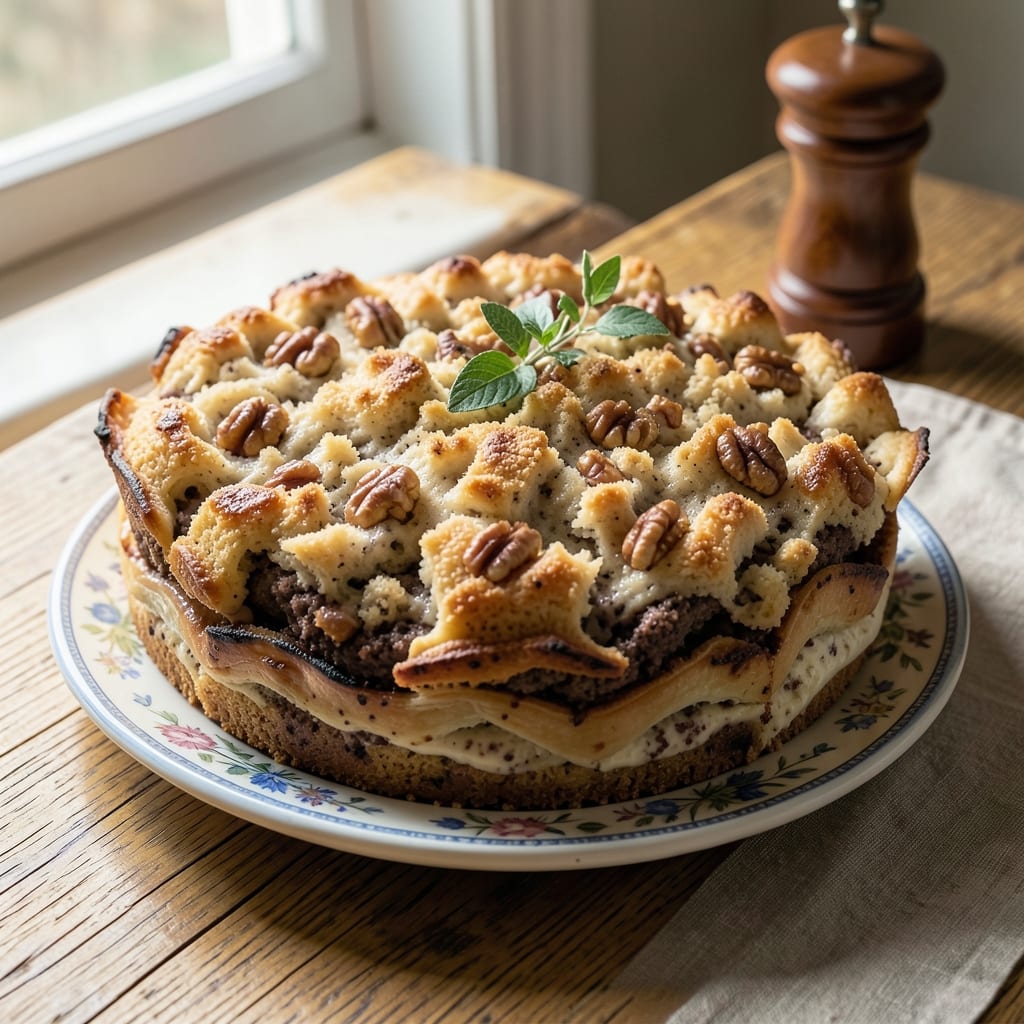
This 1950s coffee cake recipe brings back the golden era of home baking with its signature buttery streusel swirls and vanilla warmth. ✨ The secret lies in the layers—tender coffee-infused cake base, rich vanilla streusel topping, and a hint of cinnamon that transports you straight to a 1950s kitchen. I’ve recreated this classic using traditional ingredients like buttermilk and brown sugar, just as grandmas did back then, but with a few modern shortcuts to keep it foolproof.
The magic happens in the streusel—crispy, crumbly, and studded with brown sugar for that caramelized bite. The cake itself is moist and lightly spiced, with just enough coffee flavor to complement the sweetness without overpowering it. Baking it in a cast-iron skillet (or a standard cake pan) ensures even heat distribution, giving you that perfect rise and golden crust that defines vintage coffee cakes.
What you’ll end up with is a coffee cake that’s as nostalgic as it is delicious—ideal for serving with a steaming cup of coffee or tea. The streusel swirls stay crisp on top while the cake remains tender underneath, making every slice a little piece of history. Whether you’re baking for a family gathering or treating yourself to a slice of comfort, this recipe delivers the cozy, buttery goodness of mid-century baking.
For an extra touch of authenticity, brush the warm cake with a bit of melted butter before serving—just like the old home economics books recommended. And if you’re feeling adventurous, you can add a sprinkle of chopped walnuts or a zest of lemon to the streusel for a modern twist. Let’s bring back the magic of 1950s baking!
Ingredients for 1950 coffee cake
Buttermilk, brown sugar, and coffee granules bring back the nostalgic taste of 1950s baking magic.
| Ingredient | Amount | Notes |
|---|---|---|
| All-Purpose Flour 🌾 | 2 ½ cups | Sifted for light texture |
| Granulated Sugar 🍚 | 1 cup | White or light brown |
| Packed Brown Sugar 🍚 | 1 cup | Light or dark variety |
| Instant Coffee Granules ☕ | 2 tbsp | For coffee flavor |
| Buttermilk 🥛 | 1 cup | Room temperature preferred |
| Large Eggs 🥚 | 2 whole | Room temperature |
| Melted Butter 🧈 | ½ cup | Unsalted, cooled slightly |
| Vanilla Extract 🌸 | 1 tbsp | Pure extract preferred |
| Baking Powder 🧂 | 2 tsp | Aluminum-free preferred |
| Ground Cinnamon 🌿 | 1 ½ tsp | Freshly ground preferred |
| Salt 🧂 | ½ tsp | Fine sea salt |
| All-Purpose Flour (Streusel) 🌾 | 1 ½ cups | For streusel topping |
| Packed Brown Sugar (Streusel) 🍚 | ½ cup | For streusel topping |
| Cold Unsalted Butter 🧈 | ½ cup | Cut into small cubes |
| Ground Cinnamon (Streusel) 🌿 | 1 tsp | For streusel topping |
The buttermilk and brown sugar are the heart of that vintage flavor. Look for buttermilk in the dairy section—it should be thick and tangy, not watery. Domino or Bob's Red Mill are great for flour, and Trader Joe's has the best-priced brown sugar in the bulk bins. The instant coffee granules are key—Folgers or Maxwell House work perfectly, but if you're a coffee snob, grab some Starbucks instant for extra depth. For the streusel, use cold butter (straight from the fridge) to get those perfect crumbly bits—Land O'Lakes or Plugrá are my go-tos. Pro tip: If you can't find buttermilk, mix 1 cup milk with 1 tbsp vinegar or lemon juice and let it sit for 5 minutes.
No buttermilk? Substitute with 1 cup milk plus 1 tbsp vinegar or lemon juice—it works like a charm. Running out of instant coffee? Strong brewed coffee cooled to room temperature does the trick, but you might want to reduce it slightly since it's more potent. The flour can be swapped for all-purpose or cake flour, but sift it well for that light texture. For the streusel, if you're feeling fancy, add chopped walnuts or pecans—just toast them first in a dry pan for 3-4 minutes. And if you're missing the vanilla extract, vanilla bean paste gives a richer flavor, though it's pricier. The cinnamon should be fresh—if it smells like dust, toss it and grab a new jar.
This cake keeps beautifully for 3 days in an airtight container at room temperature, but honestly, it's best the day it's baked. If you want to prep ahead, make the streusel and store it in the fridge for up to 5 days—just bring it to room temp before mixing. The cake itself reheats wonderfully in the oven at 300°F for 10 minutes, wrapped in foil. For serving, brush the warm cake with melted butter like the old home ec books recommended—it adds that extra buttery richness. And if you're making it for a crowd, double the recipe and use two 9-inch pans. Trust me, it disappears fast!
Why You'll Love This Recipe
- I’ll be real: this recipe costs me less than $3 per serving, and the leftovers? They last a week if I’m smart. The buttermilk and coffee granules stretch the ingredients further, so I’m not stressing over grocery bills while still getting something that tastes like a bakery made it.
- No-Fuss Mixing: Honestly, this cake comes together in one bowl—no fancy techniques, no last-minute scrambling. Just toss in the flour, sugars, coffee granules, and buttermilk, then fold in the streusel topping. My lazy Sunday mornings just got a whole lot easier.
- Deep Coffee Kiss: That instant coffee granules aren’t just for show—they wake up every bite with a subtle, rich depth. The brown sugar caramelizes into little pockets of sweetness, while the buttermilk keeps it tender. It’s the kind of flavor that makes you pour a second cup of coffee just to match it.
- Breakfast or Snack Star: Between us, this cake is my go-to for weekday breakfasts or after-school treats. Slice it warm with a pat of butter, or save slices for lunch—it’s that reliable. Even my picky-eating teenager grabs a piece before soccer practice.
Step-by-step instructions for 1950s coffee cake
Here's how to bake that perfect nostalgic coffee cake with golden streusel swirls.
👨🍳 Step 1: Mix the Cake Batter for Light, Moist Layers
Preheat your oven to 350°F and grease a 9-inch round cake pan or line it with parchment paper. In a large mixing bowl, whisk together the 2.5 cups all-purpose flour, 2 tbsp instant coffee granules, 2 tsp baking powder, 1.5 tsp ground cinnamon, and 0.5 tsp salt. Sift the dry ingredients first to avoid lumps.
In a separate bowl, beat the 2 whole large eggs until frothy. Add the 1 cup granulated sugar, 1 cup packed brown sugar, and 0.5 cup melted butter (cooled slightly), mixing until smooth. Pour the wet ingredients into the dry ingredients and stir just until combined. Add the 1 cup buttermilk and 1 tbsp vanilla extract, mixing until the batter is just moistened—don't overmix or the cake will be tough.
👨🍳 Step 2: Prepare the Streusel Topping
While the cake batter rests, make the streusel topping in a medium bowl. Cut the 0.5 cup cold unsalted butter into small cubes and rub them between your fingers until they resemble coarse crumbs. Add the 1.5 cups all-purpose flour (streusel), 0.5 cup packed brown sugar (streusel), and 1 tsp ground cinnamon (streusel), mixing with your fingers or a fork until the mixture resembles coarse sand.
Here's the thing—don't overwork the streusel. You want it to stay crumbly and not turn into a paste. The butter should still have visible pieces, which will melt into golden brown clusters as it bakes. Set the streusel aside until you're ready to assemble the cake.
🥘 Step 3: Layer and Assemble the Coffee Cake
Pour about half of the cake batter into the prepared pan, spreading it evenly. Sprinkle about half of the streusel topping over the batter, gently pressing it down with the back of a spoon. This ensures the streusel stays in place and doesn't just float to the top. Add the remaining batter and top with the rest of the streusel.
Use a butter knife or offset spatula to swirl the streusel into the batter, creating those classic 1950s patterns. You don't need perfect swirls—just a few decorative lines that pull through the batter will give you that authentic look. The streusel should peek through the top in places, promising those buttery, cinnamon-kissed bites.
🔥 Step 4: Bake to Golden Perfection
Bake the coffee cake for 35-40 minutes until the top is golden brown and a toothpick inserted into the center comes out clean. Real talk: your oven might run hot, so start checking at the 30-minute mark. The cake is done when it springs back slightly when you press the center gently—it should feel firm but still tender.
If the streusel starts browning too quickly before the cake is done, tent the pan loosely with aluminum foil. The goal is to get that beautiful contrast of golden cake and caramelized streusel without burning either. Let the cake cool in the pan for 10 minutes before transferring it to a wire rack to cool completely.
⏰ Step 5: Serve Warm with Coffee or Cream
This coffee cake is best served warm, straight from the oven. The streusel will be soft and buttery, and the cake will have that perfect balance of moist crumb and subtle coffee flavor. Slice it thick—this isn't a delicate tea cake, it's meant to be hearty and satisfying.
Pair it with a cup of freshly brewed coffee or a dollop of whipped cream for that classic diner experience. The coffee flavor in the cake complements the coffee you're drinking, creating a harmonious bite that's pure 1950s nostalgia. Store any leftovers in an airtight container at room temperature for up to 3 days, or freeze for up to 3 months.
Pro Tips For Making 1950 Coffee Cake
- WEIGH THE FLOUR: Don’t scoop that flour straight from the bag—it packs down and you’ll end up with a denser cake. Use a kitchen scale or spoon-and-level method to get the right volume, especially since this recipe relies on the right balance of dry and wet ingredients for that classic crumb.
- MEASURE BROWN SUGAR RIGHT: Pack that brown sugar into the cup before leveling—don’t just scoop it. The moisture in brown sugar shifts when it’s loosely packed, and this recipe depends on the exact ratio of sugars for that perfect caramelized top. A damp spoon helps press it down evenly.
- DON’T OVERMIX THE BATTER: Mix just until the flour disappears—maybe 10-12 strokes max. Overworking the batter makes the cake tough, and this coffee cake needs that tender crumb to hold up to the buttermilk’s tang and the coffee’s bold flavor. Stop when it’s just combined.
- LET THE BUTTERMILK REST: If your buttermilk looks too thin, let it sit at room temp for 10 minutes before using. Cold buttermilk curdles when mixed with warm ingredients, and this recipe’s structure depends on the fat staying smooth. Room temp also helps the coffee granules dissolve better in the streusel.
Regional styles of this dish
Midwest Homestyle
The classic 1950s coffee cake from the Midwest was all about buttery richness and cozy simplicity. This version often included chopped pecans in the streusel, adding a Southern touch to the heartland tradition. I remember my grandmother's recipe called for molasses instead of brown sugar in the streusel—just 2 tablespoons—giving it a deeper, caramelized flavor that balanced the cake's sweetness. 🌾
In this region, coffee cakes were often baked in cast-iron skillets (like Lodge's classic 10-inch skillet) for an even, crispy crust. The batter was slightly denser than today's versions, almost like a quick bread, with whole milk replacing buttermilk for a milder tang. A sprinkle of coarse sugar on top before baking created those signature crackly bits.
New England Coffee Cake
New England's version leaned into maple syrup and cranberries for a unique twist. The cake batter incorporated 2 tablespoons maple syrup (like Grade A Vermont) into the wet ingredients, while the streusel often included dried cranberries and chopped walnuts. This variation was especially popular during Thanksgiving gatherings, where it paired perfectly with apple cider instead of coffee. 🍁
The streusel here was thicker and oilier, using ¼ cup melted butter mixed with ¼ cup vegetable oil to prevent burning. Bakers in this region frequently used stoneware baking dishes (like CorningWare) to create a thicker, cake-like texture rather than the traditional round pan. The coffee flavor was often more pronounced, with an extra 1 teaspoon instant coffee added to the batter.
Southern Comfort Style
Down South, coffee cakes took on a bolder, spicier profile with pecans, bourbon, and extra cinnamon. The streusel might include ½ cup chopped pecans toasted in 2 tablespoons bourbon (like Maker's Mark) for depth. I've seen recipes call for 1 teaspoon bourbon in the cake batter itself, adding warmth that cuts through the sweetness. 🥜
Southern bakers often used white cake flour for a lighter texture and added ½ teaspoon nutmeg to the cake batter. The streusel was extra buttery, with ½ cup cold butter rubbed into the flour until it resembled crushed graham crackers. This version was frequently served with sweet tea or whiskey instead of coffee, making it a breakfast staple in Southern homes.
Pacific Northwest Twist
Out West, coffee cakes incorporated local berries and honey for a lighter, fruitier profile. The batter often included ½ cup mashed raspberries or blueberries (fresh or frozen), while the streusel might use honey instead of brown sugar. Wildflower honey from local markets added a floral note that complemented the coffee flavor beautifully. 🍯
Pacific Northwest bakers preferred glass baking dishes for even heat distribution, and the cakes were often thinner and more cake-like rather than the traditional round. The coffee flavor was subtle, with only 1 tablespoon instant coffee in the batter, allowing the fruit to shine. This version was a favorite for brunch gatherings and paired perfectly with locally roasted coffee.
Nutrition facts
Frequently asked questions
Why does this 1950s coffee cake recipe use instant coffee granules?
The instant coffee granules add just the right amount of subtle coffee flavor without overpowering the sweetness. In the 1950s, many recipes used instant coffee because it was shelf-stable and easy to measure. It dissolves completely into the batter, giving that authentic vintage taste without making the cake taste like strong brewed coffee.
Can I make this recipe without buttermilk?
Mix 1 cup milk with 1 tablespoon vinegar or lemon juice, stir, and let it sit for 5 minutes to curdle. This homemade buttermilk works perfectly in the recipe. The tanginess is key for that classic 1950s texture and flavor.
How do I get the streusel to stay crumbly and not turn into a paste?
Keep the butter cold when mixing it with the flour and sugar—use your fingers to rub it into small pieces until it resembles coarse crumbs. Overworking the streusel makes it dense. Also, don't add any liquid to it, as that turns it into a dough. The butter should still have visible chunks when you're done mixing.
Is this coffee cake gluten-free?
No, this traditional recipe uses all-purpose flour, which contains gluten. For a gluten-free version, you'd need to substitute with a 1:1 gluten-free flour blend and add ½ teaspoon xanthan gum to help bind the batter. The texture will be slightly different, but still delicious!
Can I bake this in a different pan shape?
Yes! You can use a 9x13-inch baking dish or even a 10-inch cast-iron skillet for a thicker, more rustic version. If using a larger pan, reduce the baking time by about 5-10 minutes. The cake batter will spread more in a rectangular pan, so you might want to increase the streusel by 25% to cover the surface.