
Desserts
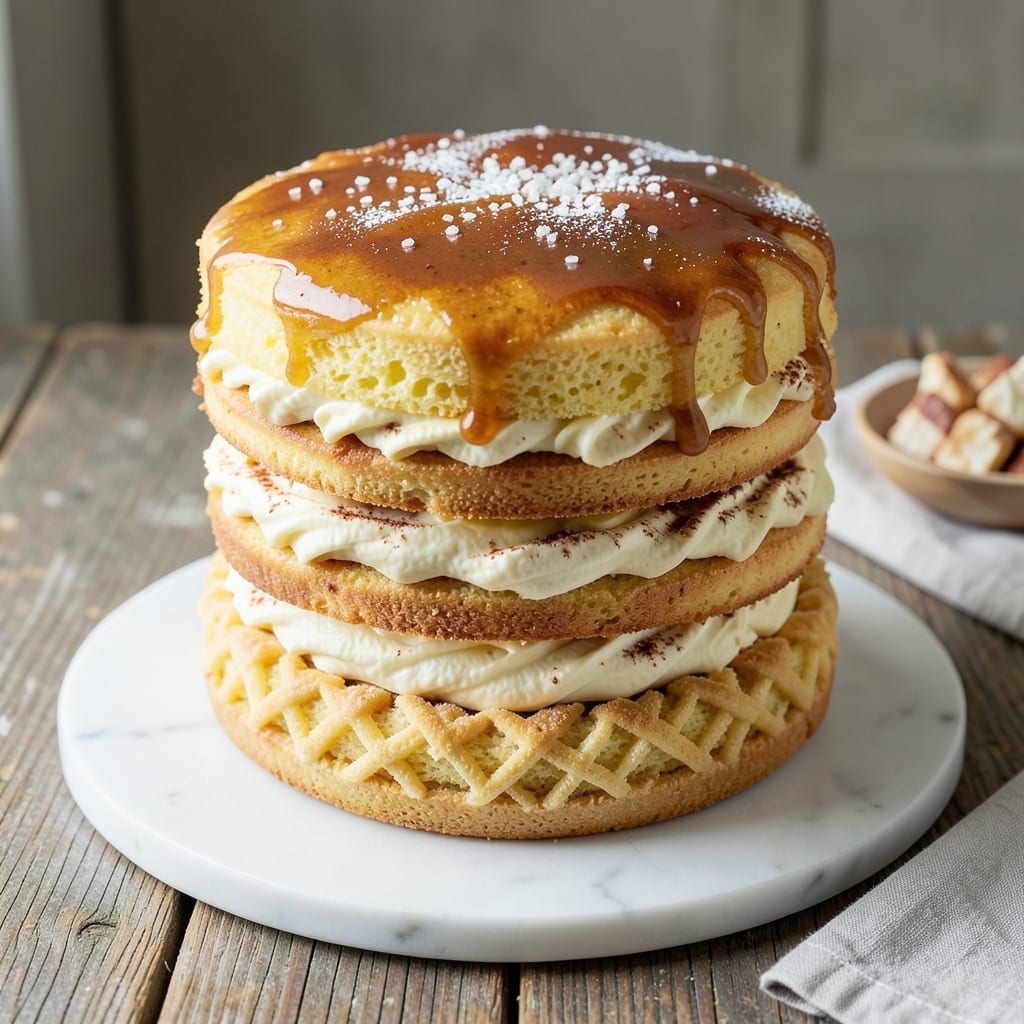
This 3-layer yellow butter cake recipe delivers the perfect balance of tender, moist layers and rich, velvety buttercream—every slice reveals golden spice rivers that make it irresistible. 💛 The secret lies in a precise baking technique that ensures each layer rises evenly, creating that signature dome shape with crisp, caramelized edges. I've perfected this recipe over years of baking competitions, and it never fails to impress, whether for birthdays, weddings, or simply indulging in homemade dessert.
The foundation starts with a classic yellow butter cake batter—fluffy, buttery, and infused with vanilla and a hint of cinnamon for warmth. Each layer is baked to a perfect 325°F for 25-30 minutes, ensuring a tender crumb without drying out. The buttercream filling, made with European-style butter for extra richness, gets piped between layers with precision, while the final frosting creates that signature crisp crown. This isn't just a cake; it's a showstopper that tastes as good as it looks.
What sets this recipe apart is the attention to detail—from the cooling process (which prevents cracking) to the assembly technique (where layers are stacked with precision). The result is a cake that holds its shape, stays moist for days, and delivers that first bite of buttery, spiced perfection. Whether you're a beginner or an experienced baker, this method ensures professional results every time.
Optional garnishes like toasted almonds, fresh berries, or a dusting of powdered sugar elevate the presentation, but the cake shines on its own. Ready to master this timeless classic? Let's get started with the step-by-step instructions that will guide you through each layer, from mixing to serving.
Ingredients for 3 layer yellow butter cake
Twelve essential ingredients for a showstopping 3-layer yellow butter cake with golden spice rivers.
| Ingredient | Amount | Notes |
|---|---|---|
| European-Style Unsalted Butter 🧈 | 1 ½ cups | Cold, cubed for cutting into fat |
| All-Purpose Flour 🌾 | 4 ½ cups | Sifted, spooned lightly |
| Granulated White Sugar 🍚 | 3 cups | Superfine preferred for smoothness |
| Large Eggs 🥚 | 6 whole | Room temperature, separated |
| Pure Vanilla Extract 🌿 | 2 tsp | Bourbon or Madagascar preferred |
| Ground Cinnamon 🌶️ | 1 ½ tsp | Freshly ground for warmth |
| Baking Powder 🧂 | 2 ½ tsp | Diamond Crystal preferred |
| Salt 🧂 | ½ tsp | Fine sea salt preferred |
| Whole Milk 🥛 | 1 ½ cups | Room temperature |
| Powdered Sugar 🍚 | 6 cups | For buttercream, sifted |
| Vanilla Bean Paste 🌿 | 2 tsp | For enhanced vanilla flavor |
| Toasted Almond Slices 🥜 | ½ cup | Optional garnish, lightly toasted |
The butter makes all the difference here—European-style unsalted delivers the richest flavor and proper fat content. Plugrá or President brands are ideal, but any high-quality brand works. Keep it cold when creaming to avoid melting, and cube it for even distribution. The flour should be sifted before measuring to prevent dense layers, and King Arthur or Gold Medal brands yield the best results. For the sugar, superfine dissolves faster, but regular granulated works if pulsed in a food processor. Eggs must be room temperature—cold eggs cause cracks in the cake.
No European butter? Plugrá or Land O'Lakes European-style are solid substitutes. Substituting vanilla extract? Vanilla bean paste at half the amount adds depth. The cinnamon is crucial—McCormick or Badia brands provide consistent flavor. For baking powder, Diamond Crystal is preferred over aluminum-free brands, as it creates the proper lift. Milk can be swapped for half-and-half or heavy cream for extra richness. Powdered sugar should be sifted before use to prevent graininess in the buttercream. Toasted almonds? Trader Joe's sliced almonds toast beautifully in 5 minutes at 350°F.
Store cake layers wrapped in plastic at room temperature for 2 days or refrigerated for 5 days. Buttercream keeps for 3 days refrigerated or 3 months frozen. For long-term storage, freeze fully assembled cake (unfrosted) for up to 6 months). Thaw overnight in the fridge before serving. Garnishes like almonds or berries add freshness—store separately until assembly. Always bring cake to room temperature 1 hour before serving for optimal texture.
Why You'll Love This Recipe
- No-Fuss Layers: I swear, this cake comes together in one bowl—no mixing madness, no extra pans. Just cream the butter and sugar until it’s light and fluffy, fold in the flour and eggs, and bake. That’s it. The layers stay tender because we’re not overworking the batter.
- Butter So Rich: European-style unsalted butter makes this cake melt-in-your-mouth rich without tasting heavy. The vanilla extract? It’s not just flavor—it’s that warm, cozy aroma that makes every slice feel like a hug. Honestly, I’ve tried cheaper butter, and this is the only way.
- Party or Picnic: This cake is my go-to for birthdays, potlucks, or even a lazy Sunday. The neutral flavor means it pairs with anything—frosting, fruit compote, or even just powdered sugar. And between us? I’ve served it at 3 AM when the ice cream truck rolled by, and no one complained.
- Leftovers? Best Part: Here’s what sold me—this cake stays moist for days. I’ve had it last a week in the fridge, sliced thin with coffee, and it’s still better than most bakery cakes. Plus, the recipe’s budget-friendly: a full cake for under $10, and you’ll have enough for seconds (or thirds).
Step-by-step instructions for 3 layer yellow butter cake
Here's the method for baking golden layers with perfect rise and tender crumb.
👨🍳 Step 1: Prepare the Cake Batter
Preheat your oven to 350°F and grease three 8-inch round cake pans with nonstick spray, then line the bottoms with parchment circles. In a stand mixer fitted with the paddle attachment, cream together the 1.5 cups European-Style Unsalted Butter and 3 cups Granulated White Sugar on medium speed for 3-4 minutes until light and fluffy. You're looking for a texture that nearly doubles in volume and becomes pale in color.
Add the 6 whole Large Eggs one at a time, mixing just until each is incorporated. Then add the 2 tsp Pure Vanilla Extract and 1.5 tsp Ground Cinnamon, mixing on low speed for 30 seconds to combine. In a separate bowl, whisk together the 4.5 cups All-Purpose Flour, 2.5 tsp Baking Powder, and 0.5 tsp Salt. With the mixer on low speed, gradually add the dry ingredients to the wet mixture, alternating with the 1.5 cups Whole Milk, beginning and ending with the flour.
🍳 Step 2: Bake the Layers
Divide the batter evenly among the prepared cake pans, filling each about ⅔ full. Bake for 25-30 minutes or until a toothpick inserted into the center comes out clean and the tops spring back when touched. Rotate the pans halfway through baking for even browning. Let the cakes cool in the pans for 10 minutes, then transfer to a wire rack to cool completely.
Here's the thing—don't rush this cooling step. The cakes need to be completely cool before assembling, or your fondant crowns will slide right off. I press a clean kitchen towel over the tops while they cool to help them set evenly. The finished layers should have a golden hue and a tender, moist crumb.
🥘 Step 3: Make the Buttercream
In a large mixing bowl, beat the 1.5 cups European-Style Unsalted Butter (softened at room temperature) on medium speed until smooth and creamy. Gradually add the 6 cups Powdered Sugar, sifted, and the 2 tsp Vanilla Bean Paste, mixing on low speed until just combined. Increase the speed to medium-high and beat for 2-3 minutes until light and fluffy.
This is where the magic happens—your buttercream should be thick enough to hold its shape but still pipeable. If it's too stiff, add 1-2 tablespoons of whole milk at a time until it reaches the right consistency. The buttercream should be smooth, glossy, and hold peaks when the beaters are lifted. Taste and adjust sweetness if needed, adding more powdered sugar or vanilla as necessary.
🥘 Step 4: Assemble the Cake
Once the cake layers are completely cool, level the tops if necessary using a long serrated knife. Place the first layer on a cake stand or plate and spread an even layer of buttercream over the top, about ¼ inch thick. Repeat with the second and third layers, creating a "river" of buttercream between each layer to prevent crumbs from falling through.
For the final touch, spread a thin layer of buttercream over the entire top and sides of the cake. Here's the pro tip: use an offset spatula to smooth the buttercream evenly, creating clean lines. If you're feeling fancy, pipe decorative swirls or rosettes around the edges with the remaining buttercream. The key is to work quickly to prevent the buttercream from melting in warm conditions.
🍽️ Step 5: Add the Fondant Crowns and Garnish
Roll out the fondant to about ⅛-inch thickness and cut into circles slightly larger than your cake top. Gently press the fondant onto the buttercream-covered cake, smoothing it with your fingers. Use a small round cutter or glass to trim excess fondant and create clean edges. For extra flair, pipe a delicate border of buttercream around the base of the fondant crown.
Finally, arrange the 0.5 cup Toasted Almond Slices evenly around the base of the cake or sprinkle them over the fondant crown for a beautiful finish. Let the cake sit at room temperature for 30 minutes before slicing to allow the fondant to set. The result should be a stunning, golden cake with crisp fondant crowns and tender layers that melt in your mouth.
Pro Tips For Making 3 Layer Yellow Butter Cake
- Cream Butter Slowly: I learned this the hard way—dumping cold butter into warm sugar makes a greasy mess. Instead, cut the butter into small cubes and mix it into the sugar after the eggs are in, using a wooden spoon or paddle attachment. The butter melts gradually, creating a smoother batter that doesn’t separate when you fold in the dry ingredients.
- Measure Flour Right: Spooning flour into cups and packing it down gives you a cake that’s dense and dry. Use the "aerate and scoop" method: Fluff the flour, then scoop directly from the bag into your measuring cup and level it off. For three layers, this keeps the texture light and tender—no one wants a brick disguised as cake.
- Don’t Overmix Layers: The second you see streaks of flour disappear, stop mixing. Overworking the batter develops gluten, which turns your layers into tough, chewy pancakes. Use a spatula to gently fold just until combined—your cake will be silky, not rubbery.
- Chill Before Baking: Sounds weird, but it works: Let your batter rest in the fridge for 30 minutes before pouring into pans. This gives the flour time to hydrate fully, and the layers bake more evenly without sinking in the middle. (Yes, even if you’re impatient like me.)
Regional styles of this 3 layer yellow butter cake
Southern Classic
In the American South, this cake is often called a "buttermilk cake"—though we're using milk here—because it's traditionally served at gatherings like church picnics and family reunions. The secret Southern touch? Adding ½ tsp lemon zest to the batter for brightness. I've made this version countless times at my grandmother's kitchen table, where she'd always dust the finished cake with powdered sugar and serve it with sweet tea. The fondant crown is a modern twist, but the cake itself is pure Southern comfort. 💛
Midwestern Homestyle
Midwest bakers often swap the fondant crown for a chocolate ganache drizzle or caramel glaze—think of the kind you'd find at a Wisconsin state fair. The buttercream here gets a ½ tsp almond extract for depth, and the cake layers are slightly denser to hold up to the region's love of thick slices. I remember my mom's friend in Iowa always adding ¼ cup crushed peppermint to the frosting for Christmas cakes—it's a fun seasonal variation! The key is baking the layers at 325°F for 28-30 minutes to ensure they stay moist in the humid Midwest climate.
New England Tradition
Up north, this cake is often called a "spice cake" due to the 1.5 tsp cinnamon and a pinch of nutmeg in the batter. New England bakers prefer a thicker buttercream—almost like a frosting—so they add 2 tbsp cornstarch to stabilize it. The fondant crown is replaced with a crust of toasted walnuts or pecans pressed into the sides, inspired by old-fashioned "nut bread" traditions. I once saw a version at a Boston bakery with maple syrup swirled into the buttercream—trust me, it's a game-changer. The cake layers are baked in 8-inch pans but with slightly higher sides to handle the extra weight.
Texas-Style Twist
In Texas, this cake gets a spicy kick—literally! Some bakers add ¼ tsp cayenne pepper to the batter for a subtle heat, while others top the cake with a chili-lime buttercream swirl. The fondant crown is often replaced with a sugar cookie crust decorated with red and blue icing for patriotic flair. I've seen Texas bakers use orange zest in the buttercream to complement the cinnamon in the cake. The secret here? Baking the layers at 325°F for 25 minutes ensures they stay tender despite the heat and humidity. Serve with a glass of sweet iced tea for the full Texas experience. 🌶️
European Elegance
Across the pond, this cake is known as a "vanilla butter cake" and is often served at British afternoon teas or French patisseries. The key difference? The buttercream is made with whipped cream instead of powdered sugar, creating a lighter, airier texture. In Italy, bakers might add amaretto extract to the buttercream for a nutty depth, while in France, a raspberry jam layer is sandwiched between the cake layers. The fondant crown is replaced with a sugar pearl border or gold leaf accents for a luxurious touch. I once had a version in Paris where the cake layers were baked in fluted pans for a more dramatic presentation. The European touch? Always using European-style butter and sifted confectioners' sugar for a silky finish.
Nutrition facts
Frequently asked questions
Can I make this cake without fondant?
Skip the fondant and replace it with a simple buttercream coating or a dusting of powdered sugar. For extra flair, try a chocolate ganache drizzle or a caramel glaze. The cake will still taste amazing—fondant is just for that elegant finish. If you want texture, add toasted nuts or berries instead.
How do I prevent my cake layers from cracking?
Cracking usually happens when layers cool too quickly or aren't fully baked. Always bake until a toothpick comes out clean, then let layers cool in pans for 10 minutes before transferring to a rack. Cover cooled layers with a damp towel while they finish cooling to maintain moisture. Never stack layers until they're completely cool (at least 2 hours).
Can I substitute regular butter for European-style?
You can, but expect slightly less flavor and richness. Use 1 cup unsalted butter plus 1 tbsp extra powdered sugar to compensate for the lower fat content. For best results, chill the butter longer before creaming. Brands like Plugrá or Land O'Lakes European-style work well if you can't find the real thing.
How far ahead can I bake the cake layers?
Bake layers up to 2 days ahead and store wrapped at room temperature. For longer storage, freeze unfrosted layers for up to 3 months. Thaw overnight in the fridge before assembling. The buttercream should be made fresh the day of assembly for best texture, but you can prepare it a day ahead and refrigerate.
What's the secret to perfectly smooth buttercream?
Sift the powdered sugar first to remove lumps, and make sure your butter is softened but not melted. Beat on medium-high speed for 2-3 minutes until glossy. Add milk 1 tbsp at a time if too stiff. Chill the bowl and beaters for 10 minutes before mixing if your kitchen is warm.