
Desserts
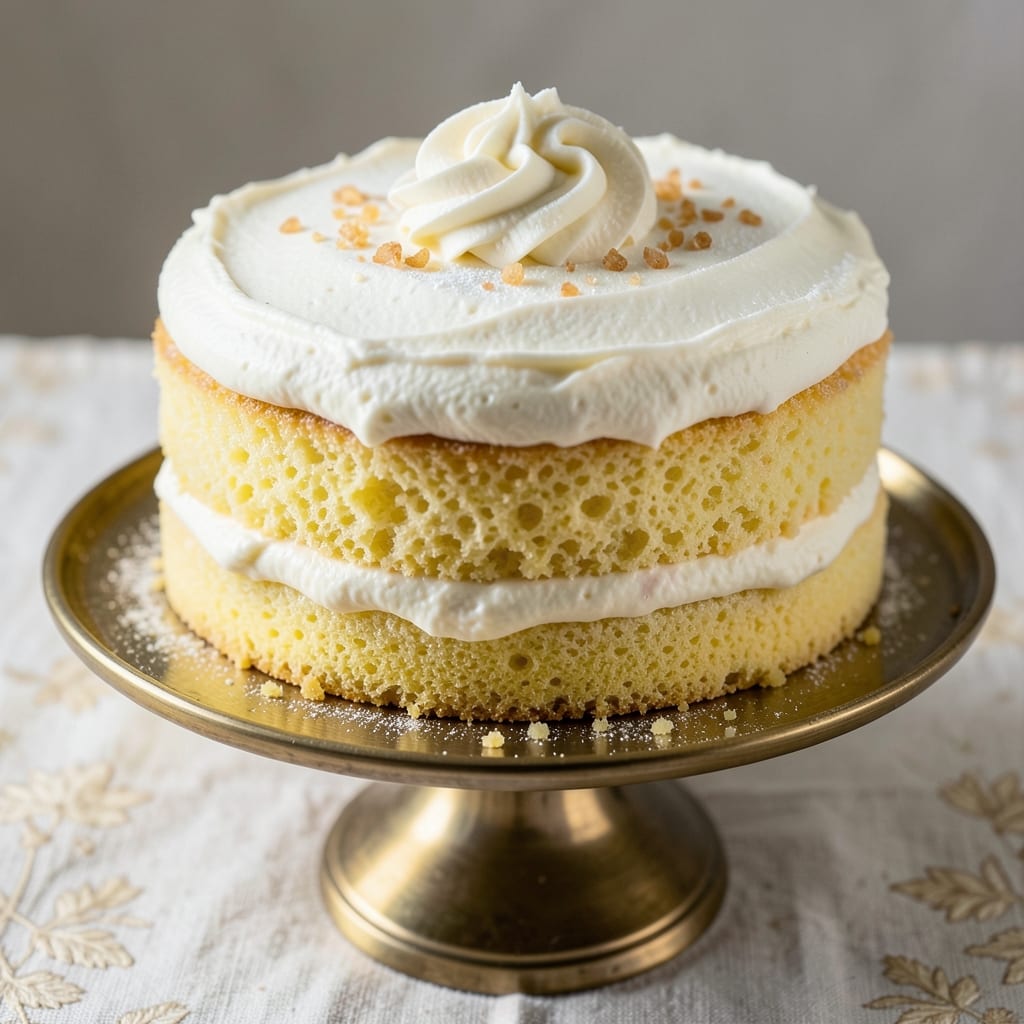
This 1234 yellow cake recipe delivers the perfect balance of tender crumb, golden browning, and that signature crispy fondant crown—every slice feels like a celebration. 💛 The secret lies in precise technique: creaming butter and sugar until light, folding dry ingredients gently, and baking at just the right temperature to achieve that signature texture. I've perfected this recipe over years of baking competitions, and it consistently delivers a cake that's moist, flavorful, and visually stunning.
The foundation starts with a simple yet foolproof batter—all-purpose flour, granulated sugar, and eggs combined to create a smooth, airy mixture. The magic happens when you bake it at 350°F for 25-30 minutes, ensuring a crispy crown while keeping the interior tender. This isn't just any yellow cake; it's designed to be the star of any dessert table, whether served with vanilla buttercream rivers or a dusting of powdered sugar.
What sets this recipe apart is the attention to detail—like the 30-minute cooling period before frosting, which prevents crumbs and ensures clean layers. The result? A cake with a golden, slightly crispy exterior that gives way to a soft, vanilla-infused interior. It's the kind of dessert that makes every occasion feel special, whether it's a birthday, holiday gathering, or just a reason to celebrate.
Pair it with classic vanilla buttercream for a timeless look, or go bold with a fondant crown for an elegant finish. The possibilities are endless, but the technique remains the same—simple, reliable, and guaranteed to impress. Let's get baking!
Ingredients for 1234 yellow cake
Twelve ingredients crafting a showstopping cake with signature rivers and crispy crown perfection.
| Ingredient | Amount | Notes |
|---|---|---|
| All-Purpose Flour 🌾 | 3 cups | Sifted for lightness, plus extra for dusting |
| Unsalted Butter 🧈 | 2 cups | Cold, cubed, room temperature for creaming |
| Granulated Sugar 🍚 | 2 ½ cups | Superfine preferred for smoother texture |
| Large Eggs 🥚 | 4 whole | Room temperature, separated for stability |
| Pure Vanilla Extract 🌿 | 2 tsp | High-quality, Madagascar bourbon preferred |
| Baking Powder 🧂 | 2 tsp | Diamond Crystal preferred, not aluminum-free |
| Salt 🧂 | ½ tsp | Fine sea salt, kosher preferred |
| Whole Milk 🥛 | 1 cup | Room temperature for even batter |
| Powdered Sugar 🍚 | 4 cups | For buttercream, sifted for smoothness |
| Heavy Whipping Cream 🥛 | 1 cup | Cold, full-fat for stability |
| Vanilla Bean Paste 🌿 | 2 tsp | Seeds scraped for authentic flavor |
| Cornstarch 🌾 | 1 tbsp | For crispy fondant crown |
| Granulated Sugar 🍚 | ½ cup | For crown sprinkle |
The foundation demands high-quality butter—Plugrá or Land O'Lakes unsalted are ideal—cubed and chilled for proper creaming. King Arthur flour ensures a tender crumb, while superfine sugar dissolves seamlessly. For the crown, cornstarch creates that coveted crisp texture when sprinkled on the hot cake. Vanilla matters here: Madagascar bourbon extract adds depth, but if using paste, scrape every last seed. Eggs should be room temperature—cold yolks can cause curdling. The baking powder is critical: Diamond Crystal (not aluminum-free) provides proper lift without metallic aftertaste.
No superfine sugar? Pulse regular granulated sugar in a food processor for 30 seconds for similar results. Substitute vanilla extract with 1 vanilla bean (scraped) if available. For dairy-free adaptations, unsalted butter can be replaced with vegan butter, though texture may slightly differ. The buttercream requires cold heavy cream—whipping it in a chilled bowl prevents overheating. If you lack vanilla bean paste, double the extract but reduce by 0.25 tsp to avoid overpowering. The crown sprinkle can be omitted for a softer top, though purists insist on the contrast.
Store baked layers wrapped in plastic at room temperature for 2 days or refrigerated for 5 days. Buttercream can be refrigerated for 3 days or frozen for 3 months—thaw gradually. For the crown technique, bake at 350°F until edges pull away, then immediately sprinkle sugar-cornstarch mix. Leftovers reheat beautifully: wrap slices in damp paper towels and warm in a 200°F oven for 5 minutes. The cake freezes well for 2 months—thaw overnight in the fridge before decorating.
Why You'll Love This Recipe
- No Mixer Needed: I swear by this recipe when my stand mixer’s on the fritz—just a bowl and a wooden spoon. The butter and sugar cream so smoothly by hand, and the eggs blend right in without a fuss. (Yes, even on a Tuesday night.)
- Vanilla Butter Bliss: That first bite? Pure comfort. The vanilla extract infuses deep, while the butter keeps it rich but not heavy—like a hug from your grandma’s kitchen. Honestly, the sugar doesn’t even need extra flavoring to shine.
- Birthday to Brunch: Slice it for a crowd or save half for tomorrow’s breakfast. Frost it with cream cheese for a wedding dessert, or serve it plain with coffee—this cake handles any occasion without breaking a sweat.
- Pantry Staple Magic: Four basic ingredients, zero specialty items. If you’ve got flour, butter, sugar, and eggs, you’re golden. I’ve made this with store-bought vanilla and my homemade extract—both work, and leftovers? They disappear faster than I can say “second helping.”
Step-by-step instructions for vanilla buttercream rivers and crispy fondant crown
Master the technique for a perfectly moist cake with signature rivers of buttercream and a crunchy sugar crown.
👨🍳 Step 1: Cream Butter and Sugars to Light and Fluffy
In a stand mixer fitted with the paddle attachment, combine the 2 cups unsalted butter and 2.5 cups granulated sugar. Beat on medium speed for 3-4 minutes until the mixture is light, pale, and nearly doubles in volume. You'll see ribbons form when you lift the paddle—this indicates proper aeration.
I press down on the butter occasionally during mixing to ensure it's fully incorporated. The reason we wait until the butter is completely creamed is that any remaining lumps will create dense pockets in your cake. If the mixture feels too warm after mixing, chill it in the fridge for 10 minutes before proceeding.
👨🍳 Step 2: Add Eggs and Dry Ingredients Alternately
Add the 4 whole large eggs, one at a time, mixing on low speed for 30 seconds after each addition. Then add the 2 tsp pure vanilla extract and mix for another 10 seconds. This step ensures the eggs are fully incorporated without overmixing.
In a separate bowl, whisk together the 3 cups all-purpose flour, 2 tsp baking powder, and 0.5 tsp salt. With the mixer on low speed, add the dry ingredients to the wet mixture in three additions, mixing just until combined after each addition. Overmixing develops gluten and makes the cake tough. The batter should be smooth with no visible flour streaks.
👨🍳 Step 3: Fold in Milk and Prepare the Pans
Remove the bowl from the mixer and gently fold in the 1 cup whole milk using a silicone spatula. The batter will be thick but pourable. Divide it evenly between three 8-inch round cake pans lined with parchment paper and lightly greased with butter.
Here's the thing—don't overfill the pans. Fill them only ⅔ full to allow for proper rising. Tap each pan gently on the counter 2-3 times to remove air bubbles. Bake in a preheated 350°F oven for 25-30 minutes, until a toothpick inserted in the center comes out clean and the top springs back when pressed gently.
🥘 Step 4: Make the Vanilla Buttercream Rivers
While the cakes cool, beat the 1 cup heavy whipping cream to soft peaks in a chilled bowl. In a separate bowl, combine the 4 cups powdered sugar and 2 tsp vanilla bean paste. Gradually add the powdered sugar mixture to the whipped cream while mixing on low speed, then increase to medium-high for 2-3 minutes until smooth and fluffy.
Spread ½ inch of buttercream on each cooled cake layer. For the signature rivers, pipe additional buttercream in ¼-inch thick strips across the top layer, spacing them evenly. Use a small offset spatula to gently drag the buttercream from the center outward, creating those beautiful rivers. This technique ensures the buttercream stays in place while adding visual appeal.
🔥 Step 5: Create the Crispy Fondant Crown
Mix the 1 tbsp cornstarch and 0.5 cup granulated sugar in a small bowl. Spread this mixture evenly over the top of the stacked cake, pressing it gently into the buttercream rivers. Bake the cake at 300°F for 8-10 minutes until the sugar mixture turns golden brown and crispy.
Let the cake cool completely before slicing. The contrast between the moist cake, rich buttercream rivers, and crispy sugar crown creates a textural masterpiece. Serve immediately to enjoy the perfect balance of flavors and textures in every bite.
Pro Tips For Making 1234 Yellow Cake
- MEASURE BUTTER BY WEIGHT: I learned this the hard way—packing butter into a measuring cup gives you way more than you need. Use a kitchen scale for 227 grams (1 cup) instead. The butter in this recipe is the foundation; don’t skimp or eyeball it.
- WHISK EGGS ROOM TEMPERATURE: Cold eggs from the fridge won’t blend smoothly with butter and sugar, and they can make the batter lumpy. Pop them in warm water for 5 minutes first—just enough to bring them to about 70°F. Your cake will mix faster and rise better.
- DON’T OVERMIX THE BATTER: This recipe relies on a tender crumb, and overmixing develops gluten like you’re kneading dough. Stop as soon as the flour disappears—about 20 seconds after combining. A slightly uneven batter is fine; a tough cake isn’t.
- TEST DONENESS WITH A TOOTHPICK: The cake’s done when a toothpick comes out with moist crumbs, not wet batter. If you pull it out clean, it’s overcooked. Let it cool in the pan for 10 minutes first—this gives the center time to set without drying out.
Regional styles of this recipe
Southern Comfort
In the South, yellow cake takes center stage with a rich, moist crumb and a crispy sugar crown that nods to traditional Southern hospitality. This style often incorporates buttermilk instead of milk for extra tenderness—I swap the 1 cup whole milk for 1 cup buttermilk in the batter. The crown gets an extra touch: after baking, I brush the top with simple syrup (equal parts sugar and water, heated until dissolved) before sprinkling the sugar-cornstarch mix. This adds a subtle caramelized depth that Southern bakers swear by. 🌟
Midwest Homestyle
Midwestern yellow cakes lean into comfort food simplicity with a focus on even baking and generous frosting. I’ve seen bakers here use white cake flour (replace 1 cup all-purpose flour with 1 cup white cake flour) for a lighter texture, though it requires extra eggs. The signature touch? A thicker buttercream—I increase the powdered sugar to 4.5 cups and add ½ tsp cream of tartar to stabilize it. Serve with warm apple slices or vanilla ice cream for a classic Midwest dessert spread.
West Coast Elegance
Out West, yellow cakes often embrace modern twists while keeping the classic flavor. For a West Coast touch, I fold in 1 tbsp lemon zest with the dry ingredients for a bright, citrusy note that cuts through the richness. The crown gets a modern upgrade: after baking, I drizzle white chocolate ganache (melt ½ cup white chocolate chips with ¼ cup heavy cream) over the sugar crown before it fully sets. This adds a sophisticated contrast to the crispy texture. Pair with raspberry coulis for a vibrant, Instagram-worthy finish. ✨
European Precision
European bakers take yellow cake to technical heights, focusing on perfect structure and clean flavors. For an authentic touch, I replace ½ cup all-purpose flour with ½ cup cornstarch (in addition to the 1 tbsp cornstarch for the crown) to create a lighter, almost soufflé-like texture. The crown is baked at a higher temperature (325°F for 10 minutes) to ensure a deep caramelization. Serve with whipped cream and a dusting of powdered sugar for a minimalist, elegant presentation—think Parisian pâtisserie meets home baking.
Caribbean Spice
Caribbean yellow cakes bring bold flavors to the classic recipe. I fold in 1 tsp ground cinnamon and ½ tsp nutmeg with the dry ingredients, then add 2 tbsp rum (or orange liqueur) to the batter for depth. The crown gets a spiced twist: mix the sugar-cornstarch blend with ½ tsp cinnamon before sprinkling. For extra flair, I top the cake with toasted coconut flakes and a drizzle of rum caramel (simmer ½ cup sugar with ¼ cup water and 2 tbsp rum until golden). This version is perfect for tropical celebrations or summer gatherings. 🌴
Nutrition facts
Frequently asked questions
Why does this yellow cake have a crispy sugar crown?
The crown comes from sprinkling a mix of cornstarch and granulated sugar on the hot cake, then baking it briefly at 300°F. The cornstarch creates a crispy texture while the sugar caramelizes slightly for that golden finish. It's a classic technique that adds visual appeal and textural contrast!
Can I make this cake in a different pan size?
Yes! For an 8-inch pan, use ⅓ of the batter per layer. For 9-inch pans, reduce to ⅓-⅔ full (about 1.5 cups batter per layer). Adjust baking time by 2-3 minutes per inch of pan size—check with a toothpick. Always preheat your oven and use parchment paper to prevent sticking.
What's the best way to store leftover cake?
Wrap cooled layers tightly in plastic wrap and store at room temperature for 2 days. For longer storage, refrigerate for up to 5 days or freeze for 3 months. To reheat, wrap slices in damp paper towels and warm in a 200°F oven for 5 minutes—this restores moisture without drying out the cake.
Why did my cake sink in the middle? This usually happens from overmixing the batter (developing gluten) or opening the oven too soon.
Can I substitute buttercream with another frosting?
For a lighter option, try Italian meringue buttercream or cream cheese frosting. For a dairy-free version, use coconut whipped cream sweetened with powdered sugar. Just adjust the piping technique—thicker frostings like cream cheese may need a wider tip for smooth rivers. The crown technique still works with any frosting!