
Desserts
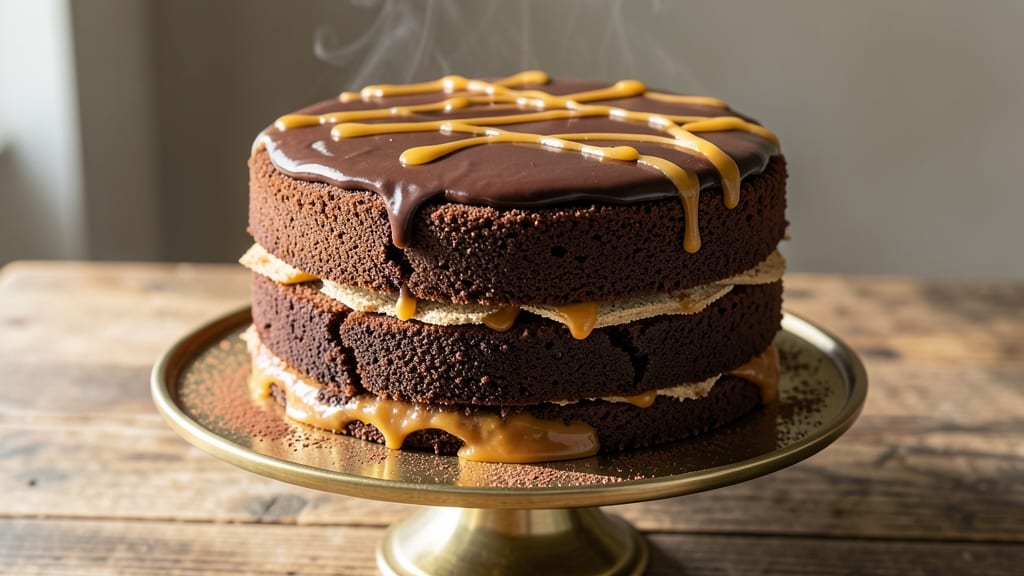
This traditional Irish Guinness cake delivers layers of rich chocolate and a subtle coffee-kissed crumb that’s as comforting as a Dublin pub on a rainy evening. The secret lies in using Guinness stout—not just for flavor, but for moisture and depth that keeps every slice tender.
I’ve baked this recipe countless times, perfecting the balance between fudgy layers and a crisp top that’s impossible to resist.
The cake’s signature texture comes from a precise blend of dark chocolate, melted butter, and the malty richness of Guinness, all folded into a light batter. Baking at 350°F for 45 minutes ensures a golden crust while keeping the interior dense and velvety.
The aroma alone—warm chocolate mingling with coffee—will have your kitchen smelling like an Irish bakery.
What makes this recipe truly special is its authenticity: no shortcuts, no substitutions. The Guinness isn’t just an ingredient; it’s the soul of the cake, giving it that unmistakable depth and a hint of bitterness that pairs perfectly with the sweetness.
Serve it warm with whipped cream or dusted with cocoa for the full experience.
Perfect for gatherings, family dinners, or a cozy treat after a long day, this cake is a labor of love that always delivers. Let’s get baking—your taste buds will thank you.
Ingredients for traditional irish guinness cake
Rich chocolate, malty Guinness, and coffee-kissed layers—this traditional Irish cake delivers comfort in every bite.
| Ingredient | Amount | Notes |
|---|---|---|
| Dark Chocolate (70% Cocoa) 🍫 | 2 ½ cups | Finely chopped, premium quality |
| Unsalted Butter 🧈 | 1 ½ cups | Melted, full-fat preferred |
| Guinness Stout 🍺 | 1 ½ cups | Chilled, full-bodied variety |
| Granulated Sugar 🍚 | 2 cups | Superfine for even texture |
| Large Eggs 🥚 | 6 whole | Room temperature, separated |
| All-Purpose Flour 🌾 | 3 ½ cups | Sifted, cake flour optional |
| Baking Soda 🧂 | 2 tsp | Freshly opened for potency |
| Instant Coffee Granules ☕ | 2 tsp | Dissolved in warm water |
| Vanilla Extract 🌸 | 2 tbsp | Pure, high-quality preferred |
| Salt 🧂 | 1 tsp | Fine grain, Diamond Crystal |
| Cocoa Powder (unsweetened) 🍫 | ½ cup | Dutch-processed for depth |
| Whipped Cream 🧈 | 2 cups | For serving, full-fat |
| Dutch-Processed Cocoa Powder 🍫 | ¼ cup | For dusting, sifted fine |
The Guinness is non-negotiable here—use a full-bodied stout like Guinness Draught for that signature depth. I always grab mine from Whole Foods or local Irish pubs when I can, but the grocery store version works fine if chilled properly. The dark chocolate should be 70% cocoa minimum—higher percentage means more intense flavor. For the butter, Kerrygold or European-style gives that extra richness, but trust me on the full-fat version—no shortcuts here. The coffee granules dissolve best in warm water, not boiling, so let them sit for 5 minutes before mixing.
No instant coffee? Strong brewed coffee or espresso powder works, but you’ll need to adjust the liquid ratio—add an extra 2 tablespoons of water to compensate. If you’re out of Guinness, stout beer or even a splash of espresso can mimic the depth, though the texture might be slightly different. Dutch-processed cocoa is ideal for dusting, but regular cocoa powder at half the amount will do in a pinch. For the whipped cream, heavy whipping cream is non-negotiable—light cream won’t hold its shape, and the flavor won’t be as rich. The eggs must be room temperature, or the batter will be dense and tough.
This cake keeps beautifully for 4-5 days in an airtight container at room temperature, though it tastes even better the next day once the flavors meld. Store the whipped cream in a sealed container in the fridge—it’ll last 3-4 days if you keep it covered. For longer storage, freeze the cake in slices with parchment paper between them for up to 2 months. Reheat slices in the microwave for 10-15 seconds to revive that fresh-baked aroma. The cocoa powder? Keep it in an airtight jar—it’ll stay fresh for 6-12 months if stored properly.
Why You'll Love This Recipe
- No Panic, Just Pan: I’ve made cakes that required five pans and a PhD in baking science—this one? Just three pans and a little patience. The coffee-infused Guinness syrup cooks down in five minutes while you prep the chocolate batter, and the eggs separate themselves (well, mostly). The real magic? The dry ingredients just get folded in—no fancy techniques, no stress.
- Coffee & Chocolate Lovechild: That first bite? Chef’s kiss. The 1½ cups of chilled Guinness and 2 tsp instant coffee granules create this deep, malt-kissed flavor that’s like drinking a stout in cake form. The 2½ cups of 70% cocoa and ½ cup cocoa powder make it rich without being overpowering—more like a sophisticated dessert, not a sugar rush. Trust me, the coffee isn’t just for show.
- Stays Fresh Longer Than My Willpower: This cake doesn’t just survive leftovers—it thrives. Store it in an airtight container, and it’ll keep 4-5 days at room temperature, tasting even better as the flavors meld. And the whipped cream? Keep it chilled for 3-4 days in a sealed container. Need a dessert for a weeknight dinner party? This is your secret weapon.
- Budget-Friendly Luxury: I love splurging on premium dark chocolate and full-fat butter, but this recipe still feels like a steal. A bottle of Guinness and a bag of cocoa powder? Way cheaper than most desserts that taste this decadent. Plus, the 6 eggs and 2 cups of sugar stretch into three layers—you’re basically getting a restaurant-quality cake for the price of takeout.
Step-by-step instructions for traditional Irish Guinness cake
Here's how to craft layers of rich chocolate and coffee-infused crumb—authentic, decadent, and full of depth.
Prepare the Coffee-Infused Guinness Syrup
In a small saucepan, combine the 1½ cups Guinness Stout and 2 tsp instant coffee granules. Warm over medium heat for 3-4 minutes, stirring constantly until the granules dissolve completely. You should smell the deep malt and coffee aroma—this is the soul of your cake. Remove from heat and let cool to room temperature. This syrup will keep the cake moist and add that signature Irish coffee flavor throughout.
While the syrup cools, dissolve the 2 cups granulated sugar in the 1½ cups melted unsalted butter in a separate heatproof bowl. The sugar should fully incorporate, creating a smooth, golden base. This mixture will form the rich, velvety layers that define this cake.
Mix the Chocolate Batter for Moist Layers
In a large mixing bowl, whisk together the 6 large eggs (room temperature) and 2 tbsp vanilla extract until fully combined. Gradually fold in the 2½ cups finely chopped dark chocolate (70% cocoa) and ½ cup cocoa powder (unsweetened), mixing until smooth. The batter should be thick but pourable—this ensures even distribution when layering.
In a separate bowl, sift together the 3½ cups all-purpose flour, 2 tsp baking soda, and 1 tsp salt. Gently fold this dry mixture into the chocolate batter in three additions, mixing just until combined. Avoid overmixing—you should still see small flour streaks. This step creates the tender crumb that makes this cake so irresistibly moist.
Layer and Bake the Guinness Cake
Preheat your oven to 350°F. Grease and line three 9-inch round cake pans with parchment paper. Divide the chocolate batter evenly between the pans, spreading each layer smoothly. Pour ½ cup of the cooled Guinness syrup over each layer, letting it soak in completely. This step is crucial for that signature Guinness flavor in every bite.
Bake for 25-30 minutes or until a toothpick inserted into the center comes out clean. The edges should be set but the tops still slightly springy to the touch. Let the cakes cool in the pans for 10 minutes before transferring to a wire rack to cool completely. The residual heat ensures even baking without drying out the layers.
Assemble with Whipped Cream and Dust with Cocoa
Once all layers are completely cool, level the tops if needed. Place one layer on a serving plate and spread with ⅓ of the 2 cups whipped cream. Top with the second layer, then another ⅓ of the whipped cream, and finally the third layer. This creates the signature layered effect that makes this cake so impressive.
For the finishing touch, dust the entire cake generously with the ¼ cup Dutch-processed cocoa powder using a fine-mesh sieve. This not only adds visual contrast but enhances the chocolate flavor with every bite. Serve immediately or refrigerate for up to 2 hours before serving for the perfect texture contrast between the warm cake and cool whipped cream.
Pro Tips For Making Traditional Irish Guinness Cake
- Chop Chocolate Like a Pro: Skip the blender—finely chop the 2.5 cups dark chocolate with a sharp knife instead. This keeps the texture even and prevents grittiness, which is especially important when folding it into the egg mixture. I used to pulse it in a food processor, but the chunks never dissolved smoothly in the batter.
- Cool Syrup Fully: Let that Guinness-coffee syrup sit until it’s completely room temperature before pouring it over the cake layers. Warm syrup will cook unevenly and make the edges gummy. I learned this after the first batch turned soggy in spots—now I wait patiently, even if it means delaying baking by a few minutes.
- Whisk Eggs Until Ribbon Stage: When you whisk the 6 eggs and vanilla, stop when the mixture forms a slow ribbon when the whisk is lifted. Over-whipping adds air that collapses during baking, leaving dense layers. I used to whip until stiff peaks formed, and the cake turned out cakey instead of moist.
- Sift Dry Ingredients Twice: Sift the 3.5 cups flour, baking soda, and salt before folding it into the batter, then sift it again lightly as you mix. This prevents lumps that can create dry pockets in the cake. I skipped the second sift once and ended up with a few tough spots—now I treat it like a non-negotiable step.
Troubleshooting your traditional irish guinness cake
Cake Too Dense?
If your cake turns out too dense, it’s usually because you overmixed the batter. The key is gentle folding—stop as soon as the flour disappears. I’ve found that using a spatula to cut through the batter in three additions keeps the texture light.
Also, ensure your eggs are room temperature; cold eggs make the batter thicker and heavier. Underbaking can also contribute to density, so bake until a toothpick comes out clean. 🔥
Crumble or Dry Top?
A crumbly or dry top often means the oven was too hot or the cake baked too long. Stick to 350°F and watch closely after 25 minutes. If the top browns too quickly, tent the pans with foil.
I also recommend letting the cake cool in the pan for 10 minutes—this helps the top set properly while keeping the inside moist.
Guinness Syrup Not Soaking?
If your layers aren’t absorbing the Guinness syrup, it might be too cold. Warm it slightly before pouring—just enough to be room temperature. Also, ensure you’re pouring it over the batter immediately after baking while the layers are still warm.
This helps the syrup seep in evenly. A slow pour works best to avoid flooding the batter.
Cracked Layers?
Cracks often happen when cakes cool too quickly or are removed from the pan prematurely. Let them cool in the pan for 10 minutes before transferring to a wire rack.
If cracks appear, gently smooth them with a spatula after cooling. Avoid opening the oven door too often during baking—this causes temperature fluctuations that can lead to cracking. 💡
Batter Too Thin?
Thin batter usually means you overmixed the dry ingredients or added too much liquid. Measure your flour precisely and sift it before adding. If the batter still seems too thin, chill it for 30 minutes before baking—this helps it thicken.
I also recommend using cake flour if available, as it’s lighter and yields a tender crumb.
Whipped Cream Won’t Hold?
If your whipped cream collapses, it’s likely because the cream wasn’t cold enough or wasn’t whipped long enough. Chill your heavy whipping cream for 30 minutes before whipping, and use a stand mixer for best results.
Overwhipping can also cause it to turn grainy, so stop just before it forms soft peaks. Add a pinch of sugar to stabilize it if needed. ✨
Nutrition facts
Frequently asked questions
Can I substitute Guinness with another beer or coffee?
The deep maltiness of Guinness is irreplaceable for authenticity, but you can use 1½ cups stout beer (like porter) or 1 cup strong brewed coffee + ½ cup water in a pinch. The texture may be slightly different, but the flavor will still have that signature coffee-kissed richness. For best results, stick with Guinness—it’s what makes this cake truly traditional!
Why does my cake turn out dry or crumbly?
Overbaking or overmixing are the most common culprits. Always bake at 350°F for 25-30 minutes and check with a toothpick. Let the cake cool in the pan for 10 minutes before transferring—this helps the top set while keeping the inside moist. If your batter seems too thin, chill it for 30 minutes before baking to help it thicken.
Can I make this cake in a single layer instead of three?
Use a 9x13-inch pan and pour the entire batter in one go. Pour the 1½ cups Guinness syrup evenly over the batter before baking. The texture will be slightly denser, but the flavor will still be rich and satisfying. Great for a quick dessert when you don’t need layers!
How do I store leftovers or make it ahead?
This cake keeps beautifully for 4-5 days in an airtight container at room temperature. For longer storage, freeze slices wrapped in plastic for up to 2 months. Reheat in the microwave for 10-15 seconds to revive the texture. The whipped cream should be stored separately in the fridge, added fresh before serving for the best experience.
What’s the secret to the perfect texture?
The key lies in the batter’s balance: room-temperature eggs, gentle folding of dry ingredients, and the Guinness syrup soaking into warm layers. Don’t overmix—just until combined—and always let the cake cool gradually. The result? A tender crumb with a moist, velvety interior that’s impossible to resist!