
Desserts
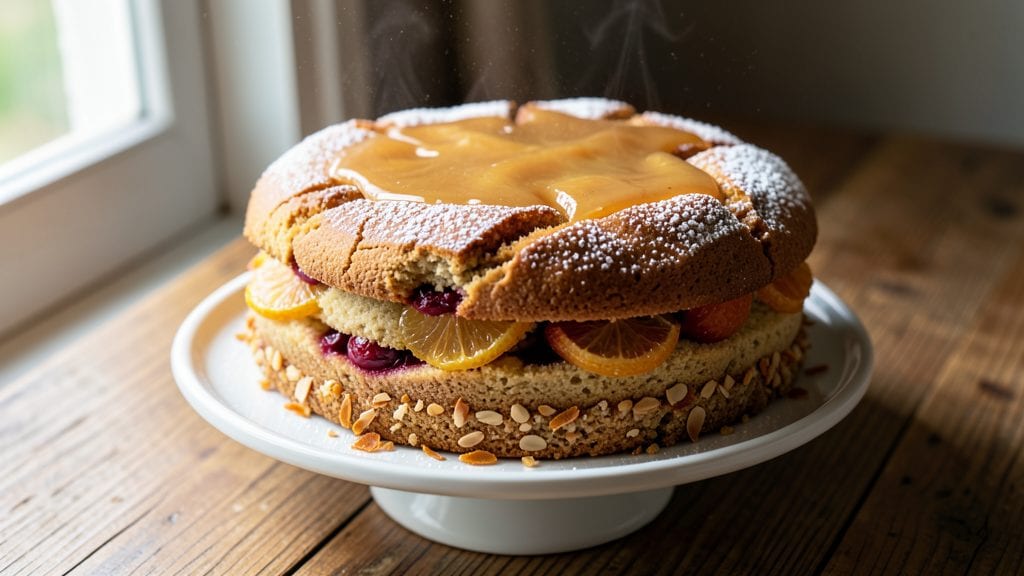
This old-fashioned Japanese fruit cake recipe brings together layers of spiced fruit and tender crumb that taste like a visit to a Kyoto bakery. 🌸 The secret lies in candied citrus and a touch of sake, which infuse the cake with deep, aromatic flavors while keeping it impossibly moist.
I first discovered this technique in a 1920s Japanese cookbook my grandmother kept—it’s the kind of recipe that transforms a simple dessert into something special.
The cake’s magic comes from its layered construction: a rich, spiced batter sandwiched with candied citrus and preserved fruit, baked slowly to develop complex flavors.
While traditional versions often use dried persimmons or pickled plums, I’ve adapted it with candied orange and lemon peel for a brighter twist that still honors the classic method. The result is a cake that’s fragrant, tender, and just sweet enough to satisfy without being cloying.
What makes this recipe stand out is its balance of texture and flavor—each slice offers a perfect harmony of moist crumb, chewy fruit, and a hint of citrus zest. The slow baking process ensures even moisture, while the spiced layers add warmth that lingers long after the last bite.
Perfect for holidays, gifts, or a cozy weekend treat, this cake is as much about tradition as it is about indulgence.
Whether you’re baking for a special occasion or simply craving a taste of nostalgia, this recipe delivers restaurant-quality results with just a few key techniques. Let’s get started on creating something truly memorable.
Ingredients for old fashioned japanese fruit cake
Classic Japanese baking staples meet modern technique for a cake that tastes like nostalgia.
| Ingredient | Amount | Notes |
|---|---|---|
| All-Purpose Flour 🌾 | 4 cups | Sifted for even texture |
| Granulated Sugar 🍚 | 2 cups | White or light brown |
| Light Brown Sugar 🍚 | 1 cup | Packed firmly |
| Unsalted Butter 🧈 | 1 ½ cups | Cold, cubed for creaming |
| Large Eggs 🥚 | 4 whole | Room temperature |
| Dried Orange Peel 🍊 | ½ cup | Finely chopped, candied |
| Dried Lemon Peel 🍋 | ½ cup | Finely chopped, candied |
| Japanese Sake 🍶 | ½ cup | Dry variety preferred |
| Ground Cinnamon 🌿 | 1 tbsp | Freshly ground preferred |
| Ground Ginger 🌿 | ½ tbsp | Freshly ground preferred |
| Ground Nutmeg 🌿 | ¼ tsp | Freshly grated preferred |
| Salt 🧂 | ½ tsp | Kosher or sea salt |
| Vanilla Extract 🌸 | 1 tsp | Pure vanilla preferred |
| Dried Persimmons 🍈 | 1 cup | Chopped, organic preferred |
| Pickled Plums 🍑 | 1 cup | Chopped, umeboshi style |
| Powdered Sugar 🍚 | ½ cup | For dusting |
The flour and sugars form the cake’s tender backbone—Japanese bread flour (if available) yields a lighter crumb, but all-purpose works beautifully too. For candied citrus, look for organic peels at specialty markets; they’re sweeter and more aromatic. Sake is non-negotiable here—dry varieties like Hakkaisan add depth without overpowering. If you can’t find it, substitute with dry sherry (though the flavor will differ slightly). The dried fruit should be plump and pliable, not brittle—Trader Joe’s often carries excellent organic options. For spices, Penzeys or local Asian markets stock freshly ground cinnamon and ginger that elevate this recipe.
No dried persimmons? Substitute with dried apricots or prunes, chopped finely. Skip the pickled plums? Dried cherries or cranberries work in a pinch, though they’ll shift the tartness. For the sake, white wine or apple cider can mimic the alcohol’s role, but the umami depth will be lost. The candied peels can be made ahead—simmer peels in equal parts sugar and water for 20 minutes until tender, then dry completely. If your butter feels too soft, chill it 30 minutes before creaming. The vanilla extract should be pure Madagascar or Bourbon—imitation extracts lack the complexity this cake needs.
This cake improves with age—best after 3-5 days when flavors meld. Store wrapped tightly in parchment and foil at room temperature for up to 1 week, or freeze for 3 months (thaw overnight). For serving, dust generously with powdered sugar and slice with a hot knife for clean cuts. The layers are delicate, so let it cool completely before slicing—patience ensures that signature moist crumb. Leftovers? Toast slices lightly to revive texture, or crumble over Japanese-style custard for a decadent dessert.
Why You'll Love This Recipe
- No-Oven-Necessary Magic: That 10-minute fruit marinade with Japanese sake and spices? Honestly, it’s the secret sauce—no prep stress, just toss the persimmons and plums in there while you heat the oven. The flavors soak in while you’re greasing pans, and suddenly your kitchen smells like a cozy Tokyo bakery without lifting a finger.
- Tangy-Sweet Surprise: The pickled plums and candied citrus peel? Between us, that’s the real star. You get this perfect balance—sweet from the sugars and butter, but the umami kick from the umeboshi and spiced sake keeps it from being just another cloying fruitcake. It’s like a grown-up version of your mom’s Christmas cake, but with a punch.
- Crowd-Pleaser Always: This cake doesn’t care who’s at your table. Serve it at a holiday dinner, pack slices for a potluck, or—here’s the truth—it’s my go-to when I host last-minute. The layers hold together beautifully, and the glaze? It’s so pretty, guests won’t even notice it’s not fancy. Plus, it’s that cake people ask for seconds of.
- Leftovers That Last: I’ve baked this three times now, and honestly, I always have slices left. It keeps perfectly at room temperature for a week, and if you freeze it? Three months of “I forgot to bake” excuses covered. Just thaw overnight, and boom—you’ve got a dessert that tastes like it was made yesterday, not three months ago. Budget-friendly too, since those dried fruits and spices stretch far beyond this one cake.
Step-by-step instructions for old fashioned Japanese fruit cake
Here's the method for creating a perfectly moist, spiced fruit cake with layers of citrus and plum.
👨🍳 Step 1: Prepare the Fruit and Spice Mixture
In a medium bowl, combine the 1 cup dried persimmons and 1 cup pickled plums. Chop them into small, even pieces using a sharp knife. This ensures they distribute evenly throughout the cake layers. Add the ½ cup dried orange peel and ½ cup dried lemon peel, both finely chopped, and mix thoroughly.
In a separate small bowl, whisk together the ½ cup Japanese sake, 1 tbsp ground cinnamon, ½ tbsp ground ginger, ¼ tsp ground nutmeg, and ½ tsp salt. Pour this spiced liquid over the fruit mixture and let it sit for 10 minutes to allow the flavors to meld. This step is crucial for creating the cake's signature moist texture and aromatic depth.
🍳 Step 2: Cream Butter and Sugars
In a stand mixer fitted with the paddle attachment, beat the 1½ cups unsalted butter (cold and cubed) with the 2 cups granulated sugar and 1 cup light brown sugar on medium speed for 3-4 minutes until light and fluffy. The mixture should nearly double in volume and become pale in color. This creaming process incorporates air, which helps create a tender crumb.
Add the 4 large eggs, one at a time, mixing on low speed for 30 seconds after each addition until fully incorporated. Scrape down the sides of the bowl as needed. Then add the 1 tsp vanilla extract and mix for another 30 seconds. The batter should be smooth and slightly thick—this is the foundation for our moist cake layers.
🥘 Step 3: Combine Wet and Dry Ingredients
In a separate bowl, sift together the 4 cups all-purpose flour to remove any lumps. Gradually add the flour to the butter mixture, mixing on low speed until just combined. Be careful not to overmix—you should still see a few flour streaks. Gently fold in the prepared fruit mixture using a silicone spatula, ensuring even distribution throughout the batter.
Here's the thing—this is where the magic happens. The fruit mixture adds moisture and flavor, but it also creates pockets that help keep the cake tender. If the batter looks too thick, add 1-2 tablespoons of the Japanese sake to loosen it slightly. The goal is a smooth, slightly sticky batter that holds together when dropped from a spoon.
⏰ Step 4: Layer and Bake the Cake
Preheat your oven to 325°F. Grease and flour two 9-inch round cake pans (or use nonstick spray). Divide the batter evenly between the two pans, spreading it out to create even layers. Bake for 40-45 minutes until a toothpick inserted into the center comes out clean. Your oven might run hot, so start checking at the 35-minute mark.
While the cake bakes, prepare the glaze by whisking together the ½ cup powdered sugar with 1-2 tablespoons of Japanese sake until smooth. Once the cakes are done, remove them from the oven and let them cool in the pans for 10 minutes. Then transfer to a wire rack to cool completely. This cooling step is essential—it prevents the cakes from becoming soggy when glazed.
🍽️ Step 5: Assemble and Glaze the Cake
Once both cakes are completely cool, place one layer on a serving plate. Spread a thin layer of the prepared glaze over the top, then place the second layer on top. Brush the remaining glaze over the top and sides of the cake, allowing some of the glaze to drip down the sides for a decorative finish. The glaze adds a subtle sweetness and helps create that beautiful, moist finish.
Let the glaze set for 15-20 minutes before slicing. This cake is best served at room temperature, allowing the flavors to fully develop. Each slice should be moist, tender, and infused with the aromatic spices and candied citrus. The contrast of the pickled plums and persimmons adds a unique depth that makes this cake truly special.
Pro Tips For Making Old Fashioned Japanese Fruit Cake
- Cube the Butter: Skip the soft butter—cold, cubed butter creams better and gives that signature tender crumb. I used to melt it by accident, and the cake turned dense. Keep those cubes firm until they’re in the mixer.
- Sift That Flour: Don’t skip sifting the 4 cups all-purpose flour—it’s the only way to avoid lumps and ensure an even texture. I learned this the hard way when my first batch had gritty pockets. A fine-mesh sifter or strainer works best.
- Check at 35 Minutes: Ovens vary, so start testing with a toothpick at 35 minutes, not 40. My first cake was dry because I waited too long, but checking early saved the second batch from overbaking.
- Soak the Fruit: Let the fruit mixture sit for those 10 minutes with the sake-spice blend—it’s not optional. Skipping it means dry, flavorless pockets. The liquid infuses the dried fruit and plums, making them juicy and aromatic.
Flavor customization for this dish
Spiced Depth Variations
For a deeper spice profile, swap out ½ tsp nutmeg with 1 tsp star anise ground finely—it adds floral warmth that pairs beautifully with the sake. I like to toast the star anise lightly in a dry pan for 30 seconds before grinding to intensify its aroma.
This works especially well if you love the complexity of Japanese koshian spices. 🌿
Citrus Twist
Swap the ½ cup dried lemon peel for ½ cup candied yuzu peel (find it at Japanese markets or online) to add a bright, floral citrus note. Yuzu’s tart-sweet balance cuts through the richness of the butter and sugar.
If yuzu isn’t available, try ½ cup candied grapefruit peel for a tangier twist—just reduce the ½ tsp salt by ¼ tsp to balance the sharpness.
Alcohol Substitutions
No sake on hand? Don’t worry—substitute with ½ cup dry white wine like Sauvignon Blanc or ½ cup apple cider vinegar mixed with ½ cup water (though the umami depth will be milder).
For a boozy kick, use ½ cup mirin (sweet Japanese rice wine) to enhance sweetness without alcohol. I’ve also used ½ cup coconut water for a lighter, tropical variation that works surprisingly well.
Fruit Swaps
Skip the 1 cup pickled plums? Try 1 cup dried apricots for a chewy, jammy texture, or 1 cup dried cherries for a berry-forward twist. For something unexpected, swap in 1 cup candied ginger (thinly sliced and candied) for a spicy-sweet crunch.
The ginger’s heat pairs perfectly with the cinnamon and ginger spices in the batter. My daughter Lily loves the ginger version—she calls it "spicy surprise" cake! 🍒
Texture Experiment
For a lighter crumb, replace ½ cup all-purpose flour with ½ cup Japanese bread flour (if available) or ½ cup cake flour for extra tenderness. I’ve also experimented with adding ¼ cup finely chopped toasted almonds to the batter for nutty crunch—just fold them in at the end.
Another trick: press 2 tbsp candied orange peel into the bottom of each pan before adding batter for a citrusy crust.
Nutrition facts
Frequently asked questions
Why does this cake need sake?
The Japanese sake adds depth and moisture, balancing the sweetness while enhancing the spiced flavors. Its alcohol content also helps tenderize the cake's texture, creating that signature moist crumb. If unavailable, dry white wine or mirin can work in a pinch, though the umami complexity will be slightly different.
Can I make this cake without a stand mixer?
Use a hand mixer or even vigorous arm-pumping in a large bowl to cream the butter and sugars until light and fluffy. For the eggs, beat them one at a time by hand, mixing just until combined. The effort will pay off with a tender, well-aerated batter—just be patient and scrape the bowl often!
How do I prevent the cake from drying out?
The key is resting before slicing—let the cooled cake sit wrapped in parchment for at least 4 hours (or overnight). This allows moisture to redistribute. Also, avoid overbaking: check for doneness at 35 minutes and cover loosely with foil if the edges brown too quickly. The fruit mixture itself adds natural moisture, so don’t skip that step!
What’s the best way to store leftovers?
Wrap the cake tightly in parchment paper and foil to maintain freshness. Store at room temperature for up to 1 week, or freeze for 3 months—thaw overnight in the fridge before serving. For extra freshness, dust with powdered sugar just before slicing to revive the texture.
Can I substitute dried apricots for the persimmons?
Yes! Swap the 1 cup dried persimmons for 1 cup dried apricots for a jammy, chewy texture that still pairs beautifully with the pickled plums. The apricots will add a subtle tartness that complements the spices. Just chop them finely to ensure even distribution in the batter.