
Desserts
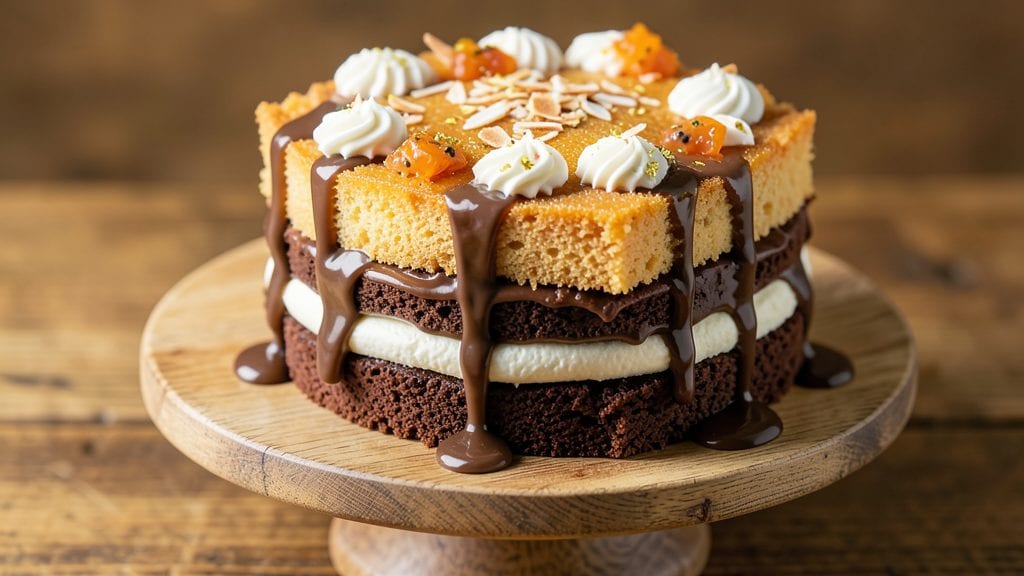
This Nigerian cake recipe delivers layers of fluffy sponge cake infused with rich cocoa and crunchy pistachios—a dessert that balances tradition with modern indulgence. 💛 The secret lies in the precise ratio of ingredients and gentle folding that creates airy, melt-in-your-mouth texture while maintaining structure.
What sets this apart is the blend of cocoa powder and crushed pistachios, which adds depth and texture without overpowering the cake's natural sweetness.
The recipe begins with a simple yet precise mix of all-purpose flour, sugar, eggs, and baking powder, baked in layers to achieve that signature height. Each layer is lightly moistened with a cocoa-infused syrup for extra tenderness, while the pistachios provide a satisfying crunch.
The cake's versatility makes it perfect for celebrations or everyday treats, with options to add vanilla or fruit extracts for variation.
What you’ll end up with is a visually stunning cake with golden-brown layers, a hint of nutty aroma from the pistachios, and a moist crumb that holds together beautifully.
The frosting—whether buttercream, cream cheese, or ganache—ties it all together, creating a dessert that’s as impressive to serve as it is to eat. This recipe bridges tradition and innovation, delivering a cake that feels both nostalgic and fresh.
For those who love customization, you can adjust the cocoa level for a milder flavor or add dried fruits like raisins or cranberries. The key to success is patience in the baking process and letting the cake cool gradually before frosting.
Ready to bake a cake that’s as beloved as it is delicious?
Ingredients for nigerian cake
Pantry staples plus a few specialty touches—this cake balances tradition with modern flair.
| Ingredient | Amount | Notes |
|---|---|---|
| All-Purpose Flour 🌾 | 3 cups | Sifted for light texture |
| Granulated Sugar 🍚 | 2 ½ cups | White or light brown |
| Unsalted Butter 🧈 | 1 ½ cups | Room temperature, full-fat |
| Large Eggs 🥚 | 6 whole | Room temperature, separated |
| Baking Powder 🧂 | 2 tsp | Double-acting preferred |
| Vanilla Extract 🌿 | 2 tsp | Pure, high-quality |
| Unsweetened Cocoa Powder 🍫 | ½ cup | Dutch-processed preferred |
| Crushed Pistachios 🥜 | 1 ½ cups | Shells removed, toasted |
| Milk 🥛 | 1 ½ cups | Whole milk preferred |
| Salt 🧂 | ½ tsp | Fine sea salt |
| Lemon Juice 🍋 | 1 tbsp | Freshly squeezed |
| Powdered Sugar 🍚 | 2 cups | For cocoa syrup |
| Heavy Whipping Cream 🥛 | 1 ½ cups | Cold for frosting |
The cocoa powder and pistachios are non-negotiable for that signature flavor. Dutch-processed cocoa (like Droste) gives a smoother taste, while unsalted butter from Plugrá or Land O'Lakes ensures richness. Pistachios? Costco's shelled variety is the best value—just toast them in a dry pan for 3 minutes to deepen the flavor. The eggs should be room temperature; cold ones won’t incorporate properly. I always buy organic eggs from the grocery store’s refrigerated section—they’re fresher and hold their shape better in baking.
No Dutch-processed cocoa? Natural cocoa powder at half the amount works, but the cake will be denser. Running short on pistachios? Toasted pecans or almonds add a similar crunch, though the flavor shifts. Substituting butter for margarine? Don’t bother—the texture suffers. For the cocoa syrup, if you’re in a pinch, use hot water instead of milk, but the layers won’t be as moist. The vanilla extract? Pure Madagascar bourbon is ideal, but imitation will do in a bind. Just don’t skip it—vanilla ties everything together.
This cake keeps beautifully. Wrap the layers in plastic wrap and store at room temperature for up to 3 days, or freeze for 3 months. The frosting? Whip it up just before serving—it melts faster in warm kitchens. I like to portion the cake into individual slices and wrap them in parchment, then foil. That way, you can grab a piece straight from the fridge without waiting for it to thaw. The pistachios stay crunchy for days if you toast them fresh before baking—no need to worry about soggy nuts.
Why You'll Love This Recipe
- No-Fuss Fluffiness: I’ll be real—this cake is that recipe where you can prep everything ahead and just pop it in the oven. The egg-sugar ribbon stage (yes, it’s a thing) takes the most time, but once that’s done, folding in the dry ingredients and milk is basically child’s play. The pistachios just get sprinkled on top before baking—no fancy decorating skills required.
- Rich, Layered Magic: The cocoa syrup isn’t just frosting—it’s the secret weapon. That thick, velvety layer between the fluffy sponge and the pistachio buttercream? Chef’s kiss. Every bite has that perfect balance of airy cake, creamy syrup, and nutty crunch. Trust me, it’s the kind of flavor that makes people ask for seconds without even realizing why.
- Crowd-Pleaser Any Day: This cake isn’t just for special occasions—it’s my go-to for family gatherings, potlucks, or even a lazy Sunday afternoon. The layers keep well for up to three days, and freezing it? Foolproof. Plus, the pistachios make it feel fancy, but the ingredients are simple enough that it won’t break the bank. My niece always steals a slice first.
- Budget-Friendly Luxury: I love that this cake feels indulgent but doesn’t require expensive ingredients. The cocoa powder and pistachios add that gourmet touch, but the rest? Basic pantry staples. And since it serves a crowd (eight to ten slices per layer), you’re getting way more bang for your buck than a store-bought cake. Plus, leftovers? Pure comfort food.
Step-by-step instructions for fluffy sponge layers with cocoa-pistachio magic
Here's how to craft that signature Nigerian cake texture—light, airy layers with rich cocoa-pistachio flavor.
👨🍳 Step 1: Whisk Eggs and Sugar to Ribbon Stage
In a stand mixer fitted with the whisk attachment, combine the 6 large eggs and 2½ cups granulated sugar. Beat on high speed for 5-7 minutes until the mixture triples in volume, becomes pale, and forms soft ribbons when the whisk is lifted. Here's the thing—this step is non-negotiable for that signature fluffiness. You'll know it's ready when the batter clings to the whisk in glossy strands that slowly dissolve.
While mixing, keep an eye on the bowl—it should feel noticeably cooler to the touch. If the mixture looks grainy, add 1 tablespoon lemon juice and mix for another 30 seconds. This acidity helps stabilize the egg foam and prevents deflation later.
👨🍳 Step 2: Fold in Dry Ingredients with Precision
In a separate bowl, sift together the 3 cups all-purpose flour, 2 teaspoons baking powder, and ½ teaspoon salt. Gently fold one-third of the dry mixture into the egg batter using a spatula, cutting down the middle to maintain air incorporation. Real talk: don't overmix here—just until combined. Then add ½ cup unsweetened cocoa powder and fold until evenly distributed.
In a small bowl, whisk together the 1½ cups milk and 2 teaspoons vanilla extract. Gradually add this liquid mixture to the batter while folding continuously. Alternate with the remaining dry ingredients, ending with the milk mixture. The batter should be thick but still pourable—like heavy pudding. If it looks too stiff, add 1-2 tablespoons milk to loosen it.
🥘 Step 3: Layer and Bake the Sponge
Preheat your oven to 350°F and grease two 9-inch round cake pans with ½ cup unsalted butter (reserving the rest for frosting), then dust with flour. Divide the batter evenly between the pans. For that classic Nigerian cake look, sprinkle ½ cup crushed pistachios evenly over each layer before baking. Tap the pans gently on the counter to release any air bubbles.
Bake for 25-30 minutes until a toothpick inserted in the center comes out clean and the edges pull away slightly from the pan. Don't open the oven during baking—this prevents the cakes from sinking. When done, let them cool in the pans for 10 minutes, then transfer to a wire rack to cool completely. The cakes should be domed with slightly cracked tops—that's your sign of perfect baking.
🍳 Step 4: Prepare the Cocoa Syrup and Frosting
While the cakes cool, make the signature cocoa syrup by combining 2 cups powdered sugar, 1½ cups heavy whipping cream, and ½ cup unsweetened cocoa powder in a saucepan. Cook over medium-low heat, stirring constantly, until the mixture thickens enough to coat the back of a spoon—about 5-7 minutes. Remove from heat and let cool completely. This syrup is what makes Nigerian cake uniquely moist and flavorful.
In a separate bowl, whip the remaining ½ cup unsalted butter (softened) with 1 cup powdered sugar until light and fluffy. Fold in the remaining ½ cup crushed pistachios for the final frosting. Here's where it gets fun—spread the cocoa syrup evenly over the cooled cake layers, then add the buttercream frosting. The contrast of the rich syrup with the lighter frosting creates that iconic layered effect.
🔪 Step 5: Assemble and Garnish
Stack the two cake layers with a thin layer of frosting between them. Spread the remaining frosting evenly over the top and sides, then chill in the refrigerator for 30 minutes to set. Before serving, press additional ½ cup crushed pistachios onto the sides and top for that signature crunch and presentation. Each slice should reveal those beautiful fluffy layers with pockets of cocoa syrup—this is the magic of Nigerian cake!
Pro Tips For Making Nigerian Cake
- Toast Pistachios First: I learned this the hard way—raw pistachios add a bitter bite that ruins the buttery sweetness. Spread the 1.5 cups crushed pistachios on a baking sheet and toast at 350°F for 5-7 minutes until fragrant. Let them cool completely before folding into the frosting or sprinkling on top. The extra effort makes a real difference in flavor.
- Room-Temp Butter Matters: Cold butter from the fridge won’t cream properly, and that’s when your cake turns dense. Take the 1.5 cups unsalted butter out 1-2 hours before mixing—it should dent when pressed but not be greasy. If you’re in a rush, microwave it in 10-second bursts until just soft. Trust me, your layers will thank you.
- Don’t Overmix the Batter: I used to treat cake batter like cookie dough, beating it until smooth. Big mistake. Once you’ve folded in the 3 cups sifted flour and 2 tsp baking powder, stop as soon as it’s just combined—lumpy but no streaks. Overmixing kills the air bubbles you worked so hard to create in the egg stage, and that’s when your cake flattens instead of staying light.
- Test Syrup Thickness: The cocoa syrup is the soul of this cake, but I’ve ruined batches by eyeballing it. Instead of guessing, use the "spoon test"—when the mixture coats the back of a spoon but still drizzles slowly, it’s perfect. If it’s too thin, simmer another 1-2 minutes; too thick, and your syrup will turn grainy. Patience here keeps the layers moist without being soggy.
Troubleshooting great nigerian cake
Cakes Too Dense?
If your Nigerian cake turns out dense instead of light and fluffy, it’s likely due to overmixing or underbeating the eggs. I always emphasize beating the eggs and sugar to the ribbon stage—when the mixture forms soft ribbons that slowly dissolve.
If your batter looks grainy or stiff, add 1 tablespoon lemon juice and mix for 30 seconds to stabilize the foam. Overmixing after adding dry ingredients collapses the air pockets, so fold gently until just combined. 💡
Batter Too Stiff?
When the batter feels thicker than pudding, it’s usually from too much flour or not enough liquid. If this happens, add 1-2 tablespoons milk gradually until the batter is pourable but still thick.
This ensures the cake rises properly instead of sinking in the middle. I’ve learned to measure flour by spooning and leveling to avoid packing it into the cup, which adds extra bulk.
Cracked or Sunken Layers?
Cracks or sinking often happen if you open the oven too soon or if the batter wasn’t evenly distributed. Bake until a toothpick comes out clean, but avoid peeking! Let the cakes cool in the pans for 10 minutes before transferring to a rack.
If the edges pull away too early, your oven might be too hot—adjust to 340°F if needed. A domed top with slight cracks is perfect; flat or cracked layers mean overbaking.
Dry or Gritty Texture?
A dry cake usually means too much flour or insufficient moisture. Double-check your measurements—3 cups sifted flour is key. If the batter looks dry, add 1-2 tablespoons milk or 1 teaspoon extra lemon juice to balance the acidity.
The cocoa syrup is what keeps the cake moist, so ensure you’re using 2 cups powdered sugar and 1½ cups heavy whipping cream—don’t skimp! Underbaking can also cause dryness, so bake until the center reaches 190°F internal temperature.
Frosting Not Setting?
If your buttercream frosting melts or doesn’t hold shape, the butter might not be softened enough or the powdered sugar wasn’t enough. Use ½ cup softened butter and 1 cup powdered sugar for the frosting, and whip until light and fluffy.
Chill the cake for 30 minutes before adding the frosting—this helps it set properly. If it still runs, add 1 teaspoon cornstarch to thicken it slightly. Room temperature frosting will melt faster, so keep it cold until serving.
Nutrition facts
Frequently asked questions
Why does this Nigerian cake recipe need room-temperature eggs and butter?
Room-temperature eggs and butter blend seamlessly into the batter, creating that signature light, airy texture. Cold ingredients can cause uneven mixing, leading to dense spots or uneven rising. The eggs form a stable foam when whipped properly, while softened butter incorporates smoothly without disrupting the air pockets in the batter.
Can I substitute Dutch-process cocoa powder with natural cocoa?
Yes, but expect a slightly denser texture. Dutch-process cocoa is more finely ground and less acidic, which helps achieve that signature fluffy crumb. If using natural cocoa, reduce the amount by 1 tablespoon and add an extra ½ teaspoon baking soda to balance acidity. The flavor will be richer and slightly more bitter.
What’s the best way to prevent cracks in the cake layers?
Cracks happen when cakes cool too quickly or are overbaked. Let them cool in the pans for 10 minutes before transferring to a rack, and avoid opening the oven during baking. If cracks appear, they’re actually a sign of perfect baking—just press extra crushed pistachios onto the cracks for a decorative touch. Overbaking causes flat layers, so pull them out when a toothpick comes out clean.
How do I adjust the recipe for a smaller or larger cake?
For a single 9-inch cake, halve all ingredients and bake in one pan. For extra layers, double the recipe and use three 9-inch pans. Adjust baking time by 5-10 minutes per layer, checking for doneness with a toothpick. Always grease pans well and let cakes cool completely before stacking to avoid soggy layers.