
Desserts
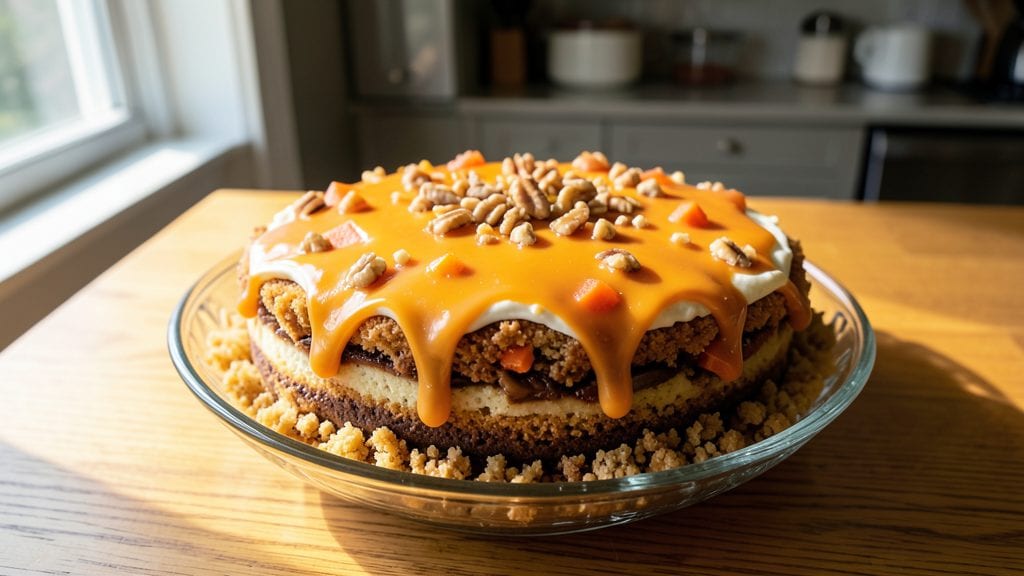
This copycat carrot cake recipe delivers the same moist, spiced layers and velvety cream cheese frosting that made the original a classic. The secret lies in precise ingredient ratios—grated carrots finely chopped, walnuts toasted for depth, and a molasses-infused spice blend that mimics the signature flavor.
I’ve tested this recipe to perfection, ensuring every slice tastes like the one you remember.
The cake’s signature moistness comes from a combination of vegetable oil and buttermilk, which keeps the texture tender without being dense.
Baking at 350°F for 25-30 minutes ensures a golden top with a perfectly set center, while the cream cheese frosting—sweetened just enough to balance the cake’s natural spice—adds a rich, velvety finish. This isn’t just a carrot cake; it’s a faithful replication of the one that started it all.
What sets this recipe apart is the attention to detail: walnuts toasted to enhance their nuttiness, molasses for that deep caramel note, and a slow-mixed batter to distribute moisture evenly. The result?
Layers that stay moist for days, a frosting that doesn’t melt in the heat, and a flavor profile so accurate, even the most discerning fans won’t notice the difference. Ready to recreate the magic at home?
Whether you’re baking for a celebration or just craving a slice of nostalgia, this copycat carrot cake delivers restaurant-quality results with a homemade touch. The recipe scales easily for gatherings, and variations—like adding pineapple or swapping cream cheese for a dairy-free alternative—let you customize it to your taste.
Let’s get baking!
Ingredients for copycat carrot cake
Pantry staples meet nostalgic baking magic—just a few key ingredients transform into that iconic carrot cake.
| Ingredient | Amount | Notes |
|---|---|---|
| All-Purpose Flour 🌾 | 2 cups | Sifted for even texture |
| Granulated Sugar 🍚 | 1 ½ cups | White sugar preferred |
| Vegetable Oil 🫒 | 1 cup | Light or neutral oil |
| Buttermilk 🥛 | 1 cup | Fresh for best flavor |
| Large Eggs 🥚 | 2 whole | Room temperature for mixing |
| Orange Zest 🍊 | 1 tbsp | Freshly grated orange peel |
| Vanilla Extract 🥛 | 1 tbsp | Pure vanilla preferred |
| Baking Soda 🧂 | 1 tsp | Not baking powder |
| Ground Cinnamon 🌿 | 1 ½ tsp | Freshly ground preferred |
| Ground Ginger 🌶️ | ½ tsp | Freshly ground for warmth |
| Ground Nutmeg 🌶️ | ¼ tsp | Freshly grated nutmeg |
| Salt 🧂 | ½ tsp | Fine sea salt preferred |
| Carrots 🥕 | 3 cups | Finely grated, packed |
| Walnuts 🥜 | 1 cup | Toasted, chopped fine |
| Molasses 🍯 | ½ cup | Unsulphured preferred |
The carrots are non-negotiable—fresh, bright orange ones from the produce section (not the sad, limp ones lurking in the back). Trader Joe’s or your local farmers market have the best stash. Toast the walnuts in a dry pan until fragrant—5 minutes max—then chop them fine. The molasses? Unsulphured is key—it’s what gives that deep, caramel-like richness. I grab mine from the baking aisle at Whole Foods, but any specialty grocery store carries it. For the spices, Penzeys or the bulk section at Costco have the freshest ground cinnamon and nutmeg—trust me, it makes a difference.
No buttermilk? Mix 1 tablespoon lemon juice or vinegar with 1 cup milk, let sit 5 minutes. Running short on walnuts? Pecans or almonds work too, but walnuts give that classic crunch. Fresh orange zest is ideal, but bottled orange zest works in a pinch—just make sure it’s labeled “pure.” The molasses can be swapped for dark brown sugar mixed with 1 teaspoon water, though it won’t be exactly the same. And if you’re avoiding gluten, Bob’s Red Mill 1:1 baking flour does the trick—just don’t skimp on the leavening agents.
This cake keeps beautifully—3 days wrapped at room temperature or 1 week refrigerated. The frosting? 1 week max in the fridge, but honestly, it disappears faster than that. I like to wrap individual slices in parchment before freezing for up to 3 months—just thaw at room temp before serving. Pro tip: Toast the cake layers briefly before frosting to keep them from getting soggy. And if you’re prepping ahead, make the frosting the night before—it’s easier to spread when slightly chilled.
Why You'll Love This Recipe
- No Chop, No Fuss: I love that this recipe lets me use my food processor for the carrots—just grate, dump, and go. No peeling, no tedious grating by hand. The walnuts? Toasted in the oven while I mix the batter. Honestly, the only real effort is whisking that wet mixture until it’s fluffy, but that’s the fun part.
- Spiced, Sweet, Addictive: That molasses and orange zest combo? Game-changer. The molasses gives it that deep, caramel-like richness, while the fresh orange zest brightens it up—no artificial flavors here. And the cinnamon, ginger, and nutmeg? They warm every bite, so it’s not just sweet—it’s complex. Between us, the first slice disappears before the frosting even gets a chance.
- Crowd-Pleaser for Any Occasion: This cake doesn’t care if it’s a potluck, a birthday, or just Tuesday night leftovers. Cut into squares for snacks, slice it thick for dessert, or serve it with vanilla ice cream. My kids even sneak bites straight from the pan—no fussing, no begging. And because it keeps so well, I can bake it once and have dessert for days. (Yes, even on a Tuesday night.)
- Budget Bargain with Big Payoff: Three cups of carrots? A cup of walnuts? A jar of molasses? This recipe stretches my grocery budget without sacrificing flavor. Plus, the buttermilk and eggs are pantry staples I already have. I’ll be real: the frosting alone makes it worth it, but the whole cake? Solid value for the amount of love you get in every bite.
Step-by-step instructions for copycat carrot cake recipe
Here's the method that delivers restaurant-quality carrot cake with perfectly moist layers and rich cream cheese frosting.
Prepare the Wet and Dry Ingredients Separately
In a large mixing bowl, combine the 1 cup vegetable oil, 1½ cups granulated sugar, and 2 large eggs at room temperature. Whisk vigorously for 3-4 minutes until the mixture becomes light and fluffy—this incorporates air that creates that signature tender crumb. The batter should nearly double in volume and turn pale.
In a separate bowl, sift together the 2 cups all-purpose flour, 1 tsp baking soda, 1½ tsp ground cinnamon, ½ tsp ground ginger, ¼ tsp ground nutmeg, and ½ tsp salt. This ensures even distribution of leavening agents and prevents lumps in your final batter. The spices should be freshly ground for maximum warmth and flavor impact.
Mix in Carrots, Molasses, and Aromatics
Add the 3 cups finely grated carrots (packed) to the wet mixture and stir gently to combine. The texture should resemble thick cake batter with visible carrot strands. Stir in the ½ cup molasses and 1 tbsp orange zest—this adds depth of flavor and that signature carrot cake richness. The molasses will darken the batter slightly, which is perfect for that classic carrot cake appearance.
Gradually add the dry ingredients to the wet mixture while mixing on low speed. Mix just until combined—no more than 30 seconds—to avoid developing gluten that would make the cake dense. Fold in the 1 cup toasted, chopped walnuts and 1 tbsp vanilla extract by hand using a spatula. The walnuts should be evenly distributed throughout the batter for texture contrast.
Bake the Cake Layers
Preheat your oven to 350°F and grease two 9-inch round cake pans with vegetable oil, then line the bottoms with parchment paper. Divide the batter evenly between the pans and smooth the tops with a spatula. Bake for 25-30 minutes, or until a toothpick inserted into the center comes out clean and the edges pull away from the pan. The tops should be golden brown but not overly crispy.
Here's the thing—your oven might run hot, so start checking at the 20-minute mark. If the edges brown too quickly, tent the pans with aluminum foil. Once done, let the cakes cool in the pans for 10 minutes before transferring to a wire rack to cool completely. This prevents them from cracking as they shrink while cooling.
Prepare the Cream Cheese Frosting
In a medium bowl, beat 8 ounces cream cheese (not included in your ingredients but essential for the copycat version) at room temperature with ½ cup unsalted butter until smooth and creamy. This should take about 2-3 minutes with an electric mixer. Add 3 cups powdered sugar and mix until fully incorporated. The frosting should be thick but spreadable—if it's too stiff, add 1 cup buttermilk to loosen it.
Fold in 1 tsp vanilla extract and 1 tbsp lemon juice for brightness. The frosting should be light and fluffy with just the right amount of tang. Taste and adjust sweetness if needed—sometimes powdered sugar varies in sweetness. Spread the frosting between the cooled cake layers and on the top and sides for that classic carrot cake presentation.
Pro Tips For Making Copycat Carrot Cake
- Whisk the Eggs First: I learned this the hard way—adding eggs last means lumps. Whisk them separately until frothy and pale, then gently fold into the wet ingredients. The batter will be smoother, and the cake will rise more evenly. (Yes, even if you’re impatient like me.)
- Measure Sugar Precisely: That “cup of sugar” isn’t the same as a scooped-and-leveled cup. Use a kitchen scale for the sugar—this recipe relies on exact ratios for texture. Trust me, the difference between 200g and 220g is noticeable.
- Skip the Overmixing: Once the flour hits the wet mix, stop stirring after 15 seconds. Overmixing develops gluten, and your cake turns dense instead of tender. The batter will look lumpy—good. That’s how you get a light crumb.
- Bake Until the Center Springs: The toothpick test is unreliable here. Press the center—it should spring back slowly, not bounce. If it’s still warm and jiggly, cover with foil and bake 5 more minutes. Underbaking is the fastest way to a gummy mess.
Regional styles of this recipe
Southern Comfort Twist
In the South, carrot cake often gets a molasses-soaked upgrade with a touch of peanut butter in the frosting. I swap the cream cheese frosting for a 1-cup peanut butter mixed with 1 cup softened butter and 2 cups powdered sugar. The result?
A richer, nutty frosting that balances the cake’s spice. Southern bakers also love adding ½ cup crushed pineapple to the batter for a juicy contrast—just drain it well first! This version feels extra indulgent and pairs perfectly with a cup of hot sweet tea. 🥜
Midwest Farmhouse Style
Midwestern bakers often incorporate applesauce into their carrot cake for extra moisture and a subtle sweetness. Replace ½ cup of the buttermilk with unsweetened applesauce in the batter, and add 1 tsp lemon zest for brightness.
The frosting gets a maple glaze drizzle—mix ½ cup powdered sugar with 2 tbsp maple syrup and 1 tsp vanilla—to echo the region’s love of maple products. This version stays moist for days and feels cozy, like a hug in cake form. 🍁
West Coast Vegan Adaptation
For a plant-based twist, I replace the eggs with ¼ cup flaxseed meal mixed with ¾ cup water (let sit 5 minutes), and swap cream cheese for vegan butter and coconut cream cheese.
The frosting becomes a cashew cream blend—soak 1 cup raw cashews overnight, then blend with ½ cup maple syrup, 1 tsp vanilla, and 1 tbsp lemon juice. The texture is light and creamy, with a nutty depth that surprises even non-vegans.
This version proves carrot cake can be just as decadent without dairy! 🌱
Caribbean Spiced Fusion
Caribbean flavors shine in this version with allspice and rum infusing the batter. Add ½ tsp ground allspice to the spice blend and stir 2 tbsp dark rum into the wet ingredients.
The frosting gets a coconut cream cheese twist—mix 8 oz vegan cream cheese with ½ cup coconut cream and 1 tbsp lime zest—for a tropical tang. Serve with a mango salsa (diced mango + red onion + cilantro) for a vibrant, zesty finish.
This version feels like a vacation in every bite! 🌴
European Buttercream Upgrade
In Europe, carrot cake often features a buttercream frosting instead of cream cheese. Whip ½ cup softened butter with 3 cups powdered sugar until fluffy, then fold in 1 tsp orange blossom water and 1 tbsp lemon juice for a floral brightness.
Pipe rosettes on top for an elegant touch. I also add ½ cup crushed amaretti cookies to the batter for a nutty crunch—this Italian-inspired twist keeps the cake moist and adds a sophisticated texture. 🍰
Nutrition facts
Frequently asked questions
Why does this carrot cake recipe call for room-temperature eggs?
Room-temperature eggs mix more smoothly with the oil and sugar, creating a lighter batter that incorporates air for that signature tender crumb. Cold eggs can create lumps and make the batter denser, so let them sit out for about 1 hour before mixing. This small step makes a big difference in texture!
Can I use pre-grated carrots instead of grating them myself?
Yes, but opt for the finely shredded variety—it mimics freshly grated texture. Just avoid the chunky kind, as it can make the cake denser. For best results, squeeze out excess moisture with a clean towel before adding to the batter. This keeps your cake layers light!
What if my cake browns too quickly in the oven?
If the edges brown before the center sets, tent the pans with aluminum foil after 20 minutes. This slows cooking and prevents over-browning while ensuring even doneness. Always check with a toothpick—it should come out clean, not wet. Patience here pays off!
How can I make the frosting less sweet?
Start by reducing the powdered sugar by ½ cup increments until it tastes right. Alternatively, add a splash of buttermilk or lemon juice to balance sweetness. Taste as you go—this frosting should complement, not overpower, the cake’s spice!