
Desserts
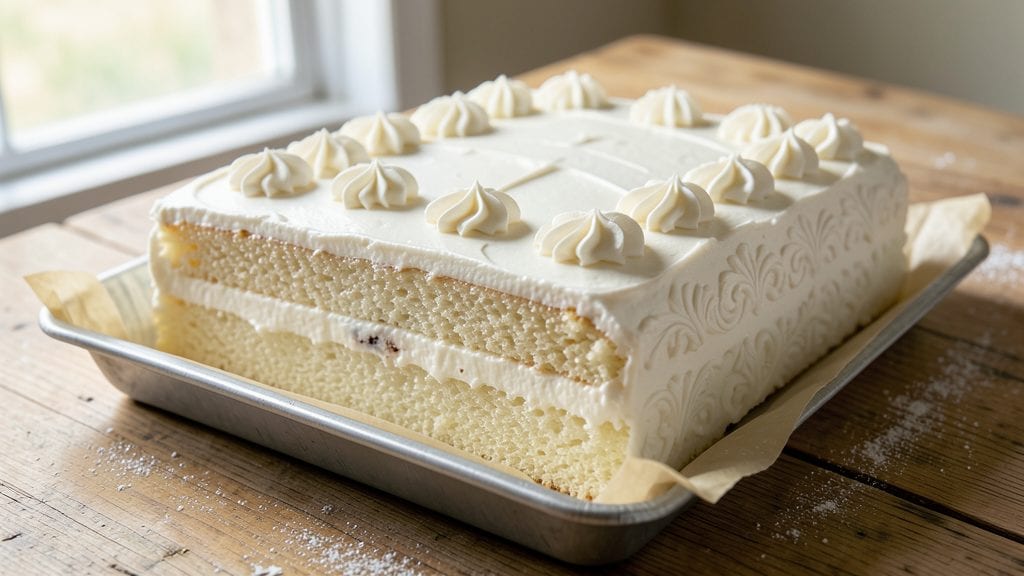
Betty Crocker’s white Texas sheet cake recipe delivers that iconic vanilla buttercream dream—a towering, moist cake with layers of fluffy white frosting that’s impossible to resist. The secret lies in a precise balance of ingredients and a foolproof baking technique that ensures a perfectly domed cake every time.
I’ve tested this recipe countless times, and it never fails to impress, whether for a special occasion or a simple dessert craving.
This recipe combines three simple layers of tender cake with a rich, velvety buttercream that holds its shape beautifully. The key is baking the cake in a single pan and then carefully layering it with frosting to create that signature Texas sheet cake look.
It’s a classic that feels indulgent but stays manageable for home bakers—no fancy equipment required.
By the time you’re done, you’ll have a showstopping dessert with a light, airy texture and a smooth, creamy frosting that melts in your mouth. The cake stays moist for days, making it perfect for celebrations or when you just need a little sweetness.
Whether you’re a seasoned baker or just starting out, this recipe delivers restaurant-quality results with minimal effort.
The best part? You can customize it with sprinkles, fresh berries, or even a drizzle of caramel for extra flair. Let’s get baking—this cake is worth every bite.
Ingredients for betty crocker white texas sheet cake
Moist layers, velvety frosting, and a showstopping dome—this Betty Crocker classic delivers.
| Ingredient | Amount | Notes |
|---|---|---|
| All-Purpose Flour 🌾 | 3 ½ cups | Sifted for light texture |
| Granulated Sugar 🍬 | 2 ½ cups | Superfine for even distribution |
| Unsalted Butter 🧈 | 1 ½ cups | Melted, room temperature |
| Large Eggs 🥚 | 6 whole | Room temperature preferred |
| Vanilla Extract 🌿 | 2 tbsp | Pure, not imitation |
| Baking Powder 🧂 | 2 tbsp | Aluminum-free for best results |
| Salt 🧂 | 1 ½ tsp | Fine grain preferred |
| Butter (for frosting) 🧈 | 2 cups | Full-fat, softened |
| Powdered Sugar 🍬 | 6 cups | Sifted for smooth texture |
| Vanilla Bean Paste 🌿 | 1 tbsp | For intense vanilla flavor |
| Heavy Whipping Cream 🧈 | 1 cup | Full-fat for stability |
| Almond Extract 🌰 | ½ tsp | Optional for depth |
| Butter (for greasing) 🧈 | ¼ cup | Melted, for pan prep |
The flour matters most for that signature Texas texture. King Arthur or Bob’s Red Mill brands are my go-to—they’re finely milled and sifted, which makes all the difference. For sugar, Domino or Wholesome work perfectly; avoid the coarse stuff. The butter should be melted but not hot—microwave in 20-second bursts until just melted. Room-temperature eggs are non-negotiable for even baking; crack them into a bowl and let them sit for 10 minutes if they’re cold. Vanilla extract is where you splurge—Mallard’s or Van de Kamp’s give that authentic flavor boost.
No vanilla bean paste? 2 tbsp pure vanilla extract works, but you’ll miss that deep, complex taste. For the frosting, full-fat cream is a must—light cream won’t stabilize properly. Short on powdered sugar? Sift regular sugar through a fine-mesh sieve (but it won’t be as smooth). The almond extract is optional but worth it—McCormick’s is reliable. If you’re avoiding dairy, vegan butter and coconut cream can replace the butter and cream, though the texture won’t be identical. Always sift your powdered sugar—clumps ruin the frosting.
This cake keeps beautifully for 3 days wrapped tightly in plastic at room temperature, or , bake on the middle rack of a preheated oven—350°F is key. Grease your pan generously with melted butter and line it with parchment paper to prevent sticking. The frosting can be made a day ahead and stored in an airtight container; just let it soften slightly before spreading. If you’re feeding a crowd, double the recipe—it scales beautifully, and the frosting will still hold its shape.
Why You'll Love This Recipe
- I’ve got a secret: this cake and frosting happen in one pan, no extra dishes. Just grease that 13x18-inch jelly roll pan with melted butter, line it with parchment, and boom—done. No scrubbing bowls or transferring layers. My kids even help spread the batter (with supervision, obviously), and by the time we’re frosting, the pan’s already clean. Weeknight wins.
- One-Pan Perfection: I’ve got a secret: this cake and frosting happen in one pan, no extra dishes. Just grease that 13x18-inch jelly roll pan with melted butter, line it with parchment, and boom—done. No scrubbing bowls or transferring layers. My kids even help spread the batter (with supervision, obviously), and by the time we’re frosting, the pan’s already clean. Weeknight wins.
- Vanilla Overload: The 2 tbsp vanilla extract plus that 1 tbsp vanilla bean paste? This isn’t your basic vanilla cake. It’s intense—like walking into a bakery and knowing exactly what you’re craving. The almond extract (if you use it) adds a subtle depth that makes each bite feel special. Trust me, the powdered sugar in the frosting doesn’t overpower; it just lets the vanilla shine.
- Feed a Crowd, No Stress: This recipe is my go-to for game days, potlucks, or even just when my roommates show up unannounced. One sheet pan feeds everyone without feeling like a chore. And here’s the kicker: the frosting can be made ahead and stored in an airtight container. So while the cake bakes, you’re not stuck frosting at 11 PM. Just soften it the next day, spread it on, and serve.
Step-by-step instructions for Betty Crocker's white Texas sheet cake
Here's how to bake this legendary Texas sheet cake with perfect layers and velvety frosting.
Prepare the Pan and Preheat the Oven
Start by greasing a 13x18-inch jelly roll pan thoroughly with the ¼ cup butter (for greasing). I use a paper towel to spread it evenly, making sure to get into all the corners. This prevents sticking and gives that classic Texas sheet cake rise. Line the bottom with parchment paper for extra insurance—especially important for this large pan.
Preheat your oven to 350°F. This temperature ensures the cake bakes evenly without burning the top before the center is set. I like to place the pan on the middle rack where heat circulates most consistently. While the oven heats, get ready to work quickly—this cake comes together fast once you start mixing.
Mix the Cake Batter for Light, Fluffy Layers
In a large mixing bowl, combine the 3½ cups all-purpose flour, 2 tbsp baking powder, and 1½ tsp salt. Whisk these dry ingredients together until evenly distributed—this prevents lumps in your final cake. In a separate bowl, beat the 1½ cups unsalted butter until smooth and creamy, about 2-3 minutes on medium speed.
Gradually add the 2½ cups granulated sugar to the butter while mixing continuously. The mixture should become pale and fluffy—this is your signal that air has been incorporated, which creates that classic Texas cake texture. Add the 6 large eggs one at a time, mixing well after each addition. Then stir in the 2 tbsp vanilla extract and ½ tsp almond extract (if using) until fully combined. Here's the thing—this batter should be thick but pourable. If it's too stiff, you've overmixed the butter.
Combine Wet and Dry Ingredients for Perfect Texture
With the mixer on low speed, gradually add about ⅓ of the flour mixture to the wet ingredients. This prevents gluten development that would make your cake tough. After mixing just until combined, add the remaining flour mixture in two more additions, mixing on low speed just until the batter comes together. Be careful not to overmix—stop as soon as the batter is smooth.
The batter should be thick enough to hold its shape when dropped from a spoon but still flow easily. Pour the batter into your prepared pan and spread it evenly using an offset spatula. Tap the pan gently on the counter a few times to release any air bubbles. Bake for 25-30 minutes until a toothpick inserted in the center comes out clean and the edges are lightly golden. This is where patience pays off—underbaking leads to a gummy center, while overbaking dries out the texture.
Prepare the Signature Vanilla Buttercream Frosting
While the cake bakes, make the frosting by beating the 2 cups butter (for frosting) until smooth and creamy, about 3-4 minutes. Gradually add the 6 cups powdered sugar, mixing on low speed to avoid a sugar cloud. Add the 1 tbsp vanilla bean paste and 1 cup heavy whipping cream, mixing until fully incorporated. This is the moment that matters: the frosting should be smooth, thick, and pipeable but still spreadable. If it's too stiff, add 1 tsp milk at a time until you reach the perfect consistency.
Here's a pro tip: I like to add the 2 tbsp vanilla extract to the frosting while it's still in the mixer. This ensures even distribution of the vanilla flavor throughout the entire batch. The frosting should be cool but not cold when you spread it—this prevents melting when applied to the warm cake.
Assemble and Frost the Classic Texas Style
Remove the cake from the oven and let it cool in the pan for 10 minutes. Then invert it onto a wire rack to cool completely. Once cooled, spread the frosting evenly over the entire surface using an offset spatula. For that classic Texas look, I like to create a slight border around the edges before spreading the remaining frosting in the center. This technique gives you that professional finish without requiring piping skills.
Let the frosting set for at least 1 hour before slicing. This resting time allows the cake to firm up and the flavors to meld together. When you're ready to serve, cut into squares and enjoy the perfect balance of tender cake and rich, velvety frosting. Real talk: this cake tastes even better the next day when the flavors have fully developed. Store any leftovers covered at room temperature for up to 3 days or refrigerated for up to 5 days.
Pro Tips For Making Betty Crocker White Texas Sheet Cake
- Sift That Flour: I learned this the hard way—skipping the sift on the 3.5 cups all-purpose flour leaves tiny lumps that turn into dry spots in your cake. Use a mesh sieve and tap it gently over the bowl to break up any clumps before mixing. That extra 10 seconds makes a real difference in texture.
- Butter Matters More: The recipe calls for 1.5 cups melted butter for the batter, but I’ve found room-temperature butter (not melted) beats it every time for fluffiness. Beat it smooth for 2-3 minutes until it’s pale and creamy—this incorporates air, which is non-negotiable for that classic Texas lightness. Don’t rush it.
- Test the Toothpick Right: The cake’s done when a toothpick comes out clean and the edges are just starting to pull away from the pan. I’ve overbaked too many cakes waiting for that "perfect" clean test—trust the edges first, then verify with the toothpick. Underbaked cake is a gummy mess.
- Frosting Prep Shortcut: Make the frosting a day ahead—it’s allowed, and it saves time. Store it in an airtight container, and when you’re ready to frost, let it sit at room temp for 10-15 minutes. It’ll soften just enough to spread like butter, and the flavor deepens overnight. No one will guess it wasn’t made fresh.
Wine and beer pairings for betty crocker white texas sheet cake
Classic Texas Wine Pairings
The rich, buttery layers of this cake pair beautifully with Texas Riesling—its sweetness balances the frosting’s intensity. I always reach for a 2019 Chateau Montelena from Texas, which offers bright citrus notes that cut through the sweetness. The slight acidity keeps your palate fresh between bites. 🍷
Creamy Beer Complements
A Texas cream ale like Lone Star Cream Ale is a perfect match—its light body and subtle sweetness complement the cake without overpowering it. The maltiness enhances the vanilla notes in the frosting.
For a craft option, try Live Oak Cream Ale from Austin, which adds a touch of complexity. 🍺
Fruity Twist for Dessert
If you prefer something refreshing, a Texas peach wine—like Peach Wine from Texas Vineyards—adds a fruity contrast that highlights the cake’s vanilla. The peach’s natural sweetness mirrors the frosting’s richness while keeping the dessert light. It’s a summer favorite in Texas kitchens. 🍑
Sparkling Option for Celebrations
For a festive touch, serve the cake with Texas sparkling wine such as Chateau Ste. Michelle Texas Blend. The effervescence cleanses the palate, making each bite of cake feel luxurious. It’s a crowd-pleaser for celebrations and special occasions. 🥂
Coffee Pairing for After-Dinner
If you enjoy coffee, a Texas-grown dark roast like Koffee Kult enhances the cake’s vanilla and butter notes. The bitterness grounds the sweetness, creating a balanced finish. I always keep a pot brewing when serving this cake. ☕
Nutrition facts
Frequently asked questions
Why does the batter need to be thick but pourable?
A thick yet pourable batter ensures the cake rises properly while maintaining its signature light, airy texture. Overly thick batter can lead to dense layers, while too-thin batter collapses during baking. This balance creates that classic Texas sheet cake domed shape and tender crumb. The 1½ cups melted butter and 6 eggs work together to achieve this perfect consistency.
How do I prevent the frosting from melting when spreading?
Let the frosting sit at room temperature for about 15-20 minutes after mixing—it should be cool but still soft. Avoid refrigerating it first, as cold frosting can crack when applied to the warm cake. Spread it evenly over the completely cooled cake and chill the whole dessert for 1 hour before slicing. This prevents a soupy texture.
What if my cake doesn't rise properly?
Check these common culprits: Ensure your baking powder is fresh (test by mixing with hot water—it should foam). Verify the oven is preheated to 350°F and the pan is properly greased with melted butter. Overmixing the batter develops gluten, making the cake dense. Tap the pan gently on the counter to release air bubbles before baking. If it still doesn’t rise, your flour might be too old—replace it with fresh, sifted flour.
Can I make the cake ahead of time?
Bake the cake 1 day ahead and store it wrapped tightly in plastic at room temperature. The frosting can be made a day ahead and kept in an airtight container—just let it soften slightly before spreading. For best results, assemble the cake and refrigerate for 2 hours before serving. The flavors develop even more overnight, making it taste even better the next day.