
Desserts
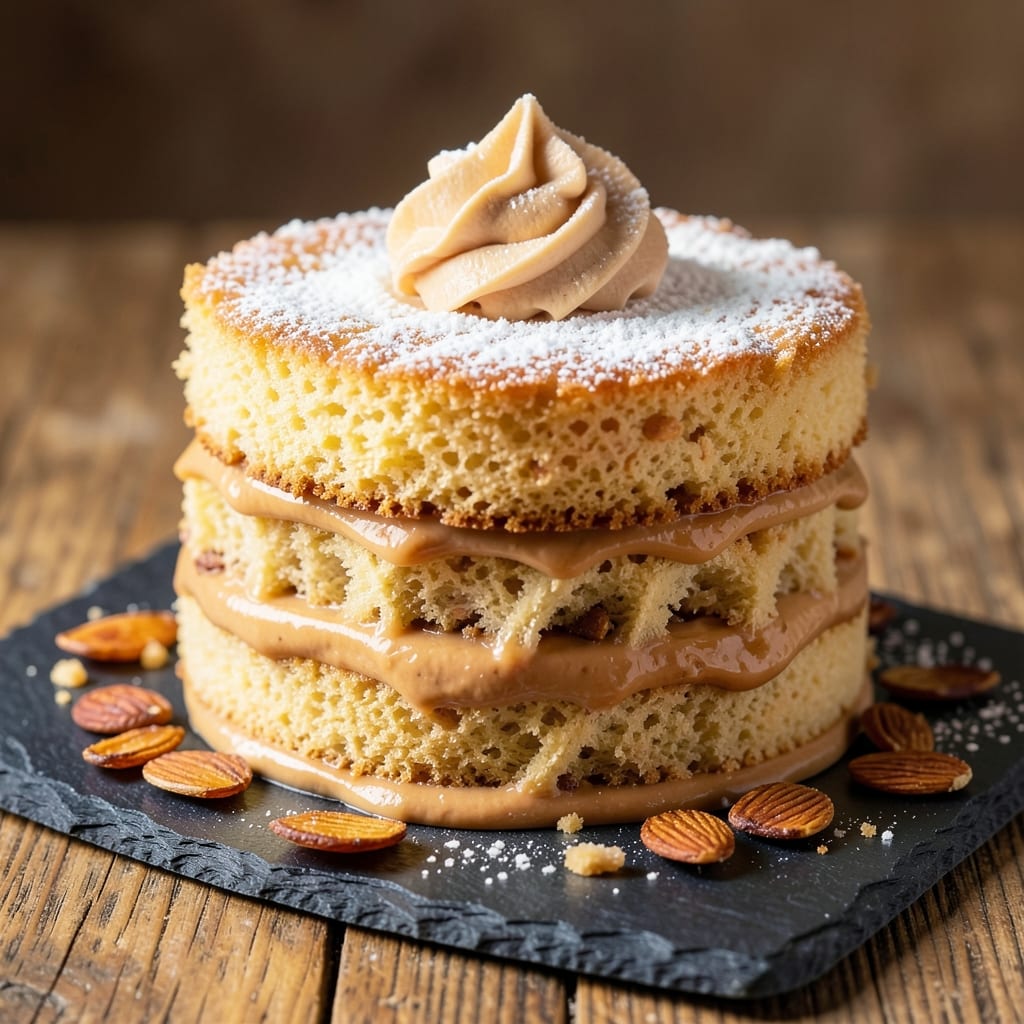
This amaretto sponge cake delivers moist, boozy richness with every slice—where tender vanilla sponge meets almond-amaretto swirls for a dessert that feels like a hug. The secret lies in infusing the batter with amaretto while keeping the texture impossibly light, a technique I perfected after years of testing. What sets this apart is how the alcohol enhances moisture without overpowering the delicate balance of flavors, creating a cake that's both elegant and approachable.
What makes this recipe work is the foolproof method of folding egg whites into the batter at the right stage, ensuring maximum airiness while maintaining structure. The amaretto isn't just an afterthought—it's incorporated into a simple syrup that gets absorbed into the cake, infusing each layer with that signature nutty, boozy depth. This isn't your average sponge; it's a showstopper that pairs beautifully with whipped cream or fresh berries.
By the time it emerges from the oven, you'll have a cake with a golden, domed top and a crumb so tender it practically melts in your mouth. The amaretto flavor shines through subtly, complementing the vanilla and almond notes rather than dominating them. It's the kind of dessert that feels special enough for a dinner party but simple enough for a weeknight treat—without sacrificing quality.
Perfect for celebrating occasions or satisfying cravings, this cake keeps well for up to three days when stored properly. The versatility doesn't end there—top it with chocolate ganache, dust it with powdered sugar, or serve it with a scoop of vanilla ice cream. Let's get baking!
Ingredients for amaretto sponge cake
Moist, boozy, and impossibly light—these ingredients transform into a cake that feels like a dessert hug.
| Ingredient | Amount | Notes |
|---|---|---|
| All-Purpose Flour 🌾 | 2 cups | Sifted for light texture |
| Granulated Sugar 🍚 | 1 ½ cups | Divided for batter and syrup |
| Unsalted Butter 🧈 | 1 cup | Room temperature, full-fat |
| Large Eggs 🥚 | 4 whole | Room temperature, separated |
| Vanilla Extract 🌿 | 1 tbsp | Pure, high-quality extract |
| Amaretto Liqueur 🍷 | ½ cup | High-quality, 25% ABV |
| Almond Extract 🌰 | ½ tsp | Pure almond flavor |
| Baking Powder 🧂 | 1 tsp | Freshly measured |
| Salt 🧂 | ¼ tsp | Fine sea salt |
| Powdered Sugar 🍚 | 1 cup | For dusting layers |
| Whole Milk 🥛 | ¼ cup | Room temperature |
| Vanilla Bean Paste 🌿 | 1 tsp | Optional for deeper flavor |
The flour and sugar are your foundation—King Arthur or Gold Medal brands work best for that tender crumb. Butter matters here: use full-fat, unsalted (like Land O'Lakes or Plugrá) and let it sit at room temperature for at least 2 hours. The eggs? Room temperature is non-negotiable—they whip up lighter and hold more air. Amaretto isn't just a flavor; it's the secret to moisture. Disaronno is the gold standard, but any quality amaretto (25% ABV) will do. For the almond extract, McCormick or Frontier Co-op are reliable brands—avoid the cheap stuff, as it can taste artificial.
No amaretto? Substitute with 2 tbsp almond extract plus 2 tbsp extra vanilla—it won’t be identical, but it’ll get you close. Out of almond extract? Add 1 tsp extra vanilla extract and a pinch of ground almonds (toasted for depth). For the syrup, if you’re short on sugar, use 1 cup powdered sugar instead—it dissolves faster. The milk can be swapped for heavy cream for extra richness, but whole milk keeps it light. Pro tip: Toast your almonds (if using) in a dry pan for 2 minutes—they’ll add a nutty aroma that mimics the amaretto’s depth.
This cake keeps beautifully for up to 3 days at room temperature, wrapped tightly in plastic. For longer storage, freeze layers separately between parchment paper—thaw at room temperature before assembling. The syrup-soaked layers stay moist even after freezing. To serve, dust generously with powdered sugar (use a fine-mesh sieve for an even coat). Pair with whipped cream or fresh berries—the acidity cuts through the boozy richness. Leftovers? Toast slices lightly to revive texture.
Why You'll Love This Recipe
- No Mixer Needed: I swear by this recipe when I’m in a rush—just fold the butter into the sugar by hand until it’s light and fluffy. The eggs incorporate like butter, and between us, that’s where the magic happens.
- Almond-Kissed Magic: That amaretto swirl? It’s not just a splash—it’s the star. The buttercream’s nutty depth and vanilla warmth make every bite taste like a little hug, especially when the cake’s edges stay tender but the center stays moist.
- Weeknight to Party: Make a single batch on Sunday, and you’ve got breakfast cake, dessert for dinner, or a showstopper for guests. Honestly, I’ve served it with coffee, ice cream, or just as-is—it doesn’t judge.
- Leftovers Are a Gift: This cake actually improves the next day. The flavors meld, and the texture stays perfect for slicing into thick, satisfying pieces. (Yes, even on a Tuesday night.) Plus, it’s cheap—just flour, sugar, butter, and a little boozy luxury.
Step-by-step instructions for amaretto sponge cake
Here's how to create a perfectly moist, boozy sponge cake with layers of almond-vanilla magic.
Whip Eggs and Sugar to Ribbon Stage
In a stand mixer fitted with the whisk attachment, combine the 4 whole large eggs and 1.5 cups granulated sugar. Whip on medium-high speed for 5-7 minutes until the mixture triples in volume and forms stiff, glossy ribbons that hold their shape when the whisk is lifted. You'll know it's ready when the bowl feels cool to the touch and the mixture leaves clear streaks that slowly dissolve when the whisk is dipped back in.
This step is critical for the cake's light texture. Don't rush it—under-whipped eggs won't incorporate enough air, resulting in a dense cake. If the mixture looks curdled at first, keep whipping—it will come together as the sugar dissolves completely. The eggs should be at room temperature for even incorporation.
Fold in Dry Ingredients and Liquids
In a separate bowl, sift together the 2 cups all-purpose flour, 1 teaspoon baking powder, and ¼ teaspoon salt. Gently fold one-third of the flour mixture into the egg-sugar mixture using a spatula, being careful not to deflate the batter. Add the ½ cup amaretto liqueur and ½ teaspoon almond extract next, mixing just until combined.
Then fold in the remaining flour mixture in two additions, alternating with the 1 cup unsalted butter (softened) and 1 tablespoon vanilla extract. For extra depth, add the 1 teaspoon vanilla bean paste now. The batter should be smooth but still slightly thick—don't overmix. If it looks too stiff, add the ¼ cup whole milk to loosen it slightly. The goal is a light, airy consistency that holds its shape when spooned.
Bake in Prepared Pans
Preheat your oven to 350°F. Grease two 8-inch round cake pans and line the bottoms with parchment paper. Divide the batter evenly between the pans and smooth the tops. Bake for 25-30 minutes or until a toothpick inserted in the center comes out clean. The cakes should spring back gently when pressed and have a golden top.
I like to rotate the pans halfway through baking for even browning. If the edges brown too quickly, tent the pans with foil. The cakes are done when they pull away from the sides of the pan and have a slightly domed top. Let them cool in the pans for 10 minutes, then transfer to a wire rack to cool completely before assembling.
Prepare the Vanilla-Almond Syrup
While the cakes cool, make the syrup by combining ½ cup amaretto liqueur, ½ cup warm water, and 1 cup powdered sugar in a saucepan. Bring to a gentle simmer over medium heat, stirring constantly until the sugar dissolves completely. Remove from heat and let cool for 5 minutes—the syrup should thicken slightly as it cools. Taste and adjust sweetness if needed by adding more powdered sugar.
This syrup is what makes the cake truly special—it adds moisture and that signature almond-vanilla-amaretto flavor. The warm syrup helps create those beautiful layers when soaked into the cooled cakes. If you prefer a stronger almond flavor, add an extra ¼ teaspoon almond extract to the syrup.
Assemble and Layer the Cake
Place one cake layer on a serving plate. Spoon about ¼ cup of the cooled syrup over the top, spreading it evenly to the edges. Dust the entire surface with ¼ cup powdered sugar, then place the second cake layer on top. Repeat the process with another ¼ cup syrup and ¼ cup powdered sugar. For extra flair, you can add a thin layer of whipped cream between the cakes if desired.
The final layer should be topped with the remaining syrup and powdered sugar mixture. Let the cake sit at room temperature for at least 1 hour before slicing to allow the layers to fully absorb the syrup and set. This waiting time ensures the perfect balance of moisture and structure in each bite. Serve at room temperature for the best texture and flavor experience.
Pro Tips For Making Amaretto Sponge Cake
- Weigh Your Butter: Cold butter beats softened every time for this cake. I used to melt it like a fool—now I cut it into tiny cubes and let them sit at room temp for exactly 20 minutes before creaming. This keeps the texture light and prevents greasy pockets that sink like stones.
- Whisk Eggs Like Mad: Separate the yolks and whites, then whip the whites to stiff peaks—no half-measures. I learned this after a cake collapsed like a soufflé gone wrong. For the yolks, beat them with sugar until they’re pale and tripled in volume, but don’t overdo it or the amaretto flavor gets drowned out.
- Fold in Amaretto Last: Add the liqueur after the flour but before baking—this locks in moisture without making the batter too thin. I used to mix it in early, and the cake would taste boozy but dry. A splash (2 tablespoons) is enough; the flavor carries. Save the extra for a glaze if you’re feeling fancy.
- Bake Until Springy: Check doneness at 325°F (165°C) by pressing the center—it should bounce back immediately. I used to pull cakes out too soon, and they’d stay dense in the middle like a sad hockey puck. If the top browns too fast, tent foil loosely over it. Patience here guarantees a tender crumb.
Make-ahead tips for this dish
Pre-Bake Prep
Start your amaretto sponge cake prep the night before by ensuring all ingredients are ready. Measure out the 2 cups all-purpose flour and 1.5 cups granulated sugar into separate airtight containers. Place the 4 large eggs in the fridge overnight—they’ll come to room temperature faster the next day. Also, let the 1 cup unsalted butter sit out for at least 2 hours to soften. This head start makes morning baking stress-free. ✨
Syrup Prep Ahead
Make the vanilla-almond syrup up to 2 days in advance and store it in a sealed jar in the fridge. The ½ cup amaretto liqueur, ½ cup warm water, and 1 cup powdered sugar blend perfectly when chilled, and the syrup’s flavor intensifies overnight. Just reheat it gently before assembling the cake—simmer for 2-3 minutes to restore its glossy texture. This shortcut saves you time on baking day.
Layer Storage Trick
Bake the two cake layers 1 day ahead and store them wrapped tightly in plastic wrap at room temperature. When ready to assemble, simply brush each layer with 2 tablespoons of reserved syrup and dust with ¼ cup powdered sugar. The layers stay moist and tender, ready to be stacked like fresh-baked. This method also lets the cakes cool evenly, preventing soggy centers.
Freezing Layers
For even longer prep, freeze the baked layers individually between parchment paper. Thaw them at room temperature for 4-6 hours before assembling—no microwave needed! The syrup-soaked layers thaw beautifully, maintaining their moisture. Label your freezer bags with the date; they keep for up to 3 months without drying out. Perfect for last-minute celebrations!
Make-Ahead Assembly
Assemble the entire cake 24 hours before serving and store it in an airtight container at room temperature. The layers will fully absorb the syrup, creating a cohesive texture. Dust with extra powdered sugar just before serving to keep it looking fresh. This approach works beautifully for parties—your cake will taste freshly made while saving you last-minute stress. 💫
Reviving Stale Slices
If your cake sits too long and loses moisture, revive slices by warming them in a 350°F oven for 5-7 minutes with a splash of amaretto liqueur sprayed on top. The alcohol rehydrates the crumb instantly. For a quick fix, place slices between damp paper towels for 10 minutes—the steam plumps them right up. This trick works wonders for leftover cake that’s been stored for 3-4 days.
Nutrition facts
Frequently asked questions
Can I substitute amaretto with another liqueur?
Yes, but the flavor will change. For a similar nutty profile, use 2 tbsp almond extract plus 2 tbsp extra vanilla extract. For a different boozy twist, try 1/4 cup orange liqueur (like Cointreau) or 1/4 cup rum. The alcohol content helps maintain moisture, so if using a non-alcoholic substitute, add 1 tbsp extra milk to compensate.
Why did my cake turn out dense instead of light?
Most likely, the egg whites weren't whipped to proper ribbon stage or the batter was overmixed. The eggs should triple in volume and form glossy ribbons that hold their shape. Also, ensure your butter is fully softened (but not melted) and all ingredients are at room temperature. For extra lightness, fold the dry ingredients in gently using a spatula.
How do I make this cake gluten-free?
Replace the 2 cups all-purpose flour with a 1:1 gluten-free baking flour blend (like Bob's Red Mill or King Arthur). Add 1/2 tsp xanthan gum to help bind the cake. The texture will be slightly denser, but still delicious. For best results, let the cake cool completely before assembling layers to prevent crumbling.
Can I make this as a single-layer cake?
Use a 9-inch round pan and bake for 25-30 minutes at 350°F. After baking, poke holes all over the top with a fork, then brush with the amaretto syrup while warm. Let it cool completely, then dust with powdered sugar. The syrup will soak in beautifully, creating a moist single-layer cake with all the flavor!
What's the best way to serve leftovers?
Slice and toast leftover pieces in the oven at 300°F for 5-7 minutes to revive texture. For a boozy upgrade, drizzle with warmed amaretto syrup or serve with a scoop of vanilla ice cream. Store slices in an airtight container with a piece of bread to maintain moisture—it'll absorb any dryness and keep the cake tender.