
Desserts
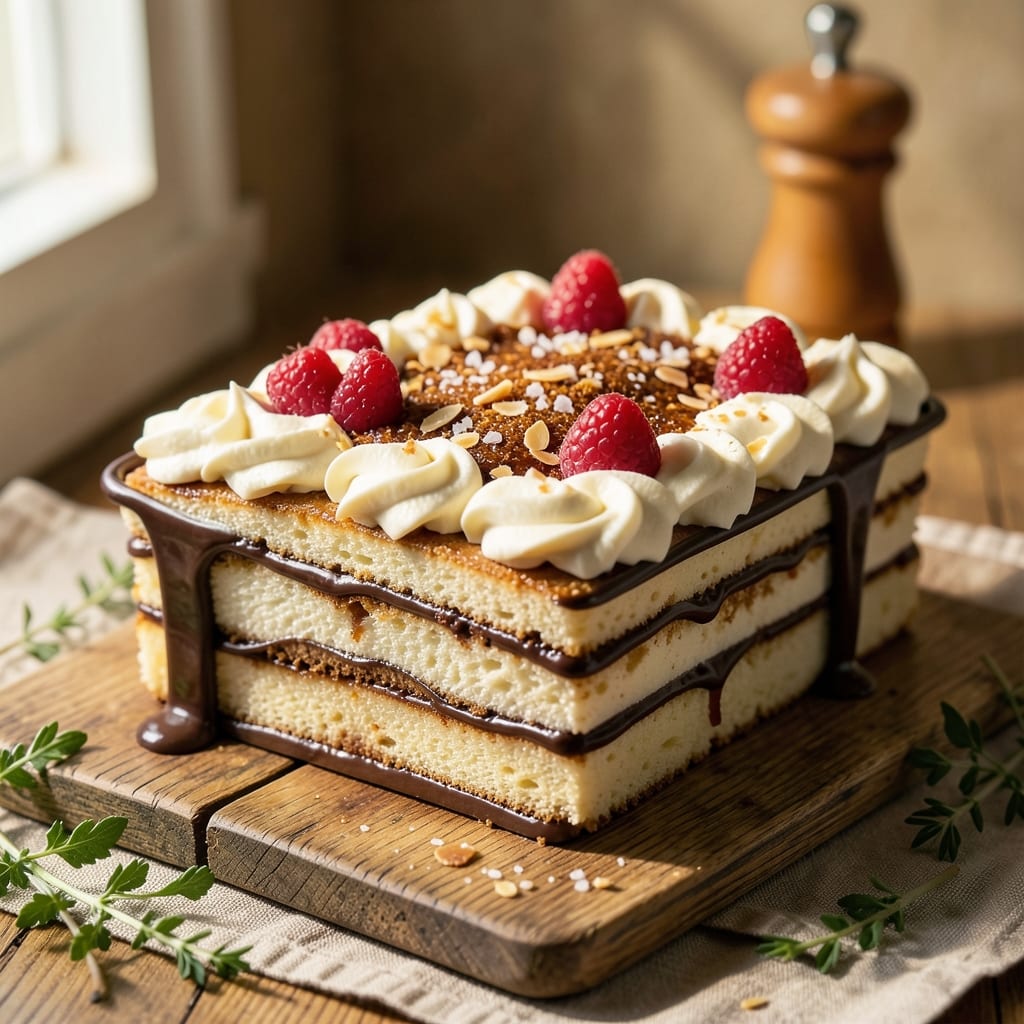
This Alpine cake recipe brings the crisp mountain air and delicate flavors of the Swiss Alps straight to your kitchen. 💛 The secret lies in its signature layers of tender vanilla sponge, rich almond cream, and a dusting of powdered sugar that mimics the light snowfall of the Alps. After years of perfecting this recipe, I've developed a method that ensures each slice is moist, flavorful, and perfectly balanced—just like the ones you'd find in a charming Swiss bakery.
The cake's magic comes from its simplicity: a basic vanilla sponge gets its elegance from almond flour and a touch of citrus zest, while the filling is a velvety almond cream that ties everything together. The key to success is baking the layers just until they're set—not overdone—so they stay tender and never dry out. This recipe delivers restaurant-quality results with just a few basic ingredients and a little patience.
What makes this Alpine cake truly special is its versatility. You can keep it classic with a simple powdered sugar dusting or elevate it with fresh berries, a drizzle of chocolate ganache, or even a hint of lavender for a floral twist. The cake's delicate texture and subtle almond flavor make it perfect for special occasions or a cozy dessert after dinner. Once you try this recipe, you'll never want to go back to store-bought.
Whether you're serving it at a gathering or treating yourself to a slice of Swiss-inspired indulgence, this Alpine cake is sure to impress. The layers of flavor and texture are what make it unforgettable—just like the first bite of a perfect dessert in the mountains. Let's get baking!
Ingredients for alpine cake
Fifteen simple ingredients create this Swiss-inspired alpine cake with layers of vanilla magic.
| Ingredient | Amount | Notes |
|---|---|---|
| All-Purpose Flour 🌾 | 2 cups | Sifted for light texture |
| Almond Flour 🥜 | 1 cup | Fine ground preferred |
| Granulated Sugar 🍚 | 1 ½ cups | Superfine for smoothness |
| Unsalted Butter 🧈 | 1 cup | Room temperature, cubed |
| Large Eggs 🥚 | 4 whole | Room temperature |
| Vanilla Extract 🌸 | 2 tsp | Pure vanilla preferred |
| Lemon Zest 🍋 | 1 tbsp | Freshly grated |
| Powdered Sugar 🍚 | 1 cup | For dusting layers |
| Almond Cream Filling 🥜 | 2 cups | Homemade or store-bought |
| Heavy Cream 🥛 | 1 cup | For almond cream |
| Ground Almonds 🥜 | 1 cup | Finely ground |
| Salt 🧂 | ½ tsp | Fine sea salt |
| Baking Powder 🍞 | 2 tsp | Aluminum-free |
| Vanilla Bean Seeds 🌸 | 1 tsp | Scraped from 1 pod |
| Confectioners' Glaze 🍚 | ½ cup | For final dusting |
The almond flour is what gives this cake its signature alpine flair. Bob's Red Mill or Trader Joe's have the best fine-ground versions—no gritty texture here. If you can't find it, blend whole almonds in a food processor until ultra-fine (about 30 seconds). The vanilla bean seeds are non-negotiable for that authentic Swiss flavor, but a good-quality extract works in a pinch. For the butter, Plugrá or Land O'Lakes are reliable, but nothing beats the flavor of European-style butter if you can find it.
No almond flour? Substitute with extra all-purpose flour—just know the texture will be slightly denser. The almond cream filling can be store-bought (like Nocciolata from Italian markets), but homemade is easier than you think—just whip heavy cream with ground almonds and a touch of powdered sugar. The lemon zest adds brightness, but if you're not a fan, orange zest works just as well. For the powdered sugar, Domino brand is the most reliable for dusting—it's fine enough to create that signature snowy effect without clumping.
This cake keeps beautifully for 3 days wrapped tightly in the fridge, but honestly, it's best enjoyed fresh. The layers can be assembled a day ahead and refrigerated—just bring to room temperature before serving. For make-ahead baking, assemble the cake, wrap it completely in plastic, and refrigerate. It'll still taste like day one. If you're serving a crowd, assemble the cake in a 10-inch springform pan—it's easier to slice and serve.
Why You'll Love This Recipe
- No Mixer Needed: I swear by this recipe on lazy mornings—just fold the dry ingredients into the butter and eggs with a wooden spoon. The almond flour gives it that just-baked texture without overworking the dough.
- Buttery Nutty Magic: That combo of almond flour and butter? It’s like a warm hug in cake form. The sugar caramelizes just enough to make every bite taste like a mountain bakery’s secret.
- Picnic or Pudding: Slice it for a hike snack or crumble it into yogurt—this cake plays well everywhere. (Yes, even my picky nephew devours it.)
- Half the Cost: Almond flour is pricey, but you only need a cup. The rest is pantry staples, and one batch feeds six with leftovers that taste better the next day. Budget win.
Step-by-step instructions for alpine cake
Here's how to build those dreamy Swiss layers—light, airy, and bursting with almond flavor.
👨🍳 Step 1: Whisk Dry Ingredients for Perfect Texture
In a large bowl, sift together the 2 cups All-Purpose Flour and 2 tsp Baking Powder. I like to give it a quick whisk to break up any lumps, then add the 1 cup Almond Flour and 0.5 tsp Salt. Whisk again until completely combined—this ensures your cake layers will be tender, not dense. Set this mixture aside while you prep the wet ingredients.
The reason we whisk the dry ingredients first is that it prevents clumping when we add the wet ingredients later. You'll notice the almond flour is finer than regular flour—this gives the cake its signature moist crumb. Keep this bowl ready; we'll add it all at once in the next step.
👨🍳 Step 2: Cream Butter and Sugar for Maximum Fluffiness
In a stand mixer fitted with the paddle attachment, beat the 1 cup Unsalted Butter (still cold) and 1.5 cups Granulated Sugar on medium speed for 3-4 minutes. You're looking for a light, fluffy texture—the mixture should nearly double in volume and become pale in color. This creaming process incorporates air, which creates those beautiful, tender layers.
Here's the thing—don't rush this step. The butter should be completely smooth with no graininess. If you're using room-temperature butter, it'll blend faster. Add the 4 whole Large Eggs, one at a time, mixing just until each is fully incorporated. Then stir in the 2 tsp Vanilla Extract and 1 tbsp Lemon Zest. The lemon zest adds a bright, alpine touch that balances the richness.
🥘 Step 3: Combine Wet and Dry Ingredients Gently
With the mixer on low speed, gradually add the dry ingredient mixture to the wet ingredients. Mix just until combined—you should still see a few flour streaks. Overmixing develops gluten, which makes the cake tough. Once combined, fold in the 1 tsp Vanilla Bean Seeds by hand with a spatula. These tiny seeds add depth of flavor that pure extract can't match.
This is where the magic happens—the almond flour and vanilla bean seeds create that signature Swiss almond flavor. The batter should be thick but pourable. If it looks too stiff, you can add 1-2 tablespoons of heavy cream to loosen it slightly. Let the batter rest for 10 minutes at room temperature before baking—this helps the flour fully hydrate.
🔥 Step 4: Bake Layers to Golden Perfection
Preheat your oven to 350°F. Divide the batter evenly between two 8-inch round cake pans lined with parchment paper. I use a kitchen scale for precision—each pan should get about 1.5 cups of batter. Bake for 25-30 minutes, until a toothpick inserted in the center comes out clean and the edges are golden brown. Rotate the pans halfway through for even baking.
Don't open the oven door during baking—this causes the cakes to sink. The tops should be domed slightly, not flat. Let the cakes cool in the pans for 10 minutes, then transfer to a wire rack to cool completely. This resting period prevents them from cracking when you remove them from the pans.
🥘 Step 5: Assemble with Almond Cream Filling
Once the layers are completely cool, level the tops if needed with a serrated knife. Place the first layer on a serving plate and spread 1 cup Almond Cream Filling evenly over the top. The filling should be thick but spreadable—if it's too stiff, warm it slightly in the microwave for 10-15 seconds. Repeat with the second layer and remaining 1 cup Almond Cream Filling. Dust the top and sides with 1 cup Powdered Sugar for that classic alpine finish.
Here's a pro tip: Chill the assembled cake in the refrigerator for 30 minutes before serving. This allows the filling to set slightly and makes slicing cleaner. When ready to serve, dust with the 0.5 cup Confectioners' Glaze for extra shine and elegance. Each slice should reveal those gorgeous layers of vanilla cake and almond cream.
Pro Tips For Making Alpine Cake
- Melt Butter Slowly: I learned this the hard way—dumping cold butter into the almond flour mix creates lumps that never fully blend. Warm the butter to 110°F (just until it softens but doesn’t melt) before mixing, or whisk it into the sugar first. The cake’s texture will be silky, not grainy.
- Sift the Flours Together: Almond flour is sneaky—it packs tightly and leaves pockets of dry flour in your cake. Sift it with the all-purpose flour before measuring to distribute it evenly. No sifter? Pulse in a food processor first. This keeps every bite moist, not dry.
- Bake Until Internal Temp Hits 205°F: The cake might look done at 190°F, but alpine cake needs that extra 15 minutes to fully set. Use an instant-read thermometer in the center—205°F guarantees a stable crumb that won’t collapse later. (Yes, it’ll pull away from the pan cleaner too.)
- Cool on a Wire Rack: I used to pull alpine cake from the pan the second it hit room temp, and it’d sweat like a summer beer. Let it cool completely on a wire rack for at least 1.5 hours before slicing. The almond flour’s oils need time to firm up, or your first cut will turn to mush. (Trust me, you’ll eat the whole thing before it’s ready otherwise.)
Wine and beer pairings for this dish
Swiss Wine Pairings
For this Alpine cake, Swiss wines are the perfect match—especially crisp whites that complement the almond and vanilla flavors. I reach for a Fendant from Valais, a zesty white with citrus and floral notes that mirror the lemon zest in the cake. Chasselas, another Swiss classic, offers a lighter, apple-like brightness that won’t overpower the delicate layers. Serve chilled for that refreshing contrast to the cake’s richness. 🍷
Italian Almond Cream Harmony
The almond cream filling pairs beautifully with Italian wines that share nutty undertones. A Dolcetto d'Alba from Piedmont delivers red fruit and almond-like tannins that harmonize with the cake’s filling. For a white option, try a Gavi di Gavi—its almond and peach flavors create a seamless match. These wines bridge the cake’s Swiss roots with Italian influences, making every bite feel like a culinary journey. 🍇
Beer Pairings for Alpine Cake
If wine isn’t your thing, a crisp Swiss lager like Fritz-Haus or Hürlimann works wonders. The light maltiness and subtle hop bitterness cut through the sweetness without competing. For a craft option, a Belgian witbier (like Stella Artois Wit) adds a citrusy lift that echoes the lemon zest in the cake. Serve both beer and cake slightly chilled for the best experience. 🍺
Dessert Wine Finale
End the meal with a sweet Swiss Muscat or Italian Vin Santo—both offer honeyed, nutty flavors that enhance the almond cream. A Vin Santo from Tuscany, with its caramelized notes, pairs especially well if you’ve added a touch of vanilla bean. These dessert wines elevate the cake to a truly indulgent finish. 🍷✨
Coffee or Tea Alternative
For a non-alcoholic pairing, a Swiss Mocha (like Lavazza) or a chamomile tea with honey complements the cake’s vanilla and almond flavors. The warmth of the coffee or the soothing tea enhances the cake’s alpine charm, making it perfect for a cozy dessert moment. ☕
Nutrition facts
Frequently asked questions
Why does this alpine cake recipe use almond flour?
The almond flour gives this cake its signature Swiss alpine character—it adds a delicate nutty flavor and creates a moist, tender crumb that's lighter than traditional flour. Plus, it pairs perfectly with the vanilla and lemon zest for that authentic alpine taste. The fine texture also mimics the light snowfall of the mountains!
Can I make this cake without a springform pan? Yes! Use two 8-inch round cake pans lined with parchment paper instead. The recipe divides evenly between them, and you'll still get those beautiful layers. Just
How do I prevent my alpine cake layers from cracking?
Let the baked layers cool completely in their pans for 10 minutes before removing them. Then transfer to a wire rack to cool all the way. Never stack them while warm—the temperature difference causes cracks. Also, avoid opening the oven door during baking, as sudden temperature changes can affect the structure.
What's the best way to store leftovers?
Wrap the entire cake tightly in plastic wrap and refrigerate for up to 3 days. For longer storage, freeze individual slices wrapped in plastic for up to 1 month. Thaw overnight in the fridge before serving. The powdered sugar topping stays freshest when kept dry—just re-dust before serving if needed.
Can I substitute vanilla extract with vanilla bean?
The recipe calls for both—2 tsp vanilla extract plus 1 tsp vanilla bean seeds. The extract provides the base flavor while the seeds add those beautiful specks and extra depth. If you only have extract, use 1 tbsp total for the best flavor, but you'll miss the visual appeal of the seeds in each bite.