
Desserts
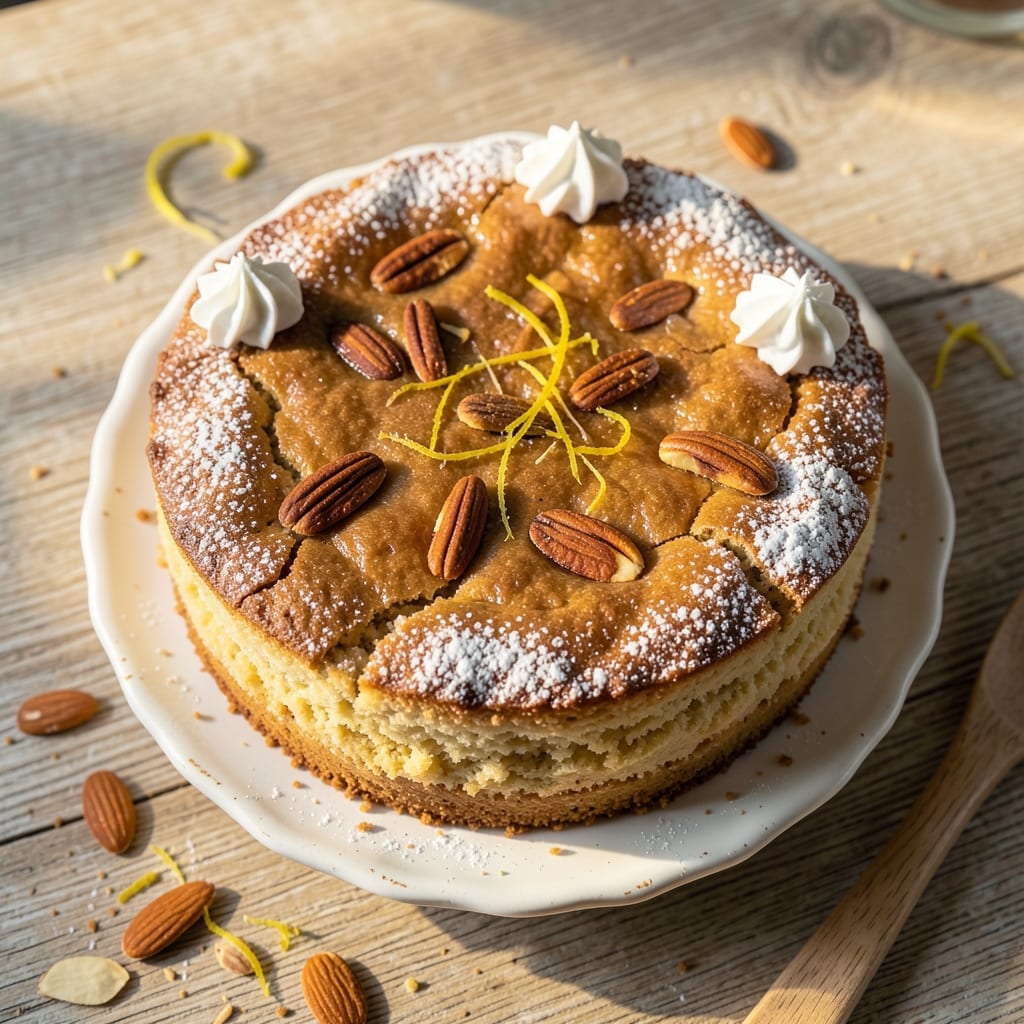
This almond breakfast cake recipe delivers layers of vanilla-scented moistness with a signature crunchy almond-topped finish—perfect for a weekend brunch that feels like a café treat. The secret lies in toasted almonds baked directly into the top layer, creating that signature texture while infusing every bite with nutty depth. What makes this version special is how it balances traditional breakfast cake elements with modern adaptability, whether you're working with classic flour or gluten-free alternatives.
Baking time is kept efficient with a single-layer approach that still delivers restaurant-quality results—about 35-40 minutes in a preheated oven. The recipe builds flavor through a simple vanilla-infused batter, where almond flour or finely ground almonds contribute both moisture and that signature crunch. For an extra touch of elegance, a light dusting of powdered sugar or a drizzle of fruit compote elevates the presentation without complicating the process.
What you'll end up with is a cake that's tender yet sturdy enough to slice cleanly, with each bite offering a perfect balance of vanilla sweetness and almond crunch. The aroma alone—warm vanilla with toasted almond notes—will have everyone gathered around the table before the first slice is even cut. This is the kind of breakfast cake that transforms a simple morning into something truly special.
Serve warm with a cup of coffee or tea for the full experience, or enjoy it cold as part of a picnic spread. The beauty of this recipe is its versatility—it works as a standalone dessert, a brunch centerpiece, or even a sophisticated afternoon treat. Here's how to make it perfectly every time.
Ingredients for almond breakfast cake
Vanilla-infused layers meet toasted almond crunch—this cake balances café elegance with home-baked simplicity.
| Ingredient | Amount | Notes |
|---|---|---|
| All-Purpose Flour 🌾 | 2 cups | Sifted for even texture |
| Almond Flour 🥜 | 1 cup | Finely ground for smooth batter |
| Granulated Sugar 🍚 | 1 ½ cups | White or light brown |
| Unsalted Butter 🧈 | 1 cup | Room temperature, cubed |
| Large Eggs 🥚 | 2 whole | Room temperature for even baking |
| Pure Vanilla Extract 🌸 | 2 tsp | High-quality Madagascar preferred |
| Baking Powder 🍞 | 2 tsp | Aluminum-free for best results |
| Salt 🧂 | ½ tsp | Fine sea salt preferred |
| Whole Milk 🥛 | ¾ cup | Room temperature |
| Sliced Almonds 🥜 | 1 ½ cups | Toasted until golden |
| Powdered Sugar 🍚 | ¼ cup | For dusting |
| Lemon Zest 🍋 | 1 tbsp | Freshly grated |
The almond flour is non-negotiable for that signature texture and nutty depth. Bob's Red Mill has the finest grind, but any high-quality almond flour works—just pulse it extra times if it feels coarse. For the sliced almonds, toasting them separately (350°F for 8-10 minutes) intensifies their flavor dramatically. The vanilla extract should be the good stuff—Madagascar bourbon or Tahitian extracts add complexity. If you're using gluten-free flour, replace the all-purpose flour with a 1:1 blend like King Arthur Measure for Measure.
No almond flour? Finely ground blanched almonds (pulse in a food processor) work in a pinch, though the texture will be slightly grainier. Substitute the milk with unsweetened almond milk for a more cohesive nutty profile, though the cake may be slightly denser. For the butter, European-style (like Plugrá) has higher fat content, creating a richer crumb. The lemon zest can be omitted if you prefer a purely vanilla-forward flavor, but it brightens the almond notes beautifully—use organic lemons for the strongest flavor.
Store the cake in an airtight container at room temperature for up to 3 days, though it's best enjoyed fresh. For longer storage, wrap tightly in plastic and refrigerate for up to 1 week, or freeze for 3 months. The almond topping stays crisp for about 2 days at room temperature, so plan to serve it within that window. Reheat slices briefly in the oven (300°F for 5-7 minutes) to restore the crunch if storing refrigerated.
Why You'll Love This Recipe
- No Mixer Needed: I swear by this—just cream butter and sugar, crack eggs, and fold in dry ingredients. The almond flour handles the texture without overworking, so even if you’re mixing by hand, it comes together like a dream.
- Buttery-Almond Magic: That combo of rich butter and toasted almond flour? It’s like a cross between a tender cake and a nutty cookie, but with a subtle sweetness that doesn’t overpower. Honestly, the first bite makes me want to bake it twice.
- Breakfast or Dessert: Serve it warm with a drizzle of honey for a lazy weekend brunch, or save slices for an after-dinner treat. The eggs and butter keep it hearty enough for breakfast but light enough to satisfy a sweet tooth later.
- Budget-Friendly Indulgence: Uses pantry staples—no fancy ingredients—and stretches far. A single batch feeds a family for days, and the almond flour adds richness without breaking the bank. (Yes, even on a Tuesday night.)
Step-by-step instructions for almond breakfast cake
Master this light, vanilla-infused cake with a signature crunchy almond topping in under an hour.
Prepare the Almond Topping and Preheat
In a small bowl, combine the 1.5 cups sliced almonds with the 1 tbsp lemon zest. Toss gently to distribute the zest evenly. Spread the almond mixture on a parchment-lined baking sheet, leaving space between each slice. Toast in a 350°F oven for 8-10 minutes, stirring once halfway, until the almonds are golden brown and fragrant. This pre-toasting enhances their nuttiness and prevents them from absorbing too much moisture from the cake.
While the almonds toast, preheat your oven to 350°F. Grease two 8-inch round cake pans (or one 9x13-inch pan) with butter and line the bottoms with parchment paper. Lightly butter the parchment to prevent sticking. The almonds will form the cake's signature crunchy topping, so we want them perfectly toasted before assembly.
Cream Butter and Sugar for Light Texture
In a stand mixer fitted with the paddle attachment, beat the 1 cup unsalted butter (room temperature) and 1.5 cups granulated sugar on medium speed for 3-4 minutes. The mixture should become pale and fluffy, nearly doubling in volume. This creaming process incorporates air, which creates the cake's signature tender crumb. Press the butter between your fingers to ensure it's soft enough—if it's too firm, let it sit at room temperature for another 10 minutes before proceeding.
Add the 2 whole large eggs, one at a time, mixing on low speed after each addition until fully incorporated. Scrape down the sides of the bowl with a spatula to ensure even mixing. Stir in the 2 tsp pure vanilla extract and 1 tbsp lemon zest, mixing just until combined. The lemon zest adds a bright contrast to the rich almond flavor, while the vanilla ensures a classic sweetness that ties everything together.
Combine Dry Ingredients and Fold Wet Mixture
In a separate bowl, whisk together the 2 cups all-purpose flour, 1 cup almond flour, 2 tsp baking powder, and 0.5 tsp salt. Sift the dry ingredients directly into the wet mixture in three additions, mixing on low speed just until combined—do not overmix. Overmixing develops gluten, which can make the cake dense instead of light. The almond flour adds a delicate nuttiness and helps create the cake's signature moist texture.
With the mixer on low speed, gradually add the 0.75 cup whole milk until the batter is smooth and just combined. The batter should be thick but pourable—similar to pancake batter. If it's too thick, add 1-2 tablespoons more milk. Transfer half of the batter to the prepared cake pan(s) and sprinkle half of the toasted almonds evenly over the top. Repeat with the remaining batter and almonds.
Bake to Golden Perfection
Bake the cake in the preheated 350°F oven for 25-30 minutes, or until a toothpick inserted into the center comes out clean. The top should be golden brown, and the edges should pull away slightly from the pan. Rotate the pans halfway through baking for even browning. If using a 9x13-inch pan, reduce baking time to 20-25 minutes—smaller pans take longer to cook through.
Once baked, remove the cake from the oven and let it cool in the pans for 10 minutes. Run a knife around the edges to loosen, then invert the cakes onto a wire rack to cool completely. The almond topping will firm up as it cools, creating that signature crunch. For a showstopping presentation, dust the cooled cake with 0.25 cup powdered sugar sifted over the top. Serve warm or at room temperature for the best texture contrast.
Pro Tips For Making Almond Breakfast Cake
- Whisk Butter Slowly: Cream the butter and sugar at medium speed for 3-4 minutes until it’s pale and slightly grainy—not perfectly smooth. I used to go full blast, thinking faster was better, but this step actually incorporates more air, which keeps the cake tender. (Yes, even if you’re impatient like me.) ---
- Sift Almond Flour Twice: Almond flour is sneaky—it clumps like a stubborn guest at a party. Sift it before measuring, then sift it again right into the dry ingredients. This prevents dense pockets and ensures the cake rises evenly. My grandmother swore by this, and she was right: the texture is noticeably lighter. ---
- Rotate the Pan: The oven’s hot spots are real, and almond cakes bake unevenly if you ignore them. After 20 minutes, swap the pan from top to bottom rack (or front to back) to guarantee even browning. I learned this the hard way—my first batch had a dark crust on one side and a pale center on the other. ---
- Skip the Overmixing: Once you add the wet ingredients to the dry, mix just until combined—about 15 strokes max. Overmixing develops gluten, and that turns your tender almond cake into a chewy brick. I was skeptical until I tried it: the crumb stays soft and airy, like it’s supposed to be.
Flavor customization for this dish
Vanilla-Almond Balance
Adjust the vanilla depth by swapping extracts—Tahitian vanilla adds floral notes, while Mexican vanilla brings caramel undertones. For a subtler profile, reduce to 1 tsp extract and boost lemon zest to 2 tbsp—this brightens the almond flavor beautifully. If you prefer a more pronounced almond taste, increase the almond flour to 1.5 cups (reduce all-purpose flour by 0.5 cup) for a denser, nuttier crumb. 🌸
Sweetness Variations
For a less sweet cake, reduce granulated sugar to 1 cup and add 1 tbsp honey or maple syrup to the wet ingredients. The honey enhances the almond flavor while keeping the texture moist. Conversely, for a richer dessert, increase sugar to 1.75 cups and add 2 tbsp brown sugar for a caramelized depth. Balance with an extra 0.25 tsp salt to prevent cloying sweetness.
Spiced Almond Twist
Infuse the almonds with warmth by adding 1 tsp cinnamon or ½ tsp cardamom to the toasted almond mixture. These spices pair beautifully with vanilla and almond, creating a cozy, aromatic profile. For a subtle kick, sprinkle ¼ tsp cayenne pepper over the batter before baking—it adds complexity without overpowering. Toast the spices in the same dry pan as the almonds for 30 seconds to deepen their flavor. 🌶️
Citrus Brightness
Swap lemon zest for orange zest (from 1 large orange) to introduce a tropical twist. The citrus oils in orange complement almonds more intensely than lemon, creating a vibrant contrast. For a tart-sweet balance, add 2 tbsp orange juice to the wet ingredients. If using orange, reduce the vanilla to 1.5 tsp to avoid competing flavors.
Chocolate-Almond Fusion
Add richness by folding ½ cup melted dark chocolate (60-70% cocoa) into the batter after mixing in the dry ingredients. The chocolate deepens the almond flavor while adding a decadent layer. For a marbled effect, swirl 2 tbsp chocolate hazelnut spread into the batter before baking. Top with extra toasted almonds for a nutty-chocolate crunch. 🍫
Gluten-Free Adaptation
Replace all-purpose flour with a 1:1 gluten-free blend (like King Arthur Measure for Measure). Add 1 tbsp xanthan gum to the dry ingredients to improve texture. For extra moisture, increase milk to 1 cup and reduce sugar slightly to 1.25 cups. The almond flour already provides structure, so no additional binders are needed—just ensure your blend includes fine almond flour for a smooth crumb.
Nutrition facts
Frequently asked questions
Can I make this almond cake without almond flour?
Replace the 1 cup almond flour with 1 cup finely ground blanched almonds (pulse in a food processor) for a similar texture. For a lighter crumb, use 1 cup all-purpose flour instead, but the cake will have a slightly less pronounced almond flavor. Toast the almonds extra long (12 minutes) to compensate for the reduced almond content.
Why did my cake turn out dense instead of light?
Overmixing the batter or using cold butter are the most common culprits. Always cream the butter and sugar until pale and fluffy, and mix the wet/dry ingredients just until combined. If your kitchen is cold, let the butter sit out for 30 minutes before starting. Also, ensure your baking powder is fresh—old leavening agent can cause dense results.
How can I make this cake vegan?
Swap the eggs for 2 tbsp ground flaxseed mixed with 6 tbsp water (let sit for 5 minutes to thicken). Use vegan butter and replace the milk with 0.75 cup unsweetened almond milk. For binding, add 1 tbsp applesauce to the wet ingredients. The texture will be slightly denser but still delicious—serve with extra almond topping for crunch!
Can I bake this in a different pan shape?
Yes! For a 9x9-inch pan, reduce baking time to 20-25 minutes. A 7-inch round pan will need 35-40 minutes at 325°F (lower temp prevents over-browning). Always use a toothpick test—insert it in the center when the edges look set. Adjust almond topping proportionally (about 1 cup for 9x9-inch).
What's the best way to store leftovers?
Keep the cake in an airtight container at room temperature for up to 3 days. For longer storage, refrigerate for 1 week or freeze for 3 months. To restore the almond topping's crunch, reheat slices in a 300°F oven for 5-7 minutes. The cake itself stays moist when stored properly—just avoid cutting into it too soon after baking!