
Desserts
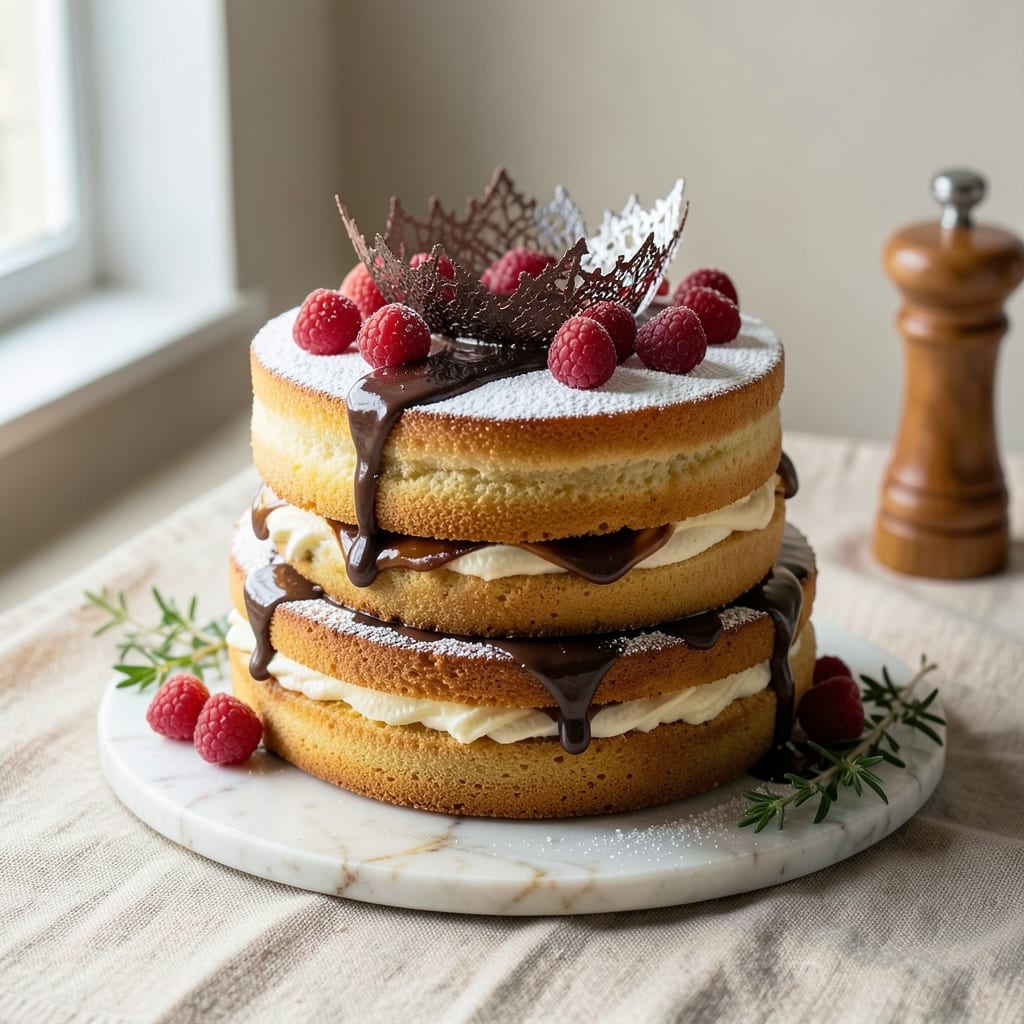
An 8-round cake recipe that stays perfectly level and stackable is the secret to showstopping fondant towers. ✨ The key lies in precise baking techniques that prevent doming or sinking, ensuring each layer sits flat and stable for your dream cake structure. This isn't just about pretty layers—it's about creating a foundation that holds up to fondant, tiers, and even the most dramatic cake designs.
What sets this recipe apart is the foolproof method for baking eight identical rounds with consistent height and texture. We'll use a simple vanilla cake base (easy to adapt for chocolate or other flavors) that bakes evenly in standard sheet pans, then level and stack with confidence. The secret ingredients? A precise oven temperature and a quick cooling trick that prevents warping.
By the end, you'll have perfectly round, level cakes ready for fondant, buttercream, or any decoration you choose. The cakes will be moist but sturdy, with a clean crumb that makes stacking and decorating effortless. No more wobbling tiers or uneven layers—just professional-quality results every time.
This recipe works for weddings, birthdays, or any celebration where you want to impress with a flawless cake tower. The technique is simple enough for beginners but refined enough for experienced bakers. Let's create cakes that look as good as they taste!
Ingredients for 8 round cake
Precision ingredients for eight flawless cake rounds that stack like professional tiers.
| Ingredient | Amount | Notes |
|---|---|---|
| All-Purpose Flour 🌾 | 4 cups | Sifted for even texture |
| Granulated Sugar 🍚 | 2 ½ cups | Superfine preferred for smooth crumb |
| Unsalted Butter 🧈 | 2 cups | Room temperature, cubed |
| Large Eggs 🥚 | 6 whole | Room temperature for even baking |
| Pure Vanilla Extract 🌿 | 2 tsp | High-quality, 100% pure |
| Baking Powder 🧂 | 2 tsp | Freshly measured for lift |
| Salt 🧂 | ½ tsp | Fine sea salt preferred |
| Whole Milk 🥛 | 1 ½ cups | Room temperature for smooth batter |
| Baking Soda 🧂 | ½ tsp | Activated with acid for rise |
| White Vinegar 🍶 | ½ tsp | For baking soda activation |
| Vegetable Oil 🫒 | ½ cup | Light neutral oil for moisture |
| Cornstarch 🌾 | 1 tbsp | For tender, clean crumb |
| Parchment Paper 📄 | 1 sheet | For perfect cake release |
The flour and sugar are the foundation—King Arthur all-purpose flour (if available) yields the cleanest crumb, while Domino superfine sugar prevents graininess. European-style unsalted butter (like Plugrá) contains 82% fat, ensuring rich moisture without excessive water content. Room temperature ingredients are non-negotiable: cold butter creates pockets, cold eggs curdle. For the vanilla, Madagascar Bourbon extract delivers deeper flavor than imitation. Measure all dry ingredients by weight if possible—oxo scales eliminate volume inconsistencies. The baking powder should be Diamond Crystal (spoon-and-level method) rather than double-acting for predictable rise.
No superfine sugar? Pulse granulated sugar in a food processor for 30 seconds—game-changer for texture. Short on butter? Crisco shortening (½ cup) replaces 1 cup butter with equal moisture, though flavor differs. Milk substitutes? Evaporated milk (1:1) or soy milk (1:1) work, but whole milk's fat content prevents dryness. Vinegar substitution? Lemon juice at the same ratio, though flavor shifts slightly. For the cornstarch, arrowroot powder is a 1:1 swap. Prefer chocolate? Replace ½ cup flour with Dutch-process cocoa powder—adjust liquid to 1.25 cups for proper consistency. Always level cakes with a serrated bread knife while completely cool to avoid crumbs.
Store baked cakes in an airtight container with parchment between layers for up to 5 days at room temperature. For longer storage, freeze fully wrapped cakes (unfrosted) for 3 months—thaw overnight in the fridge. The cooling trick? Invert cakes onto a wire rack immediately after baking to prevent doming. For stacking, use leveling weights (like cake boards with dowels) to maintain perfect rounds. Always bring cakes to room temperature before frosting to prevent condensation between tiers.
Why You'll Love This Recipe
- No Fuss Mixing: I swear by this batter—just cream butter and sugar until light, toss in eggs one at a time, then fold in dry ingredients. No stand mixer required, and the vanilla extract? It’s the secret that makes it smell like a bakery the second you open the bowl.
- Butter-Sugar Magic: That classic combo of creamed butter and sugar gives it a tender crumb that’s ridiculously satisfying. The eggs add richness without heaviness, and the vanilla? It’s not overpowering—just enough to make every bite feel like a little treat.
- Party in a Pan: Eight perfect rounds mean you can serve them as individual desserts, stack them for a tiered look, or even use them for cake pops. I’ve used these for birthdays, potlucks, and even as a fancy-ish dessert for date night—no one ever guesses how simple they were to make.
- Budget-Friendly Luxury: You’re using pantry staples here—flour, sugar, butter, eggs—so it’s cheap enough to bake twice a month. And the leftovers? They freeze beautifully, so you’re never stuck with a half-eaten cake that’ll go stale by tomorrow. Win-win.
Step-by-step instructions for stackable fondant towers
Precision is everything when baking eight perfect rounds—follow these steps to achieve level tops, even texture, and professional-level stability.
👨🍳 Step 1: Prepare the Batter with Exact Technique
In a stand mixer fitted with the paddle attachment, cream the 2 cups unsalted butter and 2.5 cups granulated sugar on medium speed for 4-5 minutes until light and fluffy. You'll see the mixture nearly double in volume and turn pale. This step incorporates air for that signature tender crumb.
Add the 6 whole large eggs one at a time, mixing just until each is fully incorporated. Scrape down the sides of the bowl after each addition to ensure even blending. Next, whisk together the 4 cups all-purpose flour, 2 tsp baking powder, 0.5 tsp salt, 1 tbsp cornstarch, and set aside. In a separate bowl, combine the 1.5 cups whole milk, 0.5 tsp baking soda, and 0.5 tsp white vinegar—this creates a curdled mixture that activates the baking soda.
🍳 Step 2: Combine Wet and Dry Ingredients Precisely
With the mixer on low speed, gradually add the dry ingredients to the butter mixture in three additions, mixing just until combined after each. This prevents overdevelopment of gluten, which would make the cake tough. Scrape the bowl again to ensure no dry spots remain.
Add the milk mixture and the 2 tsp pure vanilla extract, mixing on low speed for 1-2 minutes until smooth and fully incorporated. The batter should be thick but pourable—like heavy pudding. If it appears too thick, add 1 tablespoon whole milk to reach the ideal consistency. This ensures even distribution when pouring into the pans.
⏰ Step 3: Bake with Perfect Temperature Control
Preheat your oven to 350°F and position racks in the upper and lower thirds for even baking. Grease 8 round 8-inch cake pans with vegetable oil and line the bottoms with the parchment paper. Pour the batter evenly into each pan, filling them ¾ full—this prevents overflow and ensures level tops.
Bake for 25-30 minutes, rotating the pans halfway through for even browning. The cakes are done when a toothpick inserted in the center comes out clean and the edges pull away slightly from the pan. Overbaking leads to dryness, so watch closely—28 minutes is typically the sweet spot for this recipe.
🔪 Step 4: Cool and Level for Stacking Success
Remove the cakes from the oven and let them cool in the pans for 10 minutes. Then, run a thin knife or offset spatula around the edges to loosen them from the pans. Invert each cake onto a wire rack and peel off the parchment paper. Allow the cakes to cool completely to room temperature—at least 2 hours—before stacking. This prevents crumbling and ensures clean, level tops.
Use a serrated knife to trim any uneven edges or domed tops, creating perfectly flat surfaces. This is critical for stable stacking—even a slight dome can cause wobble in your fondant tower. Store the cooled cakes in an airtight container between layers if you're not decorating immediately.
Pro Tips For Making 8 Round Cake
- Measure Butter Cold: Grab that butter straight from the fridge—no softening needed. I used to melt it by mistake, and the cake turned out dense and greasy. Cold butter creates pockets for steam, giving you that light, fluffy texture you’re after.
- Whisk Eggs First: Beat those eggs alone until they’re pale and doubled in volume before adding sugar. This step aerates them properly, and you’ll notice the cake rises higher and stays moist longer—no more flat, sad rounds.
- Skip Overmixing: Fold in the flour just until combined—lumps are fine. Overmixing develops gluten, and your cake will turn out tough instead of tender. Think "gentle" when mixing; your arms will thank you later.
- Rotate Pans Mid-Bake: Swap the pans halfway through baking if your oven has hot spots. I learned this after one side of my cake came out golden while the other stayed pale. A quick rotation ensures even baking every time.
Wine and beer pairings for 8 round cake
Sweet White Wine
For this delicate vanilla cake, a crisp Sauvignon Blanc from New Zealand or France is my go-to choice. The bright citrus and herbal notes complement the cake's subtle sweetness without overwhelming it. Look for wines with 12-13% ABV—they're light enough to balance the richness. A chilled glass of Cloudy Bay Sauvignon Blanc (around $25) elevates the experience beautifully. 🍷
Champagne Sparkle
No celebration is complete without bubbles! A demi-sec or brut Champagne adds an elegant touch to your cake tower. The slight sweetness in demi-sec enhances the vanilla flavors, while brut offers a refreshing contrast. I recommend Moët & Chandon Impérial (around $50) for a luxurious pairing. Serve chilled in flute glasses to maintain the bubbles' fizz.
Light Red Options
If you prefer red wine, opt for a Pinot Noir with low tannins and bright acidity. A Willamette Valley or Burgundy Pinot Noir (around $20-$30) pairs wonderfully with vanilla cake. The red fruit notes harmonize with the cake's sweetness, while the acidity cuts through the richness. Keep the wine slightly cooler than room temperature (55-60°F) for optimal flavor.
Beer Pairings
For a beer lover's twist, try a Belgian witbier like Stella Artois or Hoegaarden. The citrusy notes from coriander and orange peel enhance the vanilla flavors. Alternatively, a light lager such as Peroni or Heineken provides a crisp, clean finish that complements the cake's simplicity. Serve both beers well-chilled (38-42°F) for the best experience. 🍺
Non-Alcoholic Options
Don't overlook sparkling beverages! A sparkling apple cider like Martinelli's or a ginger beer such as Brew Dr. Brown's offers refreshing alternatives. For a more elegant choice, try San Pellegrino Aranciata—its orange and mandarin flavors pair beautifully with vanilla. Serve all non-alcoholic drinks ice-cold for a crisp, refreshing contrast to the rich cake.
Nutrition facts
Frequently asked questions
Can I use 9-inch pans instead of 8-inch for this recipe?
Not recommended—this recipe is specifically designed for 8-inch rounds to create uniform layers for stacking. Using 9-inch pans would require adjusting the batter quantity (about 25% more total batter) and baking time (35-40 minutes), which could affect texture and stability. Stick to 8-inch pans for consistent results.
How do I prevent doming in my cake rounds?
Doming happens when cakes rise unevenly. To prevent it: Fill pans ¾ full (not overflowing), use parchment paper on the bottom, and avoid overbaking. After baking, invert cakes onto racks immediately and let them cool completely before leveling. If doming occurs, trim tops with a serrated knife while cakes are still warm.
What’s the best way to store these cakes before decorating?
Wrap each cooled cake tightly in plastic wrap, then place them in an airtight container with parchment between layers. They’ll stay fresh for 5 days at room temperature or 3 months frozen. Always bring cakes to room temp before stacking to prevent condensation between tiers.
Can I substitute butter with oil for a moister cake?
Yes, but with adjustments! Replace 1 cup butter with 1 cup vegetable oil (total 1.5 cups oil for the recipe). Reduce milk to 1 cup and add 1 extra egg to maintain structure. The cake will be richer but slightly denser. For chocolate versions, oil works even better for fudginess.
How do I level cakes perfectly for stacking?
Use a serrated bread knife or cake leveler while cakes are still warm (after cooling 10 minutes). Place the knife on the cake’s highest point and pull toward you in one smooth motion. For extra precision, use a laser level or stack cakes on a turntable to check for wobble.