
Desserts
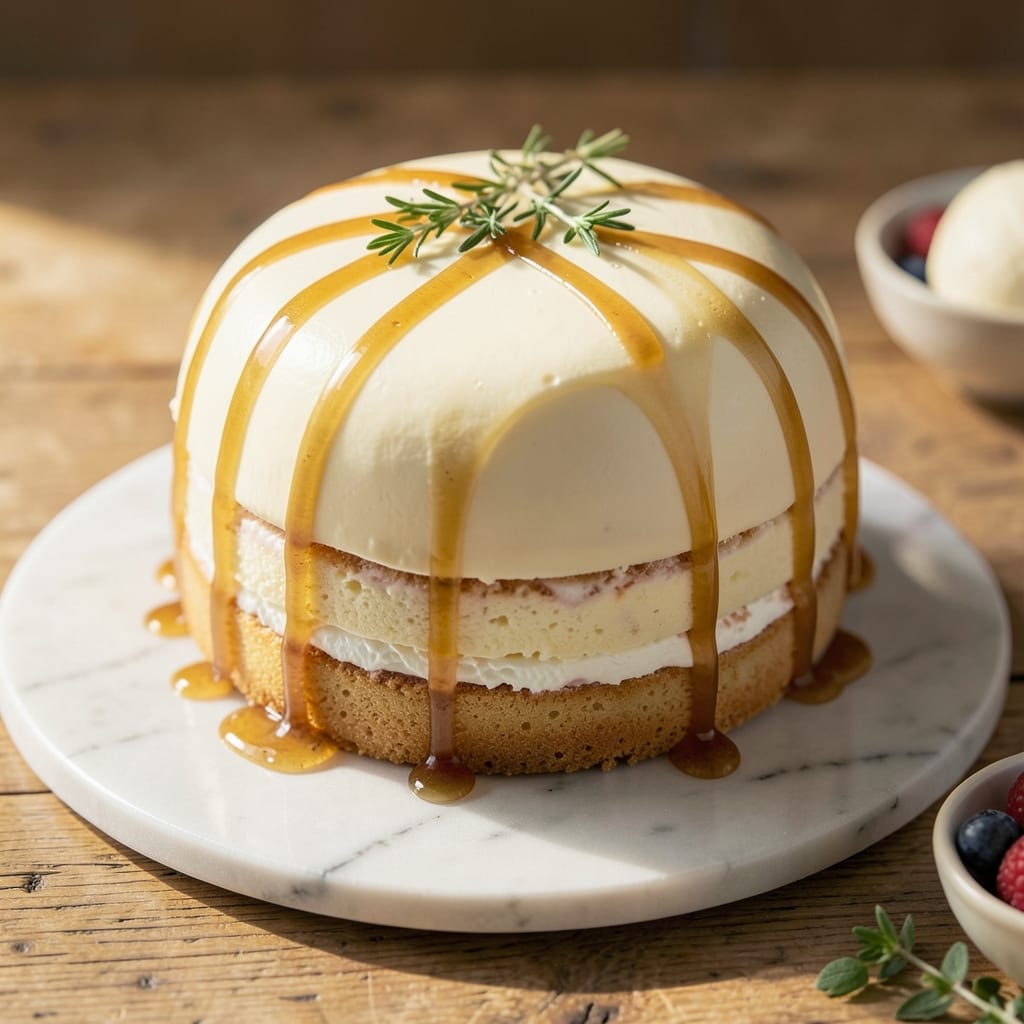
An 8-inch sphere cake transforms ordinary baking into showstopping elegance—no advanced skills required. This recipe delivers a perfectly proportioned, fondant-covered masterpiece with a foolproof shaping technique that works every time. The secret lies in a sturdy cake base and a simple rolling method that creates that coveted spherical form without the frustration.
What sets this apart is the two-tiered approach: a dense, flavorful cake that holds its shape when rolled, paired with a smooth fondant that bridges seamlessly. No special equipment beyond a cake pan and a little patience—ideal for beginners eager to impress. The result? A restaurant-worthy centerpiece that looks complex but comes together with methodical precision.
Each slice reveals a velvety crumb and buttery richness, while the fondant exterior stays flawlessly smooth. Whether you're celebrating a milestone or simply treating yourself, this cake delivers professional-level presentation with minimal fuss. The shaping technique is the real game-changer—no guesswork, just consistent results.
Perfect for birthdays, anniversaries, or special occasions, this recipe scales effortlessly. The fondant can be customized with colors, textures, or even edible glitter for extra flair. Let's create a cake that commands attention without the stress of elaborate decorating.
Ingredients for 8 inch sphere cake
Transform ordinary baking into restaurant-worthy elegance with these precision ingredients.
| Ingredient | Amount | Notes |
|---|---|---|
| All-Purpose Flour 🌾 | 2 ½ cups | Sifted for even texture |
| Unsalted Butter 🧈 | 1 ½ cups | Cold, cubed for cake layers |
| Granulated Sugar 🍚 | 2 cups | Superfine preferred for smoothness |
| Large Eggs 🥚 | 4 whole | Room temperature for even mixing |
| Vanilla Extract 🌿 | 2 tsp | Pure Madagascar preferred |
| Baking Powder 🍃 | 1 tbsp | Freshly opened for lift |
| Salt 🧂 | ½ tsp | Fine sea salt preferred |
| Whole Milk 🥛 | ¾ cup | Room temperature for creaming |
| White Fondant Icing 🍰 | 2 lbs | Store-bought or homemade |
| Cornstarch 🌾 | 1 tbsp | For dusting work surface |
| Powdered Sugar 🍚 | 1 cup | Sifted for smooth fondant |
| Shortening 🧈 | ½ cup | For fondant pliability |
| Lemon Juice 🍋 | 1 tbsp | Freshly squeezed for fondant |
The foundation begins with high-quality all-purpose flour—King Arthur or Gold Medal brands yield the best results for a sturdy yet tender crumb. Unsalted butter is non-negotiable here; Plugrá or Land O'Lakes work perfectly when cold and cubed. Superfine sugar dissolves more evenly, but if unavailable, pulse regular granulated sugar in a food processor for 30 seconds. Room-temperature eggs and milk ensure smooth batter without lumps. For the fondant, Wilton or Smooth-On brands provide professional-grade pliability, though homemade versions using powdered sugar, shortening, and lemon juice work beautifully with practice.
No vanilla extract? Pure almond extract at half the amount delivers a similar depth, though the flavor profile differs slightly. Substitute milk with whole heavy cream for richer layers, but expect a denser texture. For fondant alternatives, rolled marzipan or rolled chocolate can replace white fondant—just adjust colors and textures accordingly. If your baking powder is old (over 6 months), toast it lightly in a dry pan for 2 minutes to revive its leavening power. The cornstarch is critical for dusting during rolling; Bob's Red Mill is a reliable choice for its fine texture.
Store cake layers in an airtight container with parchment between them for up to 3 days at room temperature. Fondant-covered cakes keep for 2-3 days if refrigerated, though the fondant may become slightly tacky. For long-term storage, freeze fully assembled cakes for up to 1 month, thawing at room temperature before serving. Fondant can be pre-colored and stored in airtight bags for 2 weeks—ideal for batch decorating. Always bring fondant to room temperature before rolling to prevent cracking.
Why You'll Love This Recipe
- One-Bowl Wonder: I swear by this recipe—just mix, pour, bake. No fancy equipment, no stress. The butter and sugar cream so smoothly, even if you’re not a baking pro, you’ll get that perfect crumb every time.
- Vanilla Magic: That burst of vanilla extract? It’s the secret weapon. Rich, warm, and just sweet enough to make you forget about store-bought cakes. Honestly, the eggs add this subtle depth that keeps it from being too heavy.
- Party Ready: Slice it into wedges, and it’s instant dessert for birthdays, potlucks, or even a lazy Sunday. Between us, I’ve used leftover slices for breakfast toast—yes, really—and no one judges.
- Budget-Friendly Luxury: Butter and sugar are pantry staples, and eggs? Always on sale. You’re getting restaurant-quality flavor without the markup. Plus, the recipe scales down for singles or up for crowds—no waste, just satisfaction.
Step-by-step instructions for creating an 8-Inch sphere cake
Mastering this elegant cake requires precision in layering and fondant application.
Prepare the Cake Layers
Preheat your oven to 350°F and grease two 8-inch round cake pans with nonstick spray, dusting with 1 tablespoon cornstarch for easy release. In a stand mixer fitted with the paddle attachment, cream together the 1.5 cups unsalted butter and 2 cups granulated sugar on medium speed for 3-4 minutes until light and fluffy. This step ensures proper aeration for tender layers.
Add the 4 whole large eggs one at a time, mixing well after each addition. Incorporate the 2 teaspoons vanilla extract, 2.5 cups all-purpose flour, 1 tablespoon baking powder, and 0.5 teaspoon salt, mixing on low speed just until combined. Avoid overmixing to prevent dense layers. Divide the batter evenly between the prepared pans.
Bake for 25-30 minutes or until a toothpick inserted into the center comes out clean. Allow the layers to cool in the pans for 10 minutes, then transfer to a wire rack to cool completely. This gradual cooling prevents cracking when assembling later.
Create the Fondant Bridge
Roll out the 2 pounds white fondant icing between two sheets of parchment paper to about 1/8-inch thickness. Cut a 2-inch wide strip long enough to encircle the cake base. This bridge will support the sphere shape and create the elegant base.
To form the bridge, gently press the strip into a semi-circle shape, tapering the ends slightly. Use a small amount of shortening to help it hold its shape temporarily. Place the bridge on a flat surface and position one cake layer on top, centering it perfectly. The bridge should extend slightly beyond the cake edge for stability.
Apply a thin layer of buttercream frosting (made from the remaining 1 cup powdered sugar, 0.5 cup shortening, and 1/4 cup milk) to the top of the cake layer. This creates adhesion for the second layer while maintaining structural integrity.
Assemble the Sphere Structure
Place the second cake layer on top of the first, gently pressing down to create a flat base. Using the remaining fondant, create a dome shape by rolling it into a ball and then pressing it gently into a smooth sphere. The sphere should be slightly larger than the cake base to create the illusion of a perfect 8-inch sphere.
Carefully position the fondant dome over the cake layers, centering it perfectly. Use a small offset spatula to smooth the fondant onto the sides, ensuring complete coverage. Apply additional fondant to the underside of the bridge to secure it firmly to the cake base. Chill the assembled cake in the refrigerator for 30 minutes to set the fondant.
Finalize the Fondant Application
Remove the cake from the refrigerator and gently smooth any imperfections in the fondant using your fingertips dampened with water. For extra shine, roll the 1 tablespoon lemon juice in your hands and lightly rub the fondant surface. This creates a professional finish while adding subtle brightness to the white icing.
Use a small round cutter or your thumb to create a slight indentation at the base where the cake meets the bridge. This detail enhances the sphere's three-dimensional appearance. Allow the cake to sit at room temperature for 1 hour before serving to ensure the fondant sets completely and maintains its shape.
Pro Tips For Making 8 Inch Sphere Cake
- CHILL THE BUTTER FIRST: I learned this the hard way—mixing softened butter straight from the fridge with room-temperature eggs and sugar creates a cake that’s dense and greasy. Take that butter out 30 minutes before you start, or even better, let it sit in a warm spot while you crack eggs. You want it soft enough to cream smoothly, but not melted.
- WEIGH YOUR FLOUR: Scooping flour from the bag packs in air, and your cake will end up dry or crumbly. Use a kitchen scale and measure by weight—this recipe needs about 2 cups (250g) of all-purpose flour. If you’re in a pinch, spoon it into the measuring cup and level it off, but don’t tap it.
- DON’T OVERMIX THE BATTER: Once you add the flour, stop mixing the second it’s just combined. Overmixing develops gluten, and your sphere cake will turn out tough instead of tender. Give it 10-12 strokes max—you’re not trying to make pancakes here.
- ROOM-TEMP EGGS MATTER: Cold eggs from the fridge won’t blend as smoothly, and they can cause the butter to seize up in the mixer. Let them sit in warm water for 5 minutes before cracking them in—this ensures they emulsify properly with the butter and sugar. (Yes, even if you’re impatient like me.)
Creative variations of this 8 inch sphere cake
Flavor Variations
Swap vanilla extract for 1 teaspoon almond extract and add ½ cup finely chopped toasted almonds to the batter for a nutty twist. For a citrusy profile, replace ½ cup milk with orange juice and zest 1 orange into the batter. I’ve also made a chocolate sphere cake by adding ½ cup cocoa powder and reducing the flour to 2 cups—the fondant bridge holds just as well! 🍫
Fondant Alternatives
Replace white fondant with rolled marzipan for a nutty flavor and natural sweetness. For a chocolate version, use dark or milk chocolate fondant (melted and rolled out). If you prefer a lighter option, try rolled coconut fondant—just dust with shredded coconut before chilling. Each alternative changes the texture slightly, so adjust the thickness to ⅛-inch for best results. 🥥
Seasonal Adaptations
For spring, infuse the batter with 1 teaspoon lavender extract and top with edible violets on the fondant. In summer, add ½ cup crushed pineapple to the batter and garnish with toasted coconut flakes. Autumn calls for pumpkin spice (replace ½ cup milk with pumpkin puree and add 1 teaspoon pumpkin pie spice). Winter versions shine with white chocolate fondant and gold leaf accents. 🍂
Texture Twists
Add ½ cup crushed pretzels to the batter for a salty-sweet contrast, or fold in 1 cup whipped cream before baking for a lighter crumb. For a crunchy exterior, roll the fondant in sprinkles or crushed cookies before applying. I’ve even experimented with matcha-infused fondant (add 1 tablespoon matcha powder to the fondant mix) for a vibrant green sphere. 🍵
Dietary Swaps
Make this gluten-free by substituting all-purpose flour with a 1:1 gluten-free blend (like Bob’s Red Mill). For a dairy-free version, replace butter with vegan butter and milk with almond milk. Egg-free bakers can use ¼ cup applesauce per egg, though the texture will be slightly denser. The fondant bridge remains sturdy with these adjustments! 🌱
Themed Decorations
Create a pastel rainbow sphere by dividing fondant into colors and layering them. For a geometric look, use a fondant cutter to create clean edges. A rustic charm comes from rolling the fondant in crushed nuts or dried fruit. I once made a golden sphere by tinting fondant with edible gold powder—perfect for special occasions! ✨
Nutrition facts
Frequently asked questions
Can I make this sphere cake without a bridge?
The bridge is essential for structural integrity, but you can create a flat base instead. Use a 1-inch thick layer of buttercream between two cake layers to form a stable foundation, then roll fondant around the sides to create a spherical shape. Chill for 1 hour before serving to prevent collapsing.
How do I fix fondant cracks after chilling?
Gently warm the cracked areas with your fingertips or a hairdryer on low heat, then smooth with a tiny bit of water. For stubborn cracks, apply a thin layer of fondant glue (equal parts powdered sugar and shortening) and re-smooth. Work quickly before the fondant stiffens again.
What's the best way to transport this cake?
Place the cake on a sturdy cake board and wrap it tightly in plastic wrap, followed by a layer of aluminum foil. For extra support, place a cardboard box around it. Keep it refrigerated until serving to prevent fondant from softening in warm temperatures.
Can I use store-bought cake mix?
Technically yes, but the texture won't be as sturdy for rolling. For best results, use a high-quality boxed mix and add 1/4 cup extra butter and 2 tbsp milk powder to improve structure. The fondant bridge will still work, but expect slightly more fragility in the cake layers.
How do I adjust the recipe for a 10-inch sphere?
Increase all cake ingredients by 50% and use 3 pounds of fondant. Bake in three 8-inch pans (or one 10-inch pan with two layers) and build a wider bridge. The shaping technique remains identical—just scale up all measurements proportionally.