
Desserts
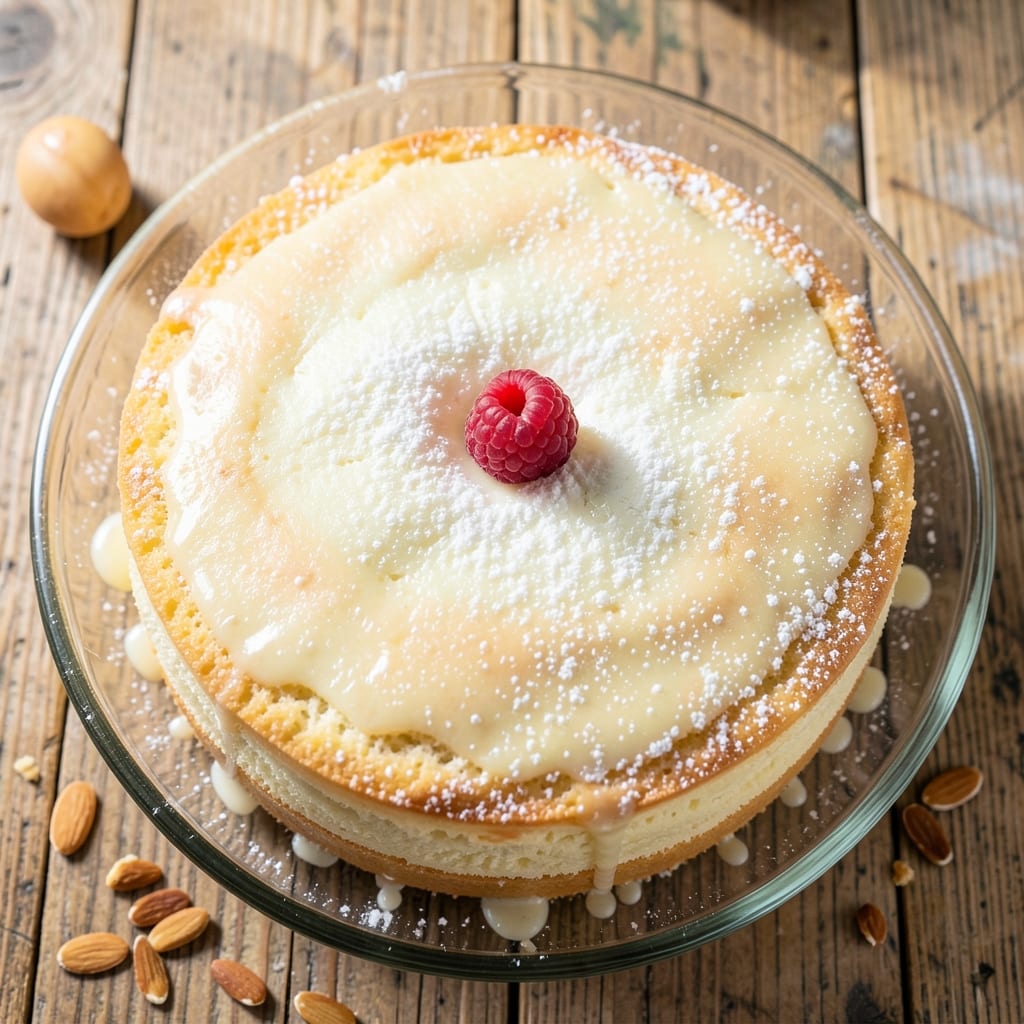
This 6-egg cake recipe delivers a perfectly golden crust and tender crumb—no fancy equipment or complicated techniques required. The secret lies in balancing moisture and structure with just the right amount of butter and sugar, creating a cake that's both rich and airy. I've perfected this one-pan method over years of baking, ensuring foolproof results every time without the mess of multiple layers or pans.
What makes this recipe stand out is its versatility—it works as a classic vanilla layer cake, a moist sponge for filling, or even a simple sheet cake for birthdays and celebrations. The high egg content creates a stable structure while keeping the texture tender, and the golden crust develops naturally without overbaking. This is the kind of cake that holds its shape when sliced but still melts in your mouth.
By the time you pull it from the oven, you'll have a cake with a crisp, caramelized exterior and a velvety interior that's impossible to resist. The recipe includes optional frosting and glazing techniques to elevate it further, but even plain, it's restaurant-quality. Whether you're baking for a special occasion or just treating yourself, this cake delivers professional results with minimal effort.
Best of all, it's adaptable—swap in flax eggs for a vegan version or add citrus zest for a bright twist. The instructions are clear, the ingredients simple, and the outcome guaranteed. Let's get started on creating your perfect cake.
Ingredients for 6 egg cake
Six eggs, one pan—this golden crust cake is all about simplicity and perfection.
| Ingredient | Amount | Notes |
|---|---|---|
| Large Eggs 🥚 | 6 whole | Room temperature for best mixing |
| All-Purpose Flour 🌾 | 2 ½ cups | Sifted for light texture |
| Granulated Sugar 🍚 | 2 cups | Superfine preferred for smooth batter |
| Unsalted Butter 🧈 | 1 cup | Cold, cubed for even mixing |
| Vanilla Extract 🌿 | 2 tsp | Pure vanilla for authentic flavor |
| Baking Powder 🍞 | 2 tsp | Freshly opened for lift |
| Salt 🧂 | ½ tsp | Fine sea salt preferred |
| Milk 🥛 | 1 cup | Whole milk for richness |
| Vegetable Oil 🫒 | ¼ cup | Lightly toasted for flavor |
| Lemon Zest 🍋 | 1 tbsp | Brightens the flavor profile |
| Cornstarch 🌾 | 1 tbsp | For tender crumb texture |
The eggs are the star here. Room temperature is key—they mix better and create a smoother batter. I always use large eggs for structure, but if you grab extra-large, just reduce the milk by 2 tablespoons. Butter matters too—unsalted, cold cubes create pockets of moisture that make the crust crisp. For the flour, King Arthur or Gold Medal brands are my go-tos—they bake evenly. The baking powder? Fresh is non-negotiable—old powder means flat cake. Check the can date if you're unsure.
No vanilla extract? Vanilla bean paste works too, or even a pinch of vanilla sugar in a pinch. Running short on butter? Coconut oil works in a bind, but it gives a slightly different texture. The lemon zest can be swapped for orange or lime, but lemon's the classic. For a richer version, add 2 tablespoons sour cream to the batter. And if you're making this vegan? Flax eggs (6 tbsp ground flax + 1.5 cups water) work surprisingly well—just add an extra teaspoon of baking powder for lift.
This cake keeps beautifully—3 days at room temp covered loosely, or 1 week in the fridge wrapped tight. For the golden crust, don't overbake—pull it when the edges are set but the center still jiggles slightly. The cornstarch trick? It prevents a gummy texture. And if you're freezing? Wrap tightly in plastic wrap and freeze for up to 3 months. Thaw overnight in the fridge before serving.
Why You'll Love This Recipe
- No Mixing Madness: I swear by this recipe—just fold the flour into the beaten eggs, sugar, and melted butter. No stand mixer, no overmixing, and definitely no lumps. The eggs do all the heavy lifting, and honestly? That’s my kind of baking.
- Buttery-Vanilla Magic: That perfect balance of rich butter and vanilla extract? It’s like a hug in cake form. The sugar caramelizes just enough to give it a subtle depth, and the eggs make it moist without being heavy. (Between us, this is the kind of cake that disappears faster than my willpower on a Sunday morning.)
- Leftover Hero: This cake keeps beautifully for days, and slices reheated in the microwave? Still tender, still delicious. I’ve packed it for lunches, served it cold with coffee, even used it for a last-minute dessert when I forgot to buy anything. It’s my secret weapon for when life gets busy.
- Budget-Friendly Luxury: Six eggs might sound like a lot, but it’s actually cost-effective—no pricey specialty ingredients, just pantry staples. The butter adds richness without breaking the bank, and the flour and sugar stretch further than you’d think. Plus, it feeds a crowd or satisfies one person’s cravings—no guilt either way.
Step-by-step instructions for a golden crust cake
This one-pan cake delivers a perfectly golden crust every time—no fancy equipment needed.
Whisk Eggs and Sugar Until Pale and Fluffy
In a large mixing bowl, combine the 6 whole Large Eggs and 2 cups Granulated Sugar. Using a hand mixer or stand mixer on medium-high speed, beat for 3-5 minutes until the mixture is light, pale yellow, and nearly tripled in volume. You'll see ribbons form when you lift the beaters—this means air has been incorporated, which is key for that tender crumb.
I like to scrape down the sides every minute or so to make sure everything gets evenly mixed. The eggs should be completely smooth with no streaks of sugar remaining. This step is crucial because the sugar helps stabilize the egg foam, giving your cake that signature height and moist texture.
Melt Butter and Mix in Dry Ingredients
In a separate bowl, melt the 1 cup Unsalted Butter over low heat or in the microwave until just liquid. Let it cool slightly for 2 minutes—it shouldn't be hot, just warm. Then, whisk in the 2.5 cups All-Purpose Flour, 1 tbsp Cornstarch, 2 tsp Baking Powder, 0.5 tsp Salt, and 1 tbsp Lemon Zest. Stir until everything is evenly combined and the mixture looks like fine crumbs.
In a small measuring cup, mix the 2 tsp Vanilla Extract with the 1 cup Milk and 0.25 cup Vegetable Oil. This pre-mixing ensures the vanilla and oil distribute evenly throughout the batter. Now, gently fold this liquid mixture into the butter-flour combination until just combined—you don't want to overmix or develop gluten, which would make the cake tough.
Combine Wet and Dry Ingredients for Smooth Batter
With the mixer on low speed, gradually pour the egg-sugar mixture into the dry ingredients. Mix just until everything is combined—about 10-15 seconds. You should still see some streaks of flour, which means you haven't overworked the batter. The goal here is to create a smooth, pourable consistency that will bake evenly.
Here's the thing—this cake relies on the cornstarch for that tender crumb, so don't skip mixing it in thoroughly. The batter should be thick but still flow easily when you lift the bowl. If it looks too thick, you can add 1-2 tablespoons of milk to loosen it up. The batter should coat the back of a spoon but still hold its shape when you lift it.
Bake in a Preheated Pan for Perfect Rise
Preheat your oven to 350°F. Grease an 8-inch round cake pan or 9x13-inch baking dish thoroughly with butter or nonstick spray. Pour the batter into the prepared pan and smooth the top with a spatula. Tap the pan gently on the counter a few times to release any air bubbles—this helps prevent a dense center.
Bake for 35-40 minutes until a toothpick inserted in the center comes out clean and the edges are golden brown. The top should look slightly domed and set, but still moist—not dry or cracked. If you're unsure, check at the 30-minute mark—ovens vary, and you don't want to overbake. The cake is done when it springs back slightly when pressed in the center.
Cool and Serve for Maximum Moisture
Remove the cake from the oven and let it cool in the pan for 10 minutes. Then, transfer it to a wire rack to cool completely. This gradual cooling prevents the cake from sinking in the middle. I know it's tempting to dig in right away, but patience here ensures the best texture—each slice should be moist and tender, not gummy or dry.
The golden crust will firm up as it cools, creating that perfect contrast with the soft interior. Once fully cooled, you can dust it with powdered sugar or serve it as-is. This cake keeps well at room temperature for 2-3 days or can be refrigerated for up to 5 days—just bring it to room temperature before serving for the best experience.
Pro Tips For Making 6 Egg Cake
- WHISK EGGS UNTIL PALE: I learned this the hard way—stopping when the batter looks "mostly mixed" leaves you with dense, rubbery cake. Whisk those eggs and sugar until they’re thick, pale yellow, and ribbon-like (when you lift the whisk, the trails should hold for a few seconds). That’s the moment the structure actually forms, not when it just looks "done."
- WEIGH YOUR FLOUR: Scooping flour from the bag into cups? You’re adding air, and this cake can’t handle extra volume. Use a kitchen scale for the flour—it’s the only way to guarantee the right texture. Six eggs are already a lot; don’t let inconsistent flour mess up the balance.
- DON’T OVERMIX AFTER FLOUR: Once you fold in the flour, stop as soon as it’s just combined. I used to keep going until the batter looked uniform, but that develops gluten and turns your cake tough. Two or three gentle swirls with a spatula—no more. This cake relies on tender layers, not structure.
- CHILL THE BATTER 30 MINUTES: I was skeptical until I tried it: letting the batter sit in the fridge before baking evens out the temperature and prevents cracking. Pour it into your pan, cover it loosely with plastic wrap, and let it rest. The edges will thank you—no more sunken centers or jagged tops.
Perfect pairings for this 6 egg cake
Classic Vanilla Frosting
This cake’s rich texture pairs beautifully with a simple American-style vanilla buttercream. Whip 1 cup unsalted butter (softened) with 4 cups powdered sugar and 2 tbsp heavy cream until smooth. Add 2 tsp vanilla extract and a pinch of salt for balance. Spread while the cake is still slightly warm for easier application. 🥄
Lemon Glaze Finish
For a bright contrast, brush the cooled cake with a lemon glaze made from 1 cup powdered sugar, 2 tbsp fresh lemon juice, and 1 tbsp lemon zest. Thin with 1-2 tsp milk if needed, then drizzle over the top. The acidity cuts through the richness, making each bite refreshing.
Fruit Compote Topping
Warm 1 cup berries (strawberries, raspberries, or blueberries) with 2 tbsp sugar and 1 tsp lemon juice until syrupy. Spoon over cake slices or use as a filling between layers. The natural sweetness enhances the cake’s vanilla notes without overpowering it.
Caramel Drizzle
For a decadent touch, drizzle the cake with salted caramel sauce (store-bought or homemade). Heat 1 cup heavy cream with 1 cup granulated sugar until dissolved, then simmer until golden. Cool slightly and drizzle over the cake. Sprinkle with flaky sea salt for contrast.
Coffee or Spiced Syrup
Drizzle with espresso syrup (simmer ½ cup sugar + ½ cup water + 2 tbsp instant coffee) or cinnamon syrup (simmer ½ cup sugar + ½ cup water + 1 cinnamon stick). The bold flavors complement the cake’s richness, especially for dessert lovers who enjoy depth.
Nutrition facts
Frequently asked questions
Why does this recipe use 6 eggs instead of the usual 3-4?
The extra eggs create a stable structure while keeping the crumb tender and moist. Six eggs provide enough protein to hold the cake's shape during baking, preventing a dense or gummy texture. This makes it ideal for layer cakes or sheet cakes where structural integrity matters.
Can I make this cake in a different pan size?
Yes, but adjust baking time accordingly. For a 9-inch round pan, bake 30-35 minutes instead of 35-40 minutes. A 9x13-inch pan works perfectly for a sheet cake—just reduce the oven temperature to 325°F and bake 40-45 minutes. Always check doneness with a toothpick.
What if my cake sinks in the middle?
This usually happens from overmixing or opening the oven too soon. Let the cake cool 10 minutes in the pan before transferring, and avoid opening the oven door during baking. If it sinks slightly, the cornstarch in the recipe helps prevent a gummy texture—just slice it while still warm for the best results.
How can I make this cake vegan?
Replace the eggs with 6 flax eggs (6 tbsp ground flaxseed + 1.5 cups water) and use plant-based butter and milk. Add an extra ½ tsp baking powder for lift. The texture will be slightly denser but still delicious—great for layer cakes or cupcakes!
Can I add mix-ins like chocolate chips?
Fold in 1 cup chocolate chips or chopped nuts after mixing the wet and dry ingredients. For even distribution, gently stir them in by hand. Avoid overmixing—just combine until no streaks remain. This works especially well with the lemon zest for a bright, citrusy twist.