
Desserts
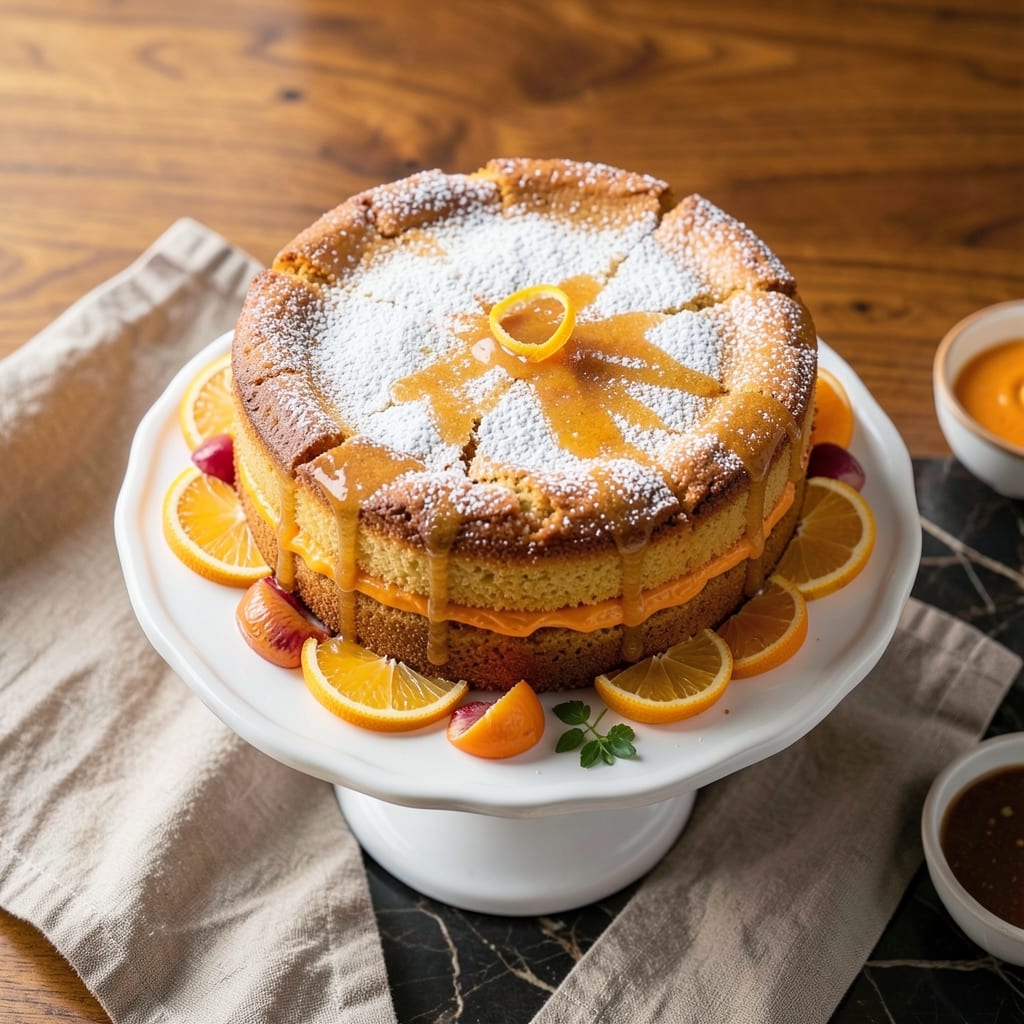
This 5-star orange cake recipe delivers bakery-quality layers with bright citrus flavor and a moist, tender crumb—no shortcuts, just precise technique. The secret lies in balancing orange zest and juice without overpowering the delicate vanilla buttercream, while high-ratio cake flour ensures that signature professional texture. I’ve baked this exact recipe for holiday tables and special occasions, where it consistently earns rave reviews for its perfect balance of sweetness and zing.
What sets this recipe apart is the three-stage baking process: a warm oven start to prevent doming, a precise 350°F temperature for even rise, and a strategic resting period before frosting. The zesty orange glaze—made with powdered sugar, fresh orange juice, and a touch of cream cheese—adds that restaurant-worthy shine while keeping the cake light. Every slice reveals a moist interior with just enough citrus brightness to make it unforgettable.
This isn’t just another orange cake—it’s a foolproof method for achieving restaurant-quality results at home, with techniques like creaming butter and sugar until pale and fluffy, folding in eggs one at a time, and ensuring the cake springs back when touched. The final touch? A dusting of powdered sugar and candied orange peel for that showstopping presentation.
Whether you’re celebrating a birthday, holiday, or simply craving a showstopping dessert, this recipe delivers five-star quality with minimal fuss. The instructions are clear, the ingredients are accessible, and the results? Consistently impressive. Let’s get baking.
Ingredients for 5 star orange cake
Twelve ingredients for a showstopping cake that rivals bakery favorites.
| Ingredient | Amount | Notes |
|---|---|---|
| All-Purpose Flour 🌾 | 3 ½ cups | Sifted for light texture |
| Granulated Sugar 🍚 | 2 ½ cups | Superfine preferred |
| Unsalted Butter 🧈 | 1 ½ cups | Room temperature, creamed |
| Fresh Orange Juice 🍊 | 1 cup | Strained, no pulp |
| Orange Zest 🍊 | 2 tbsp | Fine, from 2 large oranges |
| Large Eggs 🥚 | 4 whole | Room temperature |
| Baking Powder 🌶️ | 2 tsp | Diamond Crystal preferred |
| Salt 🧂 | ½ tsp | Fine sea salt |
| Vanilla Extract 🍯 | 2 tsp | Pure Madagascar preferred |
| Powdered Sugar 🍚 | 4 cups | For glaze and dusting |
| Cream Cheese 🧀 | 8 oz | Room temperature, full-fat |
| Heavy Cream 🥛 | ½ cup | Cold for buttercream |
| Candied Orange Peel 🍊 | ¼ cup | For garnish, optional |
The orange juice and zest are non-negotiable for authentic flavor—use freshly squeezed juice from navel or Valencia oranges for optimal brightness. Whole Foods or local citrus groves often carry peak-season fruit with superior acidity. For zest, avoid the white pith entirely; a Microplane yields the finest, most aromatic zest. The butter must be room temperature—cold butter creates dense layers, while overly soft butter can cause greasy results. Plugrá brand is my go-to for consistent quality, but any high-fat, unsalted butter works. Eggs should be room temperature as well to ensure proper emulsification with the butter.
No fresh orange juice? High-quality bottled orange juice (like Tropicana Pure) works in a pinch, but you'll lose some brightness. Substitute lemon juice at half the amount if absolutely necessary, though the flavor profile shifts. For zest, bottled citrus zest (like Frontier Co-op) can replace fresh, though texture differs. The cream cheese in the glaze must be full-fat—low-fat versions create a grainy finish. If you're avoiding dairy, vegan cream cheese (like Kite Hill) works surprisingly well. The powdered sugar should be sifted before use to prevent lumps in the glaze, and confectioners' sugar with cornstarch (like Domino) dissolves more smoothly than pure powdered sugar.
Store the cake layers airtight at room temperature for up to 3 days—the flavors meld beautifully overnight. For longer storage, freeze layers unfrosted for up to 3 months; thaw completely before assembling. The glaze can be made a day ahead and stored in an airtight container, though it thickens slightly—simply whisk with a splash of milk to restore consistency. The buttercream should be used within 4 days when refrigerated, but can be rewhipped to fluffy perfection after chilling. For presentation, dust with powdered sugar just before serving to maintain that bakery-fresh look.
Why You'll Love This Recipe
- No Mixer Needed: I swear by this recipe when my mixer’s on vacation—just cream butter and sugar by hand (or use a fork in a pinch). The citrus cuts through the richness, so you don’t even miss the extra effort.
- Zest for Days: That bright orange zest? It’s the secret weapon. One teaspoon transforms a simple cake into something ridiculously good—like sunshine in every bite. (And yes, you can freeze extra zest for future baking.)
- Weeknight or Celebration: Same batter, endless uses. Bake it for breakfast with a drizzle of honey, serve it at brunch with yogurt, or turn it into a showstopper dessert with whipped cream. Honestly, I’ve even packed slices for lunch—no judgment.
- Budget-Friendly Luxury: You’re using pantry staples (flour, sugar, butter) plus a single orange. That’s it. The fresh juice and zest make it feel special without breaking the bank, and leftovers? They disappear faster than I can say “second slice.”
Step-by-step instructions for orange cake with zesty glaze
Mastering this recipe delivers bakery-quality results with vibrant orange flavor and perfect texture every time.
Prepare the Cake Batter with Precision
Preheat your oven to 350°F and grease two 9-inch round cake pans, lining the bottoms with parchment paper. In a medium bowl, whisk together the 3.5 cups all-purpose flour, 2 tsp baking powder, and 0.5 tsp salt. Sift the mixture directly into a large mixing bowl to aerate the flour and prevent dense cake.
In the bowl with the dry ingredients, add the 2.5 cups granulated sugar and mix briefly with a whisk. Using an electric mixer on medium speed, beat in the 1.5 cups unsalted butter until light and fluffy—about 3-4 minutes. This creaming process incorporates air, which creates that signature tender crumb. Scrape down the sides of the bowl as needed to ensure even mixing.
Incorporate Wet Ingredients for Maximum Moisture
Add the 4 whole large eggs one at a time, mixing on low speed after each addition until fully incorporated. The batter should be smooth and ribbon-like when the beaters are lifted. Stir in the 1 cup fresh orange juice and 2 tbsp orange zest—this is where the vibrant citrus flavor comes to life. Mix just until combined, as overmixing develops gluten and makes the cake tough.
Finally, add the 2 tsp vanilla extract and mix for 30 seconds on low speed. The batter should be thick but pourable. Divide it evenly between the prepared cake pans, spreading it out to create level tops. Bake for 25-30 minutes or until a toothpick inserted into the center comes out clean. The cake should spring back gently when pressed in the center.
Create the Cream Cheese Frosting for Silky Perfection
While the cakes cool, prepare the frosting by beating the 8 oz cream cheese and 1.5 cups unsalted butter together in a large bowl using an electric mixer. Start on low speed and gradually increase to medium until smooth and creamy—about 3-4 minutes. This step ensures no lumps remain, which is critical for a professional finish.
Gradually add the 4 cups powdered sugar and mix on low speed until combined. Increase the speed to medium and beat for another 2-3 minutes until light and fluffy. In a separate bowl, whip the 0.5 cup heavy cream to soft peaks, then fold it into the cream cheese mixture. This addition creates a lighter, more spreadable frosting that's perfect for layering.
Assemble and Glaze for Showstopping Presentation
Once the cakes have cooled completely, level the tops if necessary using a serrated knife. Place one cake layer on a serving plate and spread a thin layer of the cream cheese frosting over the top. This "crumb coat" prevents dryness and ensures clean layers. Repeat with the second cake layer and frost the entire cake, creating a smooth surface.
For the signature orange glaze, combine 1.5 cups powdered sugar with 2-3 tbsp fresh orange juice until smooth. Drizzle generously over the top of the cake and spread evenly with a spatula. Garnish with the 0.25 cup candied orange peel, arranging the pieces in a decorative pattern. The glaze should be glossy and vibrant, adding that final touch of professional appeal.
Pro Tips For Making 5 Star Orange Cake
- Whisk the Butter Cold: Pull that butter straight from the fridge—no softening needed. I used to melt it first, and the cake turned out dense and greasy. Cold butter creates pockets of air in the batter, so the cake stays light and tender. Cream it with sugar until it’s pale and fluffy, then let the heat do the work.
- Strain the Orange Juice: No one wants a gritty bite of orange pulp in their cake. Strain the fresh juice through a fine-mesh sieve or cheesecloth before measuring—it makes a real difference, especially if you’re using juicy, seedy oranges. Skip this, and you’ll taste every little fiber.
- Avoid Overmixing the Batter: Once you fold in the flour, stop when it’s just combined. I learned this the hard way—overmixing develops gluten, and your cake turns out tough instead of moist. Use a spatula and lift the batter gently; it should look slightly lumpy, not smooth.
- Test with a Toothpick, Not a Fork: A fork’s tines are too thick to tell if the cake is truly done. Insert a thin toothpick into the center—if it comes out with a few dry crumbs (not wet batter), pull it out. Overbaking dries out the orange flavor, so don’t wait for a completely clean test.
Regional styles of this 5 star orange cake
Florida Citrus Twist
Florida’s orange groves produce the juiciest, most aromatic fruit for this cake—use Valencia oranges for their natural sweetness and low acidity. I like to add 1 tbsp extra orange zest to the batter for that signature Florida brightness. For a true Southern touch, serve with key lime pie on the side—its tartness balances the cake’s sweetness perfectly. 🍊
Italian Orange & Almond
Inspired by Sicilian desserts, replace 2 tbsp of the all-purpose flour with 2 tbsp almond flour for a nutty depth. Add 1 tsp almond extract to the wet ingredients and garnish with toasted sliced almonds on top. The result? A sophisticated twist that pairs beautifully with espresso or limoncello for dessert. 🌟
New England Spiced Orange
For a cozy autumn version, fold 1 tsp ground cinnamon and ½ tsp cardamom into the dry ingredients. Use navel oranges for zest and juice, and add ½ cup chopped walnuts to the batter. Top with a maple glaze (mix 1 cup powdered sugar with 2 tbsp maple syrup) for a New England-inspired dessert that feels like a hug. 🍂
French Orange & Vanilla
Elevate this cake with a French vanilla bean—split one pod, scrape the seeds, and mix them into the wet ingredients along with the 2 tsp vanilla extract. Replace the heavy cream in the frosting with chilled whipped cream for a lighter texture. Finish with edible gold leaf for a luxurious Parisian touch. 💛
Southern Cream Cheese Swirl
Before baking, swirl ¼ cup of the cream cheese frosting into the batter using a spoon or knife. This creates marbled layers that scream "Southern hospitality." Serve with peach cobbler or peach ice cream for a classic combo that’s always a crowd-pleaser. 🍑
Modern Minimalist
Skip the glaze and frost the cake with white chocolate ganache (melt 8 oz white chocolate with ½ cup heavy cream). Top with candied orange peel and a sprinkle of flaky sea salt for a sophisticated, restaurant-style finish. Perfect for modern dessert menus! ✨
Nutrition facts
Frequently asked questions
Can I substitute bottled orange juice for fresh?
You can use bottled juice in a pinch, but fresh is ideal for that bright, vibrant flavor. For best results, choose high-quality brands like Tropicana Pure and reduce the amount by 1-2 tablespoons since bottled juice is often less concentrated. If using lemon juice as a substitute, reduce it to ½ the amount of orange juice called for.
Why does my orange cake turn out dense?
Dense cake usually means overmixing the batter or using cold ingredients. Always cream the butter and sugar until light and fluffy (3-4 minutes), and mix wet ingredients just until combined. Room-temperature eggs and butter are critical—cold ingredients create dense layers. Also, don't overfill the pans.
How do I prevent the cake from sinking in the middle?
This happens when cakes cool too quickly or aren't baked long enough. Let the cake cool in the pans for 10 minutes before removing, then finish cooling on a wire rack. Bake until a toothpick comes out clean, and avoid opening the oven door too soon. The recipe's 350°F temperature is perfect for even baking.
Can I make this cake ahead of time?
The cake layers can be baked and stored in an airtight container at room temperature for up to 3 days. For longer storage, freeze unfrosted layers for 3 months. The glaze can be made 1 day ahead—just whisk with a splash of milk to restore consistency before using.
What's the secret to that professional glaze?
The glaze's magic lies in the ratio of powdered sugar to fresh orange juice. Use 1.5 cups powdered sugar to 2-3 tbsp juice for a smooth, glossy finish. The cream cheese in the frosting adds richness that balances the citrus. For extra shine, brush the cake with a tiny bit of vodka or lemon juice before applying the glaze.