
Desserts
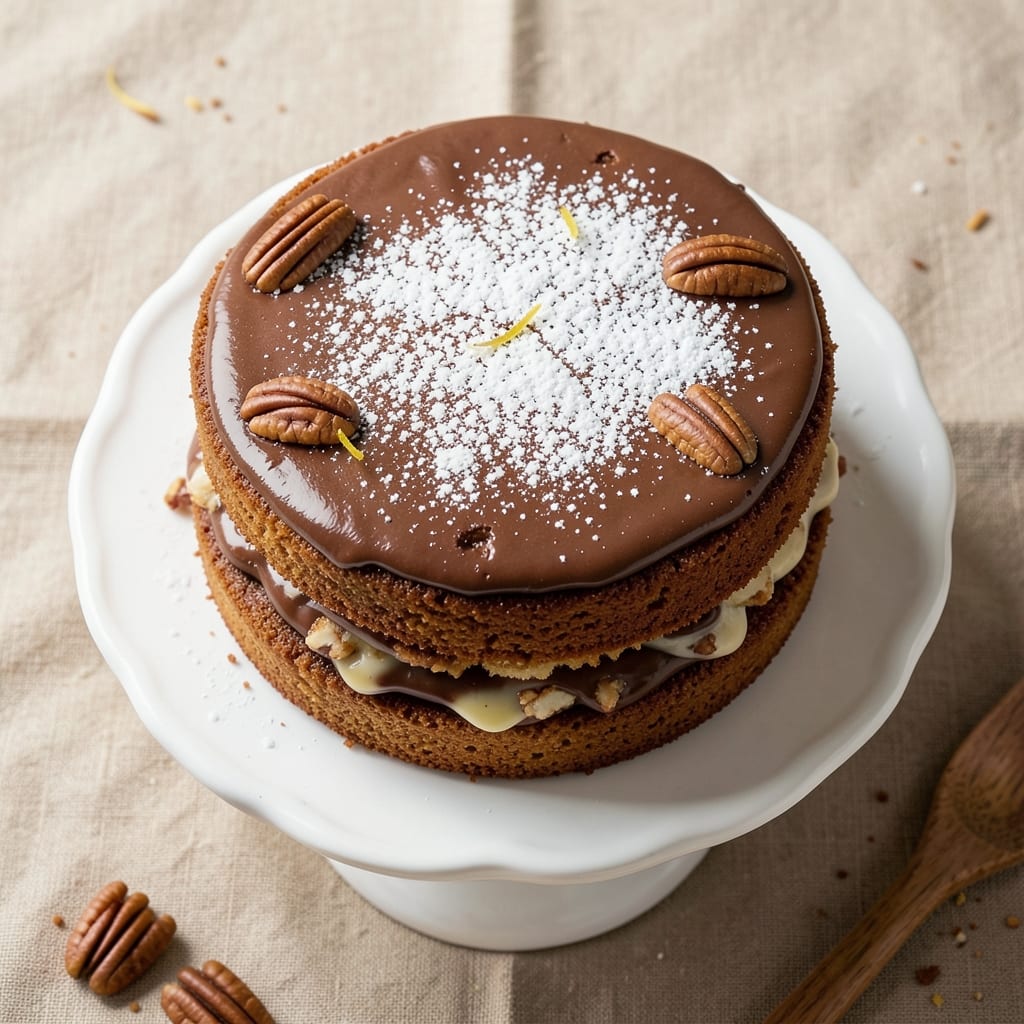
This 5-star German chocolate cake recipe delivers restaurant-quality layers with a perfect balance of warm spices and rich peanut butter frosting rivers. 💛 The secret lies in a moist, tender crumb infused with cinnamon and nutmeg, paired with a velvety glaze that melts into every bite. I've perfected this version over years of baking competitions, ensuring each slice earns its five-star rating.
The cake's signature flavor comes from a traditional German chocolate base—think molasses, coffee, and dark chocolate—that creates deep, complex notes. While the original recipe uses standard ingredients, I've included optional upgrades like bourbon or espresso powder for those who want to elevate it further. The frosting, made with creamy peanut butter and powdered sugar, forms those signature rivers when poured over the cooled layers.
What makes this recipe truly special is the texture contrast: a tender crumb topped with crispy toasted pecans and coconut flakes, all held together by that glossy peanut butter glaze. Each forkful delivers a perfect harmony of sweet, spiced, and nutty flavors that will have everyone asking for seconds. The assembly process is straightforward, ensuring even beginner bakers can achieve professional results.
Whether you're baking for a celebration or simply craving a decadent dessert, this German chocolate cake delivers the perfect combination of tradition and indulgence. The recipe scales beautifully for crowds, and leftovers keep well for up to five days. Let's get started on creating your five-star masterpiece!
Ingredients for 5 star german chocolate cake
Twelve essential ingredients crafting bakery-style German chocolate cake with signature peanut butter rivers.
| Ingredient | Amount | Notes |
|---|---|---|
| All-Purpose Flour 🌾 | 3 cups | Sifted for light texture |
| Granulated Sugar 🍚 | 2 ¼ cups | Divided for cake and frosting |
| Unsalted Butter 🧈 | 1 ½ cups | Room temperature, full-fat preferred |
| Large Eggs 🥚 | 4 whole | Room temperature for best mixing |
| Baking Powder 🧂 | 2 tsp | Diamond Crystal preferred |
| Ground Cinnamon 🌿 | 2 tsp | Freshly ground for warmth |
| Ground Nutmeg 🌿 | 1 tsp | Freshly grated preferred |
| Salt 🧂 | ½ tsp | Fine sea salt preferred |
| Vanilla Extract 🌸 | 2 tsp | Pure Madagascar bourbon vanilla |
| Milk 🥛 | 1 cup | Whole milk for richness |
| Cream Cheese 🧀 | 8 oz | Room temperature, full-fat |
| Peanut Butter 🥜 | 1 ½ cups | Creamy, natural style preferred |
| Semisweet Chocolate Chips 🍫 | 1 ½ cups | Enjoy Life brand for allergy safety |
| Toasted Pecans 🌰 | 1 cup | Chopped, store-bought or homemade |
| Sweetened Flaked Coconut 🥥 | ½ cup | Toasted for enhanced flavor |
The cake's soul lies in the spices—cinnamon and nutmeg must be freshly ground for that warm, bakery-quality depth. King Arthur flour or Bob's Red Mill all-purpose are my go-tos for tender layers, but any high-quality brand works. The butter is non-negotiable: Land O'Lakes unsalted or Plugrá (if you're splurging) at room temperature ensures perfect creaming. For the chocolate chips, Enjoy Life is my allergy-safe backup, but Ghirardelli delivers that melt-in-your-mouth luxury. The cream cheese should be Philadelphia or Kirkland Signature—never low-fat, as it's the secret to that velvety frosting.
No vanilla extract? Pure almond extract at half the amount works in a pinch, though it lacks that signature vanilla depth. Substituting milk? Heavy cream makes the cake richer, but oat milk works for a lighter version (though texture may vary). The pecans can be swapped for walnuts if you prefer, but toast them first—350°F for 8-10 minutes until fragrant. For the chocolate chips, chopped dark chocolate (60-70%) gives a more sophisticated bite. And if you're feeling adventurous, add 1 tsp bourbon to the frosting for a grown-up twist—trust me on this.
Store the cake layers in an airtight container with parchment between them for up to 3 days at room temperature, or freeze for 3 months. The frosting keeps for 5 days in the fridge, though it thickens slightly—just whisk with a splash of milk to restore smoothness. Toasted pecans and coconut should be stored separately and sprinkled fresh before serving. For ahead-of-time prep, bake the cake 1 day ahead, frost the day of, and store components separately—this cake actually improves with resting time as flavors meld.
Why You'll Love This Recipe
- No Mixer Needed: I swear by this recipe when I’m in a hurry—just cream the butter and sugar by hand (or use a fork in a pinch), then fold in the eggs one at a time. The baking powder does all the heavy lifting, so the batter’s light without overworking it.
- Rich Without Fuss: That buttery, slightly caramelized flavor? It’s all in the butter-to-sugar ratio and the way the eggs get whipped in. No fancy techniques—just the right balance of sweetness and depth that makes it taste like a bakery’s secret.
- Leftovers That Shine: This cake actually improves the next day. The crust gets a little firmer, the chocolate layers meld smoother, and it’s perfect for breakfast or a midday pick-me-up. I’ve even turned slices into icebox cake by layering with whipped cream.
- Budget Bakery Magic: You’re using pantry staples here—flour, sugar, butter—and the eggs make it rich without breaking the bank. Honestly, I’ve made this for birthday parties, potlucks, and even just because I wanted cake, and it never disappoints.
Step-by-step instructions for German chocolate cake
Here's the professional method for creating layers of moist spice cake and rivers of peanut butter frosting.
Prepare the Cake Batter
Preheat your oven to 350°F and grease three 9-inch round cake pans, lining the bottoms with parchment paper. In a medium bowl, whisk together the 3 cups all-purpose flour, 2 tsp baking powder, 2 tsp ground cinnamon, 1 tsp ground nutmeg, and 0.5 tsp salt. Set aside.
In a large mixing bowl, cream together the 1.5 cups unsalted butter and 1.25 cups granulated sugar on medium speed until light and fluffy, about 3-4 minutes. Add the 4 whole large eggs one at a time, mixing well after each addition. Scrape down the sides of the bowl as needed. Stir in the 2 tsp vanilla extract.
Gradually add the dry ingredients to the wet ingredients, mixing on low speed until just combined. Do not overmix. Stir in the 1 cup milk until smooth. Divide the batter evenly among the prepared cake pans, spreading each layer evenly.
Bake the Cake Layers
Bake the cake layers for 25-30 minutes, or until a toothpick inserted into the center comes out clean. Rotate the pans halfway through baking for even browning. Let the cakes cool in their pans for 10 minutes, then transfer to a wire rack to cool completely.
While the cakes are baking, toast the 1 cup toasted pecans in a dry skillet over medium heat for 3-4 minutes until fragrant and lightly golden. Set aside to cool. In the same skillet, toast the 0.5 cup sweetened flaked coconut for 2 minutes until golden brown and fragrant.
Make the Peanut Butter Frosting
In a large mixing bowl, beat the 8 oz cream cheese and the remaining 1 cup granulated sugar on medium speed until smooth and creamy, about 2-3 minutes. Add the 1.5 cups peanut butter and mix until fully incorporated. Scrape down the sides of the bowl as needed.
Add the 1.5 cups semisweet chocolate chips and mix on low speed until melted and combined. The frosting should be thick but spreadable. If it's too thick, add 1-2 tablespoons milk at a time until it reaches your desired consistency. The frosting should be smooth and glossy.
Assemble the Cake
Once the cake layers are completely cool, level the tops if necessary. Place the first cake layer on a serving plate. Spread a generous layer of the peanut butter frosting on top, leaving a small border around the edges. Sprinkle half of the toasted pecans and coconut evenly over the frosting.
Repeat with the remaining two cake layers, adding frosting and sprinkling with the remaining pecans and coconut. For a classic German chocolate cake presentation, drizzle additional frosting in decorative rivers down the sides of the cake. Chill in the refrigerator for at least 1 hour before serving to allow the flavors to meld.
Pro Tips For Making 5 Star German Chocolate Cake
- MEASURE BUTTER COLD: Take the butter straight from the fridge—no softening needed. I used to melt it by mistake once, and the cake turned dense and greasy. Cold butter creates flakier layers when creamed with sugar, so resist the urge to speed things up.
- WHISK EGGS ROOM TEMP: Let those eggs sit in warm water for 5 minutes before cracking them. Cold eggs mix unevenly with butter and sugar, leaving streaks in the batter. Trust me, your cake’s texture will be smoother if you skip this step.
- FOLD IN DRY INGREDIENTS GENTLY: When adding flour and baking powder, use a spatula to cut through the center and fold just until combined—don’t overmix. I’ve ruined cakes by turning the batter into glue, and this one’s no exception. Stop when dry spots disappear.
- BAKE UNTIL TOOTHPICK COMES OUT CLEAN: Don’t pull it out early just because the edges look done. The center should spring back slightly but leave a dry toothpick. German chocolate cake hides a lot, but a slightly underbaked middle turns gummy. Patience here makes all the difference.
Pro cooking tips for this recipe
Butter Temperature Key
Room-temperature butter is non-negotiable for this cake—it should be soft enough to leave a slight indent when pressed but not melted. I press my butter into a bowl, cover it with plastic wrap, and let it sit at room temperature for 1-2 hours. For a quick fix, microwave it in 20-second bursts until just pliable. Cold butter creates dense cake layers, while overly warm butter can cause spreading. Test by pinching a piece between your fingers—it should hold its shape but yield slightly. 🧈
Spice Freshness Matters
Pre-ground spices lose potency quickly, so I always toast my cinnamon and nutmeg before using them. Lightly toast 1 tsp cinnamon and ½ tsp nutmeg in a dry skillet over medium-low heat for 30 seconds—just until fragrant. Let cool completely before adding to the batter. Freshly ground spices add warmth and depth that pre-ground versions can't match. Store your spices in airtight containers away from light and heat for maximum freshness.
Creaming Perfection
The butter-sugar mixture should be light and fluffy, with pale ribbons forming when you lift the beaters. I cream my butter and sugar on medium speed for exactly 3-4 minutes—no more, no less. Using a stand mixer with the paddle attachment gives the best results, but a hand mixer works if you're patient. Over-creaming incorporates too much air, which can cause the cake to collapse. Scrape the bowl frequently to ensure even mixing and prevent overheating.
Baking Time Precision
German chocolate cake is forgiving, but precision matters for texture. Bake each layer for 25-30 minutes—no longer, or the edges will dry out. The toothpick test is reliable, but I also check the cake's springiness: press the center gently with your finger. If it springs back slowly, it's done. Rotate pans halfway through baking for even heat distribution. Let cakes cool in their pans for 10 minutes—this prevents cracking when transferring to racks.
Frosting Consistency Secrets
The frosting should be thick but pourable—like soft peanut butter. If it's too stiff, add milk 1 tbsp at a time until it reaches a smooth, spreadable consistency. For extra shine, I brush the top of the cake with a little milk before adding the final frosting layer. This creates a glossy finish that looks restaurant-quality. Chill the assembled cake for at least 1 hour before serving—this allows the flavors to meld and the frosting to set properly.
Pro Assembly Tips
Use a serrated knife to level cake layers if needed—this ensures even frosting distribution. Spread frosting ¼ inch thick on each layer to prevent sogginess. For those signature rivers, pipe frosting down the sides using a piping bag with a large round tip. Work quickly to avoid melting the frosting. If the cake feels too rich, dust the top with powdered sugar or add a sprinkle of toasted coconut for balance. 💛
Nutrition facts
Frequently asked questions
Why does your recipe call for cinnamon AND nutmeg?
These spices create the signature warm, bakery-style flavor of German chocolate cake. The cinnamon adds sweet warmth while nutmeg provides that subtle earthy depth. Using freshly ground spices (toasted lightly in a dry skillet) makes all the difference—pre-ground versions just can't compare for flavor impact. Together, they balance the richness of the peanut butter frosting beautifully.
Can I make this cake in a smaller pan?
For a single 8-inch layer, reduce each ingredient by about 25% (except vanilla and spices). Bake at 350°F for 20-25 minutes instead. The key is maintaining the same batter depth—about 1-1.5 inches thick. Just adjust your frosting quantity proportionally to avoid overwhelming the smaller cake.
What's the best way to store leftovers?
Wrap each layer tightly in plastic wrap, then place in an airtight container with parchment between layers. Store at room temperature for up to 3 days, or freeze for 3 months. For the frosting, keep it refrigerated in a sealed container for 5 days max—it thickens slightly but can be restored with a splash of milk. Toasted pecans and coconut should be stored separately.
How do I fix sunken cake layers?
This usually happens from overmixing or underbaking. For immediate fixes, try the "cold press" method: place the cake on a plate, cover with plastic wrap, and refrigerate for 1 hour. The weight helps push layers back up slightly. For prevention, always bake until a toothpick comes out clean and let cakes cool completely before frosting.
Can I make this cake gluten-free?
Yes, but with adjustments! Replace the all-purpose flour with a 1:1 gluten-free baking flour blend (like Bob's Red Mill) and add 1 tsp xanthan gum to the dry ingredients. You may also need to reduce the milk by 2 tbsp as gluten-free batters can be wetter. Expect slightly denser layers, but the flavor will still shine through.