
Desserts
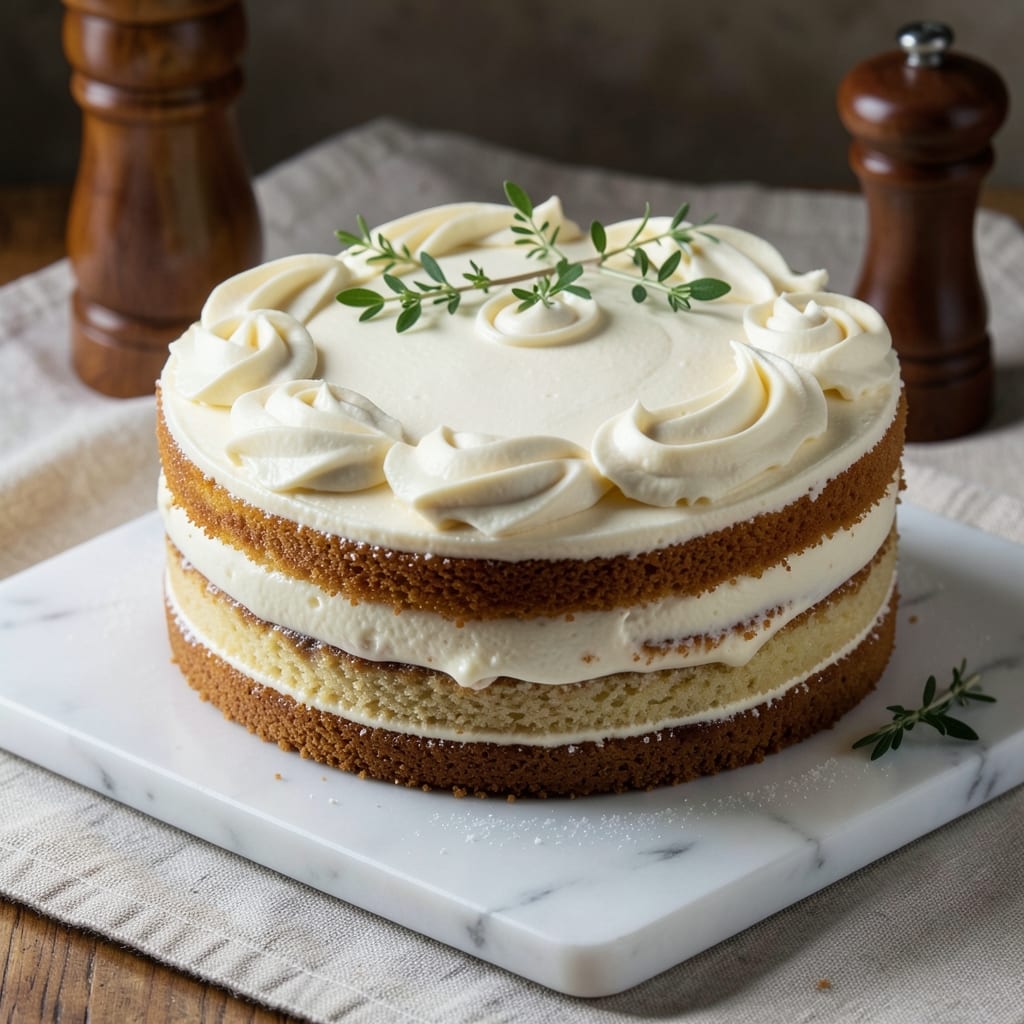
A 5-inch vanilla cake brings effortless elegance to any occasion—perfect for intimate gatherings, thoughtful gifts, or a single indulgent treat. 💛 The secret lies in precise measurements and a gentle baking technique that yields a tender crumb with a delicate fondant crown that adds just the right touch of sophistication. This recipe delivers a moist, flavorful cake that’s foolproof for home bakers, even when working with a smaller pan.
The foundation of this cake is classic: buttery, lightly sweetened vanilla cake batter that bakes to a golden finish. A 350°F oven ensures even cooking, while a 20-25 minute bake time guarantees a perfectly set crumb without drying out. The real magic happens with the fondant crown—a crisp, smooth layer that transforms a simple cake into something extraordinary with minimal effort.
What you’ll achieve is a mini masterpiece—a cake that’s light enough to enjoy in one sitting but impressive enough to serve at celebrations. The vanilla flavor shines through, balanced by a tender texture that melts in your mouth. Whether you’re decorating it yourself or gifting it to someone special, this recipe ensures every bite feels like a moment of pure joy.
Pair it with a dusting of powdered sugar, fresh berries, or a drizzle of chocolate ganache for added flair. The possibilities are endless, but the execution remains simple—ideal for bakers who want to create something beautiful without the complexity. Let’s get started!
Ingredients for 5 inch vanilla cake
Classic pantry staples meet delicate fondant for a showstopping 5-inch vanilla cake.
| Ingredient | Amount | Notes |
|---|---|---|
| All-Purpose Flour 🌾 | 1 ½ cups | Sifted for light texture |
| Granulated Sugar 🍚 | 1 cup | White or light brown |
| Unsalted Butter 🧈 | 1 cup | Room temperature, cubed |
| Large Eggs 🥚 | 2 whole | Room temperature, separated |
| Pure Vanilla Extract 🌸 | 1 tbsp | High-quality, 100% pure |
| Baking Powder 🧂 | 1 ½ tsp | Diamond Crystal preferred |
| Salt 🧂 | ½ tsp | Fine sea salt |
| Whole Milk 🥛 | ½ cup | Room temperature |
| White Fondant Icing 🎂 | 1 lb | Store-bought or homemade |
| Powdered Sugar 🍚 | ¼ cup | For dusting |
| Cornstarch 🌾 | 1 tbsp | For fondant smoothness |
| Shortening 🧈 | 1 tbsp | For fondant pliability |
| Lemon Juice 🍋 | 1 tsp | Freshly squeezed |
The butter and eggs are non-negotiable here—room temperature is key for a tender crumb. Plugrá or Land O'Lakes work perfectly for butter, but avoid salted. Eggs should be from the fridge but left out for 30 minutes before using. For vanilla, McCormick or Nielsen-Massey are my go-tos—they’re reliable and affordable. The flour? King Arthur or Gold Medal are my baking buddies, but any all-purpose will do. Just don’t pack it down when measuring—spoon it in and level off. The fondant? Wilton or Smooth-On are my favorites, but any good-quality white fondant will work for that crisp crown.
No vanilla extract? Vanilla bean paste at double the amount gives you those little specks. Short on milk? Heavy cream or even water works in a pinch, but milk adds richness. The baking powder is critical—Diamond Crystal is twice as potent as others, so if you only have aluminum-free, cut it to 1 teaspoon. Fondant too sticky? Add cornstarch a pinch at a time until it rolls smoothly. Too dry? A splash of water or a dab of shortening revives it. And if you’re feeling fancy, swap the powdered sugar dusting for a light chocolate ganache drizzle—trust me, it’s worth it.
The cake keeps beautifully—3 days at room temperature wrapped tightly in plastic, or 1 week in the fridge. Fondant crowns? Store them separately in an airtight container to prevent sticking. Reheat the cake for 10 seconds in the microwave before serving if it’s been chilled. Freezing? Wrap the whole cake tightly and freeze for up to 1 month. Thaw at room temperature before unwrapping—condensation is the enemy of fondant perfection. And if you’re making this ahead? Assemble the cake and fondant 1 day before serving—it gives the flavors time to meld and the fondant to set just right.
Why You'll Love This Recipe
- No Mixer Needed: I swear by this recipe when I’m in a rush—just cream the butter and sugar by hand (or use a fork if you’re really lazy). The eggs and vanilla blend in like a dream, and the flour folds right in without a single lump. Honestly, it’s the kind of cake that makes me feel like a baking genius, even when I’m not.
- Vanilla at Its Peak: That pure vanilla extract? It’s not just flavor—it’s the star. The butter keeps it rich but not greasy, and the sugar caramelizes just enough to give every slice a subtle depth. Between us, this is the kind of vanilla cake that makes store-bought layers look sad.
- Crowd-Pleaser in Minutes: Five-inch layers mean perfect portions—no one feels shortchanged, and they’re easy to stack for birthdays, potlucks, or even a last-minute dessert. I’ve used them for everything from coffee dates to kids’ parties, and no one ever asks what’s in it. (Spoiler: It’s just love, butter, and a little magic.)
- Budget-Friendly Luxury: Five inches might sound small, but it’s the smart way to bake. Less waste, less cost, and leftovers? They disappear faster than you can say “second slice.” Plus, the ingredients are pantry staples—no fancy substitutions needed. This is the kind of cake that makes me feel fancy without breaking the bank.
Step-by-step instructions for 5-Inch vanilla cake with fondant crown
Here's how to bake a perfectly proportioned vanilla cake with a crisp fondant crown that looks as stunning as it tastes.
🍳 Step 1: Cream Butter and Sugar to Lighten the Cake
In a stand mixer fitted with the paddle attachment, beat the 1 cup unsalted butter and 1 cup granulated sugar on medium speed for 3-4 minutes until pale and fluffy. You're looking for a texture that nearly doubles in volume and leaves faint ribbons when the beaters are lifted. This creaming process incorporates air, which helps create that tender crumb we want in a vanilla cake.
Real talk: don't rush this step. If the butter isn't fully incorporated, your cake will turn out dense. I like to scrape down the sides of the bowl with a spatula every minute to make sure everything gets evenly mixed. The butter should be completely smooth with no visible lumps by the end.
👨🍳 Step 2: Add Eggs and Vanilla for Rich Flavor
Add the 2 whole large eggs, one at a time, mixing on low speed after each addition until fully incorporated. Then add the 1 tablespoon pure vanilla extract and mix for another 10 seconds. Here's the thing—room temperature eggs blend more smoothly and prevent lumps in the batter, so make sure they're not straight from the fridge.
After adding the eggs, the mixture might look slightly curdled, but don't worry. Once you add the dry ingredients, everything will come together beautifully. The vanilla extract should be high-quality—imitation won't give you that authentic flavor we're after in this delicate cake.
👨🍳 Step 3: Combine Dry Ingredients and Milk
In a separate bowl, whisk together the 1.5 cups all-purpose flour, 1.5 teaspoons baking powder, and 0.5 teaspoon salt. Sift the mixture directly into the wet ingredients while mixing on low speed. Add the 0.5 cup whole milk and mix just until combined—you should still see some flour streaks. Overmixing develops gluten and makes the cake tough.
This is where the cake's structure comes together. The baking powder will create lift, while the flour provides the framework. The milk adds moisture without making the batter too wet. Give it a final stir with a spatula to make sure everything is evenly distributed before moving to the next step.
🔥 Step 4: Bake the Cake to Perfect Doneness
Preheat your oven to 350°F and prepare two 5-inch round cake pans by greasing them thoroughly with butter and dusting with flour. Divide the batter evenly between the pans and bake for 25-30 minutes, or until a toothpick inserted into the center comes out clean. The edges should be golden brown, but the top might still look slightly underdone—don't overbake or the cake will dry out.
I like to place the pans on the middle rack of my oven for even heat distribution. If your oven runs hot, start checking at the 20-minute mark. The cake should spring back slightly when pressed gently in the center—this is your signal that it's perfectly done.
🥘 Step 5: Prepare and Apply the Fondant Crown
Once the cakes are completely cooled, level the tops if needed. Roll out the 1 lb white fondant icing between two sheets of parchment paper to about 1/8-inch thickness. Mix the 0.25 cup powdered sugar, 1 tablespoon cornstarch, 1 tablespoon shortening, and 1 teaspoon lemon juice to create a smooth, pliable fondant. Knead it well until it's no longer sticky.
To create the crown, use a 5-inch round cutter to cut out a circle slightly larger than your cake top. Then use a 2-inch round cutter to cut out a smaller circle for the center. Place the larger circle on top of the cake and press gently. Add the smaller circle in the center and press it down firmly. Dust with powdered sugar to give it that elegant, finished look.
Pro Tips For Making 5 Inch Vanilla Cake
- Weigh Your Butter: I learned this the hard way—packed butter takes up less volume than you think. Use a kitchen scale for the 5-inch cake; ½ cup of packed butter isn’t the same as ½ cup of scooped butter. The difference? A denser, more stable crumb instead of a cake that collapses mid-bake.
- Room-Temp Everything: Cold eggs and butter are the silent cake killers. Let your eggs sit in warm water for 5 minutes to soften, and take the butter out of the fridge 1 hour before mixing. Cold fat slows emulsion, and cold eggs won’t incorporate properly—your batter will look curdled, not silky.
- Don’t Overmix the Batter: Stop mixing the second the flour disappears. Overworking the batter introduces too much gluten, and your 5-inch cake will turn out tough instead of tender. Use a spatula to fold in the last bit of flour—just until combined. Trust the process, even if it looks lumpy.
- Bake Until Springy: A toothpick check is overrated for vanilla cake. Press the center lightly—it should spring back, not jiggle. If it’s still wobbly at 325°F after 30 minutes, crank the oven to 350°F for the last 10 minutes. Underbaking is the real enemy of moist crumb.
Pro cooking tips for perfect results
Temperature Precision
Your oven temperature is non-negotiable for this delicate cake. Always preheat to 350°F—any lower and the cake may not set properly, while higher temperatures risk a dry texture. I recommend using an oven thermometer to verify accuracy, especially if your oven runs hot or cold. For even baking, place your 5-inch pans on the middle rack, never the top shelf. 🌡️
Room Temp Ingredients
Butter, eggs, and milk must be at room temperature—this is the secret to a tender crumb. Cold ingredients create pockets of steam that prevent even cooking. I like to leave butter out for 1 hour or microwave it for 10 seconds (cut into cubes first) to soften. Eggs should sit in warm water for 5 minutes to bring them to perfect consistency.
Batter Consistency
The batter should be thick but pourable—like heavy pudding. If it's too thin, add 1 tablespoon extra flour; too thick? Mix in 1 tablespoon milk. I test consistency by lifting the spatula: the batter should hold its shape briefly before slowly dripping. Overmixing develops gluten, so mix just until combined after adding dry ingredients.
Fondant Crown Tips
Work with fondant in a cool (65°F) environment to prevent sticking. Roll it between two sheets of parchment paper using a 1/8-inch thickness guide. For a crisp finish, chill the cake with fondant for 30 minutes before serving. Pro tip: Dust with powdered sugar while fondant is still pliable for an instant professional look.
Cake Pan Prep
Grease pans with butter and dust with flour, tapping out excess. Line the bottom with parchment circles for easy removal. I double-check by running my finger around the edges—no flour should stick. For extra insurance, spray with baking spray before adding batter. This prevents sticking and ensures clean slices.
Baking Time
Start checking for doneness at 20 minutes—the cake should spring back when pressed gently. A toothpick should come out with moist crumbs, not wet batter. If the top browns too quickly, tent with foil. For a perfectly golden finish, I rotate the pans halfway through baking. 💫
Nutrition facts
Frequently asked questions
Can I make this 5-inch vanilla cake in a single layer instead of two?
Yes, but the cake will be thicker and may require an extra 5-7 minutes in the oven. Use a 5-inch springform pan instead of round pans to accommodate the larger volume. Reduce the baking time to 25 minutes and check for doneness early—thicker cakes bake faster at the edges.
How do I adjust the recipe for a 6-inch cake?
For a 6-inch cake, increase the batter by 50% (use 2.25 cups flour, 1.5 cups sugar, 1.5 cups butter, and 3 eggs). Bake in two 6-inch pans for 30-35 minutes at 350°F. The fondant crown should be rolled to 1/4-inch thickness for a more dramatic effect.
What if I don’t have fondant? Can I substitute something?
Try a buttercream frosting piped into a crown shape or a simple powdered sugar glaze (mix 1 cup powdered sugar + 2 tbsp milk) brushed over the top. For a rustic look, dust with powdered sugar or sprinkle with edible glitter. These alternatives still look elegant without the fuss.
Can I bake this cake in a glass pan?
Yes, but reduce the oven temperature to 325°F and bake for 20-25 minutes. Glass conducts heat differently, so check for doneness early. Grease the pan thoroughly and line the bottom with parchment to prevent sticking. The cake may brown faster, so tent with foil if needed.
Why did my cake sink in the middle?
This usually happens from overmixing the batter or opening the oven door too early. Ensure your oven is fully preheated and avoid peeking! Also, make sure your baking powder is fresh (test by mixing with water—it should bubble vigorously). For next time, try baking at 325°F for 5 minutes longer to set the center properly.