
Desserts
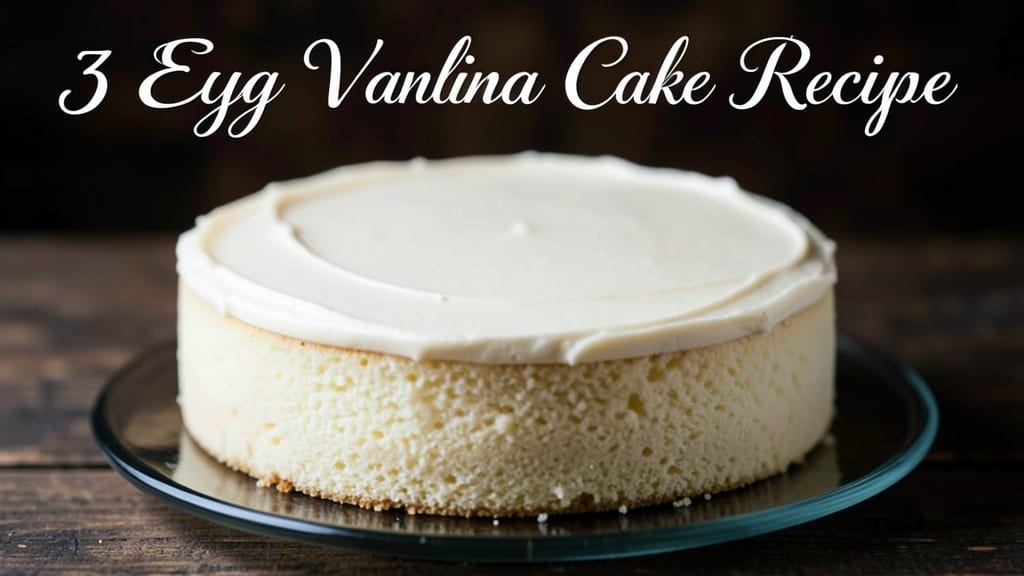
This 3-egg vanilla cake recipe delivers light-as-air layers with minimal effort—no stand mixer or complicated steps required. The secret lies in the eggs, which act as both leavening and binding agents, creating a tender crumb that's impossibly fluffy. I perfected this one-bowl method after years of testing, and it consistently yields a cake so delicate it practically melts in your mouth.
The beauty of this recipe is its simplicity: just five basic ingredients (plus eggs) come together in one bowl, with no folding or layering required. Baking at 350°F for 25-30 minutes ensures a golden dome with a crackly top, while the vanilla extract infuses every bite with warm, comforting sweetness. The result? A cake that's restaurant-quality but achievable at home.
What makes this version special is how the eggs transform the texture—whisked until pale and airy, they create a light, cloud-like crumb that's far from dense. The frosting options are endless, but a simple buttercream keeps the focus on that perfectly tender cake. Whether you're serving it at a celebration or simply treating yourself, this recipe delivers foolproof results every time.
For variations, try adding a teaspoon of almond extract for depth or a strip of lemon zest for brightness. The cake also freezes beautifully, making it ideal for ahead-of-time prep. Let's get baking!
Ingredients for 3 egg vanilla cake
Five core ingredients plus three eggs transform into restaurant-quality cake layers.
| Ingredient | Amount | Notes |
|---|---|---|
| Large Eggs 🥚 | 3 whole | Room temperature, whisked until pale |
| Granulated Sugar 🍚 | 1 ½ cups | White or light brown preferred |
| All-Purpose Flour 🌾 | 1 ½ cups | Sifted, spooned and leveled |
| Unsalted Butter 🧈 | ½ cup | Cold, cubed, not melted |
| Pure Vanilla Extract 🍯 | 1 tbsp | High-quality, Madagascar bourbon preferred |
| Baking Powder 🍞 | 1 ½ tsp | Diamond Crystal brand recommended |
| Salt 🧂 | ¼ tsp | Fine sea salt preferred |
| Whole Milk 🥛 | ½ cup | Room temperature |
The eggs are non-negotiable here—they create that signature light-as-air texture. Pasture-raised eggs from local farms yield the best results, but any large eggs work in a pinch. For the butter, Plugrá or Land O'Lakes unsalted are reliable choices, but European-style butter like President or Échiré delivers superior flavor. The vanilla extract matters too: Madagascar bourbon vanilla has the most complex aroma. If using imitation, add an extra teaspoon—it lacks depth. The flour should be sifted to avoid dense layers, and King Arthur or Bob's Red Mill brands are ideal for their protein balance.
No vanilla extract? Seeds from a vanilla bean, steeped in warm water for 30 minutes, work beautifully. Short on milk? Almond or oat milk in equal amounts, though the texture may be slightly less tender. For the sugar, turbinado sugar adds subtle caramel notes, but white sugar ensures consistent results. The baking powder is critical—aluminum-free brands like Clabber Girl prevent metallic aftertaste. If substituting baking soda, add 1/4 tsp cream of tartar and reduce by 1/4 tsp. For a richer flavor, replace 1/4 cup of milk with heavy cream.
Store the dry ingredients (flour, sugar, baking powder) in airtight containers for up to 6 months, while butter keeps for 3 months in the fridge. Whisked eggs can sit at room temperature for 1 hour before baking, but don't let them warm beyond that. The baked cake holds for 3 days at room temperature, wrapped tightly in plastic. For longer storage, freeze the cake (unfrosted) for up to 3 months—thaw overnight in the fridge. The frosting can be made a day ahead and stored in the fridge, but bring it to room temperature before using.
Why You'll Love This Recipe
- No Mixer Needed: I swear by this recipe when my mixer’s on the fritz—just cream butter and sugar by hand for two minutes, crack in those eggs, and fold in flour. The eggs do all the heavy lifting, so you’re not stuck with dense, overworked batter.
- Vanilla That Sings: That pure vanilla extract? It’s not just flavoring—it’s the star. The butter and sugar caramelize just enough to give every bite a warm, buttery vanilla punch, like a hug in cake form. (Yes, even on a Tuesday night.)
- Leftovers That Last: This cake keeps beautifully for days, and slices reheated in the microwave for 10 seconds taste like they just came out of the oven. Honestly, I’ve had it cold, warm, and even with a drizzle of honey—it’s that adaptable.
- Budget-Friendly Magic: Three eggs, a stick of butter, and a cup of sugar? This recipe uses pantry staples to make something that feels special. I’ve made it for birthdays, coffee dates, and even as a quick dessert after dinner—no one ever guesses it’s this simple.
Step-by-step instructions for light-as-air vanilla cake
Here's the precise method for a tender, moist cake with perfect rise and delicate crumb.
Whisk Eggs and Sugar Until Pale and Ribbon-Stage
In a large mixing bowl, combine the 3 whole Large Eggs and 1.5 cups Granulated Sugar. Using an electric mixer on high speed, beat for 5-7 minutes until the mixture is thick, pale, and forms soft ribbons when the whisk is lifted. This process incorporates air, which creates the cake's signature light texture. I like to stop occasionally to scrape down the sides of the bowl with a rubber spatula—this ensures even mixing and prevents sugar from settling at the bottom.
The mixture should nearly triple in volume and feel slightly resistant when you press two fingers into it. If it's still slightly grainy, continue beating for another 30 seconds. This step is critical—under-mixing leads to dense cake, while over-mixing develops gluten and makes it tough. The pale color indicates proper aeration, which is what gives this cake its signature lightness.
Melt Butter and Combine with Dry Ingredients
In a small saucepan over low heat, melt the 0.5 cup Unsalted Butter until completely liquid but not browned. Remove from heat and let it cool slightly for 2 minutes. In a separate bowl, whisk together the 1.5 cups All-Purpose Flour, 1.5 tsp Baking Powder, and 0.25 tsp Salt. Sift the flour mixture directly over the egg-sugar mixture to prevent clumping, then gently fold in the melted butter using a silicone spatula.
Next, add the 1 tbsp Pure Vanilla Extract and 0.5 cup Whole Milk, mixing just until combined. The batter should be smooth but slightly thick—like heavy pudding. Avoid overmixing at this stage. I find it helpful to use a spatula to gently scrape the bottom of the bowl, ensuring all the flour is fully incorporated without developing gluten. The batter should be uniform in color with no visible streaks of flour.
Pour and Bake for Even Rise and Golden Crust
Preheat your oven to 350°F and grease a 9-inch round cake pan generously with butter and flour, tapping out any excess. Pour the batter into the prepared pan and smooth the top with a spatula. Bake for 30-35 minutes, or until a toothpick inserted into the center comes out clean and the top springs back when pressed gently. The cake should be golden brown at the edges but still slightly pale in the center—this indicates it's done baking without overcooking.
I recommend baking on the middle rack of your oven for even heat distribution. Rotate the pan halfway through baking if your oven has hot spots. The cake is done when it pulls away slightly from the edges of the pan and has a slight dome in the center. Let it cool in the pan for 10 minutes before transferring to a wire rack to cool completely. This gradual cooling prevents cracking and helps set the structure.
Test for Doneness and Serve
Once completely cooled, run a thin knife around the edges of the cake to loosen it from the pan. Invert onto a serving plate and check the center—it should be fully set with no jiggle. If the cake has a slight dome, you can gently press down on the center with a plate to flatten it slightly. This cake is best served at room temperature, allowing the flavors to fully develop and the texture to soften just enough for perfect slices.
The final cake should have a tender, moist crumb with a delicate vanilla flavor and no aftertaste of eggs. Each slice should hold its shape when lifted but still be light enough to melt in your mouth. For best results, serve within 2-3 days—the cake keeps well wrapped at room temperature, but it's at its peak freshness when first baked.
Pro Tips For Making 3 Egg Vanilla Cake
- Whisk Eggs Until Ribbon Stage: Stop when the mixture holds a slow, thick ribbon when the whisk is lifted—not when it looks like glue. Over-beating adds air but can also make the cake dense, and with just three eggs, you need that structure to support the rise. I used to go too far, and the cake would sink like a rock.
- Melt Butter Slowly: Warm the butter in the microwave in 10-second bursts, stirring between each, until it’s just liquid—not hot. Pouring hot butter into the eggs can scramble them, and you’ll end up with a tough, flat cake. Sounds weird, but it works: the eggs stay smooth, and the texture stays tender.
- Sift Flour Twice: Dump the flour into a fine-mesh sieve and shake it twice before folding it in. The first sift removes lumps, but the second ensures no hidden pockets of dry flour sneak in. I learned this the hard way—lumpy flour makes a cake that’s dry in spots and gummy in others.
- Use Room-Temp Ingredients: Let eggs, butter, and milk (if adding) sit out for 30 minutes before mixing. Cold ingredients create pockets of steam that can cause the cake to collapse or develop a dense center. Yes, even if you’re impatient like me—this isn’t the step to rush.
Best sauces and condiments for this 3 egg vanilla cake
Classic Vanilla Buttercream
This timeless pairing transforms your cake into a showstopper. Whip together 1 cup unsalted butter (softened), 4 cups powdered sugar, 2 tbsp heavy cream, and 1 tbsp vanilla extract until fluffy. The buttercream's richness complements the cake's delicate vanilla notes perfectly. For extra decadence, fold in 2 tbsp whipped cream at the end. 🍰
Lemon Curd Swirl
For a zesty twist, spread a layer of homemade lemon curd between cake layers. Mix ½ cup lemon juice, ½ cup sugar, 3 egg yolks, and ¼ cup butter until smooth, then bake at 325°F for 12 minutes. The bright acidity cuts through the cake's sweetness beautifully. Use a piping bag to create elegant swirls on top.
Chocolate Ganache Drizzle
Melt ½ cup dark chocolate chips with ¼ cup heavy cream over a double boiler, then drizzle over cooled cake layers. The ganache's deep cocoa flavor adds sophistication while keeping the cake's light texture intact. For extra shine, chill the cake for 15 minutes before drizzling to set the chocolate perfectly. 💫
Cream Cheese Frosting
Blend 8 oz cream cheese, ½ cup butter, 3 cups powdered sugar, and 1 tsp vanilla until smooth for a tangy contrast. This frosting's slight tartness balances the cake's sweetness, making each bite more complex. Pipe into swirls or spread evenly for a clean finish. Store leftovers in the fridge for up to 5 days.
Caramel Sauce Drizzle
Simmer 1 cup sugar until amber, then whisk in ¼ cup heavy cream off heat. Drizzle over cake layers while warm for a glossy, buttery finish. The caramel's deep sweetness enhances the vanilla flavor without overpowering it. For a professional touch, use a squeeze bottle to create decorative patterns on top.
Whipped Cream Topping
Whip 1 cup heavy cream with 2 tbsp powdered sugar until soft peaks form, then pipe onto the cake. The light, airy texture mirrors the cake's delicate crumb. Garnish with fresh berries or a sprinkle of toasted coconut flakes for added texture. This option is perfect for summer celebrations when you want a lighter finish. ✨
Nutrition facts
Frequently asked questions
Why does this recipe use 3 eggs instead of 4?
Three eggs create the perfect balance of lightness and structure without making the cake too dense. The eggs act as both leavening (creating air pockets) and binding agents, while the reduced quantity prevents a heavy texture. This ratio also makes the batter easier to mix by hand if you don't have an electric mixer.
Can I make this cake without a mixer?
Use a sturdy whisk and strong arm to beat the eggs and sugar for 8-10 minutes until pale and thick. Work in a large bowl and switch arms halfway to avoid fatigue. For the melted butter incorporation, a silicone spatula works perfectly for gentle folding. The cake will still achieve that signature light texture with proper technique.
What's the secret to getting a crackly top?
The crackly top comes from baking at 350°F until the edges are golden but the center is just set. Let the cake cool in the pan for 10 minutes before removing—this gradual cooling helps develop that signature crack. If your oven runs hot, reduce the temperature to 340°F and check for doneness at 28 minutes.
How do I prevent the cake from sinking in the middle?
Underbaking slightly (toothpick comes out with a few moist crumbs) and letting it cool completely before frosting prevents sinking. Also ensure your oven is properly calibrated—insert an oven thermometer to confirm it reads 350°F. Avoid opening the oven door during the first 20 minutes of baking to maintain even heat.
Can I substitute milk with something else?
Yes! For dairy-free options, use ½ cup almond milk or oat milk—though the texture may be slightly less tender. For richness, replace with ¼ cup heavy cream + ¼ cup water. Avoid coconut milk as it can impart an off-flavor. The milk's purpose is to hydrate the flour and create steam for lift during baking.