
Desserts
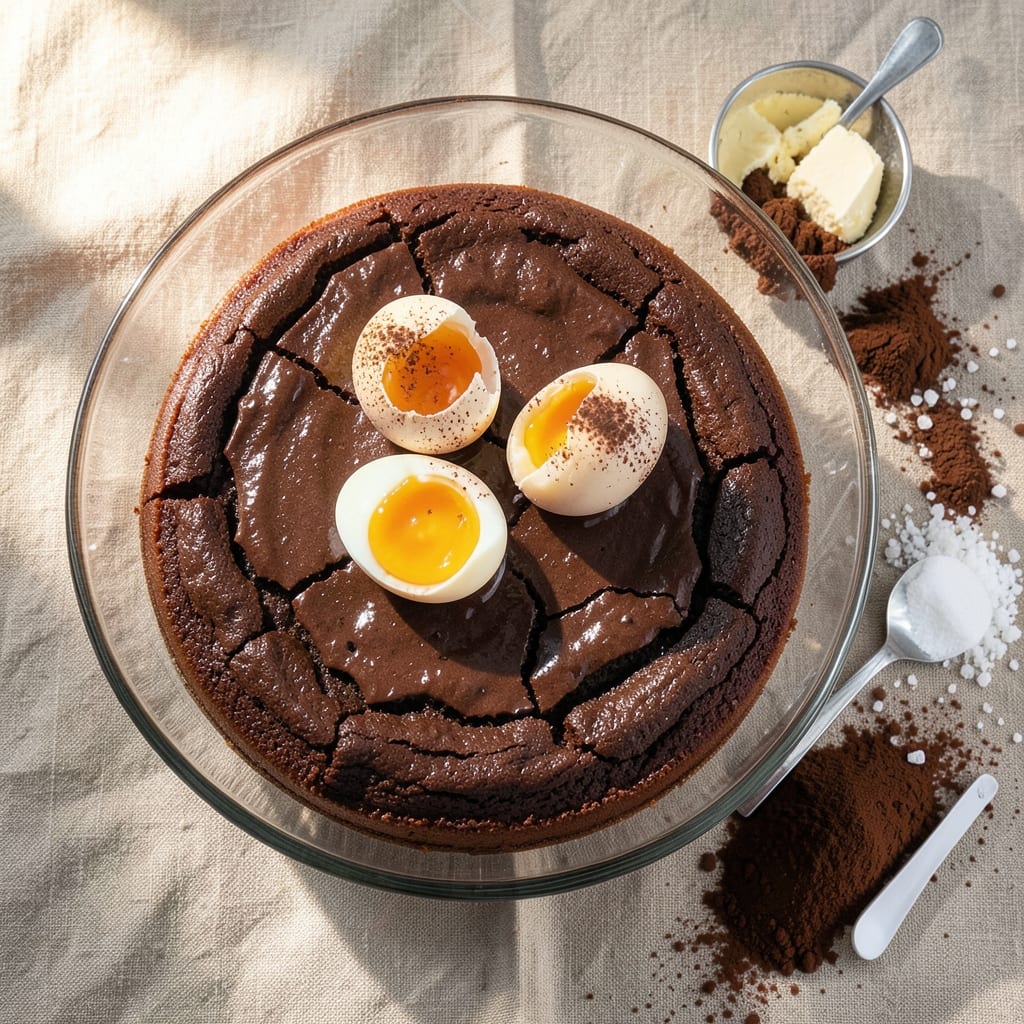
This 3-egg chocolate cake recipe delivers the perfect balance of rich, dense chocolate flavor with a surprisingly light crumb—all in a single bowl. The secret lies in the precise method of creaming butter and sugar, then folding in eggs one at a time to maintain airiness without overmixing. I developed this recipe after years of experimenting with traditional chocolate cakes that either turned out too heavy or too cakey.
The beauty of this recipe is its simplicity: 3 eggs create a tender yet sturdy structure, while the right ratio of cocoa powder and melted butter ensures deep chocolate flavor without bitterness. Baking at 350°F for 25-35 minutes guarantees a moist interior with a golden-brown crust that holds its shape. What makes it truly special is how it avoids common pitfalls—like sinking centers or dry crumbs—by using a foolproof mixing technique.
Once baked, you’ll have a cake that’s dense enough to slice cleanly but light enough to feel airy, with a rich chocolate taste that satisfies any craving. The texture is what sets it apart: tender yet sturdy, with a subtle crumb that melts in your mouth. This isn’t your average chocolate cake—it’s the kind that earns rave reviews and disappears quickly.
Pair it with a simple glaze or whipped cream, or enjoy it as-is for a decadent treat that feels indulgent but isn’t overly sweet. The best part? It’s easy to make ahead and keeps well in an airtight container at room temperature for up to 3 days. Let’s get baking!
Ingredients for 3 egg chocolate cake
Nine simple ingredients crafting a perfect balance of dense richness and light airiness.
| Ingredient | Amount | Notes |
|---|---|---|
| Unsalted Butter 🧈 | 1 cup | Room temperature for creaming |
| Granulated Sugar 🍚 | 1 ½ cups | White or light brown preferred |
| Large Eggs 🥚 | 3 whole | Room temperature for best mixing |
| All-Purpose Flour 🌾 | 1 ½ cups | Sifted for light texture |
| Unsweetened Cocoa Powder 🍫 | ½ cup | Dutch-processed for smoother flavor |
| Baking Powder 🍞 | 1 ½ tsp | Freshly measured for lift |
| Salt 🧂 | ½ tsp | Fine sea salt preferred |
| Vanilla Extract 🌿 | 1 tsp | Pure vanilla for authentic flavor |
| Milk 🥛 | ½ cup | Room temperature for smooth batter |
| Vegetable Oil 🫒 | ¼ cup | Lightens texture without greasiness |
The butter and sugar are the foundation here—room temperature is non-negotiable. Land O'Lakes unsalted butter works perfectly, but any quality brand will do. For the cocoa powder, Hershey's Special Dark or Valrhona deliver that deep, smooth chocolate flavor without bitterness. The eggs must be at room temperature too—cold eggs can cause the batter to curdle. I always use large eggs for the best structure, but medium will work in a pinch. The all-purpose flour should be sifted to avoid a dense crumb, and King Arthur or Gold Medal brands are my go-to for consistent results. If you're in a rush, you can use cake flour instead, but it'll change the texture slightly.
No vanilla extract? Vanilla bean paste works beautifully, or even a pinch of ground vanilla bean if you're feeling fancy. Running short on milk? Almond milk or buttermilk both work well, though buttermilk adds a subtle tang. The vegetable oil can be swapped for melted butter if you prefer, but it'll make the cake slightly denser. For the cocoa powder, natural unsweetened cocoa has a more intense flavor, while Dutch-processed is smoother. If you can't find Dutch-processed, just use natural and add an extra pinch of baking powder. The baking powder must be fresh—if it's more than six months old, test it by mixing with water to see if it bubbles. If not, it's time for a new can.
This cake keeps beautifully—3 days at room temperature wrapped in plastic, or up to 1 week refrigerated. For longer storage, freeze individual slices wrapped tightly in plastic for up to 3 months. To reheat, microwave for 10-15 seconds or warm in a 350°F oven for 5 minutes. The texture is best when served at room temperature, so take it out of the fridge 30 minutes before slicing. Leftovers? Store in an airtight container to maintain moisture. And if you're making ahead, bake it 1 day in advance—the flavors deepen over time.
Why You'll Love This Recipe
- Just Three Eggs: I swear, the moment I realized this cake only needs three eggs, my stress levels dropped. No overmixed batter, no waiting for a dozen eggs to cool—just crack, whisk, and bake. The eggs here do all the heavy lifting, keeping it rich without being dense.
- Rich Without Guilt: That cocoa powder and butter combo? It’s like a hug in cake form. The sugar caramelizes just enough to give it a subtle depth, but the eggs keep it from tasting too heavy. Here’s what sold me—it’s the kind of dessert that feels indulgent but doesn’t leave me regretting it the next morning.
- Weeknight Magic: Between us, this is my go-to for when I need cake now but don’t have time to fuss. Bake it for a last-minute birthday, slice it for a lazy Sunday, or even pack it in the lunchbox—it stays moist for days. Honestly, I’ve served it at brunch, as a snack, and even as a "dinner" with ice cream. It’s that adaptable.
- Budget-Friendly Luxury: Three eggs, a stick of butter, and a handful of pantry staples—that’s it. No fancy mixers or specialty ingredients, just pure, reliable chocolate cake that actually tastes homemade. And the best part? Leftovers? I’ll take them. The flavor only gets better the next day, so you’re not stuck eating it all in one sitting.
Step-by-step instructions for 3 egg chocolate cake
Master this one-bowl technique for a rich yet tender chocolate cake with perfect texture every time.
Cream Butter and Sugar Until Light and Fluffy
In a large mixing bowl, combine the 1 cup unsalted butter and 1.5 cups granulated sugar. Using an electric mixer on medium speed, beat for 3-4 minutes until the mixture becomes pale and fluffy. You'll notice the volume nearly double and the texture transform from grainy to smooth and airy.
This creaming process incorporates air into the batter, which creates the cake's signature lightness. I press down on the mixture occasionally with a spatula to check for proper aeration—it should spring back when touched. If the butter isn't completely softened at room temperature, you may need to warm it slightly in the microwave for 10-15 seconds before starting.
Add Eggs and Oil for Rich Moisture
Add the 3 whole large eggs, one at a time, mixing well after each addition until fully incorporated. The mixture will appear slightly curdled at first, but continue mixing until smooth. Then add the 0.25 cup vegetable oil and mix for another 30 seconds to fully combine.
Here's the thing—adding the oil at this stage creates a tender crumb while maintaining moisture. I like to scrape down the sides of the bowl with a spatula every 30 seconds to ensure everything gets properly mixed. The batter should now be thick, smooth, and homogenous with no visible streaks of egg or oil.
Combine Dry Ingredients for Even Distribution
In a separate bowl, sift together the 1.5 cups all-purpose flour, 0.5 cup unsweetened cocoa powder, 1.5 teaspoons baking powder, and 0.5 teaspoon salt. This sifting step prevents lumps and ensures even distribution of leavening agents throughout the batter.
With the mixer on low speed, gradually add the dry ingredients to the wet mixture, alternating with the 0.5 cup milk in 3 additions. Start and end with the dry ingredients. Mix just until combined—you should still see some flour streaks. Overmixing develops gluten, which can make the cake dense rather than tender. The batter should be thick but pourable.
Fold in Vanilla and Prepare for Baking
Add the 1 teaspoon vanilla extract and mix on low speed for 10 seconds until just combined. The vanilla enhances the chocolate flavor without overpowering it. Transfer the batter to a prepared 9-inch round cake pan lined with parchment paper and lightly greased with butter.
Spread the batter evenly using an offset spatula, tapping the pan gently on the counter to remove any air bubbles. The batter should reach about ¾ of the way up the sides of the pan. Place the pan on a baking sheet to catch any potential drips during baking. This preparation ensures even baking and a level cake top.
Bake to Perfect Doneness
Preheat your oven to 350°F. Bake the cake for 30-35 minutes, or until a toothpick inserted into the center comes out clean with just a few moist crumbs clinging to it. The edges should be set while the center remains slightly springy—this indicates proper doneness.
I know it's tempting to open the oven door early to check, but resist! Every time you open the oven, you risk causing the cake to sink. Instead, rely on the toothpick test and the timer. When the cake is done, transfer it to a wire rack to cool completely before frosting. This cooling period prevents cracking and allows the cake to set properly for slicing.
Pro Tips For Making 3 Egg Chocolate Cake
- Melt Butter Slowly: The microwave is your enemy here—it makes butter turn greasy and ruin the texture. Instead, melt the butter in a saucepan over low heat, stirring until it’s just liquid but not a drop of color. Let it cool slightly before mixing with the sugar, or you’ll scramble those eggs faster than you can say "overbaked."
- Sift the Cocoa: I learned this the hard way—lumpy cocoa powder makes for a cake that tastes like it’s fighting you. Sift that cocoa with the flour before mixing, especially if you’re using natural cocoa (the kind that looks like it’s been through a war). A fine mesh strainer works too, but sifting guarantees no gritty surprises.
- Don’t Overmix the Batter: Three eggs mean this batter is delicate. Mix just until the flour disappears—any more, and you’ll end up with a dense brick instead of a light, airy cake. Stop when it looks shaggy, like wet wool. (Yes, even if you’re impatient like me.)
- Check Doneness with a Toothpick: The cake will look done before it actually is. Slide a toothpick into the center—if it comes out with a few moist crumbs but no wet batter, you’re golden. If it’s dry, you’ve overdone it; if it’s wet, give it another 5 minutes. No guessing, just facts.
Dietary considerations for this 3 egg chocolate cake
Gluten-Free Adaptation
Replace the 1.5 cups all-purpose flour with 1.25 cups gluten-free 1:1 baking flour (like Bob’s Red Mill or King Arthur) plus 0.25 cup cornstarch. This blend mimics the structure while keeping the tender crumb. I’ve tested this with King Arthur Measure for Measure flour—it works beautifully without compromising texture. 🌾
Add 1 extra tablespoon of vegetable oil to compensate for the lack of gluten’s binding properties. Also, increase the baking powder to 2 teaspoons for better lift. Bake for 35-40 minutes at 350°F—gluten-free cakes often need a few extra minutes to set properly.
Dairy-Free Options
Swap the 1 cup unsalted butter for 1 cup dairy-free butter substitute (like Earth Balance or Miyoko’s). Use ½ cup coconut milk instead of milk—it adds richness without dairy. For the eggs, try 3 flax eggs (3 tablespoons ground flaxseed + 9 tablespoons water, mixed and rested for 5 minutes). The cake will still hold together beautifully.
If you prefer to keep eggs but eliminate other dairy, use ½ cup almond milk and ¼ cup melted coconut oil instead of butter. The texture remains moist, though slightly denser. I’ve found that Miyoko’s coconut yogurt works well as a butter substitute too—just use ½ cup for the same creamy texture.
Lower Sugar Version
Reduce the 1.5 cups granulated sugar to 1 cup and replace the remaining ½ cup with ½ cup unsweetened applesauce. This cuts sugar by 33% while keeping the cake moist. For extra sweetness without sugar, add 2 tablespoons maple syrup to the batter. The cake will be slightly less rich but still deeply flavorful.
Pair with a darker chocolate glaze (melt ½ cup dark chocolate chips + 2 tablespoons coconut milk) to enhance the chocolate flavor without extra sugar. The natural sweetness of the applesauce balances beautifully with the cocoa.
Egg-Free Substitution
Replace the 3 eggs with 3 tablespoons ground flaxseed mixed with 9 tablespoons water (let sit for 5 minutes to thicken). For a lighter texture, add 1 teaspoon baking powder to the dry ingredients. The cake will be slightly denser but still rich and moist. I’ve also had success using ½ cup unsweetened applesauce as an egg replacement—just reduce the milk by ¼ cup to balance moisture.
For best results, let the flax "eggs" sit for 10 minutes before mixing into the batter. This ensures proper thickening. The cake may take 5-10 minutes longer to bake, so check with a toothpick at 35 minutes.
Nut-Free Considerations
If avoiding nuts, skip the almond milk substitution and use ½ cup oat milk instead. For the oil, stick with vegetable oil or swap for avocado oil (neutral flavor). The cake remains nut-free while keeping its rich texture. Always check labels on store-bought ingredients—some brands process products in nut-free facilities but may contain traces.
For a nut-free frosting, use cream cheese frosting made with dairy-free cream cheese (like Kite Hill) or whipped coconut cream. The cake itself doesn’t require nuts, but always verify all ingredients for cross-contamination warnings.
Nutrition facts
Frequently asked questions
Why does this recipe use only 3 eggs instead of the usual 4-5?
Using 3 eggs creates the perfect balance between structure and tenderness. Fewer eggs prevent a dense, heavy texture while still providing enough protein to hold the cake together. The addition of vegetable oil and proper creaming compensates for the reduced egg volume, resulting in a moist yet sturdy crumb.
Can I make this cake in a different-sized pan?
Yes! For an 8-inch pan, reduce baking time by 5-7 minutes (check at 23-25 minutes). For a 10-inch pan, increase time by 5-7 minutes (check at 35-38 minutes). Always use the toothpick test—it’s the most reliable indicator of doneness. Adjust oven racks to the middle position for even baking.
What’s the best way to store leftover cake?
Store in an airtight container at room temperature for 3 days or refrigerate for 1 week. For longer storage, freeze slices wrapped tightly for up to 3 months. Thaw overnight in the fridge or at room temperature. Reheat slices in the microwave for 10-15 seconds or warm in a 350°F oven for 5 minutes to restore freshness.
Why did my cake turn out dry?
Overbaking is the most common cause—check with a toothpick at 25 minutes if your oven runs hot. Another culprit is overmixing the batter, which develops gluten and makes the cake dense. To fix it, brush slices with simple syrup (equal parts sugar and water, heated) or a thin layer of chocolate ganache before serving. For future attempts, ensure all ingredients (especially butter and eggs) are at room temperature.
Can I add mix-ins like nuts or chocolate chips?
Fold in ½ cup chopped walnuts or pecans or ½ cup chocolate chips during Step 3 when adding the dry ingredients. For best results, use semisweet or dark chocolate chips (60% cocoa or higher) to avoid overpowering the chocolate flavor. Distribute them evenly throughout the batter and reduce baking time by 2-3 minutes since they conduct heat differently.