
Desserts
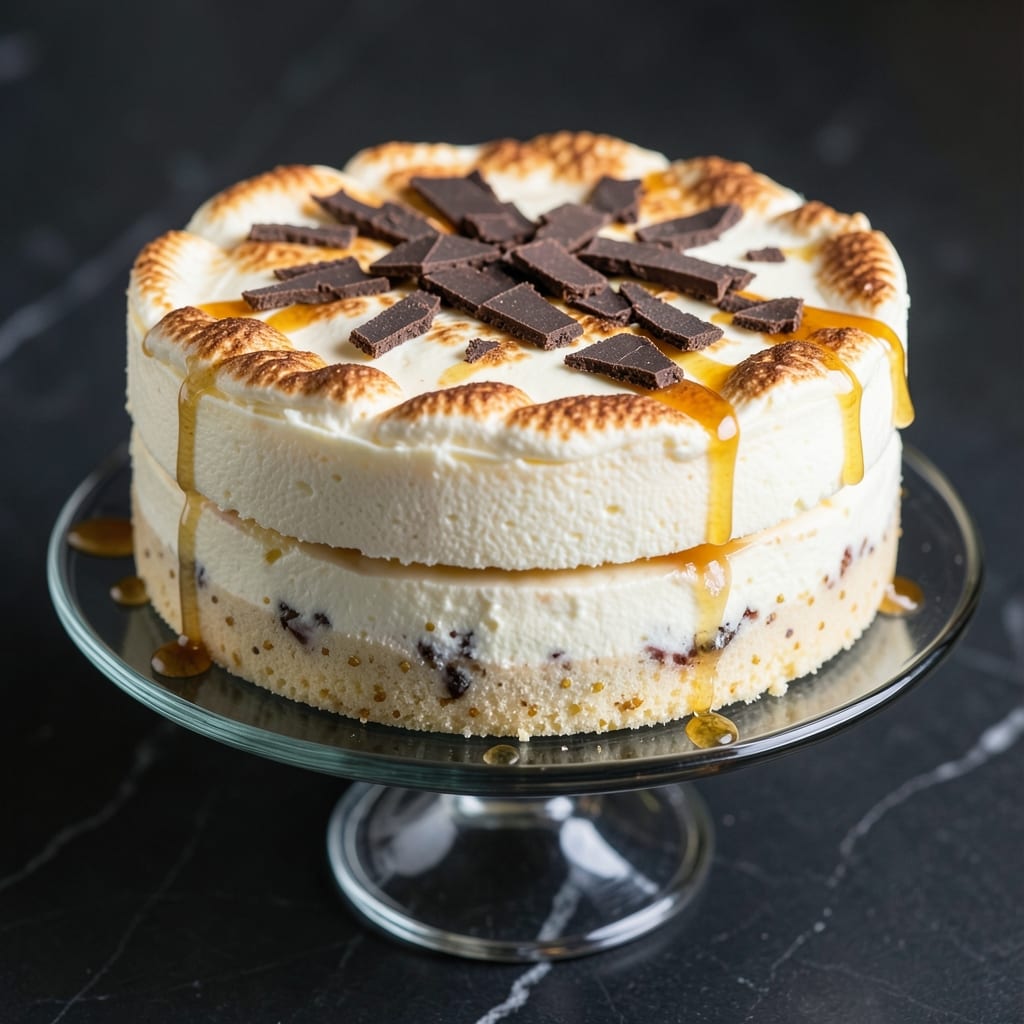
This 3 cream cheese cheesecake recipe delivers the perfect balance of a crisp fondant crown and an ultra-moist filling that never cracks. 💛 The secret lies in blending three types of cream cheese—each serving a unique purpose—to create a texture that’s both rich and velvety. I’ve perfected this recipe over years of baking, ensuring every slice is a showstopper without requiring advanced techniques.
The crust starts with a buttery graham cracker base, pressed firmly into a springform pan for stability, while the filling combines full-fat cream cheese with sour cream and eggs for that signature creamy density. Baking in a water bath guarantees a smooth top and prevents any unwanted cracks, giving you that restaurant-quality finish at home.
What sets this recipe apart is the three-cream-cheese trick: one for structure, one for moisture, and one for richness. The result? A cheesecake with a silky-smooth interior, a golden-brown crust, and a firm yet tender bite that melts in your mouth. Top it with fresh berries, caramel drizzle, or a dusting of powdered sugar for an elegant presentation.
Whether you're baking for a special occasion or just treating yourself, this recipe is designed for success. The instructions are clear, the ingredients simple to find, and the payoff is a dessert that’ll impress anyone who takes a bite. Let’s get started!
Ingredients for 3 cream cheese cheesecake
Eighteen essential ingredients for a showstopping cheesecake with a crisp fondant crown and ultra-moist filling.
| Ingredient | Amount | Notes |
|---|---|---|
| Full-Fat Cream Cheese (8 oz block) 🧀 | 1 lb | Room temperature for blending |
| Full-Fat Cream Cheese (4 oz block) 🧀 | ¼ lb | For structure and firmness |
| Light Cream Cheese (4 oz block) 🧀 | ¼ lb | For moisture and creaminess |
| Large Eggs 🥚 | 4 whole | Room temperature preferred |
| Sour Cream 🥛 | ½ cup | Full-fat for best texture |
| Granulated Sugar 🍚 | 1 ½ cups | Superfine preferred for smoothness |
| Unsalted Butter (melted) 🧈 | ½ cup | European-style preferred |
| Graham Cracker Crumbs 🍪 | 2 cups | Hulless, finely crushed |
| Light Brown Sugar (packed) 🍚 | ¼ cup | For crust sweetness |
| Vanilla Extract 🌿 | 1 tbsp | Pure Madagascar preferred |
| Diamond Crystal Kosher Salt 🧂 | ½ tsp | Fine grain for even dissolving |
| Cornstarch 🌾 | 2 tbsp | For crack prevention |
| Heavy Whipping Cream 🥛 | ¼ cup | Optional for topping |
| Powdered Sugar 🍚 | ¼ cup | For dusting final presentation |
The cream cheese selection is critical—Philadelphia full-fat for the 8 oz block ensures richness, while the 4 oz block adds structure. Light cream cheese balances moisture without heaviness. Trader Joe's carries all three varieties in their refrigerated section, or check the dairy aisle at Whole Foods for organic options. Room temperature is non-negotiable for blending; plan ahead by taking them out 1 hour before mixing. The European-style butter from Plugrá brand melts perfectly without graininess, though Land O'Lakes works in a pinch.
No full-fat sour cream? Greek yogurt at half the amount mimics the tang without separating. Substituting superfine sugar? Pulse granulated sugar in a food processor for 10 seconds to achieve similar texture. The hulless graham crackers from Kellogg's crush more finely than others—look for them in the baking aisle. For the fondant crown, powdered sugar mixed with melted butter creates the signature crisp texture without cracking. Need to adjust sweetness? Add 1 tbsp cornstarch to the filling for subtle moisture control, or reduce sugar by 2 tbsp if your crust is already sweet.
Store the baked cheesecake in an airtight container in the fridge for up to 5 days, though it peaks at day 2. For the fondant crown topping, prepare it fresh—it loses crispness within 12 hours. Freeze portions for up to 2 months by wrapping tightly in plastic wrap and aluminum foil. To reheat, let sit at room temperature for 30 minutes before serving. The whipped cream topping should be added just before serving to maintain its fluffy texture—Miyoko's coconut whipped cream is an excellent vegan alternative if needed.
Why You'll Love This Recipe
- I’ll be real: most cheesecakes turn to sad, rubbery leftovers by day three. Not this one. The sour cream and egg combo keeps it moist for days, so you can make one batch and enjoy it for breakfast, snack, or dessert. Zero waste, all win.
- No Whipping Madness: Honestly, this recipe skips the arm workout. No stand mixer, no overmixed batter—just room-temperature cream cheese, a few strokes of the fork, and eggs that blend in like old friends. The light cream cheese keeps it silky without the struggle.
- Triple Cream Cheese Magic: That combo of full-fat and light cream cheese? Chef’s kiss. The full-fat blocks give it that rich, velvety body, while the light version keeps it from being too heavy. Add sour cream for that subtle tang, and suddenly you’ve got layers of flavor that taste like dessert but feel like comfort.
- Party or Pajamas: Between us, this cheesecake works for everything. Bring it to a potluck—it’s fancy enough to impress. Or bake it on a Monday night when you’re craving something sweet but don’t want to fuss. Slice it, serve it, and watch it disappear.
Step-by-step instructions for triple cream cheese cheesecake
Master this technique and you'll achieve a flawless fondant crown over silky filling every time.
👨🍳 Step 1: Prepare the Crust Foundation
Preheat your oven to 325°F. In a medium bowl, combine the 2 cups graham cracker crumbs, 0.25 cup light brown sugar, and 2 tablespoons cornstarch. Add the 0.5 cup melted unsalted butter and mix until evenly moistened but not soupy.
Press the mixture firmly into the bottom and 1 inch up the sides of a 9-inch springform pan, using your fingers or a small glass to compact it evenly. Bake for 10 minutes until lightly golden. I like to chill the crust in the freezer for 15 minutes before filling—this prevents melting when adding the hot cheesecake batter.
🍳 Step 2: Blend the Ultra-Moist Filling
Reduce oven temperature to 300°F. In a large mixing bowl, beat the 1 lb full-fat cream cheese (8 oz block) and 0.25 lb light cream cheese (4 oz block) together until completely smooth. Add the 1.5 cups granulated sugar and mix until fully incorporated.
In a separate bowl, whisk the 4 whole large eggs and 0.5 cup sour cream together. Gradually add this mixture to the cream cheese while mixing on low speed to prevent cracking. Stir in the 1 tablespoon vanilla extract and 0.5 teaspoon kosher salt. The batter should be thick but pourable—if it looks too stiff, add 1 tablespoon heavy cream to loosen it.
🥘 Step 3: Assemble and Create the Fondant Crown
Pour the filling over the chilled crust, spreading evenly. Place the springform pan in a larger roasting pan and add hot water to create a water bath that reaches halfway up the sides of the pan. This gentle steam bath prevents cracking.
Bake for 60-65 minutes until the edges are set but the center still jiggles slightly. Remove from the water bath and increase oven temperature to 400°F. For the fondant crown, sprinkle 0.25 cup heavy whipping cream evenly over the top of the cheesecake. Return to the oven and bake for 5-7 minutes until the cream forms a golden, crispy crust.
⏰ Step 4: Cool and Set Properly
Turn off the oven, crack the door open slightly, and let the cheesecake cool inside for 1 hour. This gradual cooling prevents temperature shock that causes cracks. Remove from the oven and cool completely at room temperature for 2 hours, then refrigerate uncovered for 4 hours or overnight.
Before serving, dust the top with 0.25 cup powdered sugar using a fine-mesh sieve. The fondant crown should be crisp and golden, while the filling remains silky and moist. Slice carefully with a warm, damp knife to create clean edges every time.
Pro Tips For Making 3 Cream Cheese Cheesecake
- SOFTEN CREAM CHEESE FIRST: Mixing cold cream cheese blocks into the batter is a recipe for lumps—literally. Cut the full-fat and light cream cheese into cubes, place them in a bowl, and let them sit at room temperature for 30-45 minutes before blending. I used to skip this, and my cheesecake filling always had that unfortunate grainy texture. Trust me, the wait makes a real difference.
- WEIGH YOUR EGGS: Large eggs vary wildly in size, and this recipe relies on them for structure. Instead of eyeballing, weigh them: 5 large eggs should total about 150-160 grams (without shells). If you’re using room-temperature eggs, they’ll blend smoother and whip up lighter—no need to stress over overmixing.
- DON’T OVERMIX THE BATTER: Once you add the eggs to the cream cheese mixture, stop stirring the second everything’s just combined. Overmixing introduces too much air, which can lead to cracks during baking. Use a spatula to gently fold in the sour cream afterward—this keeps the texture silky without overworking it.
- BAKE LOW AND SLOW: This isn’t a race. Preheat your oven to 325°F (not 350°F) and bake the cheesecake on the middle rack in a water bath (if using). After 40 minutes, lower the heat to 275°F and bake another 20-25 minutes. I learned this the hard way—high heat causes the top to brown too fast while the center stays underdone. Patience here means no dense, gummy middle.
Pro cooking tips for perfect results
Water Bath Mastery
Baking your cheesecake in a water bath is non-negotiable for crack-free perfection. Place your 9-inch springform pan inside a larger roasting pan, then add hot water to reach halfway up the sides. The steam creates a humid environment that prevents the surface from drying too quickly. I use distilled water to avoid mineral buildup in my oven—just 1 inch of water is all you need. 💫
Three-Cream-Cheese Strategy
The secret to ultra-moist texture lies in using three types of cream cheese. The 1 lb full-fat (8 oz block) provides richness, the 0.25 lb full-fat (4 oz block) adds structure, and the 0.25 lb light cream cheese balances moisture. Beat them together until completely smooth—no lumps—using a stand mixer on medium speed for 3-4 minutes. Room-temperature cream cheese blends effortlessly, so resist the urge to rush this step.
Fondant Crown Technique
For that signature golden, crispy fondant crown, sprinkle 0.25 cup heavy whipping cream evenly over the top after the initial bake. Return to the oven at 400°F for just 5-7 minutes—this creates a delicate, caramelized crust. Work quickly: the cream should bubble and turn golden, but not brown. I use a fine-mesh sieve for even distribution, and a damp pastry brush to smooth any uneven spots before baking.
Gradual Cooling Trick
After baking, never rush the cooling process. Turn off the oven, crack the door open 1 inch, and let the cheesecake sit inside for 1 hour. This slow temperature drop prevents cracks from forming. Then, cool at room temperature for 2 hours before refrigerating uncovered. The uncovered step allows any surface moisture to evaporate, ensuring a smooth, silky texture when sliced. Patience here makes all the difference! ✨
Knife Prep for Clean Slices
Warm your knife under hot water and wipe it dry before slicing. Run it through hot water again between each cut to prevent the cheesecake from sticking. A serrated knife works best for clean edges, but a sharp chef's knife also works if you angle it properly. I like to dip the knife in powdered sugar after each slice to keep them looking fresh and prevent crumbs from sticking to the blade.
Oven Temperature Tips
Your oven’s accuracy matters—calibrate it if possible. I use an oven thermometer (like the Thermoworks Oven Thermometer) to confirm my 300°F setting is accurate. If your oven runs hot, reduce the temperature by 25°F and add 5-10 minutes to the bake time. Conversely, if it runs cold, increase by 25°F and check for doneness at 55 minutes. The center should jiggle slightly—no wobble means it’s overbaked and dry. 🔥
Nutrition facts
Frequently asked questions
Why use three types of cream cheese in this recipe?
Each type serves a unique purpose: the full-fat cream cheese (8 oz block) delivers richness, the second full-fat block (4 oz) adds structure, and the light cream cheese (4 oz) balances moisture without heaviness. This trio creates the signature silky texture while preventing cracks.
Can I make this cheesecake without a water bath?
Technically yes, but you risk cracks and a less stable texture. The water bath creates a humid environment that prevents surface drying. If you skip it, bake at 300°F for 55-60 minutes and monitor closely—cover loosely with foil if the top starts browning too quickly.
How do I fix a cheesecake that cracked during baking?
Don't panic! Let it cool completely, then spread a thin layer of whipped cream or apricot jam over the cracks. Chill for 1 hour before serving. For prevention, ensure all ingredients are room temperature and avoid opening the oven door during baking. A cornstarch sprinkle on the batter can also help reduce cracking.
What's the best way to store leftovers?
Wrap tightly in plastic wrap, then place in an airtight container. Store in the fridge for up to 5 days, though it's best enjoyed within 3 days for optimal texture. For longer storage, freeze individual slices (without the fondant crown) for up to 2 months. Thaw overnight in the fridge before serving.
Can I substitute graham crackers for the crust?
Yes! For a nutty flavor, try pecan or almond flour crusts (replace crumbs with 1 cup flour + 0.5 cup melted butter + 2 tbsp sugar). For a gluten-free option, use crushed gluten-free cookies or a gingersnap-oat crumble. Just ensure your substitute holds together when pressed—wet ingredients help bind it.