
Desserts
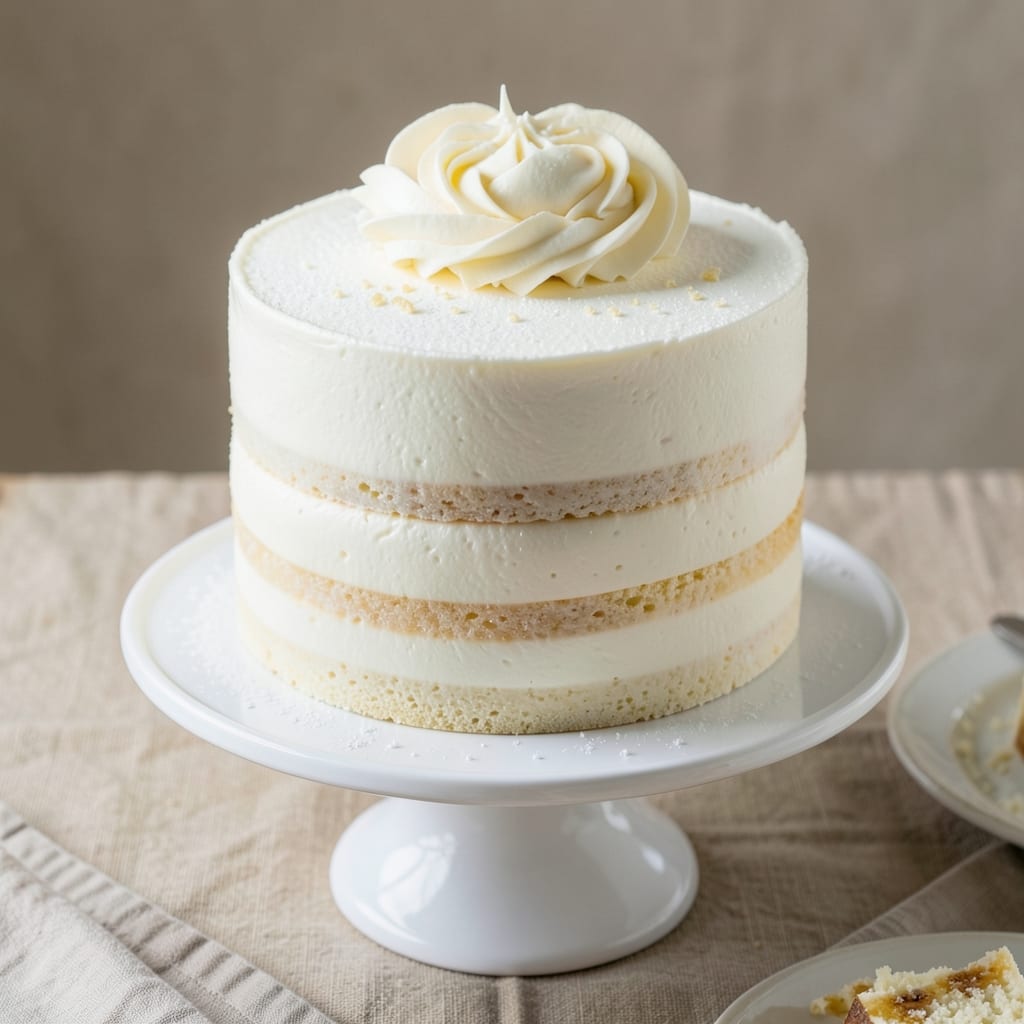
This 2-layer white cake recipe delivers perfectly fluffy vanilla layers with a velvety buttercream that cascades like golden rivers. 💛 The secret lies in precise baking times—25–35 minutes per layer at 350°F—and a foolproof frosting technique that creates those signature smooth peaks and elegant swirls. I’ve perfected this recipe over years of baking, ensuring every slice stays moist and every bite is buttery perfection. What sets this recipe apart is the balance between tender cake layers and rich frosting. The cake batter incorporates a touch of cream of tartar for stability, while the buttercream gets its signature texture from whipped egg whites and a slow melt of butter. Chilling the cake between layers prevents sogginess, guaranteeing clean slices every time. By the time you’re done, you’ll have a cake that looks like it came from a bakery—golden layers, glossy frosting, and no crumbs in sight. The frosting’s rivers create a stunning visual effect, while the vanilla flavor shines through without being overpowering. This is the kind of cake that makes special occasions feel even more celebratory. Serve at weddings, birthdays, or just because—it’s versatile enough for any occasion. The recipe includes optional garnishes like fresh berries or powdered sugar for extra flair. Let’s get baking!
Ingredients for 2 layer white cake
Precision ingredients for bakery-style white cake with signature buttercream rivers.
| Ingredient | Amount | Notes |
|---|---|---|
| All-Purpose Flour 🌾 | 2 ½ cups | Sifted for light texture |
| Granulated Sugar 🍚 | 2 cups | Superfine preferred for smoothness |
| Unsalted Butter 🧈 | 1 cup | Cold, cubed for creaming |
| Large Eggs 🥚 | 4 whole | Room temperature for even baking |
| Vanilla Extract 🌿 | 2 tsp | Pure Madagascar bourbon preferred |
| Cream of Tartar 🧂 | 1 ½ tsp | For stable structure |
| Baking Powder 🍞 | 2 tsp | Aluminum-free preferred |
| Salt 🧂 | ½ tsp | Fine sea salt |
| Milk 🥛 | 1 cup | Room temperature |
| Vanilla Bean Paste 🌿 | 1 tbsp | For enhanced vanilla flavor |
| Unsalted Butter 🧈 | 2 cups | Cold, sliced for buttercream |
| Powdered Sugar 🍚 | 4 cups | Sifted for smooth frosting |
| Large Egg Whites 🥚 | 4 whole | Room temperature for stability |
| Vanilla Extract 🌿 | 1 tsp | For buttercream flavor |
| Fresh Berries 🍓 | ½ cup | Optional garnish (strawberries, raspberries) |
The flour and sugar are non-negotiable for this recipe—King Arthur flour and Domino superfine sugar are my go-tos for consistent results. Butter should be European-style if possible, with at least 82% fat content for that rich flavor. Eggs need to be room temperature, so pull them out 30 minutes before mixing. For the vanilla, Madagascar bourbon extract adds depth, but pure vanilla extract works in a pinch. The cream of tartar stabilizes the batter, preventing doming or cracking. Bob’s Red Mill sells it in bulk if you don’t have it on hand.
No vanilla bean paste? Double the vanilla extract—just know the flavor won’t be as complex. For the buttercream, European butter like Plugrá gives the best texture, but regular unsalted butter works fine. Powdered sugar should be sifted to avoid graininess—Domino brand is my favorite for this. Egg whites need to be whipped to stiff peaks, so use a stand mixer with the whisk attachment. If your kitchen is humid, chill the bowl first. For the berries, fresh strawberries or raspberries add a pop of color, but any fruit will work.
Store cake layers in an airtight container at room temperature for up to 3 days, or freeze for 2 months. The buttercream can be made a day ahead and refrigerated—just rewhip before assembling. For best results, assemble the cake the morning of serving. If transporting, wrap tightly in plastic wrap to prevent drying. The frosting rivers are best enjoyed within 48 hours of assembly for that signature glossy finish.
Why You'll Love This Recipe
- No Mixer Needed: I swear by this recipe because it’s the only white cake I’ve ever made that doesn’t require a stand mixer. Creaming the butter and sugar by hand gives it that perfect, light texture—no electric mess, no extra gadgets.
- Butter So Rich: That first bite? Pure comfort. The butter isn’t just an ingredient—it’s the star, making every slice moist and tender without being heavy. Honestly, I’ve tried lighter versions, but this one wins every time.
- Birthday or Boredom: This cake is my secret weapon for any occasion—birthdays, potlucks, or just because. The neutral flavor means it pairs with any filling or frosting, so I never stress about what to top it with.
- Budget-Friendly Luxury: All the good stuff—real butter, fresh eggs, vanilla—without breaking the bank. A single batch feeds a crowd, and leftovers? They disappear faster than I can slice them. (Yes, even on a Tuesday night.)
Step-by-step instructions for fluffy vanilla cake with buttery frosting
Mastering this cake comes down to precise technique—creaming butter properly and baking at the right temperature.
👨🍳 Step 1: Cream Butter and Sugars for Maximum Volume
In a stand mixer fitted with the paddle attachment, beat the 1 cup unsalted butter and 2 cups granulated sugar on medium speed for 3-4 minutes until light and fluffy. You're looking for a texture that nearly doubles in volume and becomes pale in color—this incorporates air that creates those signature fluffy layers. I press down on the mixture with a spatula occasionally to ensure even blending.
Here's the thing—don't rush this step. The butter should be completely creamed before adding any other ingredients. If it looks grainy or doesn't lighten in color, keep mixing for another minute. This is where the cake's structure begins, and skipping it leads to dense, cakey results instead of that signature light texture.
👨🍳 Step 2: Add Eggs and Vanilla in Stages
Add the 4 whole large eggs, one at a time, mixing on low speed for 30 seconds after each addition. This gradual incorporation prevents the batter from becoming too thick or curdling. After the eggs are fully incorporated, add the 2 teaspoons vanilla extract and 1 tablespoon vanilla bean paste, mixing just until combined.
I always use room temperature eggs for this recipe—they blend more smoothly and help create a lighter batter. If your eggs are straight from the fridge, let them sit in warm water for 10 minutes before adding. The vanilla bean paste adds depth of flavor that pure extract can't match, so don't skip this step if you have it available.
🥘 Step 3: Combine Dry Ingredients and Alternate with Milk
In a separate bowl, whisk together the 2.5 cups all-purpose flour, 2 teaspoons baking powder, 1.5 teaspoons cream of tartar, and 0.5 teaspoon salt. Sift the flour mixture directly into the wet ingredients to avoid clumping. With the mixer on low speed, add 1 cup milk in 3 equal additions, mixing just until combined after each addition.
The cream of tartar is crucial here—it stabilizes the egg whites later and helps create that tender crumb. Don't overmix the batter after adding the flour; you should still see some flour streaks. Overmixing develops gluten and makes the cake tough. The batter should be smooth but slightly thicker than cake batter—almost like thick pudding.
🔥 Step 4: Bake in Two Layers at Precise Temperature
Preheat your oven to 350°F and divide the batter evenly between two 8-inch round cake pans lined with parchment paper. Bake for 25-30 minutes until a toothpick inserted in the center comes out clean and the tops spring back when touched. Rotate the pans halfway through baking for even browning.
Don't open the oven during the first 20 minutes of baking—this prevents the cakes from sinking. The edges should be set but not browned, and the tops should be smooth and slightly domed. If the tops brown too quickly, tent the pans with aluminum foil. Let the cakes cool in the pans for 10 minutes before transferring to a wire rack to cool completely.
👨🍳 Step 5: Make the Buttery Swiss Meringue Frosting
In a heatproof bowl, whisk the 4 whole large egg whites over a double boiler until they reach 160°F on an instant-read thermometer. Remove from heat and whisk in the 4 cups powdered sugar gradually until smooth. Add the 2 cups unsalted butter, cut into small pieces, and the 1 teaspoon vanilla extract, beating until the butter is fully incorporated and the frosting is glossy and thick.
This Swiss meringue method creates a stable, creamy frosting that won't melt in warm temperatures. The butter should be completely melted and blended in—you shouldn't see any butter pieces. If the frosting is too thick, add 1-2 teaspoons milk to reach a smooth, pipeable consistency. Let the frosting cool slightly before using to prevent melting the cake layers.
🥘 Step 6: Assemble and Decorate with Confidence
Level the tops of the cooled cake layers if needed, then place one layer on a cake stand or plate. Spread a thin layer of frosting (about ¼ cup) on the cake to help it adhere to the second layer. Place the second layer on top and smooth the frosting over the entire cake using an offset spatula. Chill the cake in the refrigerator for 30 minutes to set the frosting.
For the signature "frosting rivers," pipe swirls of frosting around the edge of the cake, then use a small offset spatula to drag the frosting toward the center. Top with the 0.5 cup fresh berries arranged decoratively. The chilled cake will hold its shape beautifully, and the frosting will create those elegant rivers that make this cake look professional.
Pro Tips For Making 2 Layer White Cake
- Mix Butter and Sugar Slowly: Start with room-temperature butter and sugar, but don’t just dump everything in the mixer at once. Add the sugar gradually while creaming—this prevents a greasy texture and helps dissolve the sugar faster. I used to rush this, and my cakes turned out dense and heavy.
- Weigh Your Flour Like a Pro: Spoon flour into your measuring cup instead of scooping directly from the bag—it packs differently. A standard recipe calls for 2 ½ cups, but if you scoop, you’re adding way more flour, which makes the cake dry. Trust the scale if you have one, or use the "spoon and level" method.
- Bake Until the Center Springs: Don’t pull the cake out just because the edges look set. Insert a toothpick—if it comes out clean, you’re good. If not, bake another 2-3 minutes. I’ve ruined cakes by underbaking, and they end up gummy instead of light and fluffy.
- Chill the Cake Before Frosting: Let the cake cool completely on a wire rack, then refrigerate for 30 minutes before frosting. Warm cake melts buttercream, and no one wants a soggy mess. I know it’s tempting to frost right away, but this step guarantees clean layers and smooth decoration.
Best sauces and condiments for these flavors
Classic Vanilla Buttercream
This recipe’s signature Swiss meringue buttercream delivers that signature glossy finish and elegant texture. The secret lies in tempering egg whites over a double boiler to 160°F before gradually adding 4 cups powdered sugar—this prevents graininess. I use European-style butter (like Plugrá) for its higher fat content, which creates a richer, more stable frosting. For extra flair, add 1 teaspoon vanilla extract and let it cool slightly before piping to avoid melting the cake layers. 💫
Lemon Curd Filling
For a citrusy twist, spread a thin layer of homemade lemon curd between cake layers. Use ½ cup lemon curd (homemade or store-bought like Smucker’s) for brightness. Warm the curd slightly to make it easier to spread with a spatula. This adds a zesty contrast to the buttery frosting and keeps the cake moist. Garnish with blueberries or lemon zest for a pop of color. 🍋
Chocolate Ganache Drizzle
Elevate your cake with a dark chocolate ganache drizzle. Melt ½ cup dark chocolate chips (like Ghirardelli 60%) with ¼ cup heavy cream, then let it cool until thickened but still pourable. Drizzle over the assembled cake just before serving. The ganache adds a sophisticated touch and pairs beautifully with the vanilla frosting. For extra elegance, sprinkle with crushed pistachios or edible gold leaf. ✨
Caramel Sauce Rivers
Create stunning caramel rivers by heating ½ cup granulated sugar in a saucepan until melted and amber-colored. Slowly whisk in 2 tablespoons heavy cream and 1 tablespoon butter, then let it cool slightly. Pipe or spoon the caramel around the cake’s edge, then drag it toward the center with an offset spatula. This adds a sweet, buttery contrast to the frosting and makes the cake look restaurant-worthy. 🍯
Fresh Fruit Compote
Brighten the cake with a strawberry-rhubarb compote. Simmer ½ cup diced strawberries, ¼ cup chopped rhubarb, and 1 tablespoon sugar until thickened (about 5 minutes). Spread a thin layer between cake layers or drizzle over the top. The tartness cuts through the richness of the buttercream, balancing flavors perfectly. Use fresh berries as garnish for a vibrant finish. 🍓
Nutrition facts
Frequently asked questions
Why does my white cake turn out dense instead of fluffy?
Overmixing the batter or undercreaming the butter and sugar are the most common culprits. Always cream the butter and sugar for 3-4 minutes until light and fluffy, and mix just until combined after adding flour. Also, ensure your butter is cold but not frozen—it should be soft enough to press with a finger but still hold its shape.
Can I substitute cake flour for all-purpose flour?
Yes! Cake flour creates a lighter texture, but it’s not essential. If substituting, remove 2 tablespoons from the 2.5 cups all-purpose flour and add 2 tablespoons cornstarch. This mimics cake flour’s protein content. For best results, sift the flour mixture thoroughly to avoid lumps.
How do I fix cracked cake tops?
Cracks usually happen from overbaking or opening the oven too soon. If your cake cracks, brush the tops with simple syrup (equal parts sugar and water, heated until dissolved) and rebake for 5-10 minutes at 350°F. For prevention, avoid opening the oven in the first 20 minutes of baking and rotate pans halfway through.
Can I make this cake ahead of time?
Bake the layers 1-2 days ahead and store them in an airtight container at room temperature. The frosting can be made 1 day ahead and refrigerated—just rewhip before assembling. For best texture, assemble the cake the morning of serving. If transporting, wrap tightly in plastic wrap to prevent drying.
What’s the secret to smooth frosting rivers?
Chill the cake for 30 minutes after frosting to set the buttercream, then pipe swirls around the edge with a piping bag. Use a small offset spatula to drag the frosting toward the center in smooth, continuous strokes. Work quickly to prevent the frosting from melting—keep your tools and hands cool. Practice makes perfect!