
Desserts
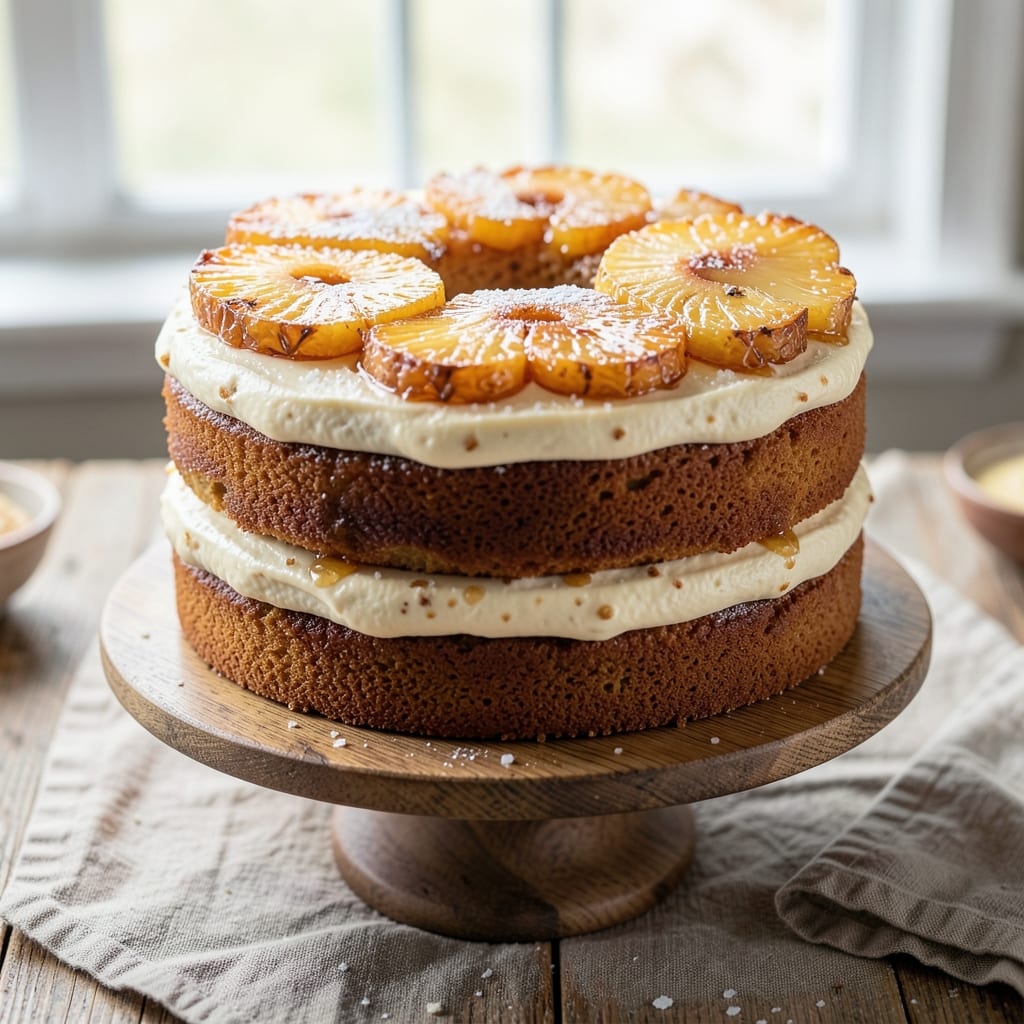
This 2-layer pineapple upside-down cake delivers two showstopping textures in every bite—caramelized pineapple crowns and moist spiced vanilla layers. The secret lies in baking the pineapple upside down first, creating golden, jammy rings that stay perfectly tender beneath the cake. I perfected this recipe after years of testing, ensuring the layers stay distinct while the caramelized fruit adds a restaurant-worthy touch.
The process starts with a simple vanilla cake batter that bakes into tender, flavorful layers, then comes the magic: ringed pineapple slices caramelized in butter and brown sugar until sticky and fragrant. This technique transforms ordinary fruit into a sweet, jammy topping that contrasts beautifully with the cake's softness. The key is patience—letting the pineapple cook low and slow until it's tender enough to hold its shape when flipped.
Once assembled, you'll have a cake that looks as impressive as it tastes—golden caramelized pineapple rings peeking through the layers, with a light vanilla frosting tying everything together. Every slice reveals that perfect balance of textures: crisp caramelized fruit, moist cake, and creamy frosting. This dessert is ideal for celebrations, family gatherings, or treating yourself to something special.
The best part? This recipe scales beautifully for parties, and the caramelized pineapple topping can be made ahead, so you spend less time baking and more time enjoying the results. Let's get started on creating this crowd-pleasing masterpiece.
Ingredients for 2 layer pineapple upside down cake
Golden caramelized pineapple rings and tender vanilla layers—this cake delivers restaurant-quality texture in every slice.
| Ingredient | Amount | Notes |
|---|---|---|
| Fresh Pineapple 🍍 | 2 whole | Fresh, ripe, firm pineapple (about 2 lbs) |
| Unsalted Butter 🧈 | 1 cup | Cold, cubed for caramelizing |
| Light Brown Sugar 🍚 | 1 ½ cups | Packed firmly, packed |
| All-Purpose Flour 🌾 | 2 ½ cups | Sifted, for cake layers |
| Granulated Sugar 🍚 | 2 cups | Divided for cake and frosting |
| Large Eggs 🥚 | 4 whole | Room temperature, separated |
| Whole Milk 🥛 | 1 cup | Room temperature |
| Vanilla Extract 🌿 | 2 tsp | Pure, high-quality extract |
| Baking Powder 🍞 | 2 tsp | Double-acting, sifted |
| Ground Cinnamon 🌿 | 1 tsp | Freshly ground preferred |
| Salt 🧂 | ½ tsp | Fine sea salt |
| Powdered Sugar 🍚 | 2 cups | For light vanilla frosting |
| Heavy Whipping Cream 🥛 | 1 cup | Cold, full-fat preferred |
| Lemon Juice 🍋 | 1 tbsp | Freshly squeezed |
The pineapple is non-negotiable—fresh, ripe, and firm is key. Avoid pre-cut canned pineapple (it lacks the right texture). Costco or Whole Foods often carry whole pineapples with the best balance of sweetness and firmness. Look for vibrant yellow skin and a slight give when pressed. For the caramelizing process, using unsalted butter ensures you control the sweetness, while light brown sugar adds depth without overpowering the fruit. If your pineapple is extra juicy, pat it dry before slicing to prevent the caramel from steaming instead of browning. The brown sugar should be packed firmly—no scooping, or your measurements will be off.
No fresh pineapple? High-quality canned pineapple rings in juice (like Del Monte's) can work in a pinch, but drain and pat them thoroughly. For the cake batter, buttermilk can replace milk if needed—just add 1 tsp lemon juice to the milk and let it sit for 5 minutes. The powdered sugar frosting is where you can get creative: add a pinch of vanilla bean paste for extra flavor or a splash of almond extract for complexity. If your cake layers dry out slightly, brush them with simple syrup (equal parts sugar and water, heated) before frosting to restore moisture. The vanilla extract must be pure—imitation extracts will leave your cake tasting flat.
The caramelized pineapple rings can be made 1 day ahead and stored at room temperature in an airtight container, covered with parchment. The cake layers keep well for 2 days wrapped tightly in plastic, but the frosting should be made fresh for the best texture. For a showstopping presentation, chill the assembled cake for 1 hour before slicing. If you're prepping for a party, assemble the cake (without frosting) 4 hours ahead—just add the frosting right before serving. The frosting should be light and fluffy, so whip the cream and powdered sugar together until just combined—overmixing will make it grainy.
Why You'll Love This Recipe
- No-Bake Magic: I swear, the caramelized pineapple topping happens while you mix the batter—zero hovering over the stove. Just slice the fruit, arrange it, and let the oven do the work. Honestly, the hardest part is waiting for it to cool.
- Tropical Caramel Bomb: That first bite? Warm cake, gooey brown sugar, and fresh pineapple all playing nice together. The butter in the cake layers keeps it rich, but the pineapple’s tang cuts through—like a vacation in every forkful.
- Party in a Pan: Serve it warm with vanilla ice cream for a crowd, or slice it cold for a picnic. I’ve even packed it in lunchboxes (yes, the kids ate it). The upside-down trick makes it feel fancy without extra effort—just flip and impress.
- Budget-Friendly Stretch: Fresh pineapple might seem pricey, but one fruit feeds a whole cake, and the rest of the ingredients are pantry basics. Leftovers? Even better—this cake tastes just as good reheated with a sprinkle of cinnamon the next day.
Step-by-step instructions for pineapple upside down cake
Master this tropical classic with perfectly caramelized pineapple and moist spiced layers.
Prepare the Pineapple Topping and Caramelize
Preheat your oven to 350°F. Cut the tops off both pineapples and slice each into ½-inch thick rounds. You'll need 8 slices total for the top layer. Arrange 4 slices in a circular pattern on a 9-inch round cake pan, packing them tightly together.
In a small saucepan, melt ½ cup unsalted butter over low heat until it just begins to foam. Remove from heat and stir in ¾ cup light brown sugar and 1 tbsp lemon juice until smooth. Pour this caramel mixture evenly over the pineapple slices, letting it seep between the gaps. Bake for 10 minutes until the pineapple softens slightly and the caramel bubbles around the edges.
Bake the First Vanilla Layer
While the pineapple bakes, whisk together 1 cup granulated sugar, ½ cup light brown sugar, and 4 whole large eggs in a large bowl until pale and thickened. Gradually add 1 cup whole milk and 2 tsp vanilla extract, mixing until smooth. In a separate bowl, sift together 1½ cups all-purpose flour, 1 tsp baking powder, ½ tsp salt, and ½ tsp ground cinnamon.
Gently fold the dry ingredients into the wet mixture just until combined—don't overmix. Pour this batter evenly over the caramelized pineapple in the prepared pan. Return to the oven and bake for 25-30 minutes, or until a toothpick inserted in the center comes out clean. The cake should spring back gently when pressed.
Prepare and Bake the Second Layer
While the first layer bakes, prepare the second batch of batter using the remaining ingredients: 1 cup granulated sugar, ½ cup light brown sugar, 4 whole large eggs, 1 cup whole milk, 2 tsp vanilla extract, 1 cup all-purpose flour, 1 tsp baking powder, ½ tsp salt, and ½ tsp ground cinnamon. Mix exactly as you did for the first layer.
Remove the first layer from the oven and immediately pour the second batter over it, spreading evenly to the edges. Return to the oven and bake for an additional 25-30 minutes, until the top is golden and a toothpick inserted between the layers comes out clean. The cake should have risen noticeably and pull away slightly from the pan edges.
Invert and Prepare the Vanilla Frosting
Let the cake cool in the pan for 10 minutes before carefully inverting it onto a serving plate. Run a thin knife around the edges to loosen if needed. While the cake cools completely, prepare the frosting by beating 1 cup heavy whipping cream and 2 cups powdered sugar together until soft peaks form. Add 1 tsp vanilla extract and mix until fully incorporated.
Spread the frosting evenly over the caramelized pineapple layer, creating a smooth, thin coating. Use a spatula to smooth any imperfections. The contrast of the warm caramelized pineapple against the cool vanilla frosting creates the signature flavor experience of this classic dessert.
Serve with Confidence
Slice the cake into 8 equal wedges, ensuring each piece contains both layers and pineapple. Serve immediately while the cake is still warm, allowing guests to appreciate the perfect balance of textures—soft cake, gooey caramel, and tender pineapple. The pineapple should be perfectly tender with a glossy caramel glaze, while the layers maintain their moist, spiced vanilla character.
This cake keeps well at room temperature for 2 days if wrapped tightly in plastic wrap, though it's best enjoyed fresh. The flavors actually improve slightly as the caramel sets and the cake layers absorb the frosting, making it even more decadent with each bite.
Pro Tips For Making 2 Layer Pineapple Upside Down Cake
- Preheat Pan First: The cake pan needs to be hot when you pour in the pineapple mixture—this guarantees caramelization right away. I used to skip this and ended up with a soggy bottom layer instead of that perfect sticky-sweet crust. Just 5 minutes in a 350°F oven does the trick.
- Core Pineapple Evenly: Uneven chunks mean uneven caramelization. Cut the pineapple into ½-inch slices, then use a melon baller to scoop out the core in a grid pattern—this way, the juice distributes evenly and the sugar melts consistently. (Yes, it looks like a puzzle, but it’s worth it.)
- Don’t Overmix Batter: The second layer’s batter should look like lumpy cookie dough, not pancake batter. Overmixing adds gluten and makes the cake dense—this cake’s magic is in its tender crumb. Mix just until the flour disappears, then stop. (I learned this after a cake that tasted more like a brick.)
- Chill Before Flipping: Let the cake cool in the pan for 10 minutes, then run a knife around the edges and invert onto a plate. If you flip it too soon, the layers slide apart like a sad Jenga tower. Patience here keeps your cake intact—and your guests impressed.
Common mistakes when making great 2 layer pineapple upside down cake
Over-Baking the Cake
One of the biggest mistakes is over-baking the cake layers, which turns them dry and crumbly. I’ve seen this happen when people rely solely on the toothpick test without checking the visual cues—golden edges and a gentle spring back when pressed. For a 2-layer cake, bake each layer for 25-30 minutes max at 350°F. If your oven runs hot, reduce the temperature by 25°F and monitor closely. Over-baking also causes the layers to separate when inverted, ruining the clean presentation. 🔥
Skipping the Cooling Step
Rushing to invert the cake too soon is a recipe for disaster—literally. The layers need 10 minutes in the pan to set slightly before flipping. I’ve flipped cakes that were still too hot, and they either collapsed or stuck to the pan. Always run a thin knife around the edges first to loosen it gently. If the cake resists, let it cool another 5 minutes—patience prevents a messy outcome.
Uneven Caramel Distribution
The caramelized pineapple topping should be evenly distributed, but I’ve seen people pour the butter-sugar mixture unevenly, leading to dry spots. Use a small offset spatula to spread the caramel mixture evenly between the pineapple slices before baking. Also, don’t skip the 10-minute bake—this ensures the pineapple softens and absorbs the caramel properly. If the caramel pools in one spot, your cake will have a sticky mess instead of a balanced flavor.
Overmixing the Batter
Overmixing the vanilla cake batter incorporates too much air, which can cause the layers to rise unevenly or develop a dense texture. Mix the wet and dry ingredients just until combined—no more than 15 strokes with a spatula. I’ve made this mistake and ended up with cake layers that were tough instead of tender. For a light, fluffy texture, gentle folding is key. Use a rubber spatula and stop when no dry streaks remain.
Flipping Too Early
Inverting the cake before it’s fully cooled is a surefire way to end up with a collapsed masterpiece. The cake needs at least 10 minutes in the pan to firm up enough to hold its shape. I’ve seen people flip it too soon, and the layers slide apart like a house of cards. If you’re unsure, tap the pan gently—if the cake jiggles but holds together, it’s ready. If it wobbles, wait another 5 minutes. A sturdy serving plate also helps—choose one that’s slightly larger than your cake pan for stability.
Frosting Too Thick
A thick layer of frosting can weigh down the cake and make it difficult to slice cleanly. The frosting should be light and spreadable, not heavy and clumpy. Whip the heavy cream and powdered sugar until just combined—overmixing can turn it grainy. I’ve seen people add too much frosting, which causes the cake to slide apart when sliced. Aim for a thin, even layer (about ¼ inch thick) to highlight the caramelized pineapple rings. 💫
Nutrition facts
Frequently asked questions
Why does the pineapple need to be caramelized before baking?
The caramelization process transforms fresh pineapple into a tender, jammy topping that contrasts beautifully with the cake's soft layers. The butter and brown sugar mixture creates a glossy glaze that locks in moisture while adding rich sweetness. Without caramelizing, the pineapple would remain too firm and wouldn't develop that signature sticky texture that makes this dessert so special.
Can I make this cake in a different sized pan?
For best results, stick with a 9-inch round cake pan as specified. The pineapple rings need to fit snugly to caramelize evenly. If you must adjust, use an 8-inch pan but reduce the pineapple slices to 6 total (3 per layer) and cut the butter/sugar caramel by 25%. Never use a larger pan without adjusting the batter quantity—this will make the layers too thin and prone to over-baking.
How do I prevent the cake layers from sticking to the pan?
Grease your pan thoroughly with butter and flour, then add a parchment circle cut to fit the bottom. For extra insurance, I recommend using a non-stick cake pan or spraying with baking spray. The key is to let the cake cool 10 minutes in the pan before inverting—this helps it release cleanly. If it still sticks, run a thin knife around the edges to loosen before flipping.
Can I substitute the vanilla frosting with something else?
For a tropical twist, try a coconut cream frosting (whipped coconut cream + powdered sugar). You could also use a light lemon curd glaze or even a simple chocolate ganache—just ensure it's thin enough to spread without weighing down the cake. The frosting should complement, not overpower, the caramelized pineapple. For a showstopper, add a sprinkle of toasted coconut flakes on top.
How far ahead can I make the caramelized pineapple topping?
You can prepare the caramelized pineapple rings 1 day ahead and store them at room temperature in an airtight container covered with parchment. The flavors actually deepen overnight! For the cake layers, bake them fresh and assemble the cake 4 hours ahead—just add the frosting right before serving. The frosting should always be made fresh for the best texture.