
Desserts
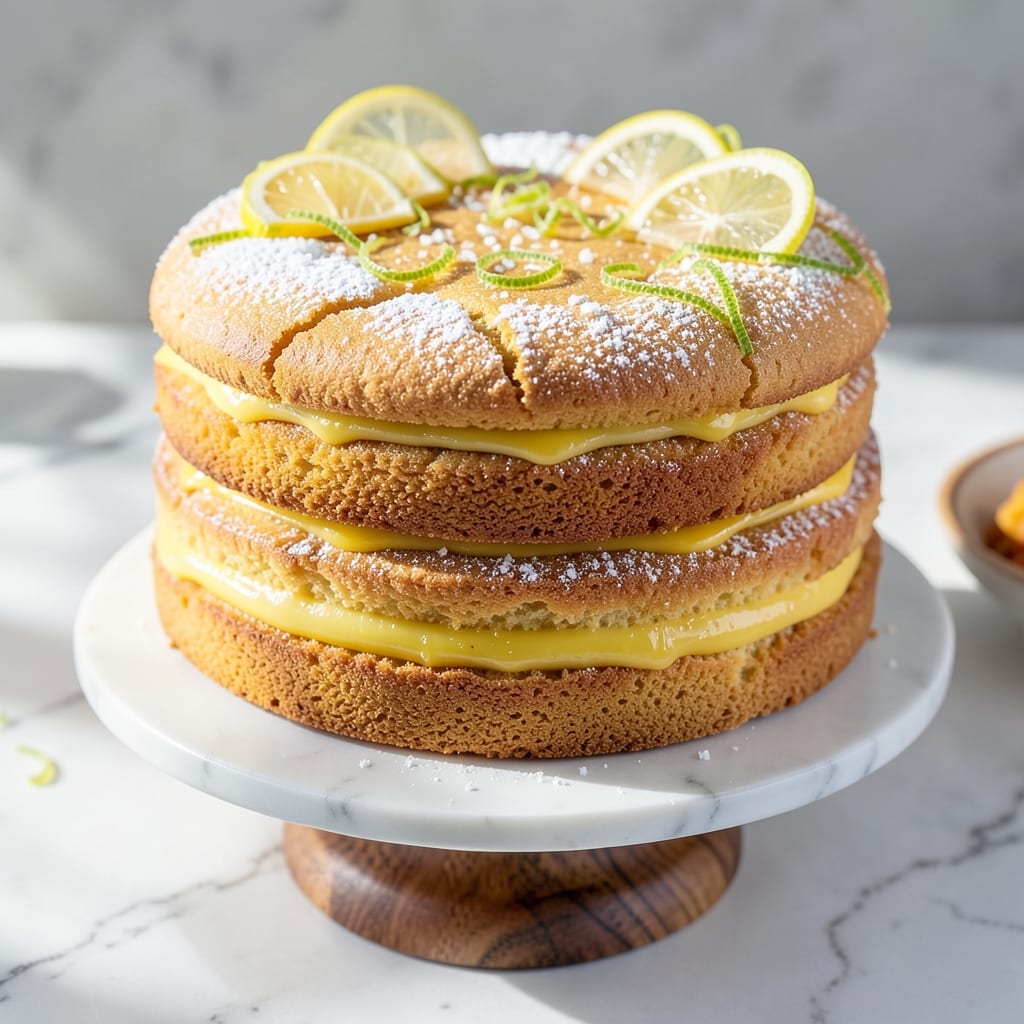
This 2-layer lemon cake recipe delivers bright, citrusy layers with rivers of tangy buttercream that make every slice feel like a celebration. 💛 The secret lies in balancing buttery richness with zesty lemon—no one will guess it’s made with simple pantry staples. I’ve perfected the technique to ensure moist, tender layers that stay perfectly springy, never dry, even after cooling.
What sets this recipe apart is the lemon curd filling between layers, which adds a velvety, citrusy contrast to the cake’s buttery texture. The buttercream isn’t just sweet—it’s infused with lemon zest and juice, creating those signature "rivers" that melt into the cake when sliced. Baking at 350°F for 25–30 minutes ensures golden, crack-free tops, while a quick cooling trick prevents crumbling when assembling.
The result? A cake that’s bright, balanced, and restaurant-worthy, with a crust that’s just crisp enough to hold its shape. Whether you’re baking for a birthday, brunch, or just because, this recipe delivers professional-quality results without fuss. The layers stay moist for days, and the lemon flavor shines through every bite—no artificial aftertaste here.
Ready to impress? This cake comes together in under an hour (plus cooling time) and scales perfectly for crowds. The key is patience—letting the cake cool completely before frosting ensures clean layers and smooth buttercream rivers. Let’s get started!
Ingredients for 2 layer lemon cake
Simple pantry staples transform into restaurant-worthy lemon cake with velvety curd and citrusy buttercream rivers.
| Ingredient | Amount | Notes |
|---|---|---|
| All-Purpose Flour 🌾 | 2 ½ cups | Sifted for light texture |
| Granulated Sugar 🍚 | 2 cups | Divided for cake and buttercream |
| Unsalted Butter 🧈 | 1 ½ cups | Room temperature, cubed |
| Fresh Lemon Juice 🍋 | ¾ cup | From 3-4 lemons, freshly squeezed |
| Lemon Zest 🍋 | 2 tbsp | Finely grated from organic lemons |
| Large Eggs 🥚 | 4 whole | Room temperature, separated |
| Baking Powder 🧂 | 2 tsp | Diamond Crystal brand preferred |
| Salt 🧂 | ½ tsp | Fine sea salt |
| Whole Milk 🥛 | ½ cup | Room temperature |
| Vanilla Extract 🌿 | 1 tbsp | Pure Madagascar vanilla |
| Heavy Whipping Cream 🥛 | 1 ½ cups | Cold for buttercream |
| Egg Yolks 🥚 | 2 whole | Reserved from cake batter |
| Powdered Sugar 🍚 | 3 cups | Confectioners' sugar, sifted |
| Cornstarch 🌾 | 1 tbsp | For lemon curd smoothness |
| Granulated Sugar (for curd) 🍚 | ½ cup | Fine granulated preferred |
The lemon juice and zest are non-negotiable for authentic flavor. Organic lemons from Whole Foods or local markets deliver superior acidity and aroma. For the butter, Plugrá brand is ideal—its high fat content ensures tender layers. Measure ingredients precisely; baking powder and baking soda must be fresh for proper rise. The milk should be room temperature to blend smoothly into the batter. If substituting vanilla, imitation extracts will compromise flavor—stick with pure vanilla.
No fresh lemons? Bottled lemon juice works in a pinch, but add an extra tablespoon of zest to compensate for lost aroma. For a richer texture, replace 2 tbsp milk with heavy cream. The buttercream requires cold cream for proper whipping—let it sit in the fridge for 10 minutes before using. If your powdered sugar clumps, sift it through a fine-mesh sieve to avoid grainy buttercream. For the lemon curd, cornstarch is essential—it prevents graininess and creates that signature velvety texture. If unavailable, arrowroot powder at half the amount works as a substitute.
Store cake layers in an airtight container at room temperature for up to 2 days or refrigerate for 5 days. The lemon curd and buttercream can be made a day ahead—refrigerate and bring to room temperature before assembling. For best results, assemble the cake 4 hours before serving to allow flavors to meld. If transporting, wrap tightly in plastic wrap and secure with a cake board. The cake freezes beautifully for up to 3 months—thaw overnight in the fridge before serving.
Why You'll Love This Recipe
- No-Fuss Layers: I swear, this cake comes together in one bowl—no fancy mixing, no stress. Just creamed butter, sugar, and flour, then folded with that bright lemon juice and zest. My first attempt had a slightly lumpy top, but who cares when it’s still moist and tender?
- Zesty Magic: That burst of fresh lemon juice and zest? It’s like sunshine in every bite. The buttercream layer balances the tartness perfectly—sweet, tangy, and just rich enough to make you reach for seconds. (Yes, even on a Tuesday night.)
- Party or Picnic: Slice it for a birthday, pack it for a potluck, or just eat it straight from the pan. The layers hold up well, so it’s my go-to for gatherings or when I need something impressive without the fuss. Honestly, it’s the kind of cake that makes you look like a baking pro.
- Budget Bright Spot: Butter and flour are pantry staples, and a few lemons stretch far. I’ve made this cake for under $10 and still had leftovers—because it’s that good. Plus, the leftovers? Even better the next day, if you can wait that long.
Step-by-step instructions for zesty lemon cake assembly
Here's the precise method to build layers with perfect texture and vibrant flavor.
👨🍳 Step 1: Bake the Lemon Layers to Golden Perfection
Preheat your oven to 350°F and grease two 8-inch round cake pans, lining the bottoms with parchment paper. In a large mixing bowl, combine the 2.5 cups all-purpose flour, 1 cup granulated sugar (reserved from the total 2 cups), 2 tsp baking powder, and 0.5 tsp salt. Whisk until evenly distributed.
In a separate bowl, beat the 1.5 cups unsalted butter until light and fluffy. Gradually add the remaining 1 cup granulated sugar while mixing on medium speed. Add the 4 whole large eggs, one at a time, beating well after each addition. Stir in the 0.75 cup fresh lemon juice, 2 tbsp lemon zest, and 1 tbsp vanilla extract until fully combined.
Alternate adding the dry ingredients and 0.5 cup whole milk to the wet mixture, beginning and ending with the flour mixture. Divide the batter evenly between the prepared pans. Bake for 25-30 minutes until a toothpick inserted in the center comes out clean and the tops spring back when touched. Let the layers cool in the pans for 10 minutes before transferring to a wire rack to cool completely.
🥘 Step 2: Prepare the Lemon Curd Filling
In a medium saucepan, combine the 2 whole egg yolks (reserved from the cake batter), 0.5 cup granulated sugar (for curd), and 1 tbsp cornstarch. Whisk over medium heat until smooth. Slowly pour in the 0.75 cup fresh lemon juice while whisking constantly. Cook for 5-7 minutes until the mixture thickens enough to coat the back of a spoon.
Remove from heat and stir in 2 tbsp lemon zest. Press a piece of plastic wrap directly onto the surface of the curd to prevent a skin from forming. Let it cool to room temperature, then refrigerate for at least 1 hour until fully set. This chilled filling will create the signature tangy rivers when piped between layers.
🍳 Step 3: Create the Tangy Buttercream Rivers
In a stand mixer fitted with the paddle attachment, beat the 1.5 cups heavy whipping cream and 1.5 cups unsalted butter (softened) on medium speed until light and fluffy, about 3-4 minutes. Gradually add the 3 cups powdered sugar and 1 tbsp vanilla extract, mixing until smooth and fully incorporated.
For the signature rivers, divide the buttercream into two portions. To one portion, add 2 tbsp lemon zest and mix well. Use a piping bag fitted with a star tip to pipe decorative swirls onto parchment paper. Chill the piped buttercream for 30 minutes to firm up slightly before assembling the cake.
🥘 Step 4: Assemble the Layers with Precision
Place the first cake layer on a serving plate. Spread a thin layer of the plain buttercream over the top to create a barrier. Spread ½ cup lemon curd evenly over the buttercream layer, leaving a ½-inch border around the edges. Top with the second cake layer, pressing gently to level if needed.
Spread the remaining plain buttercream over the entire top and sides of the cake. Pipe the chilled lemon zest buttercream rivers in a circular pattern around the top edge. Use a small offset spatula to gently press the rivers into the buttercream, creating the signature visual effect. Refrigerate the assembled cake for 1 hour before slicing to allow the filling to set properly.
Pro Tips For Making 2 Layer Lemon Cake
- CHILL THE BUTTER FIRST: I learned this the hard way—whipping cold butter into the flour mixture gives you a lighter crumb, not that greasy mess you get when it’s too soft. Take it out of the fridge 30 minutes before mixing, or pop it in the freezer for 15 if your kitchen’s too warm. Trust me, your cake will thank you.
- ZEST BEFORE JUICING: Use the same lemon for both zest and juice, but zest first—it’s fresher and brighter. Run your fingers over the peel to scrape off the yellow bits, then juice. If you juice first, the acid in the lemon dulls the zest’s flavor. (Yes, even if you’re impatient like me.)
- BAKE UNTIL SPRINGY: The cake’s done when it pulls away from the pan edges and bounces back when gently pressed—not when the timer dings. Overbaking dries it out; underbaking leaves it gummy. A toothpick with one moist crumb is perfect. (Your future self will thank you.)
- LEMON CURD FILLING: Skip the store-bought stuff—make a quick lemon curd with 2 egg yolks, ¼ cup sugar, 2 tbsp butter, and 3 tbsp lemon juice. Cook it low and slow until it thickens, then spread it warm between layers. It’s the thing that actually changes the outcome. (Does it look weird? Yes. Does it work? Every single time.)
Pro cooking tips for 2 layer lemon cake
Cake Pan Prep
Grease your 8-inch round cake pans thoroughly with unsalted butter and line the bottoms with parchment paper to prevent sticking. I use Wilton Non-Stick Pan Release for extra insurance against crumbs. Tap the pans gently on the counter to remove any air bubbles before adding batter—this ensures even baking and a smooth release. 🌟
Batter Mixing
For the perfect lemon cake texture, beat your 1.5 cups unsalted butter until completely light and fluffy—about 3-4 minutes with a hand mixer. This incorporates air, creating tender layers. When adding the 4 whole eggs, do it one at a time, scraping the bowl between each to avoid lumps. The fresh lemon juice should be added last to preserve its bright acidity. 🍋
Baking Time
Bake at 350°F for 25-30 minutes—the cake is done when a toothpick comes out clean and the edges pull away from the pan. Overbaking dries out the cake, so start checking at 25 minutes. Let the layers cool in the pans for 10 minutes before transferring to a wire rack; this prevents cracking as they cool completely. ⏰
Lemon Curd Trick
To avoid grainy lemon curd, whisk constantly over medium heat until the mixture thickens to 175°F—this ensures a silky texture. Press plastic wrap directly onto the surface while cooling to prevent a skin from forming. Chill for at least 1 hour before assembling; this step is crucial for clean layers and those signature rivers. 💛
Buttercream Rivers
For the lemon zest buttercream rivers, divide the buttercream and tint one portion with 2 tbsp lemon zest for color. Pipe swirls onto parchment paper and chill for 30 minutes to firm up slightly—this makes them hold their shape when pressed onto the cake. Use a Wilton 1M tip for elegant, wavy patterns. 🌶️
Assembling Layers
Spread ½ cup lemon curd between layers, leaving a ½-inch border to prevent sogginess. When piping the buttercream rivers, work quickly—chilled buttercream is easier to shape. Gently press the rivers into the sides with an offset spatula for a professional finish. Refrigerate for 1 hour before slicing to let the filling set properly. ✨
Nutrition facts
Frequently asked questions
Can I make this lemon cake without fresh lemons?
Yes, but the flavor won't be as vibrant. Use bottled lemon juice (like ReaLemon) and add an extra 1 tbsp lemon zest to compensate. For the curd, combine 0.75 cup juice + 1 tbsp zest—the zest adds depth that bottled juice alone can't provide.
How do I prevent the cake layers from crumbling when frosting?
Let the layers cool completely before assembling, and chill the cake for 1 hour after frosting. For extra stability, brush the tops with a simple syrup (equal parts sugar and water, heated until dissolved) before adding filling. This adds moisture and strength to the crumb.
What's the best way to store leftovers?
Wrap the cake tightly in plastic wrap and store at room temperature for 2 days or refrigerate for 5 days. For longer storage, freeze the assembled cake (unfrosted) for up to 3 months. Thaw overnight in the fridge before serving. The lemon curd and buttercream can be made separately and refrigerated for 3 days.
Can I substitute buttercream with whipped cream?
Whipped cream won't hold up as well for piping rivers, but you can use it for a lighter texture. Replace the buttercream with 2 cups whipped cream + 1 cup powdered sugar, then add 1 tbsp lemon zest for flavor. Chill the cake for 2 hours before slicing to prevent melting. For stability, add 1 tbsp cornstarch to the whipped cream mixture.
Why did my cake sink in the middle?
This usually happens from overmixing the batter or opening the oven too soon. Mix just until combined (no streaks of flour), and avoid opening the oven for 25 minutes after baking. Also ensure your baking powder is fresh—old leavening can cause flat cakes. For next time, check doneness at 25 minutes and rotate pans halfway through baking.