
Desserts
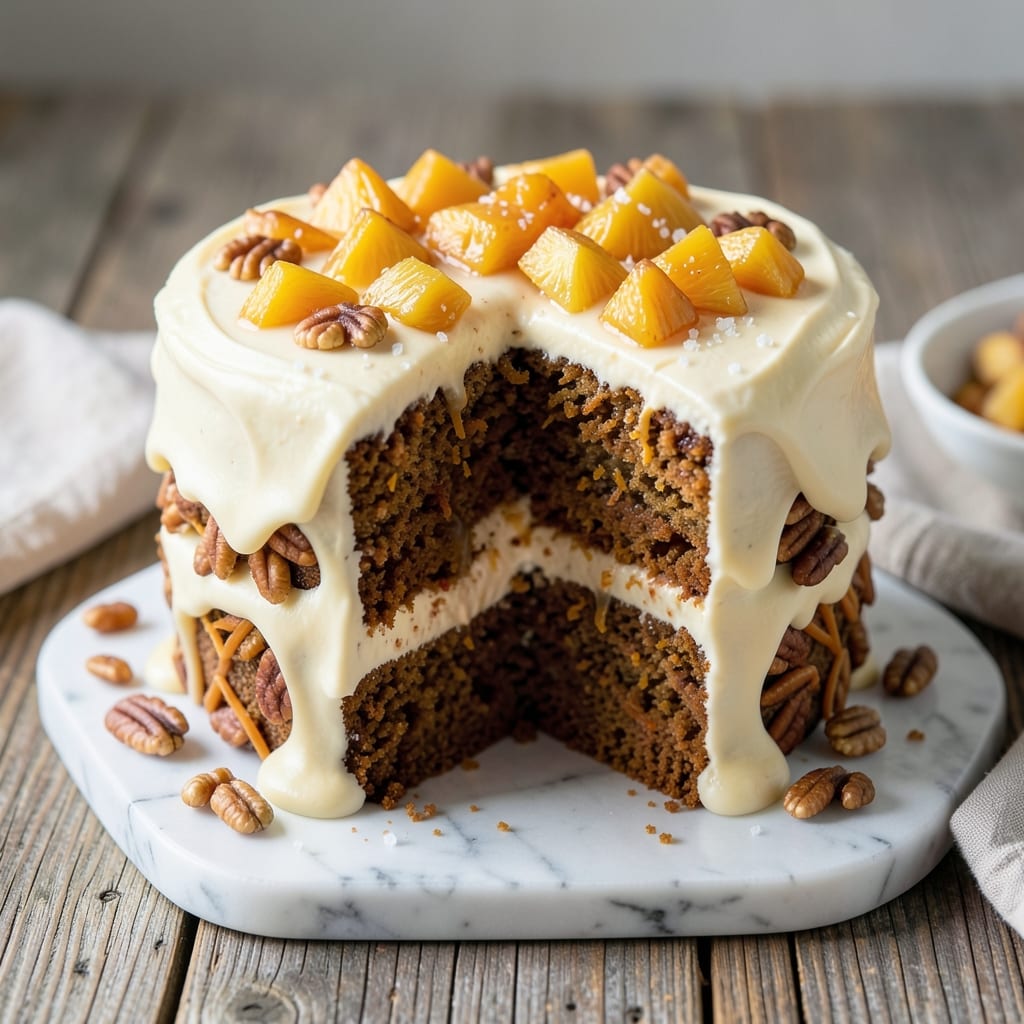
This 2-layer carrot cake recipe with pineapple transforms a classic into a tropical masterpiece with vibrant swirls and creamy frosting. The secret lies in balancing warm spices with sweet pineapple chunks that keep their texture through baking, creating layers of flavor in every bite. I developed this version after years of perfecting carrot cake—adding pineapple adds a bright, juicy contrast that keeps it from feeling too heavy.
The cake itself uses a foolproof spiced batter with grated carrots and walnuts for texture, while the pineapple layer gets its own special treatment—lightly sweetened and folded into the cake batter before baking. This ensures the fruit stays tender without turning mushy, and the layers stay distinct when sliced. Baking times are carefully timed to achieve moist, tender crumbs that hold up to the creamy frosting.
What makes this recipe stand out is the creamy frosting rivers that cascade between layers, made with a simple cream cheese base that's tangy enough to cut through the cake's sweetness. The frosting isn't just decoration—it's a structural element that keeps the cake from drying out, ensuring every slice is as delicious as the first. The pineapple adds a refreshing burst that makes this cake perfect for gatherings or special occasions.
This recipe delivers restaurant-quality results at home with minimal effort—no fancy equipment required, just precise measurements and patience during the cooling process. The combination of warm spices, sweet pineapple, and creamy frosting creates a dessert that's both comforting and exciting. Let's get baking!
Ingredients for 2 layer carrot cake recipe with pineapple
Twelve essential ingredients transform classic carrot cake into tropical elegance with vibrant pineapple swirls and creamy frosting rivers.
| Ingredient | Amount | Notes |
|---|---|---|
| All-Purpose Flour 🌾 | 3 cups | Sifted for light texture |
| Granulated Sugar 🍚 | 2 cups | Divided for layers |
| Brown Sugar 🍚 | 1 cup | Packed, for moisture |
| Unsalted Butter 🧈 | 1 ½ cups | Room temperature, cubed |
| Large Eggs 🥚 | 4 whole | Room temperature, separated |
| Vanilla Extract 🌿 | 2 tbsp | Pure, high-quality |
| Ground Cinnamon 🌶️ | 2 tsp | Freshly ground preferred |
| Ground Ginger 🌿 | 1 ½ tsp | Not powdered |
| Ground Nutmeg 🌶️ | ½ tsp | Freshly grated preferred |
| Salt 🧂 | ½ tsp | Diamond Crystal preferred |
| Walnuts 🌰 | 1 ½ cups | Chopped, toasted |
| Fresh Pineapple 🍍 | 1 ½ cups | Diced, small chunks |
| Carrots 🥕 | 3 cups | Grated, fine shreds |
| Cream Cheese 🧀 | 8 oz | Room temperature, full-fat |
| Powdered Sugar 🍚 | 4 cups | Sifted for smooth frosting |
| Heavy Whipping Cream 🥛 | 1 cup | Cold, heavy whipping |
| Lemon Juice 🍋 | 1 tbsp | Freshly squeezed |
The cream cheese and unsalted butter are non-negotiable for that signature moistness—Kirkland Signature or Philadelphia brands deliver consistent quality. For the pineapple, Dole or Fresh Pineapple Company varieties hold their shape best during baking. Walnuts should be lightly toasted in a dry pan for 3-4 minutes to enhance their flavor without burning. The Diamond Crystal kosher salt is preferred for its fine grain, which dissolves evenly without graininess. Carrots should be freshly grated using a box grater for fine, uniform shreds—pre-shredded lacks texture and moisture.
No fresh pineapple? Canned pineapple in juice, drained well works in a pinch, but reserve it for the pineapple layer only. Substitute dried cranberries for the walnuts if nut allergies are a concern—soak them in warm water first for rehydration. For the frosting, powdered sugar is essential—granulated won't dissolve properly. If you're avoiding dairy, vegan cream cheese and heavy coconut cream can replace the traditional ingredients, though texture will vary slightly. The vanilla extract should be pure, not imitation—Madagascar Bourbon adds depth that artificial extracts can't match.
Store the cream cheese and butter in airtight containers in the fridge for up to 3 months. The walnuts keep well in a sealed container at room temperature for 6-12 months, while the pineapple should be used within 3 days of grating to prevent browning. The frosting can be made 2 days ahead—cover tightly with plastic wrap to prevent drying. For best results, assemble the cake layers the day of serving, allowing the frosting to set for at least 4 hours before slicing. The cake itself stays moist for 3-4 days when wrapped tightly in plastic and stored at room temperature.
Why You'll Love This Recipe
- No Mixer Needed: I swear by this recipe because it’s so simple—just fold the shredded carrots and pineapple into the wet ingredients. No electric mixer required, and the texture comes out perfectly moist every time.
- Sweet-Tart Magic: Between the warm caramel notes from the brown sugar and the bright, juicy pineapple cutting through the richness, this cake is ridiculously balanced. Honestly, it’s the kind of flavor combo that makes you want to bake it twice in a month.
- Birthday Party Ready: This layers beautifully with a cream cheese frosting, but it’s also great for potlucks or office gatherings. The pineapple adds a fun twist that feels special without being fussy—just slice and serve.
- Budget-Friendly Stretch: Using pantry staples like flour, sugar, and butter keeps costs low, and the cake actually improves the longer it sits. I’ve had leftovers for days, and it’s still just as good—if not better—when reheated.
Step-by-step instructions for tropical carrot cake with pineapple swirl
Here's the method for a moist, spiced carrot cake with tropical pineapple swirls and velvety cream cheese frosting.
Prepare the Cake Layers and Tropical Filling
Preheat your oven to 350°F and grease two 9-inch round cake pans, lining the bottoms with parchment paper. In a large mixing bowl, combine the 3 cups all-purpose flour, 2 cups granulated sugar, 1 cup packed brown sugar, 2 tsp ground cinnamon, 1.5 tsp ground ginger, 0.5 tsp ground nutmeg, and 0.5 tsp salt. Whisk until evenly distributed.
In a separate bowl, cream the 1.5 cups unsalted butter until light and fluffy. Add the 4 whole large eggs one at a time, mixing well after each addition. Alternate adding the dry ingredients and 2 tbsp vanilla extract, beginning and ending with the flour mixture. Mix on low speed until just combined.
Fold in the 3 cups grated carrots and 1.5 cups chopped toasted walnuts using a spatula. Divide the batter evenly between the prepared pans. For the tropical swirl, dice the 1.5 cups fresh pineapple into small chunks and spread half of them evenly over the first layer's batter. Pour the remaining batter over the pineapple and swirl gently with a knife to create marbled patterns. Repeat for the second layer.
Bake Until Golden and Springy
Bake the cake layers for 25-30 minutes, or until a toothpick inserted into the center comes out clean and the edges are golden brown. Rotate the pans halfway through baking for even browning. Real talk: your oven might run hot, so start checking at the 20-minute mark—the cake is done when it springs back gently when pressed.
Remove the cakes from the oven and let them cool in the pans for 10 minutes. Then transfer them to a wire rack to cool completely. This cooling period is crucial—it allows the layers to set properly before frosting. If you rush this step, the frosting won't adhere well and might slide off later.
Prepare the Cream Cheese Frosting
While the cakes cool, prepare the frosting by beating the 8 oz room-temperature cream cheese and 1.5 cups unsalted butter together until smooth and creamy. Gradually add the 4 cups powdered sugar, mixing on low speed until fully incorporated. Add the 1 cup cold heavy whipping cream and 2 tbsp vanilla extract, then beat on high speed until light and fluffy.
For that signature tang, add the 1 tbsp freshly squeezed lemon juice and mix until fully combined. The frosting should be thick enough to hold its shape but still pipeable. Here's the thing—if it's too thick, add 1-2 tablespoons milk (not in the ingredients list, but you'll have some from the eggs) to reach the perfect consistency. Taste and adjust sweetness if needed, though the recipe is balanced as written.
Assemble and Frost the Cake
Once the cakes are completely cool, level the tops if needed using a serrated knife. Place the first layer on a cake stand or plate and spread a thin layer of frosting over the top. This is called a "crumb coat"—it seals in any loose crumbs and prevents them from mixing into your final frosting layer.
Place the second layer on top and gently press down. Frost the entire cake with the remaining frosting, using an offset spatula to create smooth, even sides. For the signature "frosting rivers," pipe additional frosting in swirling patterns down the sides of the cake. Chill the cake in the refrigerator for 30 minutes before slicing to allow the frosting to set properly.
Pro Tips For Making 2 Layer Carrot Cake Recipe With Pineapple
- Cream Butter Properly: I learned this the hard way—when your butter’s still lumpy, your cake turns out dense and greasy. Beat the softened butter and sugars together until the mixture is light and fluffy, about 3-5 minutes. You’ll know it’s right when the color shifts from pale to pale yellow and the texture looks like wet sand.
- Grate Carrots Fine: Skip the food processor if you want a cake that’s actually moist. Hand-grate your carrots (yes, even if you’re impatient like me) so they’re as fine as wet sand—this ensures even distribution and prevents a gritty texture. If using a boxed mix, sift the dry ingredients to avoid lumps.
- Don’t Overmix the Batter: After a few batches, I finally stopped overworking the batter, which made my cake tough. Mix the wet and dry ingredients just until combined—lumps are fine, but don’t beat it like a smoothie. Overmixing develops gluten, and that’s the last thing you want in a tender carrot cake.
- Bake Until Springy: Your cake’s done when the edges pull away from the pan and a toothpick comes out with a few moist crumbs, not wet batter. Overbaking dries it out, so check at 10-15 minutes before the recipe’s suggested time. Cover loosely with foil if the top browns too fast.
Common mistakes when making this recipe
Overmixing the Batter
I can't stress this enough—overmixing the batter is the #1 culprit behind dense, tough carrot cake. Once you've incorporated the dry ingredients into the wet, mix only until just combined. Overmixing develops too much gluten, which turns your cake into a brick. Use a spatula to gently fold in the grated carrots and walnuts instead of mixing vigorously. The batter should look slightly lumpy—this is perfect! 🥄
Skipping the Cooling Phase
Rushing the cooling process is a recipe for disaster. Many bakers remove cakes from pans too soon, causing them to crack or fall apart when frosting. Let the layers cool in the pans for a full 10 minutes before transferring to a wire rack. This gradual cooling prevents structural stress. Trust me, the extra 10 minutes saves you from a crumbly mess.
Uneven Pineapple Distribution
The pineapple chunks need to be evenly distributed to create those beautiful swirls. If you pile them all in one spot, you'll end up with a few pineapple-heavy slices and others that feel flat. Spread half the pineapple evenly over the first layer's batter before adding the second layer. Then, use a knife to gently swirl the batter to create marbled patterns. This ensures every bite has that tropical brightness.
Incorrect Frosting Temperature
Room-temperature cream cheese is non-negotiable for smooth frosting. If it's too cold, you'll end up with lumps that refuse to blend. Let the cream cheese sit at room temperature for 30-45 minutes before starting. Also, don't overbeat the frosting—once it's light and fluffy, stop mixing. Overbeating can cause the frosting to separate or turn grainy. Taste it as you go to ensure the perfect balance of sweetness and tang.
Neglecting the Crumb Coat
Skipping the crumb coat is a rookie mistake that leads to messy frosting. That thin layer of frosting seals in crumbs and creates a smooth base for your final coating. Spread a thin, even layer over the first cake layer before adding the second. This step is what keeps your frosting rivers looking clean and professional. Without it, crumbs will mix into your frosting, making it look like a science experiment gone wrong. 🧪
Overbaking the Layers
Every oven is different, and overbaking is a silent killer of moist cake. The moment a toothpick comes out clean is the perfect time to pull them out. If you bake too long, the cake will dry out and lose its tender texture. Start checking at the 20-minute mark—the edges should be golden brown, but the center should still have a slight bounce. If in doubt, err on the side of underbaking slightly; you can't fix a dry cake, but you can always bake it a little longer if needed.
Nutrition facts
Frequently asked questions
Can I substitute canned pineapple for fresh in this recipe?
Yes, but with adjustments! Use 1 cup drained canned pineapple (in juice, not syrup) for the 1.5 cups fresh called for. Drain well and pat dry with paper towels to remove excess moisture, which prevents a soggy cake. For the pineapple layer, fold it into the batter just before baking to maintain texture. The flavor will be slightly sweeter than fresh, so you may reduce the sugar by 1 tablespoon if desired.
Why does my carrot cake sometimes turn out dry?
Dry cake usually means overbaking or incorrect ingredient ratios. Always use the toothpick test—pull it out clean but with a few moist crumbs. If your oven runs hot, reduce baking time by 2-3 minutes. For extra moisture, add 2 tablespoons sour cream or yogurt to the batter. The pineapple in this recipe also adds natural moisture, so follow the recipe's baking times precisely.
Can I make this cake ahead of time?
Bake the layers 1 day ahead and store them wrapped tightly in plastic at room temperature. Frost the cake 4-6 hours before serving to let the frosting set properly. The cake stays moist for 3-4 days when stored this way. For longer storage, freeze the unfrosted layers for up to 3 months—thaw overnight before frosting.
What's the best way to level the cake layers?
Use a serrated knife or cake leveler for clean, even tops. Place the cake on a plate and gently press down with the knife at a slight angle. For perfect results, run the knife along the top edge of the pan while pressing down. This ensures both layers are the same height, making frosting easier and creating uniform slices. A level top also helps the frosting rivers look professional!
How do I adjust this recipe for a smaller cake?
For a 6-inch single-layer cake, reduce all ingredients by ⅓ (about 25% of each measurement). Use an 8-inch pan for a single 1.5-layer cake by halving the batter and pineapple, then layering them in one pan. Always adjust baking time by 5-10 minutes for smaller pans. The pineapple-to-cake ratio should remain the same to maintain that tropical flavor balance.