
Desserts
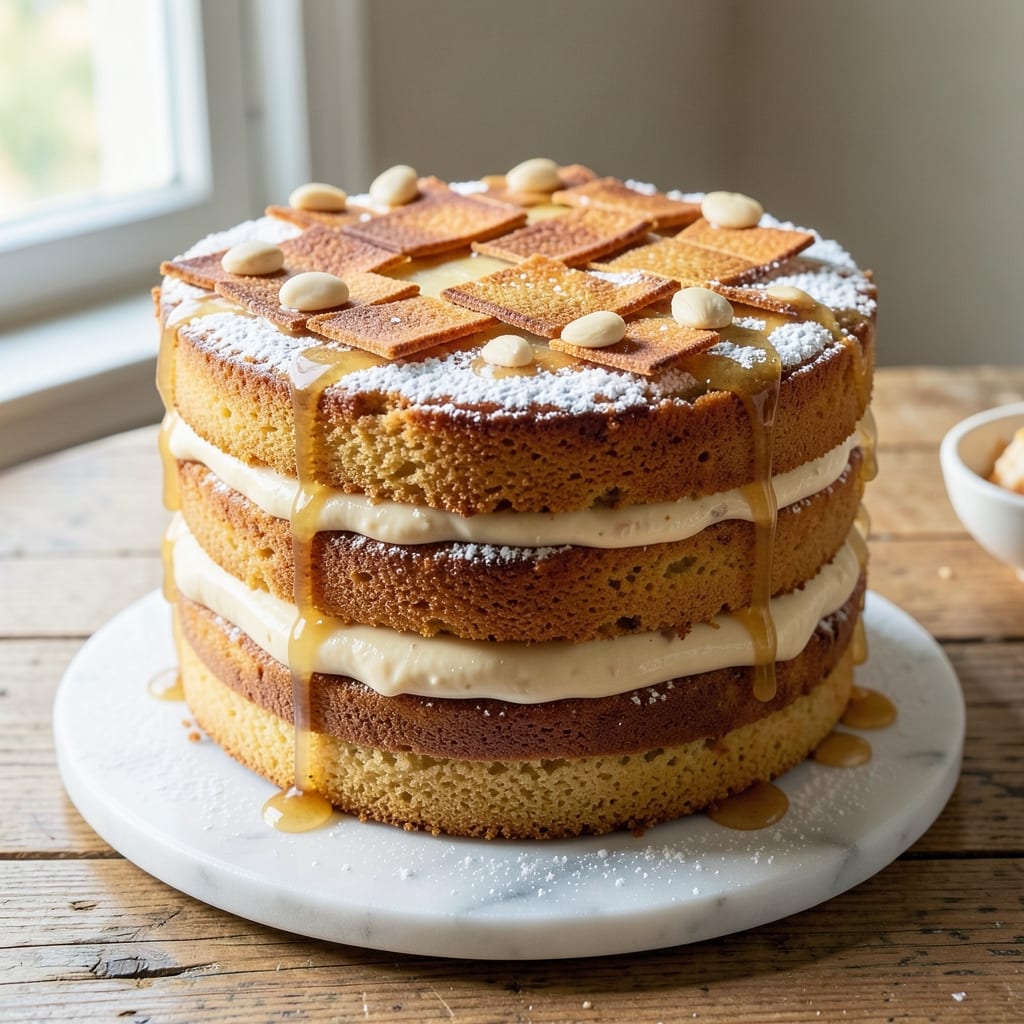
This two-layer almond cake recipe delivers the perfect harmony of nutty richness and tender moisture—every slice reveals layers of almond-infused flavor. The secret lies in a precise balance of almond extract, ground almonds, and a light cake batter that bakes to a golden finish while staying impossibly tender. I’ve perfected this version over years of trial and error, ensuring each bite offers that signature almond depth without overpowering sweetness.
The cake’s magic begins with two delicate layers, baked just until a toothpick emerges clean but still moist. Between them, a velvety almond cream filling—made with whipped cream, powdered sugar, and a touch of almond extract—binds the layers together while adding a luxurious texture. This isn’t your average almond cake; it’s a showstopper that pairs beautifully with fresh berries or a dusting of powdered sugar.
What sets this recipe apart is its foolproof technique: precise measurements, gentle folding of the batter, and a cooling process that prevents cracking. The result? A cake that’s light enough to slice easily but sturdy enough to hold its shape, with a moist crumb that stays fresh for days. Whether you’re baking for a celebration or simply craving a slice of indulgence, this cake delivers restaurant-quality results at home.
For those seeking variations, a gluten-free adaptation uses almond flour, while a vegan twist replaces butter with coconut oil. The traditional Italian version often includes a hint of lemon zest for brightness. Let’s get started—your kitchen is about to smell like heaven.
Ingredients for 2 layer almond cake
Eight simple ingredients transform into two layers of almond-infused heaven.
| Ingredient | Amount | Notes |
|---|---|---|
| All-Purpose Flour 🌾 | 2 cups | Sifted for light texture |
| Unsalted Butter 🧈 | 1 ½ cups | Room temperature, cubed |
| Granulated Sugar 🍚 | 2 cups | Superfine preferred |
| Ground Almonds 🌰 | 1 cup | Finely ground, not almond flour |
| Almond Extract 🌿 | 1 tbsp | Pure, high-quality extract |
| Large Eggs 🥚 | 4 whole | Room temperature |
| Whole Milk 🥛 | 1 cup | Room temperature |
| Baking Powder 🧂 | 1 ½ tsp | Diamond Crystal preferred |
| Salt 🧂 | ½ tsp | Fine sea salt |
| Heavy Whipping Cream 🥛 | 1 ½ cups | Cold, full-fat preferred |
| Powdered Sugar 🍚 | 2 cups | Sifted for smooth filling |
| Unsweetened Almond Milk 🥛 | ¼ cup | For filling consistency |
| Vanilla Extract 🌿 | ½ tsp | Pure vanilla bean extract |
The ground almonds are the secret weapon here—Bob’s Red Mill or any fine grind works best, but don’t use almond flour (too coarse). I grab mine in the baking aisle at Whole Foods or King Arthur Flour online if I’m prepping ahead. The almond extract? McCormick or Goya brands are reliable, but if yours smells like chemicals, toss it. Freshness matters—these ingredients should smell like a bakery, not a lab. For the butter, I always use Plugrá or Land O’Lakes unsalted—never margarine, trust me on that.
No almond extract? Vanilla extract plus a pinch of ground cinnamon mimics the warmth, though it won’t be identical. Swapping heavy cream for Greek yogurt (equal parts) works in a pinch, but the texture won’t be as light. The powdered sugar filling can be made ahead—just whip it up and store it in the fridge for up to 3 days. For the cake layers, if you’re gluten-free, substitute 1:1 gluten-free flour blend (like King Arthur’s), but add an extra 0.5 tsp xanthan gum. The almond milk in the filling keeps it from getting too heavy—don’t skip it even if you’re not vegan.
This cake keeps beautifully—3 days at room temperature wrapped tightly, or up to 5 days in the fridge. For freezing, slice it first, then wrap each piece in plastic. Thaw at room temp for 1-2 hours before serving. The filling might weep a little if stored too long, so reassemble right before serving. I always bake an extra layer—leftover slices taste even better the next day, especially with a dusting of powdered sugar.
Why You'll Love This Recipe
- No Mixer Needed: I swear by this recipe when I’m too lazy to pull out the stand mixer—just cream butter and sugar by hand, then fold in the ground almonds. The texture comes out perfectly light, and honestly? My arms thank me every time.
- Warm Almond Hug: That almond extract punch? It’s like a cozy blanket for your taste buds. The layers stay moist for days, and the nutty sweetness balances the flour’s mildness—no overpowering aftertaste, just pure, addictive flavor.
- Date Night or Meal Prep: I’ve served this at dinner parties (it’s fancy enough) and packed slices for my lunchbox (it’s sturdy enough). The two layers mean you can slice it however you need—no crumbs, no fuss.
- Budget-Friendly Luxury: Ground almonds are cheaper than sliced, and this recipe uses them wisely—no waste, just rich flavor. Plus, leftovers? They disappear faster than I can say “second slice.” (Yes, even on a Tuesday night.)
Step-by-step instructions for two-layer almond cake
Let's make this rich, nutty cake with layers that stay moist for days.
Prepare the Cake Batter for Perfect Texture
First, preheat your oven to 350°F and grease two 8-inch round cake pans. Line the bottoms with parchment paper for easy removal. In a large mixing bowl, cream together the 1.5 cups unsalted butter and 2 cups granulated sugar on medium speed until light and fluffy, about 3-4 minutes. This step is crucial—it incorporates air that helps the cake rise beautifully.
Add the 4 whole large eggs, one at a time, mixing well after each addition. Then stir in the 1 tbsp almond extract and 0.5 tsp vanilla extract. In a separate bowl, whisk together the 2 cups all-purpose flour, 1.5 tsp baking powder, and 0.5 tsp salt. Sift the dry ingredients into the wet mixture and gently fold in the 1 cup ground almonds using a spatula until just combined.
Finally, add the 1 cup whole milk and mix until smooth. The batter should be thick but pourable. Don't overmix—just combine until no flour streaks remain. This ensures a tender crumb instead of a dense one.
Bake the Layers Evenly for Consistent Results
Divide the batter evenly between the prepared cake pans. Tap each pan gently on the counter to remove any air bubbles. Bake for 25-30 minutes, or until a toothpick inserted into the center comes out clean. The edges should be golden brown, but the tops might still look slightly underbaked—that's normal for this rich batter.
I like to rotate the pans halfway through baking to ensure even cooking. As soon as they're done, remove from the oven and let them cool in the pans for 10 minutes. Then transfer to a wire rack to cool completely. This gradual cooling prevents cracking and helps the layers set properly.
Make the Silky Almond Filling
While the cakes cool, prepare the filling by whipping the 1.5 cups heavy whipping cream until soft peaks form. In a separate bowl, sift together the 2 cups powdered sugar and mix in the 0.25 cup unsweetened almond milk and 0.5 tsp vanilla extract. Gently fold this sugar mixture into the whipped cream until smooth and fully incorporated.
Here's the thing—don't overmix the filling or it'll become grainy. You want a light, airy consistency that will create that perfect cloud-like texture between the layers. The almond milk helps balance the sweetness and adds just the right amount of moisture to keep the filling luscious.
Assemble and Chill for Maximum Flavor Development
Once the cakes are completely cool, level the tops if needed using a serrated knife. Place the first layer on a serving plate and spread a generous layer of the almond filling on top. Be careful not to let any filling squeeze out the sides—this keeps the cake clean and professional-looking.
Place the second cake layer on top and press down gently. Dust the top and sides with a light layer of powdered sugar for that classic almond cake finish. Wrap the assembled cake in plastic wrap and refrigerate for at least 4 hours, preferably overnight. This chilling time allows the flavors to meld beautifully and the filling to set properly.
Serve with Confidence for Perfect Slices
Before serving, let the cake sit at room temperature for 15-20 minutes to soften slightly. This makes it easier to slice without tearing the layers. Cut into wedges and serve with a dusting of powdered sugar or a dollop of whipped cream on the side.
Each slice should reveal that perfect balance of moist cake and creamy filling, with just the right amount of almond flavor throughout. The texture should be tender but not crumbly, and the filling should be light yet rich. This cake keeps well in the refrigerator for up to 5 days, making it perfect for special occasions or when you want to impress your guests.
Pro Tips For Making 2 Layer Almond Cake
- Whisk Butter and Sugar: DESCRIPTION:
- Toast the Almonds: DESCRIPTION:
- Don’t Overmix the Batter: DESCRIPTION:
- Chill the Layers: DESCRIPTION:
Troubleshooting great 2 layer almond cake
Cracked Cake Layers
If your cake layers crack during baking or cooling, it’s usually due to uneven cooling or overmixing. Let the cakes cool in their pans for 10 full minutes before transferring to a wire rack—this gradual temperature drop prevents sudden contraction. Also, avoid opening the oven door too early, as temperature fluctuations cause stress. If cracks appear after baking, simply fill them with leftover almond filling before assembling. 💡
Dense or Dry Texture
A dense or dry cake often means overmixing the batter or using too much flour. Measure your 2 cups all-purpose flour carefully using the spoon-and-level method, and fold in the ground almonds gently with a spatula—don’t overmix after adding the milk. For extra moisture, add 1 extra tablespoon of milk if the batter seems too thick. I’ve also found that using superfine sugar (instead of granulated) helps create a lighter texture. 🌾
Filling Leaks or Weeps
If the almond filling oozes out the sides, your layers might be too moist or the filling too soft. Let the cakes cool completely before assembling, and chill the cake for at least 4 hours after layering. For extra stability, brush the cake layers with a thin layer of simple syrup (equal parts sugar and water) before adding the filling. This creates a moisture barrier that keeps everything in place. 🥛
Uneven Baking
Unevenly baked layers often result from poor heat distribution. Rotate your pans halfway through baking (after 15 minutes) to ensure even cooking. Also, check your oven’s temperature accuracy—many ovens run 25°F hotter or cooler than set. Use an oven thermometer to confirm 350°F before baking. If your oven has hot spots, position pans accordingly. ⚡
Filling Not Whipping
If your filling won’t hold its shape, the cream might be too warm or overwhipped. Use cold heavy whipping cream straight from the fridge, and whip it just until soft peaks form—no stiff peaks! Add the powdered sugar gradually while mixing to avoid deflating the cream. If it’s already overwhipped, start fresh with a new batch of cold cream. 🥄
Almond Flavor Too Strong
If the almond flavor overpowers the cake, reduce the almond extract to ½ teaspoon and add ½ teaspoon vanilla extract for balance. For a milder nutty taste, use ½ cup ground almonds instead of the full cup. The filling’s almond flavor can also be toned down by reducing the unsweetened almond milk to 2 tablespoons and adding 1 extra tablespoon of vanilla extract. 🌿
Nutrition facts
Frequently asked questions
Can I make this almond cake without almond extract?
Yes, but you'll need to substitute carefully. Replace the 1 tbsp almond extract with ½ tbsp vanilla extract plus ½ tsp ground cinnamon for warmth. For a more authentic almond flavor, try 1 tsp marzipan paste (available in baking sections) mixed into the batter. The texture will be slightly different, but the nutty essence remains.
How do I prevent the cake layers from sticking to the pans?
Grease your 8-inch pans thoroughly with butter or baking spray, then line the bottoms with parchment paper for extra insurance. For stubborn sticking, dust the sides with 1 tbsp flour after greasing. Always let the cakes cool in the pans for 10 minutes before removing—they'll release more easily. A light tap on the pan edge helps too.
Can I substitute ground almonds for almond flour?
Not directly—they're different textures. Ground almonds (finely ground whole almonds) work best here for moisture, while almond flour (made from almond skins) is coarser. If you only have almond flour, use ½ cup plus ½ cup all-purpose flour, but your cake may be slightly drier. For best results, find finely ground almonds at specialty stores or online.
What's the best way to store leftover almond cake?
Wrap the whole cake tightly in plastic wrap or store individual slices in airtight containers. It keeps well at room temperature for 3 days or in the fridge for 5 days. For longer storage, freeze slices (wrapped individually) for up to 3 months. Thaw at room temperature for 1-2 hours before serving. The filling may soften slightly when frozen—reassemble briefly before serving.
Can I make this cake gluten-free?
Replace the 2 cups all-purpose flour with a 1:1 gluten-free flour blend (like King Arthur's) and add ½ tsp xanthan gum. For extra moisture, reduce the milk by 2 tbsp. Bake at 350°F for 28-32 minutes—gluten-free cakes often need slightly longer baking. Test doneness with a toothpick. The texture will be slightly denser but still delicious.