
Desserts
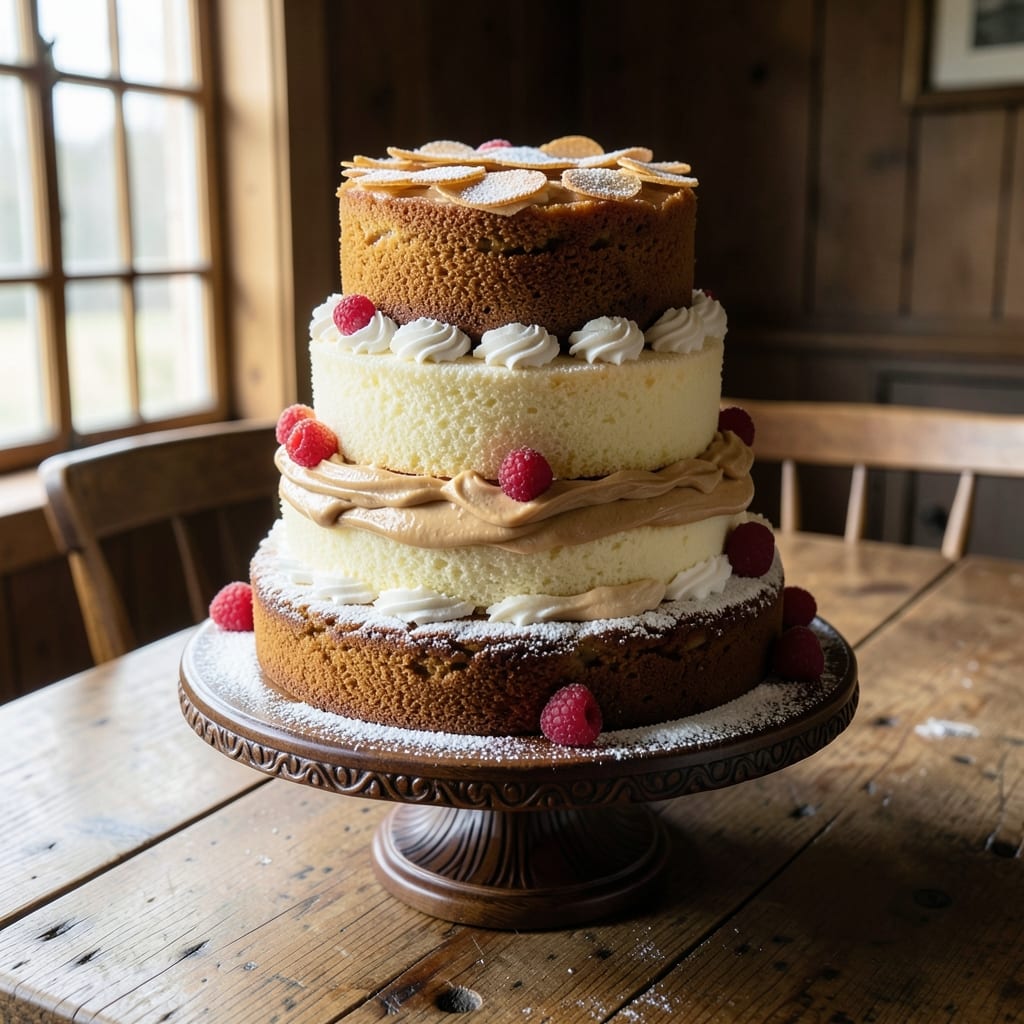
This authentic 1800s cake recipe transports you to Victorian-era kitchens with its rich spice cake and delicate almond topping. 🌟 The original recipe relied on simple pantry staples—flour, butter, eggs, and warm spices like cinnamon and nutmeg—that were staples in 19th-century households. What makes this cake special is its balance of tender crumb and fragrant spices, a hallmark of Victorian baking techniques that prioritized flavor over ornate decoration.
The cake itself is a study in restraint—no elaborate frosting, just a light dusting of powdered sugar and a crunchy almond topping that adds texture. Back then, ovens were less precise than today’s, so the recipe relies on careful ingredient ratios and a gentle baking method to achieve consistent results. The spices used weren’t just for flavor; they were believed to have medicinal properties, reflecting the era’s blend of culinary and folk traditions.
What you’ll end up with is a moist, aromatic cake with a subtle sweetness that lets the spices shine. The almond topping, made from ground almonds and a touch of sugar, adds a delicate crunch that contrasts beautifully with the cake’s tender interior. This was the kind of dessert served at afternoon teas and family gatherings, where simplicity and warmth took center stage over elaborate presentation.
Perfect for historical reenactments, vintage-inspired dessert menus, or simply satisfying a craving for old-world charm. The recipe has been adapted for modern kitchens while staying true to its 19th-century roots—just as the Victorians would have prepared it, with a few practical adjustments for today’s cooks.
Ingredients for 1800s cake
Simple pantry staples transform into a timeless Victorian spice cake with delicate almond topping.
| Ingredient | Amount | Notes |
|---|---|---|
| All-Purpose Flour 🌾 | 2 ½ cups | Sifted for even texture |
| Unsalted Butter 🧈 | 1 cup | Cold, cubed for even mixing |
| Granulated Sugar 🍚 | 1 ½ cups | White sugar preferred |
| Large Eggs 🥚 | 3 whole | Room temperature for blending |
| Ground Almonds 🥜 | 1 cup | Freshly ground for texture |
| Powdered Sugar 🍚 | ½ cup | For dusting and topping |
| Ground Cinnamon 🌿 | 2 tsp | Freshly ground for aroma |
| Ground Nutmeg 🌿 | 1 tsp | Freshly grated preferred |
| Ground Allspice 🌶️ | ½ tsp | For depth of flavor |
| Salt 🧂 | ½ tsp | Fine sea salt preferred |
| Milk 🥛 | ½ cup | Whole milk for richness |
| Vanilla Extract 🌸 | 1 tbsp | Pure vanilla preferred |
| Almond Extract 🥜 | ½ tbsp | For authentic almond flavor |
The flour and butter form the foundation of this cake, just as they did in 19th-century kitchens. King Arthur or Gold Medal flour yields the best texture, while Plugrá or Land O’Lakes unsalted butter ensures rich flavor without added salt. For the spices, Penzeys or McCormick’s ground spices deliver the most authentic aroma—freshly ground is ideal, but pre-ground works in a pinch. The almonds should be finely ground for a smooth topping, though you can pulse them briefly in a food processor if you don’t have a mortar and pestle. Victorian bakers often relied on whole almonds that they ground themselves, so consider toasting them lightly before grinding for added depth.
No almond extract? A pinch of almond essence or even a splash of amaretto can substitute, though the flavor will be subtly different. Running short on vanilla? A scraped vanilla bean or even a dash of orange zest adds complexity. The milk can be swapped for cream or buttermilk for a slightly richer texture, though the original recipe called for whole milk to balance the spices. For the spices themselves, mace or cardamom can replace allspice if needed, though the flavor profile will shift slightly. Pre-ground spices lose potency quickly, so store them in airtight containers away from light and heat—just as Victorian cooks would have done in their larders.
This cake keeps beautifully for up to 5 days in an airtight container at room temperature, though it’s best enjoyed within 2-3 days for maximum moisture. For longer storage, wrap tightly in wax paper and refrigerate for up to 1 week or freeze for 2 months. The almond topping hardens as it cools, so reheat gently in the oven at 300°F for 5-10 minutes to restore its delicate crunch. Victorian households often served this cake at afternoon teas, so it’s perfect for historical reenactments, vintage dessert menus, or family gatherings where tradition meets modern convenience.
Why You'll Love This Recipe
- No Mixer Needed: I swear by this recipe when my hands are full—just cream butter and sugar by hand, fold in eggs, and stir the dry ingredients right into the bowl. The ground almonds give it that old-world texture without requiring a food processor.
- Buttery Almond Magic: That combination of warm browned butter and toasted ground almonds? It’s like biting into a hug—rich, nutty, and just sweet enough to keep you coming back. Honestly, the first time I made this, I ate a slice straight from the pan.
- Tea Time Hero: Between us, this cake is my go-to for afternoon tea or when I need something elegant but effortless. Serve it with a cup of chamomile, and suddenly you’re hosting a Victorian-era afternoon—no fancy setup required.
- Budget-Friendly Luxury: Uses pantry staples that won’t break the bank, and a single batch feeds four or five with leftovers that actually taste better the next day. I’ll be real: my grocery bill stays sane, but my guests think I’m a baking genius.
Step-by-step instructions for Victorian spice cake
Here's how to recreate this authentic 19th-century masterpiece with its signature warm spices and almond-flecked topping.
👨🍳 Step 1: Prepare the Almond Topping
In a medium bowl, combine the 1 cup Ground Almonds, 0.5 cup Powdered Sugar, 2 tsp Ground Cinnamon, 1 tsp Ground Nutmeg, 0.5 tsp Ground Allspice, and 0.5 tsp Salt. Mix thoroughly until the almonds are evenly coated with the spiced sugar mixture. This topping should resemble coarse sand when finished.
The texture is crucial here—you want the almonds to remain distinct rather than forming a paste. Press the mixture gently between your fingers to check consistency; it should hold shape when squeezed but still crumble easily. Set aside for now—we'll use this later to create that iconic Victorian crunch.
🍳 Step 2: Cream Butter and Sugar
In a stand mixer fitted with the paddle attachment, beat the 1 cup Unsalted Butter and 1.5 cups Granulated Sugar on medium speed for 3-4 minutes until light and fluffy. You'll know it's ready when the mixture nearly doubles in volume and leaves clean streaks on the bowl when the paddle is lifted.
This creaming process incorporates air, which creates the cake's characteristic tender crumb. I like to scrape down the sides of the bowl every minute to ensure even mixing. The butter should be completely smooth with no visible lumps by the end of this step.
👨🍳 Step 3: Add Eggs and Flavorings
Add the 3 whole Large Eggs, one at a time, mixing on low speed for 30 seconds after each addition. Then incorporate the 1 tbsp Vanilla Extract and 0.5 tbsp Almond Extract, mixing just until combined. The almond extract is particularly potent—start with half the amount and adjust to taste if needed.
This is where the cake's signature flavor profile begins to develop. The vanilla provides sweetness, while the almond extract adds that distinctive nutty aroma that defines Victorian spice cakes. Don't overmix at this stage—just enough to combine the ingredients thoroughly.
🥘 Step 4: Combine Dry Ingredients
In a separate bowl, sift together the 2.5 cups All-Purpose Flour, remaining 0.5 tsp Salt, and 1 tsp Ground Nutmeg (if not already included in the topping). With the mixer on low speed, gradually add the dry ingredients to the wet mixture, alternating with the 0.5 cup Milk, beginning and ending with the flour.
Add the milk in 2-3 additions, mixing just until incorporated after each. The batter should be thick but pourable. Overmixing develops gluten and can make the cake dense. Stop mixing as soon as the flour disappears—you might still see a few streaks, and that's perfectly fine.
🔥 Step 5: Bake the Cake
Preheat your oven to 350°F and grease two 9-inch round cake pans (or one 9x13-inch pan). Divide the batter evenly between the prepared pans. Sprinkle half of the almond topping mixture over each pan, pressing down gently but not compacting it.
Bake for 30-35 minutes (for round pans) or 35-40 minutes (for the sheet pan) until a toothpick inserted in the center comes out clean. The edges should be golden brown, and the top should spring back when touched lightly. Rotate the pans halfway through baking for even browning.
⏰ Step 6: Cool and Serve
Allow the cake to cool in the pans for 10 minutes, then transfer to a wire rack to cool completely. For the best texture, let it cool for at least 1 hour before slicing. The contrast between the warm, spiced cake and the cool almond topping is what makes this recipe truly special.
Serve at room temperature with a dusting of additional powdered sugar or a dollop of clotted cream for an authentic Victorian touch. The cake keeps well for 3-4 days in an airtight container, though I find it's best enjoyed within the first day when the spices are most aromatic.
Pro Tips For Making 1800s Cake
- Cream Butter Slowly: If you dump cold butter into sugar and eggs, you’re fighting a losing battle—it’ll stay in clumps no matter how much you beat it. Warm the butter slightly (hold the bowl in warm water for 30 seconds) before creaming. The mixture will emulsify faster, and you’ll avoid that lumpy texture that ruins the crumb.
- Toast the Almonds: Ground almonds can taste bland straight from the jar. Toast them first—spread on a baking sheet at 325°F for 8–10 minutes until golden and fragrant. The nutty depth carries through the cake, especially if your recipe relies on them for flavor. (Yes, even if the recipe doesn’t mention toasting—do it anyway.)
- Don’t Overmix the Batter: This isn’t pancake batter—once the flour hits, mix just until combined. Overworking it develops gluten, and your cake will turn out dense instead of light. Stop when there’s no flour streaks left, then fold in the ground almonds gently. (I learned this after making a brick the first time.)
- Test for Doneness Early: These cakes bake unevenly—check for doneness 5–10 minutes before the recipe’s suggested time. Stick a toothpick in the center; if it comes out with moist crumbs (not wet batter), it’s done. If you wait for a clean stick, you’ll end up with a dry, cracked top. (Trust the crumbs, not the clock.)
Creative variations of this dish
Victorian Fruit Variations
Swap the almond topping for dried fruit to create a fruitcake-inspired version. Use ½ cup chopped dried figs, raisins, and currants mixed with 1 tbsp brandy or orange juice to plump them. Fold these into the batter before baking for a moist, fruity twist. 🍇 Victorian households often included dried fruit in cakes to preserve freshness and add natural sweetness.
Citrus Glaze Option
Add a zesty citrus glaze by mixing ½ cup powdered sugar with 2 tbsp fresh lemon juice and 1 tsp lemon zest. Drizzle over the cooled cake for a bright, refreshing contrast to the warm spices. This was a popular finishing touch in 19th-century dessert menus, especially for afternoon teas. 🍋
Spiced Rum Soak
For a boozy twist, brush the cooled cake layers with 2 tbsp spiced rum (mix 1 tbsp dark rum with ½ tsp cinnamon and a pinch of nutmeg). Let it absorb for 10 minutes before serving. This was a common technique in Victorian-era desserts to add depth and warmth. 🥃
Nutty Crunch Alternatives
Experiment with other nuts for the topping. Toasted hazelnuts or pecans work beautifully—just replace the almonds with 1 cup chopped nuts and 1 tbsp maple syrup for binding. Toast the nuts first in a dry pan over medium heat for 5 minutes until fragrant. 🌰
Modern Twist: Chocolate-Dipped
For a contemporary touch, dip the cooled cake in melted dark chocolate (use 4 oz dark chocolate and 1 tbsp coconut oil). Let the excess drip off, then sprinkle with crushed pistachios or sea salt flakes. This fusion of old-world spice with modern decadence is sure to impress. 🍫
Egg-Free Adaptation
For a vegan-friendly version, replace the eggs with 3 tbsp ground flaxseed mixed with 9 tbsp water (let sit for 5 minutes to thicken). Reduce the milk to ¼ cup to balance the extra moisture. The texture will be slightly denser but still rich and spiced. 🌱
Nutrition facts
Frequently asked questions
Why does this Victorian cake use so many spices?
19th-century baking relied on spices for both flavor and their believed medicinal properties. The combination of cinnamon, nutmeg, and allspice creates warmth while masking the limited sugar available at the time. These spices were also status symbols—displaying them showed wealth and sophistication in Victorian households.
Can I make this cake without almond extract?
Use 1 tbsp almond essence or even 1 tsp amaretto as a substitute. For a nut-free version, omit it entirely—the cake will still be delicious, just with a more subtle vanilla-almond flavor. The almond topping provides the nutty element even without extract.
How did Victorians store cakes without modern refrigeration?
Cakes were typically baked fresh and consumed within 2-3 days. They stored them in cool, dark pantries or cellars with airtight cloth wraps. The high butter and sugar content helped preserve freshness, while the spice topping acted as a natural preservative. For longer storage, they might preserve slices in brandy or syrup.
What's the best way to test doneness in an old-fashioned oven?
Since 19th-century ovens varied in temperature accuracy, rely on these cues: The cake should pull away from the pan edges, and a toothpick inserted should come out with moist crumbs (not wet batter). Tap the top lightly—it should spring back. Bake until the edges are golden but the center is just set.
How was this cake traditionally served in Victorian times?
This cake was a staple at afternoon teas and family dinners. Served at room temperature with clotted cream or berry compote, it was often cut into small squares. The almond topping made it elegant enough for guests but simple enough for everyday meals—a perfect balance of practicality and refinement.