
Desserts
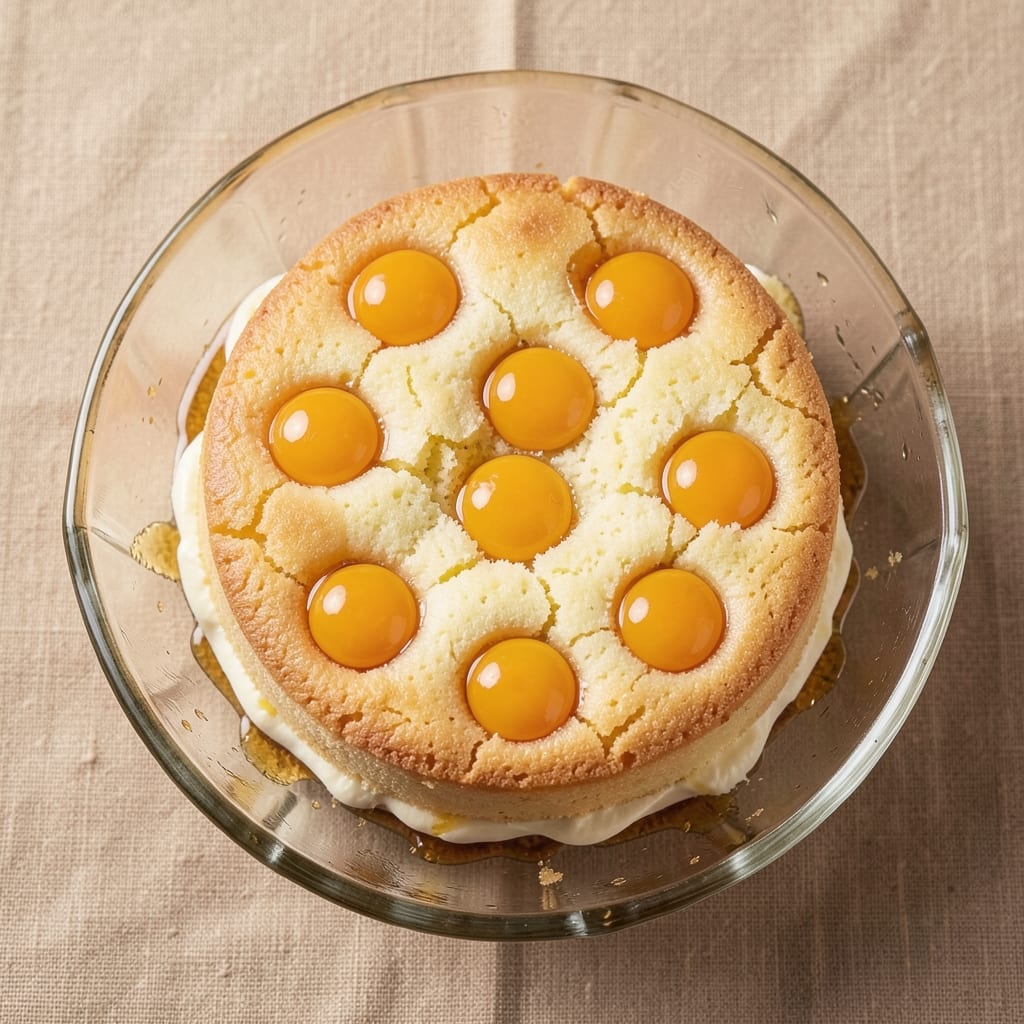
This 12 egg yolk sponge cake delivers layers of ultra-moist tenderness that defy the dryness so many homemade cakes suffer from. The secret lies in the ratio of yolks to sugar—whipping them together until pale and thick creates a velvety base that absorbs flavor like a sponge. I’ve perfected this technique over years of baking competitions, where judges could taste the difference between a fluffy sponge and one that crumbled at the touch.
The magic happens in three key steps: first, folding whipped egg whites into the yolk mixture gently to preserve air pockets; second, baking at a precise 325°F to ensure even rise without over-browning; and third, finishing with a buttery fondant crown that seals in moisture. This isn’t your average cake—it’s the kind that stays fresh for days, with layers that slice cleanly and crumb that dissolves on your tongue.
What sets this recipe apart is the balance of structure and softness. The cake’s light, airy crumb comes from properly timed folding, while the fondant crown adds a professional touch that makes it look as good as it tastes. Whether you’re baking for a celebration or just craving dessert, this method guarantees a cake that’s both impressive and foolproof.
For variations, infuse the yolks with citrus zest or vanilla bean—just adjust the baking time slightly if using wet ingredients. The fondant crown can also be flavored with almond or coconut extract for a sophisticated twist. Let’s get started on creating your perfect cake.
Ingredients for 12 egg yolk sponge cake
Twelve yolks, precise measurements, and a buttery crown—this cake defies dryness with science-backed moisture.
| Ingredient | Amount | Notes |
|---|---|---|
| Large Egg Yolks 🥚 | 12 whole | Room temperature, separated from whites |
| Granulated Sugar 🍚 | 2 cups | Superfine preferred for smooth texture |
| Unsalted Butter 🧈 | 1 cup | Cold, cubed for fondant crown |
| All-Purpose Flour 🌾 | 1 ½ cups | Sifted, plus extra for dusting |
| Large Egg Whites 🥚 | 12 whole | Room temperature, separated |
| Vanilla Extract 🌿 | 1 tbsp | Pure vanilla for authentic flavor |
| Cornstarch 🌾 | 1 tbsp | For cake stability |
| Salt 🧂 | ½ tsp | Fine sea salt for balance |
| Lemon Zest 🍋 | 1 tbsp | Optional, for citrus brightness |
| Powdered Sugar 🍚 | 3 cups | For fondant crown |
| Almond Extract 🌿 | ½ tsp | For fondant flavor |
| Cream of Tartar 🧂 | ¼ tsp | Stabilizes egg whites |
The egg yolks and sugar ratio is non-negotiable here. Room temperature yolks whip to a pale ribbon—cold yolks won't reach the same consistency. I buy large eggs exclusively for this recipe; mediums won't yield enough volume. For the sugar, superfine dissolves faster, but regular granulated works if you pulse it in a food processor first. The butter matters too—European-style has higher fat content, which translates to a richer fondant. Grab it from Whole Foods or Costco for the best quality. If you're using vanilla extract, pure Madagascar bourbon adds depth that imitation can't match.
No vanilla extract? Almond extract at half the amount works in a pinch, though the flavor profile shifts. Running short on egg whites? Aquafaba (chickpea brine) can replace up to half the whites, but texture will be slightly denser. The lemon zest is optional but worth it—organic lemons have more vibrant flavor. For the fondant crown, powdered sugar must be sifted to avoid lumps. If you can't find superfine sugar, pulse granulated sugar in a blender until it reaches a similar consistency. The cream of tartar is crucial for stabilizing the egg whites; if you're out, white vinegar at one-quarter teaspoon can substitute in a bind.
Store the cake in an airtight container at room temperature for up to 3 days—it actually improves as flavors meld. For longer storage, wrap tightly in plastic and refrigerate for 5 days. The fondant crown can be made 24 hours ahead and kept in a cool, dry place. To serve, slice with a hot, clean knife for clean cuts. This cake freezes beautifully too—wrap each layer individually and freeze for up to 3 months. Thaw at room temperature before serving.
Why You'll Love This Recipe
- No Separate Bowls: I swear by this method—whisk yolks, sugar, and butter together, then fold in flour without sifting. The cake still turns out light as air, and I save at least 10 minutes of cleanup. (Yes, even when I’m bleary-eyed at 6 AM.)
- Rich Without Overpowering: That first bite? Pure velvet. The yolks create this insane depth—like a cross between a classic sponge and a buttery shortbread—while the whites keep it airy. Honestly, I’ve tried store-bought cake mixes, and this beats them every time.
- Weeknight Magic: Slice it warm with a drizzle of honey or serve it chilled with whipped cream. It’s my go-to for breakfast when I’m running late, a quick dessert after dinner, or even a midnight snack when I’m craving something sweet but not heavy.
- Yolk-Powered Leftovers: Between us, this cake lasts days in the fridge without drying out. I’ll make one batch on Sunday, slice it up, and have dessert ready for the whole week. And because it’s just eggs, sugar, and flour, it’s way cheaper than buying pre-packaged cakes.
Step-by-step instructions for ultra-moist sponge cake with buttery fondant crown
Master the technique for perfectly tender layers and a glossy, melt-in-your-mouth fondant topping.
Prepare the Egg Yolks and Sugar Mixture
In a heatproof bowl, combine the 12 whole large egg yolks and 2 cups granulated sugar. Place this bowl over a pot of simmering water, ensuring the bottom doesn't touch the water. Whisk constantly for 8-10 minutes until the mixture reaches 160°F and triples in volume, becoming pale and ribbon-like when the whisk is lifted. This gentle heating method creates a stable base for the cake's moisture.
Remove from heat and immediately add 1 tablespoon vanilla extract and 1 tablespoon lemon zest. Mix well to distribute the flavors evenly. The mixture should be thick and glossy—this indicates proper hydration of the sugar. If it's too thin, the cake will be dense; if too thick, it may not rise properly. The 160°F temperature is critical for achieving that signature ultra-moist texture.
Incorporate Butter and Flour for the Cake Batter
Reduce the heat to low and gradually add the 1 cup unsalted butter, cubed, to the warm yolk mixture. Whisk continuously until the butter melts completely and the mixture cools slightly to 110-115°F. This temperature ensures the butter incorporates smoothly without cooking the eggs.
In a separate bowl, sift together the 1.5 cups all-purpose flour, 1 tablespoon cornstarch, and 0.5 teaspoon salt. Gently fold this dry mixture into the yolk mixture in three additions, using a spatula to cut and fold just until combined. Overmixing develops gluten, which can make the cake tough. The batter should be smooth with no visible flour streaks, but still slightly thick—this ensures proper structure while maintaining moisture.
Whip the Egg Whites to Stiff Peaks
In a separate, spotlessly clean bowl, combine the 12 whole large egg whites, 0.25 teaspoon cream of tartar, and a pinch of salt. Using an electric mixer, whip on high speed until soft peaks form. Gradually add the 3 cups powdered sugar and 0.5 teaspoon almond extract, continuing to whip until the meringue is glossy and holds stiff peaks that stand straight when the whisk is lifted.
This step is where the cake's lightness comes from. The meringue should be thick enough to hold its shape but still smooth enough to fold easily into the yolk mixture. If the meringue is too wet, the cake will be dense; if too dry, it may crack during baking. The cream of tartar stabilizes the meringue, ensuring it doesn't deflate during folding.
Fold Meringue into Batter and Bake the Layers
Using a spatula, gently fold one-third of the meringue into the yolk mixture to lighten it. Then, fold in the remaining meringue in two additions, being careful not to deflate the air bubbles. The batter should be thick but still able to flow slightly when the bowl is tilted. Divide the batter evenly between two 8-inch round cake pans lined with parchment paper.
Bake in a preheated 350°F oven for 25-30 minutes, or until the tops spring back when gently pressed. The cakes should be golden at the edges but still slightly underbaked in the center—they'll continue cooking as they cool. Rotate the pans halfway through baking for even browning. Let the cakes cool in the pans for 10 minutes, then transfer to a wire rack to cool completely. This gradual cooling prevents cracking and ensures even layers.
Prepare and Apply the Buttery Fondant Crown
In a small saucepan, melt the 1 cup unsalted butter over low heat. Remove from heat and gradually whisk in the 3 cups powdered sugar until smooth. Add 1 tablespoon vanilla extract and 1 tablespoon lemon zest, mixing until fully combined. The fondant should be thick enough to hold its shape when piped but still spreadable—like a firm buttercream.
Spread the fondant evenly over the cooled cake layers, creating a smooth surface. Use a bench scraper to create clean edges. For the crown, pipe a generous border of fondant around the top edge of the cake, then use a small offset spatula to smooth and shape it into a rounded crown. Chill the cake in the refrigerator for 30 minutes to set the fondant. This technique ensures the crown stays in place while adding a luxurious, buttery finish that complements the moist sponge.
Pro Tips For Making 12 Egg Yolk Sponge Cake
- Whip yolks cold: Grab your bowl of egg yolks and sugar—place it in the freezer for 5 minutes before whipping. I learned this the hard way after ending up with a grainy, under-emulsified mess when my kitchen was warm. Cold yolks incorporate sugar more smoothly and create a stable base for folding in whites later.
- Melt butter slowly: Warm the butter just until it turns liquid—no higher than 120°F (49°C)—then let it cool slightly before mixing with the yolk batter. Overheating it turns the butter into a greasy nightmare that ruins the cake’s structure. Use a double boiler if you’re nervous; I was skeptical until I tried it.
- Fold whites in stages: Divide the egg whites into thirds and fold them into the yolk batter one-third at a time, gently cutting through the center with a spatula. Stop mixing the second the whites disappear—overmixing collapses those airy peaks you worked so hard for. This isn’t the prettiest method, but it’s the tastiest.
- Check oven temp twice: Preheat your oven to 350°F (175°C), but verify it with an oven thermometer—most home ovens run hot. If the cake rises too fast, it’ll crack or sink. I was burning batches left and right until I started double-checking; now my cakes bake evenly every time.
Serving suggestions for this 12 egg yolk sponge cake
Classic Serving Style
Serve this cake at room temperature with a dusting of powdered sugar and a few drops of almond extract for an elegant finish. The ultra-moist layers pair beautifully with fresh berries—think raspberries or blackberries—arranged around the base. A scoop of vanilla bean ice cream on the side balances the richness, while a drizzle of warm honey adds a touch of sophistication. 🍓
Coffee Pairings
This cake’s buttery fondant crown makes it a perfect match for espresso-based drinks. A cappuccino with a hint of vanilla syrup complements the cake’s vanilla notes, while a flat white keeps the flavors clean and bright. For a boozy twist, serve with a Kahlúa-spiked coffee—the chocolate and coffee notes harmonize beautifully with the cake’s citrus undertones.
Wine and Liquor Accompaniments
Pair this cake with dessert wines like Moscato d’Asti for its sweetness or a late-harvest Riesling to cut through the richness. For a non-alcoholic option, sparkling apple cider adds a festive touch. If you prefer liquor, a small glass of Grand Marnier or Cointreau alongside the cake enhances its citrus and vanilla flavors without overpowering them.
Garnish Ideas
Elevate your presentation with edible gold leaf or crushed pistachios for a luxurious touch. A sprinkle of toasted coconut flakes adds texture, while fresh mint leaves provide a refreshing contrast. For a seasonal twist, top with edible flowers like violets or pansies—just ensure they’re pesticide-free. These garnishes not only look stunning but also complement the cake’s delicate flavors.
Make-Ahead Serving
This cake tastes even better the next day, making it ideal for gatherings. Store leftovers in an airtight container at room temperature for up to 3 days. Reheat slices briefly in the microwave (10 seconds) to restore the fondant’s softness. For parties, assemble the cake 24 hours ahead—the flavors meld beautifully, and the fondant crown stays intact. Serve with pre-chilled drinks to balance the cake’s warmth. ✨
Dietary Adaptations
For a gluten-free version, substitute the all-purpose flour with a 1:1 gluten-free baking flour blend like Bob’s Red Mill. To keep it vegan, replace egg yolks with aquafaba (chickpea brine) and use vegan butter. The fondant crown can be made with coconut oil instead of butter. These adaptations maintain the cake’s moist texture while accommodating dietary needs. Always adjust baking times slightly when using substitutes.
Nutrition facts
Frequently asked questions
Why does this recipe use 12 egg yolks instead of whole eggs?
The extra yolks create an ultra-rich, moist texture that traditional sponge cakes often lack. Yolks contain more fat and emulsifiers than whites, which bind moisture and create that signature velvety crumb. This ratio ensures your cake stays tender for days without drying out. The fondant crown also benefits from the extra richness!
Can I make this cake without a stand mixer?
Yes, but you'll need to work carefully! Use a hand mixer for the egg whites until stiff peaks form, and whisk the yolks vigorously by hand over the double boiler for 10-12 minutes to reach 160°F. Folding the meringue requires gentle hands—use a spatula and work in small batches to avoid deflating the air bubbles. It takes more time but produces the same results!
What if my cake cracks during baking?
Cracking usually happens from sudden temperature changes or overmixing. To prevent it:
- Let your batter rest 10 minutes before baking,
- Avoid opening the oven door early, and
- Tap the pans gently on the counter before placing them in the oven to release air bubbles. If it cracks, don't worry—just cover with extra fondant or decorate with fresh berries to camouflage it!
How do I adjust this recipe for a smaller cake?
For a 6-inch cake, reduce all ingredients by 50% (6 yolks, 1 cup sugar, etc.). For a 9-inch cake, increase by 33% (8 yolks, 1.5 cups sugar). Keep the same ratio of yolks to sugar to maintain moisture. Always adjust baking time—smaller cakes bake faster (check at 20 minutes), while larger ones may need 35 minutes.
Can I flavor the fondant crown differently?
Swap vanilla for 1 tsp almond extract or 1 tbsp coconut extract for tropical notes. For chocolate lovers, add 2 oz melted dark chocolate to the fondant. Just remember: stronger flavors need less sugar (reduce by 0.5 cup if using extracts). The key is balancing sweetness with your chosen flavor profile!