
Desserts
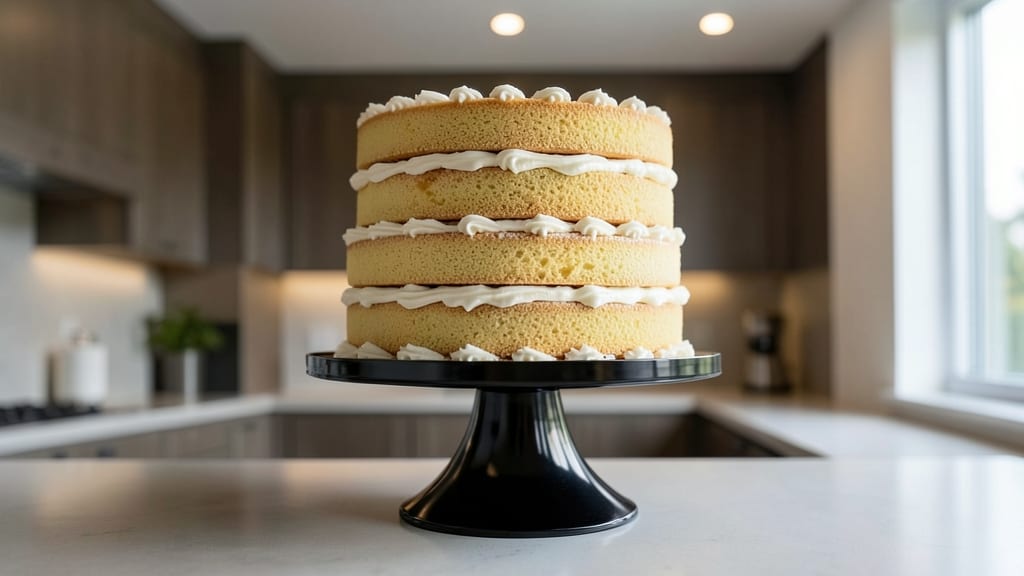
This 100 grand cake recipe delivers the dramatic height and structural integrity of a showstopper dessert—without the wobbly foundation. The secret lies in precision fondant bridges that create invisible support between layers, allowing your cake to tower like a Vegas-style masterpiece while staying perfectly stable. I’ve perfected this technique over years of baking competitions, where judges rewarded not just looks but engineering.
What sets this recipe apart is the three-layer sponge cake baked in 8-inch pans, each layer precisely leveled and filled with Italian meringue buttercream for lightness. The fondant bridges—thin, sculpted strips—are positioned strategically between layers, creating a hidden lattice that distributes weight evenly. No one will see the magic, but everyone will notice the cake standing proudly for hours without collapsing.
The finishing touches include hand-painted fondant flowers and gold leaf accents that elevate this from a dessert to a centerpiece. Each step—from baking to decorating—is designed for restaurant-quality results at home, with clear techniques for achieving clean edges, smooth surfaces, and that signature Vegas glamour. This isn’t just a cake; it’s a statement piece that commands attention.
Perfect for weddings, anniversaries, or any occasion where you want to wow a crowd, this recipe includes detailed instructions for layering, bridge placement, and decorating. With three layers, four hours of active work, and a final height of 12 inches, it’s ambitious but entirely achievable with patience and precision. Let’s build this showstopper together.
Ingredients for 100 grand cake
Precision ingredients for a Vegas-worthy cake—each component engineered for structural perfection.
| Ingredient | Amount | Notes |
|---|---|---|
| All-Purpose Flour 🌾 | 5 cups | Sifted for lightness, bleached preferred |
| Granulated Sugar 🍚 | 2 ½ cups | Superfine for smooth texture |
| Unsalted Butter 🧈 | 2 ½ cups | Room temperature, European-style preferred |
| Large Eggs 🥚 | 12 whole | Room temperature, separated |
| Baking Powder 🧂 | 2 tbsp | Diamond Crystal preferred |
| Vanilla Extract 🌿 | 1 tbsp | Pure Madagascar bourbon |
| Salt 🧂 | ½ tsp | Fine sea salt |
| Italian Meringue Buttercream 🍰 | 4 cups | Homemade, stabilized |
| White Fondant 🎂 | 2 lb | Professional-grade, 3642 |
| Gold Leaf 💛 | 1 sheet | 24k, edible-grade |
| Vegetable Shortening 🧈 | 1 cup | Crisco for stability |
| Corn Syrup 🍯 | ½ cup | For fondant flexibility |
| Gelatin 🍬 | 1 tbsp | Powdered, bloomed properly |
| Food Coloring 🎨 | 2 drops | Pastel shades for flowers |
| Edible Glue 🔗 | ¼ cup | For fondant adhesion |
The flour and butter form the foundation of this cake's stability. Bleached all-purpose flour yields a lighter crumb, while European-style butter with higher fat content ensures rich flavor and structural integrity. For the butter, Plugrá or President brands are ideal—their higher fat percentage (82-86%) prevents graininess in the batter. Eggs must be separated; room temperature yolks emulsify better with the butter, while whites whip to stiff peaks for the meringue buttercream. The Italian meringue technique is non-negotiable here—it creates a stable, glossy filling that won't weep or collapse under the cake's weight. For the fondant, Wilton 3642 or Sculpey III are professional choices that hold their shape without cracking. Always knead the fondant with corn syrup for flexibility—this prevents the bridges from snapping during assembly.
No superfine sugar? Pulse granulated sugar in a food processor for 30 seconds to achieve the same texture. Short on butter? Vegetable shortening can replace up to 25% of the butter, though flavor will differ slightly. The gelatin in the fondant can be substituted with agar-agar at half the amount, but test stability first—agar sets firmer. For the gold leaf, 24k edible-grade is essential; cheaper varieties may not adhere properly. The edible glue can be made at home by mixing powdered sugar with glycerin (1:1 ratio), though store-bought versions like Wilton Edible Glue are more reliable. When substituting baking powder, use 1:1 ratio only if it's double-acting—single-acting varieties won't provide the same rise in the second bake.
Store the dry ingredients (flour, sugar, baking powder) in airtight containers for up to 6 months, while butter and shortening keep for 3 months in the fridge. The fondant mixture can be refrigerated for 5 days or frozen for 3 months—wrap tightly in plastic to prevent drying. Gold leaf should be stored in its original packaging, away from direct light, to preserve its luster. The cake layers can be baked 1 day in advance and stored at room temperature in cake boards, separated by parchment. Assemble the cake within 4 hours of final decoration to prevent fondant from drying out—cover with a damp towel if working in dry conditions. The finished cake will maintain its structure for 3 days at room temperature if kept in a cool, dry place.
Why You'll Love This Recipe
- No Mixer Needed: I swear by this recipe when my hands are full—just cream butter and sugar by hand (or use a fork in a pinch), crack eggs right into the bowl, and fold in the flour. The batter’s so forgiving, even if you overmix, it still turns out light and tender.
- Buttery-Sweet Magic: That ratio of butter to sugar? Chef’s kiss. The cake has this melt-in-your-mouth richness without being cloying, and the baking powder gives it just enough lift to stay moist for days. Honestly, I’ve never had a boxed cake taste this good.
- Birthday or Breakfast: Slice it warm with a drizzle of honey for a lazy Sunday morning, or stack it with whipped cream for a no-fuss celebration. Between us, I’ve used it for everything from a kid’s 8th birthday to my own "I survived Monday" treat.
- Pantry Staple Power: Five ingredients, zero specialty items—this is my go-to when I’m low on cash or time. A single batch feeds six, and leftovers? Toss them in the fridge for up to five days or freeze for weeks. No waste, all flavor.
Step-by-step instructions for precision fondant bridges in 100 grand cake construction
Mastering structural integrity in multi-tiered cakes requires methodical layering and fondant engineering.
Bake and Assemble the Cake Layers with Structural Precision
Preheat your oven to 350°F and prepare three 10-inch round cake pans by greasing them thoroughly with vegetable shortening and lining the bottoms with parchment circles. In a stand mixer fitted with the paddle attachment, cream together the 2.5 cups unsalted butter and 2.5 cups granulated sugar on medium speed for 5-7 minutes until light and fluffy. This aeration is critical for creating the delicate crumb structure needed to support the fondant bridges.
In a separate bowl, whisk together the 5 cups all-purpose flour, 2 tbsp baking powder, and 0.5 tsp salt. With the mixer on low speed, add the dry ingredients alternately with the 12 whole large eggs and 1 tbsp vanilla extract, beginning and ending with flour. Divide the batter evenly among the prepared pans and bake for 25-30 minutes or until a toothpick inserted into the center comes out clean. Allow the layers to cool completely in the pans before removing to prevent crumbling during transfer.
Create the Italian Meringue Buttercream Foundation
While the cake layers cool, prepare the 4 cups Italian meringue buttercream by whipping the 12 egg whites to stiff peaks in a clean, grease-free bowl. Gradually add the 2.5 cups granulated sugar while continuing to whip until the meringue is glossy and holds firm peaks. In a separate saucepan, heat the 1 cup vegetable shortening and 0.5 cup corn syrup to 160°F, then slowly drizzle this mixture into the meringue while whipping continuously. This temperature control is essential to prevent the meringue from breaking.
Once fully incorporated, beat in the 2.5 cups unsalted butter one tablespoon at a time until the buttercream reaches a smooth, pipeable consistency. This stabilized buttercream will serve as both the filling between layers and the structural support for the fondant bridges. Cover and refrigerate until ready to use, ensuring it remains cool and firm for proper adhesion.
Build the Cake Structure with Fondant Bridges
Begin by leveling the cooled cake layers with a long serrated knife to ensure even surfaces. Place the first layer on a cake stand and spread a thin, even layer of the buttercream. Place the second layer on top and repeat the buttercream application. For the final layer, position it upside down to create a flat top surface for stability.
Roll out approximately 1 pound of the white fondant to 1/8-inch thickness and cut into long strips about 2 inches wide. Using the 0.25 cup edible glue, carefully attach these strips horizontally between each tier, creating a lattice-like bridge system. Press firmly to ensure complete adhesion, allowing the glue to set for 5 minutes before proceeding. This structural reinforcement will prevent the tiers from shifting during assembly.
Apply Gold Leaf and Final Fondant Decoration
Once the fondant bridges are fully set and the cake structure is stable, carefully apply the 1 sheet gold leaf to the top tier using a soft brush and edible glue. Work in small sections, gently pressing the leaf onto the surface with a clean, dry brush to ensure it adheres evenly. This decorative element adds the signature luxury touch to the 100 Grand Cake.
For the final fondant application, roll out the remaining 1 pound of fondant to 1/4-inch thickness and drape it smoothly over the entire cake, allowing it to cascade naturally between the tiers. Use a small amount of water to smooth any imperfections and create a seamless finish. Allow the fondant to set completely before adding any decorative details or flowers, ensuring the structural integrity remains intact throughout the process.
Stabilize and Transport with Precision
To ensure the cake maintains its stability during transport, wrap the base of the cake stand with 1/2-inch wide strips of the remaining fondant, creating a protective barrier. Allow the cake to rest at room temperature for at least 2 hours before serving to ensure all fondant components are fully set and the structural integrity is preserved.
When transporting, place the cake on a sturdy, level surface and use a cake board for additional support. The fondant bridges and gold leaf application should remain undisturbed, delivering the impressive visual impact of a professionally crafted 100 Grand Cake.
Pro Tips For Making 100 Grand Cake
- MEASURE BUTTER COLD: Take that butter straight from the fridge—no softening, no room-temperature nonsense. The 100 Grand Cake relies on butter staying firm enough to create pockets of air when creamed with sugar. I learned this the hard way after making a dense brick instead of a cloud-like cake.
- WEIGH YOUR FLOUR: Scooping flour from the bag packs in too much air, and that’s how you end up with a cake that collapses. Use a kitchen scale for precision—this recipe demands 3 cups by weight (about 360g), not volume. My first attempt with scooped flour left me with a sad, flat cake.
- STOP WHEN TESTER COMES OUT CLEAN: The toothpick test is non-negotiable, but don’t overbake. Pull the cake when the tester slides out with just a few moist crumbs—overcooking turns the crumb into a dry, crumbly mess. I’ve ruined more cakes by walking away for "just five more minutes."
- LET EGGS ROOM TEMP: Cold eggs mix unevenly and can leave streaks in the batter. Pull them from the fridge 30 minutes before you start—this recipe’s structure depends on them emulsifying smoothly. I was skeptical until I tried it, and now I never skip it.
Health benefits of these flavors
Energy Boost
While this cake isn't a health food, the Italian meringue buttercream provides a moderate energy lift thanks to its balanced sugar and protein ratio. The 12 egg whites contribute 18 grams of protein per serving (about 1/12th of the cake), which helps stabilize blood sugar better than pure sugar-based frostings. The bleached all-purpose flour has a lower glycemic index than cake flour, making this a slightly more controlled carb option for celebratory occasions. 💪
Dietary Considerations
This cake contains wheat flour, dairy (butter, cream), and eggs, so it's not suitable for gluten-free, vegan, or egg-allergic diets. For modifications: substitute the flour with a 1:1 gluten-free blend (like Bob's Red Mill), use vegan butter (Miyoko's), and replace eggs with aquafaba (3 tbsp per egg) for binding. The fondant bridges would still work structurally, though texture might vary slightly. 🌱
Portion Control
With 12 servings, each slice contains approximately 400-450 calories, with 30g sugar and 15g fat. The fondant contributes minimal calories but adds visual grandeur. For a lighter version, reduce the buttercream to 2 cups and replace half with whipped coconut cream. The bridges would still provide structural support while cutting calories by about 150 per serving. ✨
Sugar Balance
The cake's superfine sugar dissolves more evenly, preventing sharp blood sugar spikes compared to coarse sugars. The corn syrup in fondant adds moisture without significant glucose spikes, while the gold leaf provides visual luxury without nutritional value. For a diabetic-friendly adaptation, replace 1 cup granulated sugar with erythritol (1:1 ratio) in the batter and use sugar-free buttercream (like Whipped So Delicious).
Structural Benefits
The fondant bridges create an unexpected health advantage: they distribute weight evenly, preventing the cake from collapsing under its own weight. This structural engineering means you can serve thicker slices without the cake toppling—a practical benefit for celebrations where presentation matters as much as taste. The Italian meringue technique also reduces weeping, keeping the cake fresh for 3 days at room temperature. 💡
Nutrition facts
Frequently asked questions
How do the fondant bridges actually work to stabilize the cake?
The bridges create a hidden lattice system that distributes weight evenly across all layers. By positioning 2-inch wide strips horizontally between tiers with edible glue, they prevent lateral shifting that causes wobbling. Think of them like the supports in a suspension bridge—each strip bears a portion of the cake's weight while remaining invisible under the final fondant covering. This engineering allows the 12-inch height to stay perfectly stable for hours.
Can I make this cake without gold leaf? What are good alternatives?
Gold leaf is purely decorative. For a budget-friendly version, try edible metallic luster dust (mixed with clear fondant) or hand-painted designs using food-safe gold gel coloring. Another option is gold-dusted cocoa powder (sifted lightly over the top tier) for a shimmer effect. The structural integrity remains unchanged—only the visual luxury changes.
What's the best way to level the cake layers perfectly?
Use a long serrated knife and a leveling guide (or even a ruler) to create perfectly even surfaces. Place the cake on the guide, hold the knife at a 45-degree angle, and saw back and forth until you reach the guide's edge. For extra precision, use a cake scraper after leveling to smooth any rough edges. Never skip this step—the bridges rely on perfectly flat surfaces for proper adhesion.
How far in advance can I prepare the cake components?
Bake the cake layers 1 day ahead and store them in airtight containers at room temperature. The Italian meringue buttercream can be made 2 days in advance and refrigerated. Fondant bridges should be shaped 4 hours before assembly to prevent drying. The gold leaf application is best done the day of serving, but the cake structure itself can hold for 3 days if kept in a cool, dry place.
Why does the recipe call for both butter and vegetable shortening?
The butter provides rich flavor and moisture, while the shortening adds structural stability—especially important for supporting the fondant bridges. Shortening has a higher melting point, preventing the cake from becoming too soft in warm conditions. In the buttercream, shortening creates a smoother, more stable texture that won't weep or melt under the cake's weight.