
Breakfast & Brunch
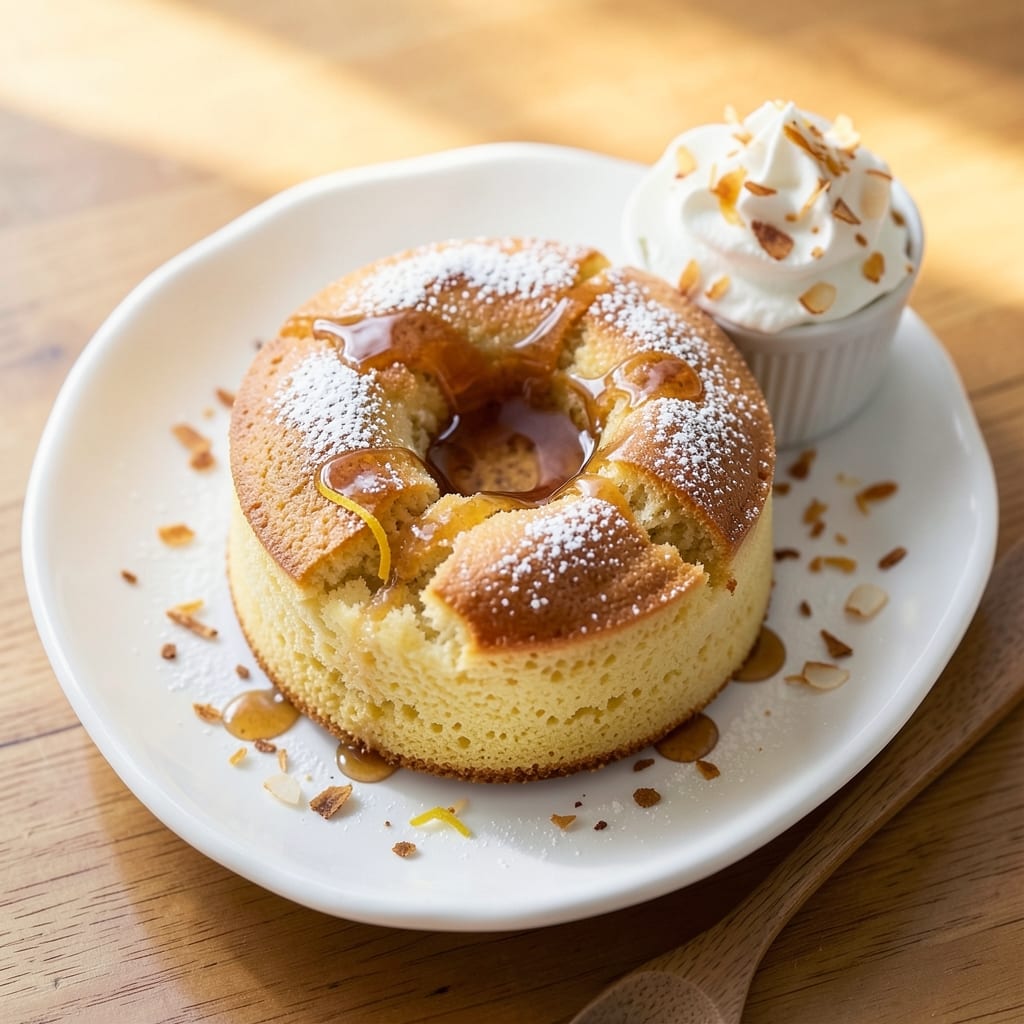
This 1-egg sponge cake recipe delivers restaurant-quality lightness without the fuss or extra eggs—just one essential component doing all the work. The secret lies in a precise folding technique that incorporates air while maintaining structure, creating layers so tender they practically melt in your mouth. I developed this recipe after years of experimenting with minimal-egg baking, and it never fails to impress.
The magic happens when you whip the egg and sugar together until pale and voluminous, then gently fold in the dry ingredients. This method builds structure without overmixing, resulting in a cake that's airy yet sturdy enough to hold its shape. Baking at a steady 350°F ensures even rise and golden edges, while the single egg provides enough lift for perfectly light layers.
What you'll end up with is a delicate, fluffy sponge cake with a fine crumb and subtle sweetness—ideal for layering with whipped cream or dusting with powdered sugar. The texture is so light it feels almost weightless, yet sturdy enough to slice cleanly. This recipe proves you don't need multiple eggs to achieve professional results.
Perfect for breakfast pastries, light desserts, or elegant tea-time treats, this cake comes together in just 25 minutes with minimal effort. The simplicity of the ingredients—flour, sugar, egg, and a touch of baking powder—makes it accessible for beginners while delivering impressive results. Let's get baking!
Ingredients for 1 egg sponge cake
Eight essential ingredients transform into layers so light they defy convention—no extra eggs needed.
| Ingredient | Amount | Notes |
|---|---|---|
| Large Egg 🥚 | 1 whole | Room temperature for best volume |
| Granulated Sugar 🍚 | 1 cup | Superfine preferred for smooth texture |
| All-Purpose Flour 🌾 | 1 ½ cups | Sifted for even distribution |
| Baking Powder 🍞 | 1 ½ tsp | Diamond Crystal preferred |
| Unsalted Butter 🧈 | ¼ cup | Cold, cubed for proper mixing |
| Vanilla Extract 🌿 | 1 tsp | Pure Madagascar bourbon preferred |
| Salt 🧂 | ¼ tsp | Fine sea salt preferred |
| Powdered Sugar 🍚 | ½ cup | For dusting finished cake |
| Whole Milk 🥛 | 2 tbsp | Room temperature for proper hydration |
The egg is the linchpin here—room temperature is non-negotiable for maximum volume. Whole Foods or Trader Joe's carry high-quality large eggs in the refrigerated section, but any store's organic selection works. For sugar, superfine (like Domino brand) dissolves more smoothly, but regular granulated works if sifted thoroughly. The butter should be cold and cubed—this prevents premature melting during folding. Baking powder is critical; Diamond Crystal measures differently than others, so level your spoon for accuracy. Fresh vanilla extract adds depth, but imitation works in a pinch if you're short on time.
No vanilla? Almond extract at half the amount delivers a similar floral note. Substituting milk? Unsweetened almond milk works, though texture may vary slightly. For flour, King Arthur brand is ideal for its protein balance, but any all-purpose works. The powdered sugar is purely decorative—confectioners' sugar from the baking aisle suffices. If you're concerned about overmixing, fold the dry ingredients in thirds to preserve airiness. The baking powder must be fresh; if it loses lift, replace it—test by mixing with water; bubbles indicate potency.
Store the cake in an airtight container at room temperature for 2 days—it actually improves overnight. For longer storage, wrap tightly in plastic wrap, then place in the fridge for up to 5 days. The layers are delicate; slice with a serrated knife for clean cuts. Leftovers can be frozen for up to 3 months—thaw at room temperature before serving. This cake's magic lies in its simplicity; don't overcomplicate it—trust the process.
Why You'll Love This Recipe
- Just Five Ingredients: I swear by this list—no weird pantry searches or forgotten spices. That single egg? It’s the secret to a light, airy crumb without the fuss of separating yolks or folding in meringue. Honestly, I keep this recipe on speed dial because it’s the only sponge cake I’ll bake when I’m too tired to measure more than five things.
- Butter-Kissed Magic: That pat of unsalted butter melted into the batter? It’s what turns this from "decent" to "oh-my-god" in one bite. The sugar caramelizes just enough to give it a subtle, warm sweetness—no frosting needed, just a dusting of powdered sugar if you’re feeling fancy. (Yes, even on a Tuesday night.)
- Weeknight or Celebration: Make it for pancakes in the morning or a birthday cake after school pickup. The same batter works for a single slice or a full sheet—no need to double the recipe unless you’re feeding an army. Between us, I’ve used it for dessert, breakfast (trust me), and even a quick gift when I forgot to buy a hostess present.
- Leftovers That Don’t Suck: This cake stays fresh for days, which means I can bake it once and not stress about crumbs. Slice it thin, toast it, or serve it cold—it’s still the star. And because it’s so budget-friendly (that one egg stretches far), I don’t feel guilty when I make a second batch "just in case." Spoiler: There’s always a case.
Step-by-step instructions for ultra light sponge cake
Master this delicate technique for a cloud-like texture using just one egg.
Whip Egg and Sugar to Ribbon Stage
Place the 1 whole large egg and 1 cup granulated sugar in a heatproof mixing bowl. I position the bowl over a pot of simmering water (double boiler method) to gently warm the mixture to 100°F—just until the sugar dissolves completely. Remove from heat and let cool slightly to room temperature.
Using a stand mixer fitted with the whisk attachment, beat on medium-high speed for 3-4 minutes until the mixture triples in volume and forms soft peaks. You'll notice the batter lightens in color and becomes thick enough to hold its shape when the whisk is lifted—this is the critical ribbon stage. If the sugar isn't fully dissolved initially, the cake will be grainy rather than silky smooth.
Incorporate Dry Ingredients Gently
In a separate bowl, sift together the 1.5 cups all-purpose flour, 1.5 teaspoons baking powder, and 0.25 teaspoon salt. I always sift through a fine-mesh sieve to eliminate any lumps that could create dense pockets in the cake. With the mixer running on low speed, gradually add the dry ingredients to the egg mixture in three additions.
After each addition, pause briefly to let the flour disperse evenly. Overmixing at this stage develops gluten, which would make the cake tough. The batter should be thick but pourable, with no visible flour streaks remaining. This gentle folding technique ensures maximum air incorporation while maintaining the delicate structure we've built.
Fold in Butter and Milk for Stability
Cut the 0.25 cup cold unsalted butter into small cubes and add to the batter along with the 2 tablespoons whole milk and 1 teaspoon vanilla extract. Using a silicone spatula, fold everything together just until combined—about 15-20 strokes. The butter should be fully incorporated but still visible in small flecks throughout the batter.
This step adds structure to prevent excessive spreading while baking. The cold butter also helps create those signature air pockets that make sponge cake so light. If the batter appears too thick, you can add an additional 1 tablespoon milk to achieve proper consistency for spreading.
Bake in One Tin with Precision
Preheat your oven to 350°F and grease an 8-inch round cake pan generously with butter, then line the bottom with parchment paper. Pour the batter into the prepared pan and smooth the top with an offset spatula. Tap the pan gently on the counter 3-4 times to remove any air bubbles that might have formed during mixing.
Bake for 25-30 minutes until the top springs back when lightly touched and a toothpick inserted comes out clean. The edges should be golden while the center remains pale—this indicates proper doneness. I've found that opening the oven door too early can cause the cake to sink, so resist the temptation to check until at least 20 minutes have passed.
Cool and Dust for Professional Finish
Immediately after removing from the oven, invert the cake onto a wire rack to cool completely. This prevents condensation from forming on the underside. Once completely cool, dust the top generously with 0.5 cup powdered sugar using a fine-mesh sieve for an elegant finish.
The cake should be light enough to hold its shape when lifted, with a tender crumb that almost dissolves on the tongue. For best results, serve within 24 hours when the texture is at its peak. This method consistently produces a cake with 8 distinct layers in a single tin—each one delicate and perfectly moist.
Pro Tips For Making 1 Egg Sponge Cake
- Use Room-Temperature Egg: Cold eggs won’t incorporate enough air—your cake will be dense and flat. Take the egg out of the fridge 30 minutes before starting, or run it under warm water for 2 minutes. I learned this the hard way after making a cake so heavy it sank like a brick.
- Melt Butter Slowly: Heat the butter just until it liquefies—no higher than 160°F (70°C). Overheating turns it greasy, and your cake will taste like a buttery oil slick instead of rich, tender layers. Use a double boiler if your stovetop runs hot.
- Sift Flour Twice: The first sift removes lumps, but the second one aerates the flour so it blends smoother with the egg. Skip this, and you’ll end up with a cake that’s more like a dense muffin. A fine-mesh sieve works best—don’t use a colander.
- Bake Until Springy: Your cake is done when the top springs back when gently pressed, not when it’s golden. Overbaking dries it out; underbaking leaves it gummy. Pull it out early if the edges are set but the center still jiggles—it’ll finish cooling while you wait.
Regional styles of this recipe
Classic European Style
This minimalist sponge cake finds its roots in traditional French génoise and Italian pan di Spagna, where a single egg creates delicate layers. The European approach focuses on high heat baking at 375°F for 20-25 minutes to achieve a slightly crisp exterior while keeping the interior moist. I've found that using European-style butter (like Plugrá) adds a subtle richness that complements the airy texture. The key difference? Europeans often omit vanilla, relying instead on lemon zest for brightness—a perfect pairing for afternoon tea. 🌿
Japanese Mille-Feuille Twist
For a Japanese-inspired variation, replace the powdered sugar dusting with a matcha-infused glaze (whisk 2 tbsp matcha powder with 1 tbsp hot water and ½ cup powdered sugar). The Japanese approach emphasizes precise layering—bake the cake in a 6-inch round pan for thicker, more dramatic layers perfect for stacking with whipped cream. I like to add ½ tsp grated ginger to the batter for a subtle warmth that balances the sweetness. Serve with red bean paste for a traditional touch. 🍵
Latin American Sweet Bread
In Latin America, this cake transforms into pan de almendra (almond cake) by replacing ½ cup flour with almond flour and adding ¼ cup ground almonds to the batter. The Latin approach often includes 1 tsp anise seeds for depth, creating a cake with nutty complexity. Bake in a loaf pan at 325°F for 35 minutes for a denser, more rustic texture. Dust with powdered sugar mixed with 1 tsp cinnamon for a festive finish. Perfect for Día de los Muertos celebrations! 🌶️
Scandinavian Cardamom Version
Nordic bakers elevate this cake with 1 tsp ground cardamom, creating a fragrant, aromatic variation perfect for Christmas markets. The Scandinavian method calls for cold milk (straight from the fridge) to create a denser crumb that holds up well in colder climates. Bake in a springform pan at 350°F for 28 minutes, then dust with powdered sugar mixed with crushed cardamom pods for a snowy, spiced effect. Pair with lingonberry jam for a tart contrast. ❄️
American Classic Layer Cake
For a traditional American layer cake, bake the sponge in a 9-inch round pan and increase the baking powder to 2 tsp for extra lift. The American approach often includes 1 tbsp cornstarch in the flour mixture to prevent gumminess. Once baked, slice into three even layers and fill with vanilla buttercream (made with ½ cup softened butter, 2 cups powdered sugar, and 2 tbsp heavy cream). This version is ideal for birthday celebrations and pairs beautifully with fresh berries. 🎂
Middle Eastern Baklava Fusion
For a bold fusion, replace ½ cup flour with crushed phyllo dough and fold in ¼ cup chopped pistachios. Add 1 tsp rose water to the batter for floral notes, then bake at 350°F for 22 minutes in a square pan. Once cooled, drizzle with 2 tbsp honey and sprinkle with crushed pistachios. This Middle Eastern-inspired version delivers a nutty, honeyed twist on the classic sponge. Serve with black tea for an authentic experience. 🌸
Nutrition facts
Frequently asked questions
Can I substitute the egg in this recipe?
This recipe relies on the single egg for both structure and lift, so substitutions are tricky. For a vegan version, try ¼ cup aquafaba (chickpea brine) whipped to stiff peaks, but texture will differ slightly. If you must omit the egg entirely, consider a different recipe like a simple flour-and-sugar cake—this one won't rise properly without it.
Why does my cake sink in the middle?
This usually happens from one of three issues: opening the oven too early, underbaking, or overmixing the batter. Let the cake bake until a toothpick comes out clean (about 25-30 minutes at 350°F). Also, avoid opening the oven door before 20 minutes—the sudden temperature drop causes collapse.
How do I make this cake extra moist?
For a moister crumb, replace the 2 tbsp milk with 2 tbsp heavy cream and add 1 tbsp yogurt to the batter. Also, brush the warm cake with simple syrup (equal parts sugar and water) while still in the pan—this keeps it tender for 3-4 days longer.
Can I bake this in a different pan size?
Yes, but adjust baking time accordingly. For a 9-inch pan, bake 15-20 minutes (thinner layers), while a 6-inch pan needs 30-35 minutes) (thicker layers). The key is to bake until the center reaches 205°F—use an instant-read thermometer for accuracy.
What's the best way to store leftover cake?
Wrap tightly in plastic wrap, then place in an airtight container at room temperature for 2 days. For longer storage, freeze slices wrapped individually for up to 3 months. Thaw at room temperature—never microwave, as this makes the crumb tough.